

A heritage trail in Jaipur is more than a route between forts and palaces. It is a journey through a historic city where royal residences, observatories, bazaars, temples, crafts and family homes continue to shape everyday life. Jaipur was founded in 1727 by Sawai Jai Singh II and its planned streets, public squares and commercial lanes still form the heart of the Pink City.
The best way to explore Jaipur’s living heritage is at a measured pace. Begin with the major landmarks, leave time for the old city markets and choose a stay connected to local traditions. Food matters just as much. A local meal, a conversation with a host or an evening in a quiet courtyard can reveal a side of Jaipur that monuments alone cannot.
Where to Begin Your Jaipur Heritage Trail
Jaipur brings together several layers of history within a compact area. The walled city includes historic gates, bazaars, public squares, temples, havelis and major monuments. City Palace introduces the royal legacy of Jaipur, while the astronomical instruments of Jantar Mantar show the scientific curiosity of its founder. Hawa Mahal and the surrounding markets reveal how architecture, trade and daily life developed together.
To explore the city further, visit our Discover Jaipur page for curated insights or refer to the official Rajasthan Tourism guide to Jaipur for detailed destination information.
A well-planned Jaipur heritage trail should balance grand architecture with local life.. Visit monuments during the cooler hours, walk through active bazaars and pause to notice painted facades, courtyards and crafts. This slower rhythm makes the city feel less like a checklist and more like a continuing story.
Where to Stay: Choosing the Right Royal Retreat
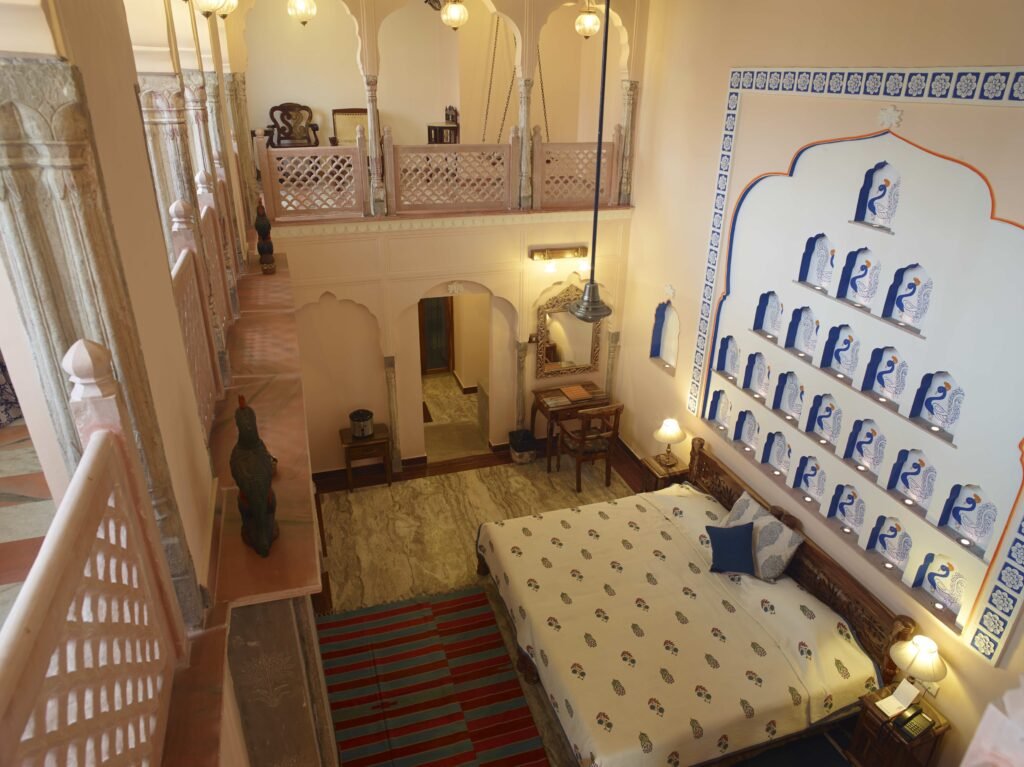
The place you choose to stay can shape the entire heritage trail journey. A standard hotel may provide convenience, but a heritage haveli in Jaipur offers a more intimate connection to the city’s architecture, family traditions and hospitality. It allows the experience of Jaipur to continue even after the day’s sightseeing has ended.
Dera Mandawa was established around 1885 by Thakur Jait Singh Ji of Mandawa as his residence during visits to the court of the Maharaja of Jaipur. It remains a family-run home where historic character is part of everyday life rather than a decorative theme. Traditional furnishings, hand-painted details, spacious suites, airy courtyards and private balconies provide a calm setting after exploring the city.
The personal welcome makes the stay distinctive. Conversations with the family and stories connected to the house add context to the places visited during the day. Dera Mandawa offers the grace of a historic residence with the warmth of a home.
What to Eat: Flavours That Complete the Journey
Jaipur’s food culture deserves a place within every Jaipur cultural itinerary. Traditional Rajasthani cooking reflects the region’s climate, produce and household recipes. Travellers may encounter dal baati churma, gatte ki sabzi, ker sangri, kadhi, bajra roti and regional sweets. Jaipur also has numerous dining places, from heritage restaurants to market stalls.
Kachori, mirchi vada, ghevar, lassi and masala chai are popular choices in the old city. Include a few planned food stops between monuments so there is time to appreciate each flavour and setting.
Where and When to Eat Along the Way
Timing matters as much as the dish. Kachori and mirchi vada are morning food, sold hot from around eight and gone by mid-afternoon. Ghevar is seasonal, at its best around Teej and Raksha Bandhan, and lassi is an early-afternoon drink rather than an evening one. Dal baati churma is a heavy midday meal, not something to attempt before a fort climb.
Anyone asking what to eat in Jaipur usually gets a list of dishes without this context, which is why so many visitors end up eating the right thing at the wrong hour. Build one or two food stops into each day of the heritage trail rather than treating meals as gaps between monuments.
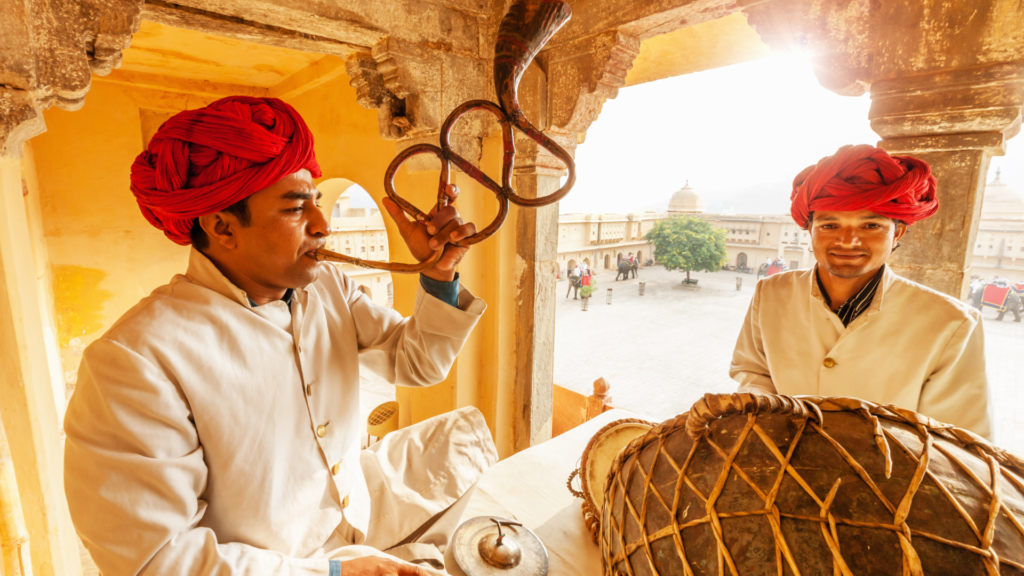
Dining at Dera Mandawa offers a different experience. Meals are prepared from family recipes and served with the ease of a traditional household. Guests may watch chapatis rise on the griddle, learn about regional ingredients or join a cooking session arranged in advance. An evening meal in the courtyard brings together flavour, setting and conversation in a way that feels personal rather than staged. This makes a perfect addition to your heritage trail in Jaipur.
How Long to Allow for a Heritage Trail in Jaipur
Three days is the working minimum, and it is what the itinerary below assumes. With one day, keep to the walled city and accept that Amer will have to wait. Two days adds Amer as a full early morning. Five days opens up a proper Jaipur cultural itinerary, with room for Nahargarh at sunset, a block printing workshop at Sanganer or Bagru, and the Chandpole flower market before dawn.
The mistake most visitors make is treating a heritage trail in Jaipur as a list to complete rather than a route to walk. The heritage places in Jaipur worth the most time are rarely the ones with the longest queues.
A Complete 3-Day Heritage Trail in Jaipur
Day One: The Royal and Scientific Heart
Arrive at Dera Mandawa and settle into the quieter rhythm of the haveli before beginning with City Palace and Jantar Mantar. City Palace introduces Jaipur’s royal history through courtyards, gateways and museum collections. Beside it, Jantar Mantar presents monumental instruments created to observe astronomical positions and measure time with remarkable precision.
Continue towards Hawa Mahal and spend time along the old city streets. Notice the market facades, traditional shopfronts and public squares that form part of Jaipur’s historic urban character. End the day with a relaxed dinner and avoid adding another major monument simply to fill the schedule.
Day Two: Amer, Views and Local Flavours
Begin early at Amer Fort, also widely known as Amber Palace. Its courtyards, halls, gateways and hilltop views make it one of Jaipur’s defining attractions. An early visit lets you move at a more comfortable pace, especially during warmer months, and gives you time to explore the complex without rushing. This is one of the most important heritage places in Jaipur to add to your Jaipur heritage trail itinerary.
On the return journey, stop near Jal Mahal for a view across Man Sagar Lake. Spend the late afternoon at Dera Mandawa with tea in the courtyard or rest in your suite. In the evening, enjoy a home-cooked Rajasthani meal and ask your hosts about the recipes, ingredients and family traditions behind it.
Day Three: Bazaars, Crafts and a Slower Jaipur
Dedicate the final day to the city’s living heritage. Explore Johari Bazaar, Bapu Bazaar, or selected craft areas, with time for textiles, jewellery, block prints, and local snacks. Shopping is more meaningful when you understand how materials are made and which traditions they represent, so consider visiting with a knowledgeable local guide.
You may also include the Albert Hall Museum, a guided heritage walk or an experience such as kite flying, saree draping, safa tying or a cooking demonstration. Finish the heritage trail with a quiet evening at the haveli. The final hours should leave room to absorb the journey rather than moving through one more crowded attraction.
Adapting the Jaipur Heritage Itinerary to Your Time
Not everyone has three days, and the Jaipur heritage itinerary scales in both directions. With a single day, keep to the walled city: City Palace, Jantar Mantar, Hawa Mahal and Johari Bazaar are all within walking distance of one another, and Amer is better skipped than rushed. Two days add Amer Fort as a full early morning, with the afternoon left open and the rest of the heritage trail kept walkable.
With five days, the Jaipur heritage itinerary opens up considerably. Add Nahargarh at sunset, the Chandpole flower market before dawn, a block printing workshop in Sanganer or Bagru, and a day trip to Abhaneri’s stepwell. The extra time is better spent on depth than on distance.
Joining a Guide or Walking It Alone
Both approaches work, and most visitors benefit from mixing them. A Jaipur guided tour is worth booking for Amer Fort and the City Palace, where the architecture, court history, and astronomical instruments genuinely need explaining, and for craft areas where a guide can get you into working karkhanas otherwise closed to walk-ins.
The bazaars and the old city grid are better walked alone. Half the value of a heritage trail is noticing things nobody has pointed out to you. Hosts at a family-run haveli can usually suggest which lanes are worth an unguided hour, and arrange a licensed guide for the parts that warrant one.
Why Dera Mandawa Stands Apart
Among the old city’s heritage properties, Dera Mandawa holds a special place because it still functions as a family residence. The architecture, furniture, recipes and stories remain connected to the people who care for the property. Guests experience heritage through rooms shaped over generations, thoughtfully prepared meals and conversations that give the city greater meaning.
When planning a heritage trail in Jaipur, the best itinerary is not necessarily the busiest. Three considered days can bring together monuments, bazaars, food and living traditions without making the journey feel rushed. A stay at Dera Mandawa completes the experience with comfort, character and a genuine sense of belonging.
Frequently Asked Questions
What is a heritage trail in Jaipur?
It is a route through Jaipur’s monuments, bazaars, havelis, temples, crafts and food traditions, combining sightseeing with cultural experiences.
How many days are enough for Jaipur?
Three days allow first-time visitors to cover the old city, major monuments, markets and local dining without rushing.
What is the best time to explore Jaipur?
October to March generally offers cooler weather. Summer requires early starts, while monsoon can bring fewer crowds and fresh city views.
Can Jaipur’s heritage sites be explored on foot?
For your heritage trail in Jaipur, parts of the walled city can be explored on foot, especially around City Palace, Jantar Mantar, Hawa Mahal and nearby bazaars.
Which places should be included?
Include City Palace, Jantar Mantar, Hawa Mahal, Amber Palace and the old city bazaars. Jal Mahal and Albert Hall Museum can also be added.
Where should travellers stay?
Choose a central heritage property with easy access to the old city and knowledgeable hosts. A family-run haveli adds character and local context. This creates a very authentic experience for your heritage trail in Jaipur.
Which heritage hotels in Jaipur are best placed for this trail?
Look for a property inside or immediately outside the walled city. Dera Mandawa sits just beyond Chandpole Gate, within two kilometres of City Palace, Jantar Mantar and Hawa Mahal, which means the first and third days of the heritage trail in Jaipur can be walked rather than driven. Among heritage hotels in Jaipur, proximity to the old city matters more than star rating for an itinerary built on foot.
What food should visitors try?
Try dal baati churma, gatte ki sabzi, ker sangri, kachori, mirchi vada, ghevar and lassi, along with a home-cooked meal.
Is a guide necessary?
A guide is not essential, but they can explain architecture, urban planning, crafts, and customs that are easy to miss independently.
What should visitors wear?
Wear light clothing and supportive footwear. Modest attire suits temples. Carry sun protection and water in warmer months.
Is Jaipur suitable for solo travellers and families?
Yes. Planned transport, standard precautions and care in crowded markets help make the visit smoother. Whether you are on a heritage trail or a backpacking trip, Jaipur is suitable for all.
What is the difference between a Jaipur heritage trail and a normal city tour?
A city tour moves between ticketed monuments on a fixed schedule. A Jaipur heritage trail includes the bazaars, havelis, craft workshops and family kitchens that sit between them, and allows the time to actually stop.
Which heritage places in Jaipur should not be missed?
City Palace, Jantar Mantar, Hawa Mahal and Amer Fort are the essentials. Beyond those, the heritage places in Jaipur that reward an unhurried visit include Panna Meena ka Kund, Gaitor Ki Chhatriyan and the working lanes of Khajane Walon Ka Rasta.
Can a heritage trail in Jaipur be done without a car?
Largely, yes. The walled city portion of the heritage trail in Jaipur is walkable end to end. Amer, Nahargarh and Gaitor need a short drive, which is easily arranged for a half day.
