

Most routes through Rajasthan are built around things that stay put. The forts of Jaipur and Jodhpur, the lake palaces of Udaipur and the golden walls of Jaisalmer will all be standing next year. The Pushkar fair will not wait. For about a week each autumn, a small temple town on the edge of the desert fills with camels, horse traders, pilgrims, musicians and travellers from every corner of the world, then empties again once the moon is full.
It is the one part of a trip through the state that cannot be moved to a better week, which is exactly why it deserves a fixed place in the plan. Seen properly, the fair is Rajasthan at work and at prayer, not posing for a postcard. Here is what goes on there, when to arrive, and how to fold it into a route that begins in Jaipur.
What happens at the Pushkar fair
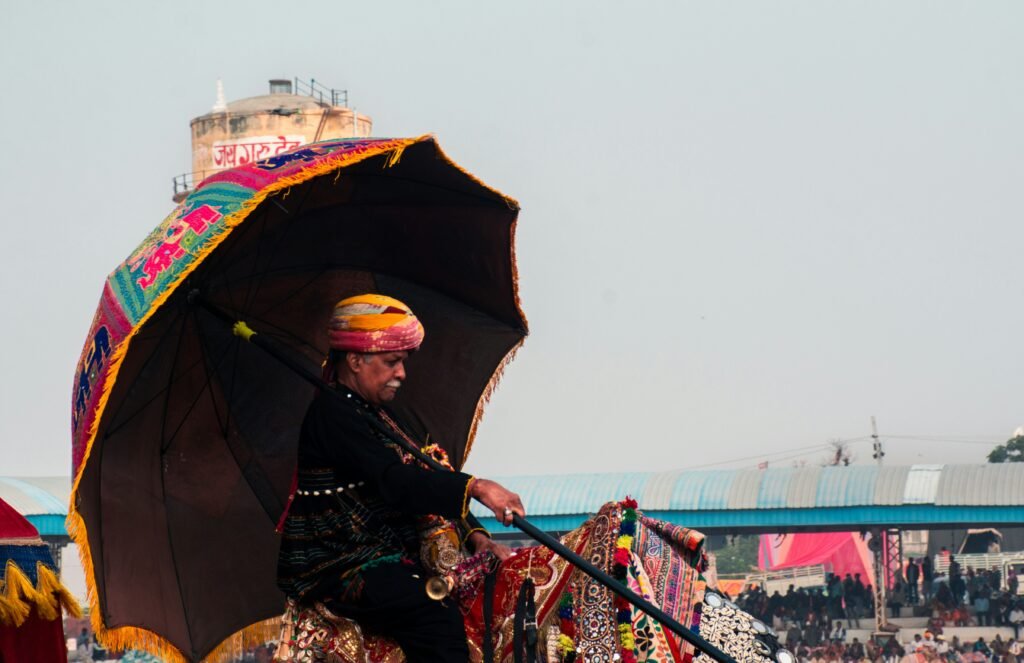
Three fairs run on the same ground at the same time, and each draws its own crowd.
1. The trade
Long before any visitor came to watch, the Pushkar fair was a livestock market, and it still is. Rabari herders and breeders walk camels, horses and cattle in from across western Rajasthan, some setting out weeks ahead, and the sand on the edge of town fills with animals being inspected, bargained over and sold. Marwari horses, whose ears curve inward until the tips almost meet, are ridden up and down for buyers. The trading is the heart of the Pushkar camel fair, as English guides call it, and the reason the event began.
2. The spectacle
Around the trade, the state’s tourism and animal husbandry departments run a programme of contests on the fairground. Camels are dressed in mirrorwork, tassels and bells and judged for their looks. Men with moustaches of improbable length line up for the prize for the longest. Matka phod, a pot-breaking contest, draws a roaring audience, and so do a bridal competition and a tug of war. Folk singers and puppeteers fill the gaps, and Ferris wheels turn over the fairground after dark.
3. The pilgrimage
Pushkar is one of the most sacred pilgrimage towns in India, built around Pushkar Lake and its 52 ghats, the broad stepped banks where pilgrims bathe. Legend holds that the lake formed where lotus petals fell from the hand of Lord Brahma, and the town keeps one of very few temples anywhere dedicated to him, the Brahma temple above the water. The fair closes on Kartik Purnima, the full moon of the Hindu month of Kartik, when crowds gather on the ghats at first light for the most auspicious bath of the year.
When to arrive, and why the dates move
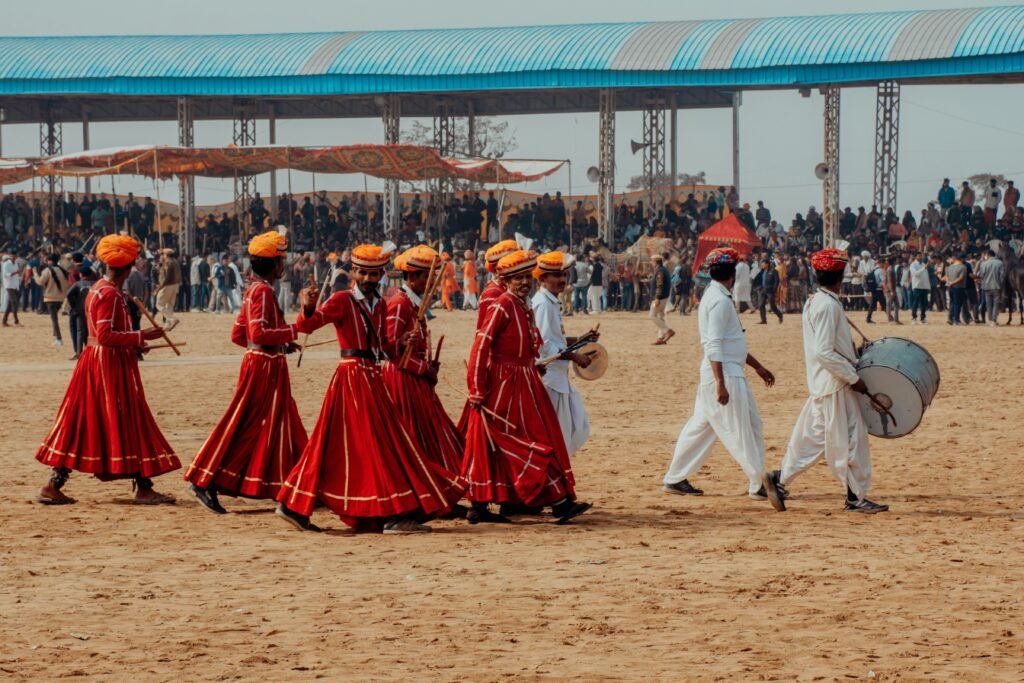
The Pushkar fair keeps to the lunar calendar, so its dates shift from one year to the next. It builds through the waxing moon of Kartik and peaks at the full moon, which lands in late October or in November. The opening days belong to the animals, with the herds at their largest and the trading at its busiest. By the full-moon weekend many herders have sold up and set off for home, and the town belongs to pilgrims, day visitors and the thickest crowds of the week.
The choice of days therefore decides which Pushkar fair a traveller sees. Those who have come for the camels should arrive near the start and stay two nights. Those drawn by the religious side should aim for the final days and accept the press of people on the ghats as part of the experience. The programme dates are listed each year on India’s national tourism site, though the trading itself gets going a few days ahead of the official opening.
Fitting the fair into a Rajasthan itinerary
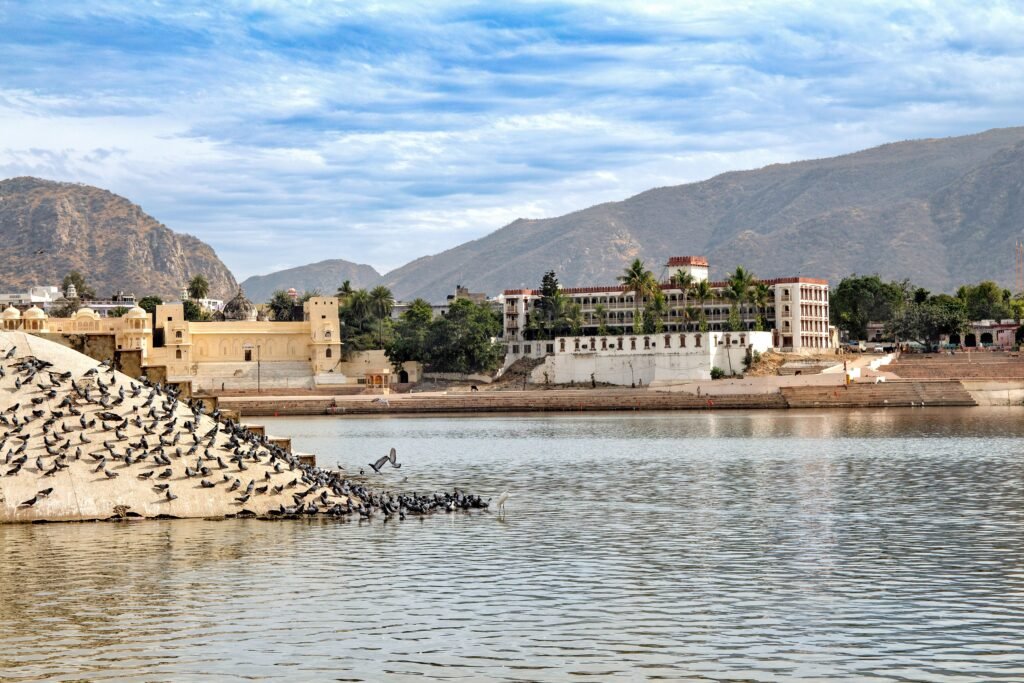
Pushkar lies on the road south-west from Jaipur, just past Ajmer, which makes it an easy link in most routes through the state. A classic Rajasthan itinerary starts in Jaipur and heads on to Jodhpur, Udaipur or the desert at Jaisalmer, and the Pushkar fair slots in early with only a short detour.
The bigger adjustment is timing. A November trip has to be planned backwards from the full moon, with the Pushkar nights fixed first and everything else arranged around them, since those are the only nights in the route that cannot move. Two nights suit most people, time for one dawn among the herds and one evening on the fairground, and one night will do for those short of time. Beyond three, the same scenes start to repeat.
Getting to Pushkar from Jaipur
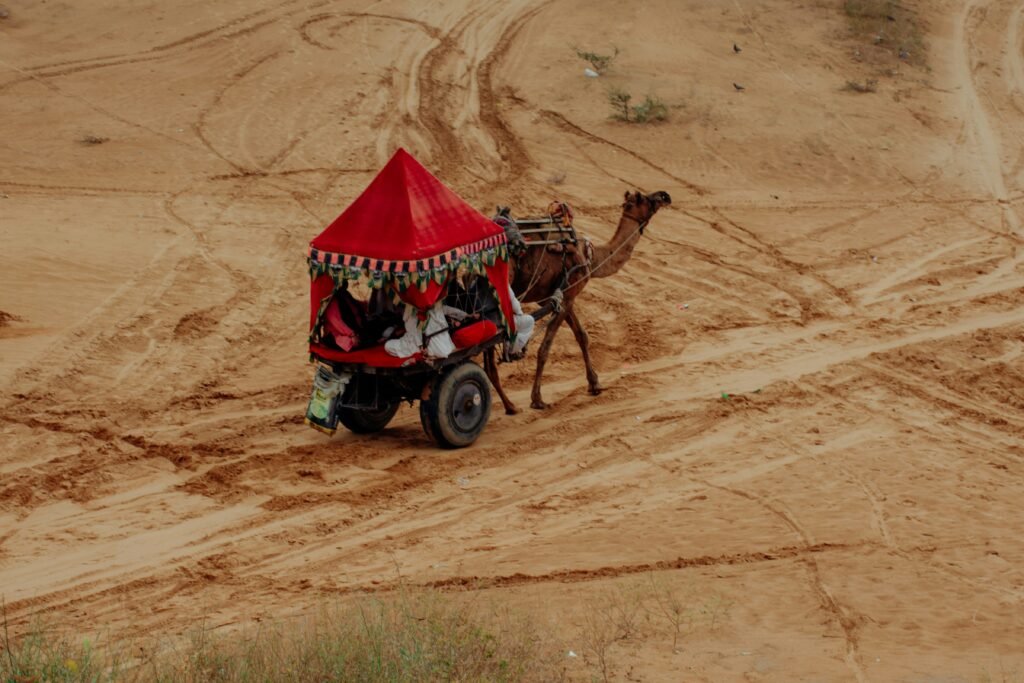
The drive to Pushkar fair from Jaipur covers about 150 kilometres, nearly all of it on the main highway to Ajmer. It takes around two and a half to three hours by car, longer on a fair week, when the final approach into town slows to a crawl. That final stretch is also the finest part of the journey, climbing over Nag Pahar, the Snake Mountain that stands between Ajmer and Pushkar, before dropping down towards the lake.
The train is the other option. The faster services from Jaipur reach Ajmer in under two hours, and Pushkar is about ten kilometres beyond, a short taxi or bus ride over the same hill. Either way, an early start from Jaipur pays for itself, since a mid-morning arrival catches the trading in full swing and the light while it is still soft.
Fair tents or a heritage hotel in Rajasthan
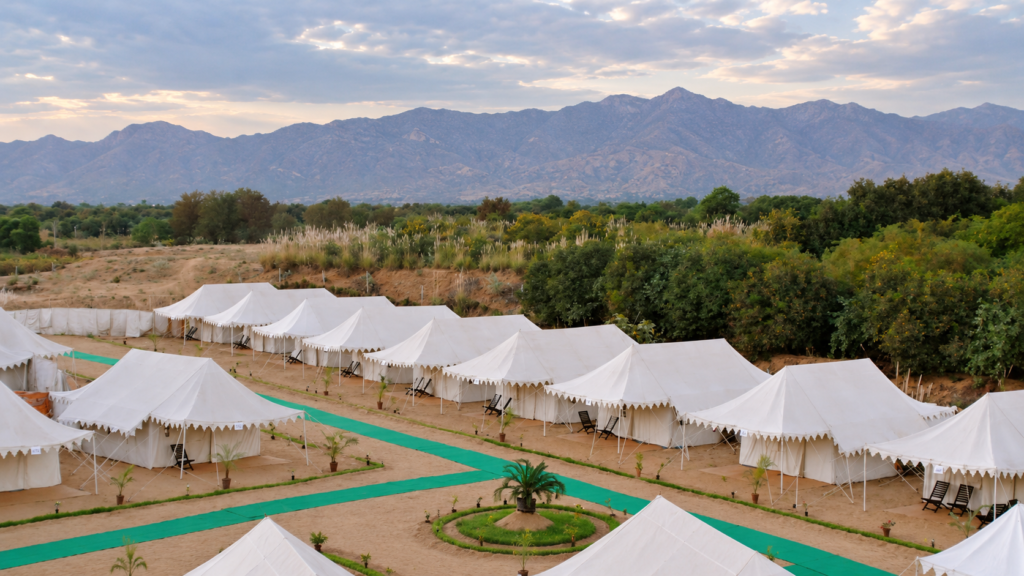
Each autumn, tent camps spring up around the fairground, from plain canvas to luxury tents with their own bathrooms. Sleeping among the herds puts the fair just outside the flap, with camel bells before sunrise and music deep into the night, and for many visitors that is the whole point. The cost is dust, cold desert nights and rates that rise steeply in fair week, with the better camps full months ahead. Guesthouses in the old town sit closer to the lake but can be loud until the small hours.
The other approach is to keep a base in a heritage hotel in Rajasthan and treat Pushkar as an excursion from it, with a single night at the fair at most. A good base means a calm room, hot water and a proper breakfast between the long days, which counts for more than it sounds after hours of sand and smoke. Jaipur suits this well, since most trips through the state begin and end there anyway. Waking inside the fair means booking a tent early. Seeing it and coming back to comfort means keeping the base and travelling in.
A Jaipur base for the road to Pushkar
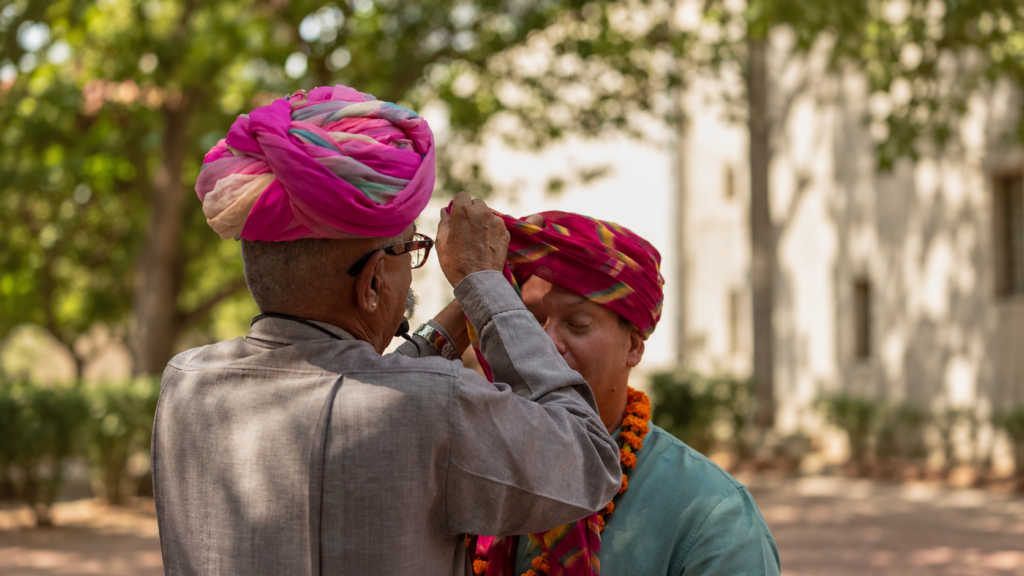
Our home sits just beyond Chandpole Gate in Jaipur, a morning’s drive from Pushkar, which makes it an easy place to begin and end a visit to the Pushkar fair. A night or two with us on either side means a comfortable bed and our family kitchen to come back to after the dust. Before setting off, learn to tie a turban with us, handy practice for the turban contest at the fair, and leave a day for the sights of Jaipur itself. No two of our suites are alike, so when your dates are fixed, write to us and we will talk through how many nights to give Pushkar and which ones.
Frequently Asked Questions
When is the Pushkar fair held?
Its dates change every year because they follow the lunar calendar, with the last day falling on the Kartik full moon. In 2026, the official programme runs from 17 to 24 November, and herders start arriving a few days earlier.
Is there an entry fee for the fair?
No. The fairground and the contests are open to everyone without a ticket. Rides, balloon flights and camel safaris are paid for separately.
Can foreign visitors join the contests?
Some events are set up with them in mind. Recent programmes have included a cricket match on the fairground between Indian and foreign visitors, and a safa and tilak contest that introduces visitors from abroad to the Rajasthani turban.
Can you photograph people at the fair?
Ask before photographing anyone. Some sadhus and performers expect payment in return, so agree on it first. Pilgrims bathing in the lake deserve the same privacy anyone would want, so keep cameras down at the ghats.
What should you pack for the Pushkar fair?
A warm layer for the evenings, when the desert cools fast, and a scarf or mask against the dust on the dunes. Shoes that slip on and off save time at every ghat and temple. Cash in small notes helps at the stalls and for rides.
Can you see the fair from a hot air balloon?
Yes. Balloon flights run over the fairground during the fair, usually soon after sunrise when the air is still. Seats are limited, so book them well ahead.
Is the fair suitable for children?
Yes, above all in its first days, when the camels, horses and Ferris wheels hold their attention and the crowds are lighter. The full-moon days bring a dense crush in the lanes and on the ghats, which is harder going with small children.
What is the Pushkar fair called locally?
Locally, it is the Pushkar fair or Pushkar mela, mela being the Hindi word for a fair. English guides and tour operators usually call it the Pushkar Camel Fair, after its best-known animal.
Where is the nearest airport to Pushkar?
Jaipur International Airport is the nearest major airport, around 150 kilometres away by road. Flying into Jaipur also leaves room for a few days in the city before the drive on to the fair.
Can Dera Mandawa help plan a visit to the fair?
Yes. Tell us your dates and whether the camels or the pilgrimage matter more to you, and we will suggest which days suit and how long to stay. Guests can also stay with us in Jaipur before and after the fair.
