

Dusty pink sunsets and towering sandstone fortresses often steal the spotlight on a foray into India’s most vibrant state. You might arrive expecting to simply sip gin and tonics on a palace terrace or float over the Aravalli hills in a hot air balloon. While those moments are undeniably spectacular, the real pulse of this land beats in the shaded courtyards and bustling alleyways of its ancient villages.
Here, far from the polished hotel lobbies, you will find the craftsmen of Rajasthan working their absolute magic. These individuals are the ultimate custodians of history. They do not need a time machine to transport you back to an era of maharajas and legendary battles.
Through their hands, Rajasthan’s history is still being made, not just displayed. Forget the generic souvenirs you might find in an airport duty-free shop, because we are talking about true heritage.
Beyond the Palaces with the Traditional Craftsmen of Rajasthan
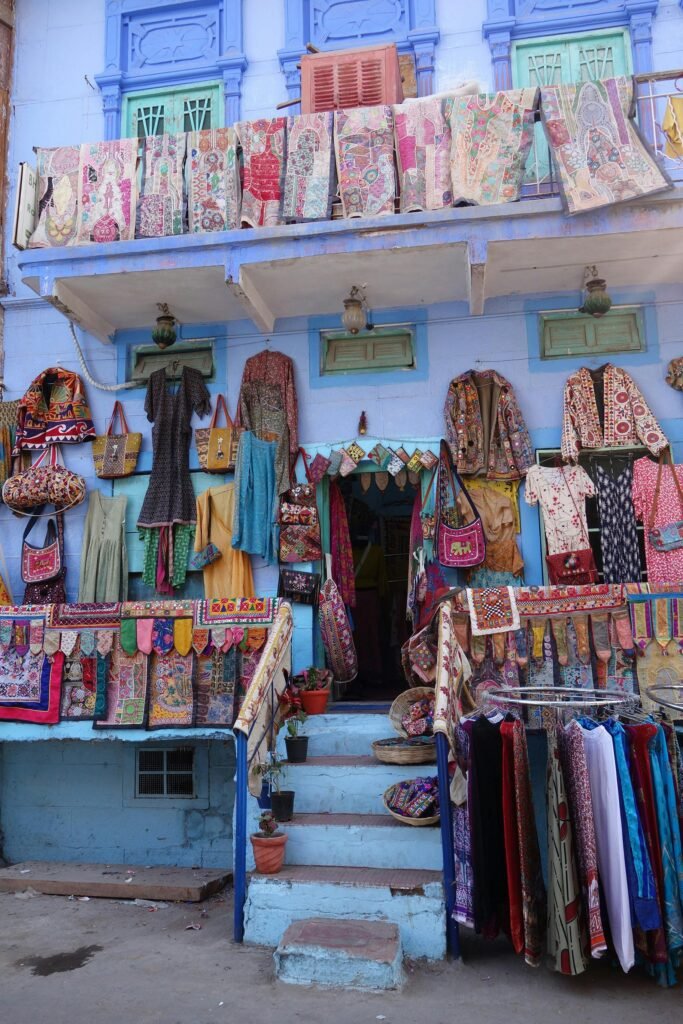
It’s humbling to watch someone create a masterpiece using techniques older than most modern nations. The craftsmen of Rajasthan do not rely on automated factories or complex software. Their tools are startlingly simple. The skills the artisans of Rajasthan depend on are passed down through families like closely guarded recipes. A grandfather guides his grandson in perfectly mixing natural dyes, while mothers teach their daughters the dizzying mathematics behind intricate threadwork.
This beautiful generational transfer means that every single woven rug or painted canvas carries the weight of ancestry. The same is true of the Kathputli puppets that hang in every bazaar, carved and dressed by the Bhat families who also perform with them. Spending a few hours with these creators is incredibly fun and far more engaging than simply reading a history book. You get to hear the local gossip, share a cup of heavily spiced chai and witness the sheer dedication required to keep these dwindling arts alive.
The Rhythmic Thud of Hand Block Printing
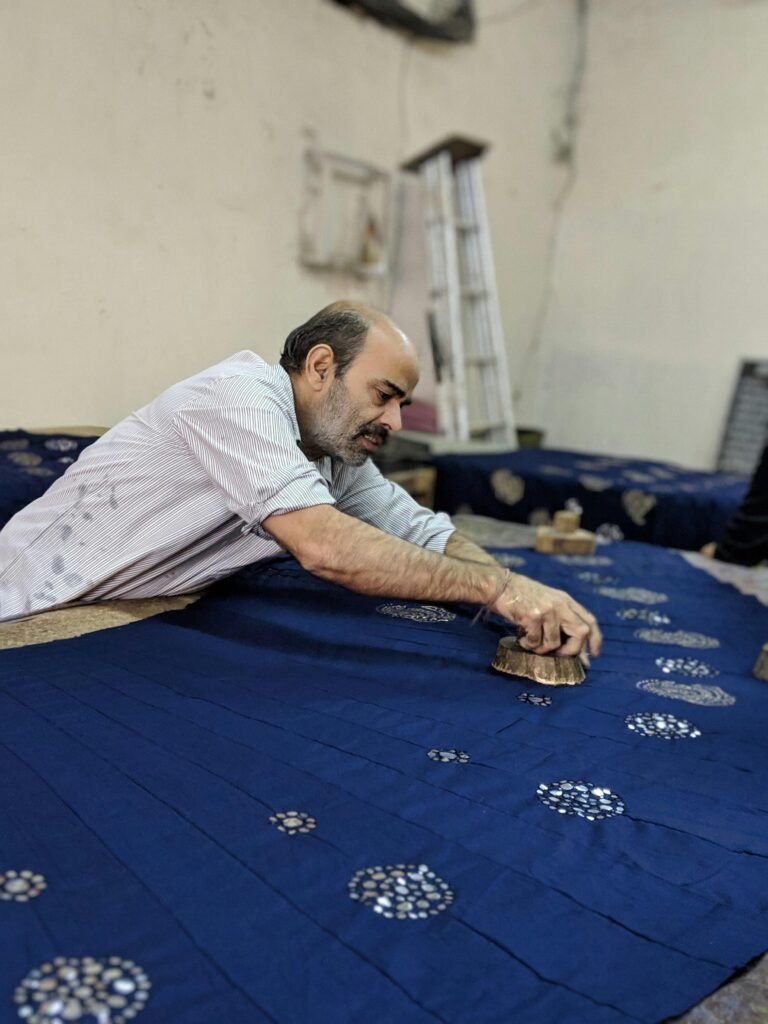
The first thing you notice about hand block printing is the precision. Villages such as Bagru and Sanganer are famous for it. Local artisans carve detailed floral and geometric patterns into small wooden blocks, then dip them into natural dyes made from madder root, indigo, and pomegranate skins.
Then the printing begins: block onto cotton with a steady, rhythmic thud, repeat after repeat. A single misplaced stamp can ruin an entire length of fabric, and the printers work so fluidly that the difficulty never shows. The finished cloth is Rajasthani folk art at its most wearable. If you would rather buy than watch, our guide to block printing shops in Jaipur names six worth the trip.
Miniature Paintings and Maximum Patience
We live in a world of instant gratification where photos are snapped and edited in seconds. This makes the painstaking world of miniature painting feel all the more extraordinary. This specific craft requires a level of patience that would test a saint. Artists use natural pigments derived from crushed precious stones, conch shells, and minerals.
The real showstopper is the brush they use. It is often fashioned from a single squirrel hair. Yes, just one hair. They use this microscopic tool to paint scenes of royal courtrooms, dramatic hunts and epic love stories. The level of detail is so astonishing that you almost need a magnifying glass to appreciate the individual leaves on a painted tree or the delicate pearls on a royal necklace.
Collecting one of these pieces is the most direct way to bring Rajasthani folk art into your home. The monsoon was a favourite subject, and our piece on how Rajasthani miniature painters captured the rains looks at why.
Blue Pottery, Made Without Clay
A stroll through the bazaars is a feast for the senses, but the brilliant azure of blue pottery will invariably catch your eye. The craft uses no clay at all. Artisans mix quartz powder, powdered glass, fuller’s earth, gum, and water into a workable dough, mould it entirely by hand, and paint it with bird and floral motifs.
The blue comes from cobalt oxide and the green highlights from copper oxide, and a low firing in the kiln leaves the surface with a glassy shine. Of the five crafts here, Jaipur claims this one as its own. It arrived in the nineteenth century under Sawai Ram Singh II, had all but vanished by the 1950s, and was revived by the painter Kripal Singh Shekhawat, whose story is told in our piece on Jaipur’s blue pottery. Keep it for display rather than the dinner table: the low firing leaves it porous, and older glazes can contain lead.
The Golden Touch of Zari
The sartorial elegance of this desert state is legendary, much of it thanks to its textile embellishers. Zari is metallic thread, woven into silk or stitched onto it to make garments fit for a court. In Rajasthan it is best known as gota: ribbons of zari cut and stitched onto ghagras, odhnis and the edges of turbans. The original was real gold and silver. Most gota today is copper or metallised film, and asking which you are looking at is a fair question in any shop. Watching the artisans of Rajasthan at their frames is spellbinding.
Mojaris Made for the Desert
Rajasthan’s leatherworkers make mojaris, the slip-on shoes that leave most of the foot bare to the heat. The leather was traditionally tanned with babul bark, and the embroidery on top, in bright thread and sometimes small mirrors, is usually worked by the women of the maker’s family. Traditional pairs are cut without a left or right foot and shape themselves to whoever wears them.
Why Authentic Heritage Rajasthani Folk Art Beats Mass Production
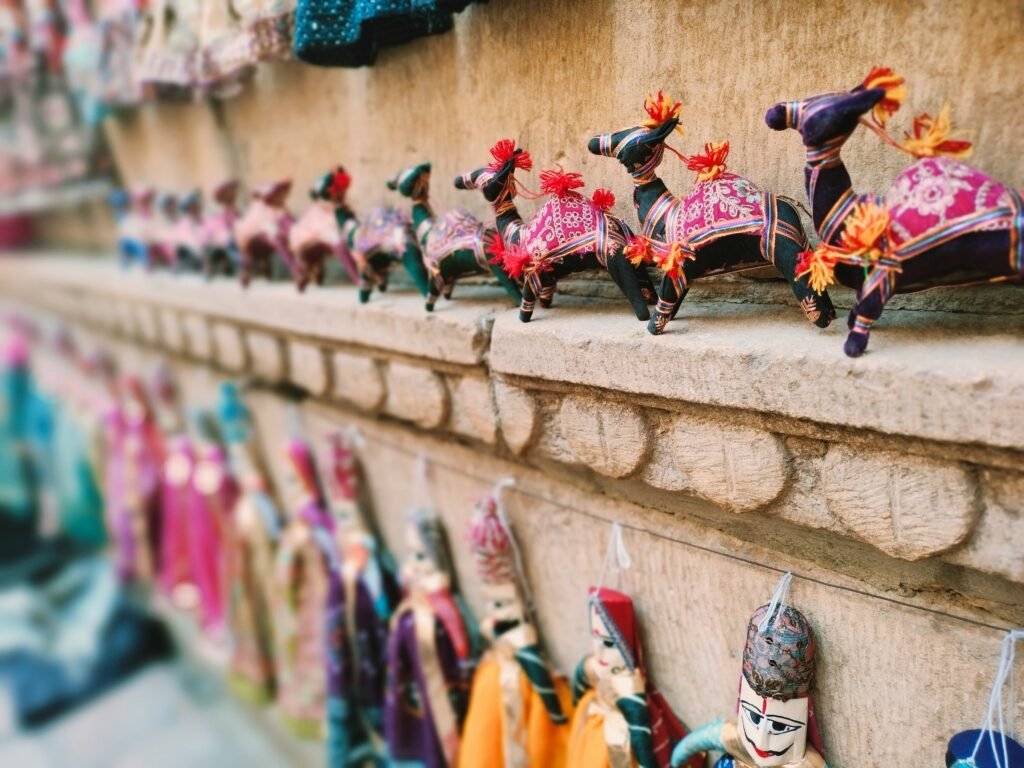
It is a sad truth that many of these incredible skills are under threat from the fast-paced modern world. Machine-made knock-offs are cheaper and faster to produce. Younger generations are understandably lured by the promise of corporate jobs in bustling cities. This means their ancestors’ time-consuming crafts risk fading into the background. But this is exactly where the discerning luxury traveller steps in.
Conscious globetrotters know that true exclusivity is not found in a factory. It is found in the slight imperfections of a hand-painted bowl or the unique dye variations of a block-printed scarf. When you invest in these authentic pieces, you do more than souvenir shopping.
You are actively funding the survival of these ancestral skills and ensuring that these brilliant craftsmen of Rajasthan can continue to earn a livelihood from their extraordinary talents.
Stepping Into a World of Wonder
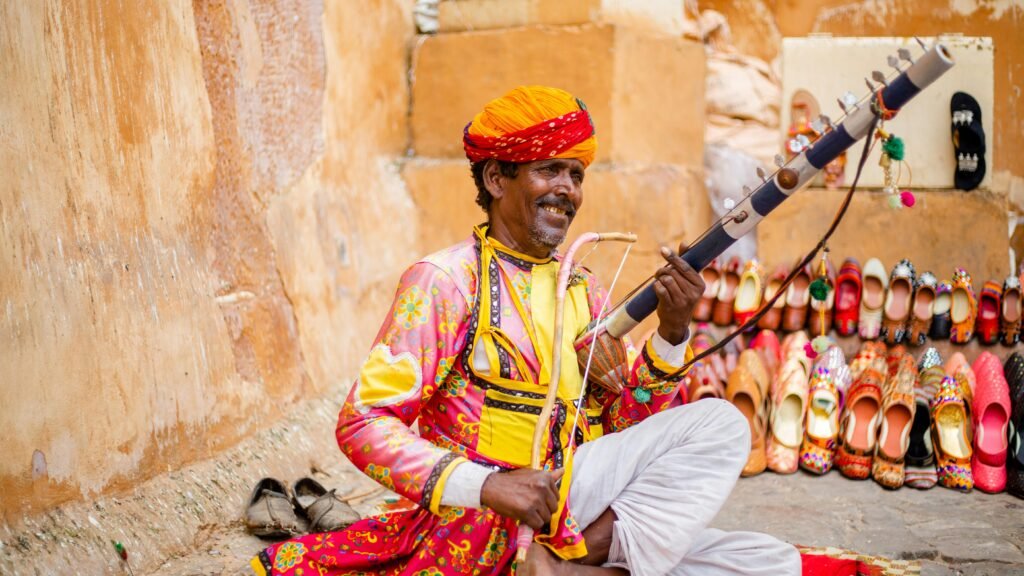
Time spent with the craftsmen of Rajasthan adds a completely new dimension to any holiday. It turns a standard sightseeing trip into a deeply personal, enriching adventure. There is something incredibly special about laughing with a weaver as you try to operate a loom, or watching a painter’s face light up as they explain the story behind their artwork.
These are the moments that linger in your memory long after the holiday tan has faded. To truly experience the magic of this region, you need a base that understands and celebrates this profound cultural heritage. You need a place that feels like an extension of the local artistry rather than a sterile hotel room.
For travellers who would rather meet the craftsmen of Rajasthan than only buy from them, Dera Mandawa is a family-run haveli within reach of Bagru, Sanganer and the workshops of the old city.
For those looking to dive deep into this vibrant world while enjoying impeccable comfort and authentic hospitality, our heritage haveli, Dera Mandawa, offers a glorious retreat perfectly attuned to the state’s creative soul.
Reach out to our team today to book your stay and let us craft your perfectly tailored Rajasthani escape.
Frequently Asked Questions
What crafts are the craftsmen of Rajasthan known for?
What crafts are the craftsmen of Rajasthan known for?
The craftsmen of Rajasthan are best known for block printing, miniature painting, blue pottery, zari and gota work, leather mojaris, bandhani tie-dye, Kathputli puppets and kundan jewellery. Most are tied to a place: block printing to Bagru and Sanganer, and blue pottery and kundan to Jaipur. Nearly all are still made by hand.
Where can you watch traditional craftsmen in Jaipur at work?
Bagru, thirty kilometres west, and Sanganer, fifteen kilometres south near the airport, are the two block printing villages, and both have workshops that welcome visitors in the morning. The Anokhi Museum of Hand Printing in Amer shows the process in a restored haveli and is closed on Mondays. Our Bagru page covers the village in detail.
Which craft is Jaipur’s own?
Blue pottery, which came to the city under Sawai Ram Singh II in the nineteenth century and was revived after nearly disappearing in the 1950s. Jaipur is equally known for kundan and meenakari jewellery, made here for around four hundred years. Both are still made by traditional craftsmen in Jaipur, and both are worth seeing made rather than only bought.
What is Rajasthani folk art?
Rajasthani folk art is the broad name for the painted, printed, carved and stitched work of Rajasthan’s craft communities, as distinct from court art made for palaces. It covers phad scroll painting, block-printed and tie-dyed textiles, painted wooden toys, puppets and the wall paintings redrawn in homes before festivals.
How can you tell handmade from machine-made?
Look for small irregularities: a block print where one repeat sits a fraction off the last, visible brush strokes in a painted figure, a slightly uneven glaze. Machine work is identical from piece to piece. Price is the other clue, because handwork cannot be cheap. Our guide to Rajasthani textiles covers the tells for block prints and bandhani
Are the traditional crafts of Rajasthan really dying out?
Some are and some are not. Blue pottery came close, with almost no workshops left in Jaipur by the 1950s. Block printing, by contrast, supports whole villages and sells worldwide. The pressure on most crafts is the same: machine copies undercut the price, and younger family members take other work. Buying directly from the maker is the most useful thing a visitor can do.
What is a mojari?
A slip-on leather shoe from Rajasthan, cut to keep the foot cool in the heat. The leather was traditionally tanned with babul bark, and the embroidery on top is usually done by the women of the maker’s family. Traditional pairs have no left or right foot and shape themselves to the wearer.
What is zari, and what is gota?
Zari is metallic thread, woven into silk or embroidered onto it. Gota is zari in ribbon form, cut and stitched onto ghagras, odhnis and turban edges, and it is the version Rajasthan is known for. Both were once made of real gold and silver. Today most is copper or metallised film.
How can you buy directly from the artisans of Rajasthan?
Go to the workshop rather than the showroom where you can, and ask who made the piece in front of you. The printers in Bagru and Sanganer sell from their own units, and many blue pottery makers do the same. Expect to pay more than in a bazaar, and to know exactly where the money went. For smaller pieces, our Jaipur souvenirs guide lists what travels well.
Can Dera Mandawa arrange a visit to the craftsmen of Rajasthan?
Yes. A morning in Bagru or Sanganer, or an afternoon at a blue pottery workshop with the artisans of Rajasthan, is easy to arrange from the haveli, and we will steer you to working units rather than showrooms. Ask us when you book, and tell us which craft interests you most.
