



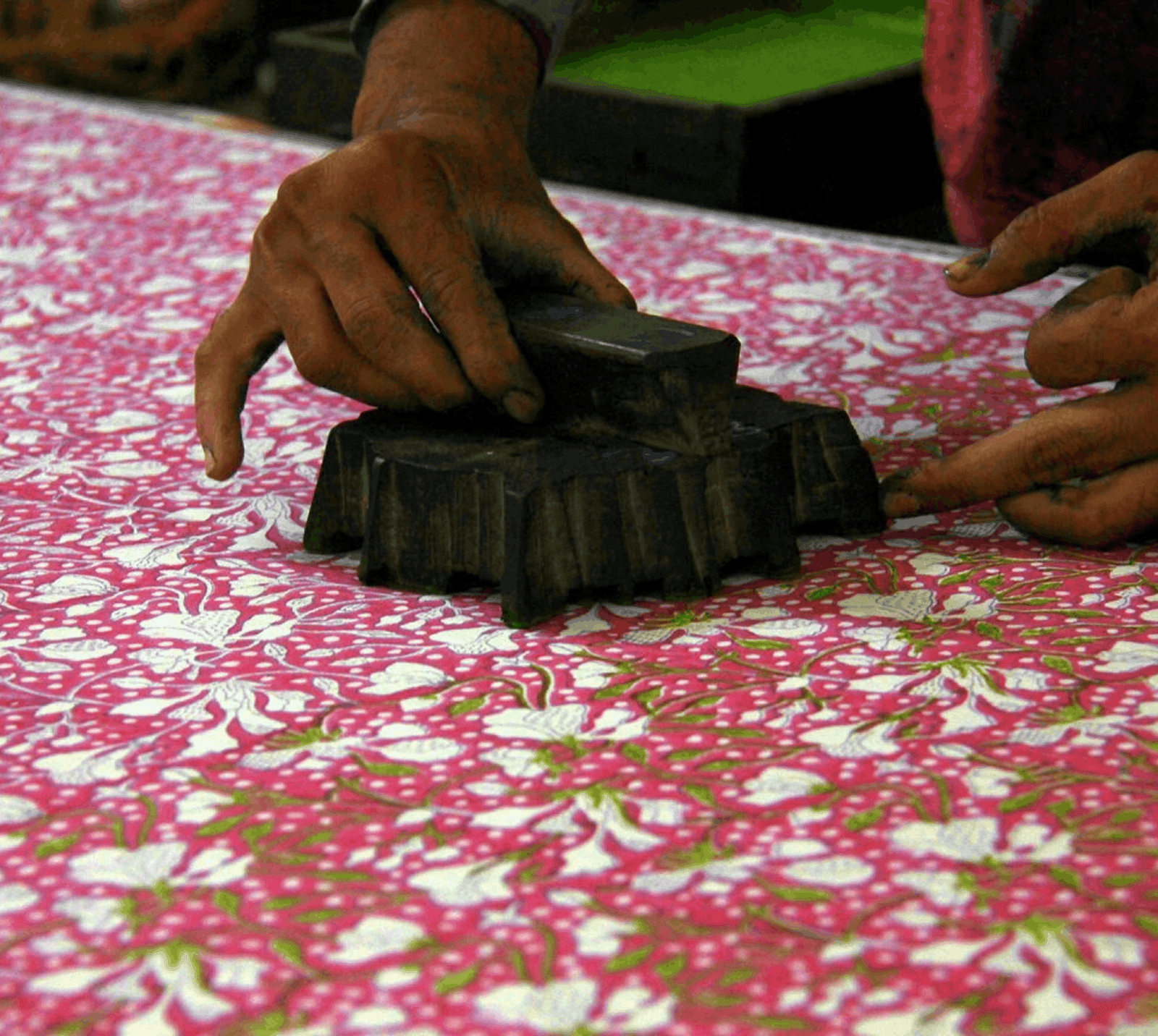
Bagru prints are stamped by hand using carved wooden blocks, with each colour requiring a separate block. The artisan dips the block into a tray of natural dye and presses it onto cotton stretched on long printing tables. A single sari may pass through eight to twelve blocks before the design is complete.
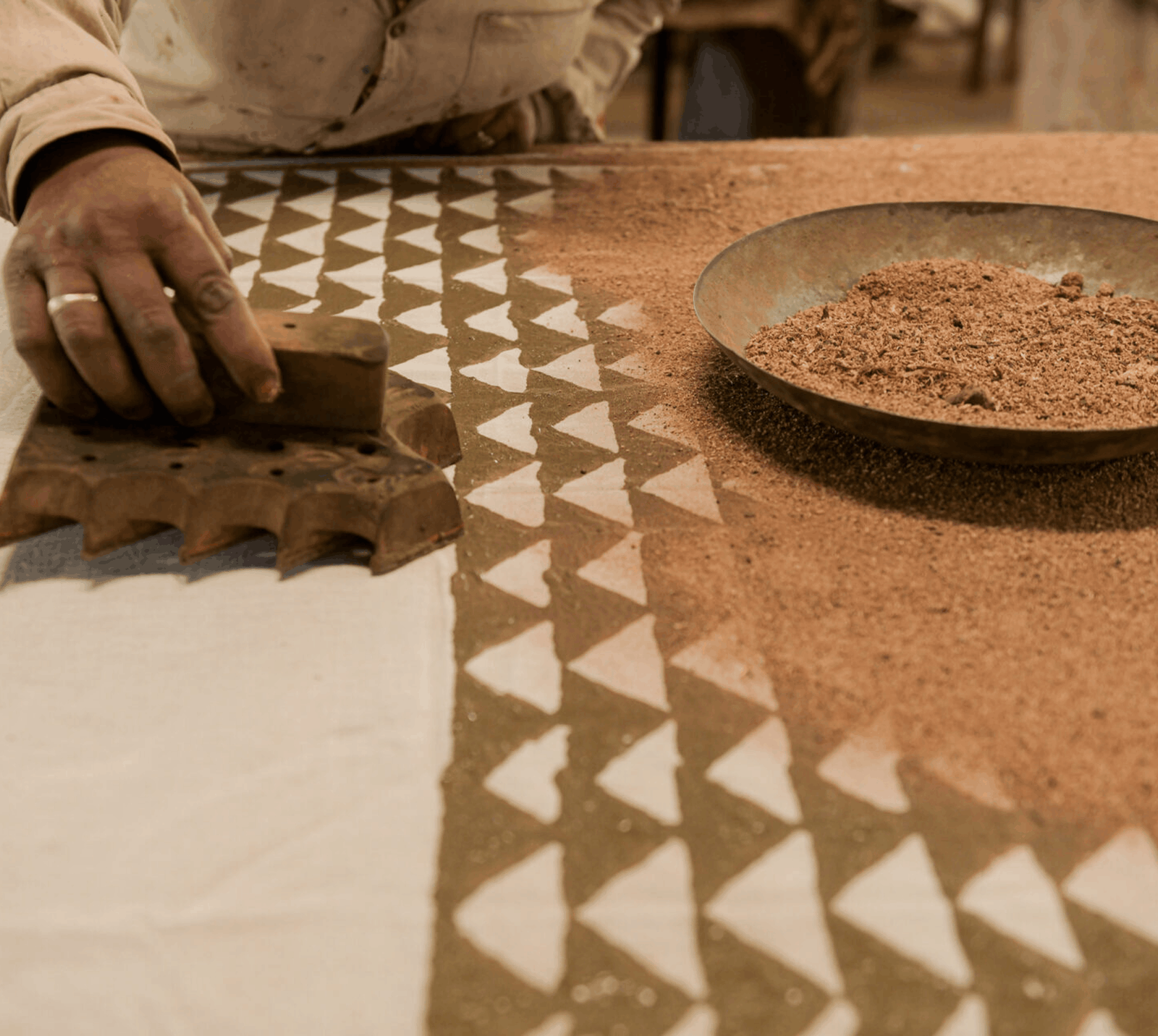
The signature Bagru technique is Dabu, a mud-resist method in which a paste of clay, gum, lime, and wheat chaff is stamped onto the fabric using blocks. Once dry, the cloth is dipped in an indigo or madder vat, and the resist paste prevents the dye from penetrating those areas. When the mud washes off, the original cloth colour shows through in a soft pattern against the dyed ground.
The dye palette is entirely plant and mineral-based. Indigo gives the blues, manjistha or madder root gives the deep reds, pomegranate rind gives the yellows, harda (myrobalan) provides the base coat, and rusted iron filings fermented with jaggery yield the iron black known locally as syahi.
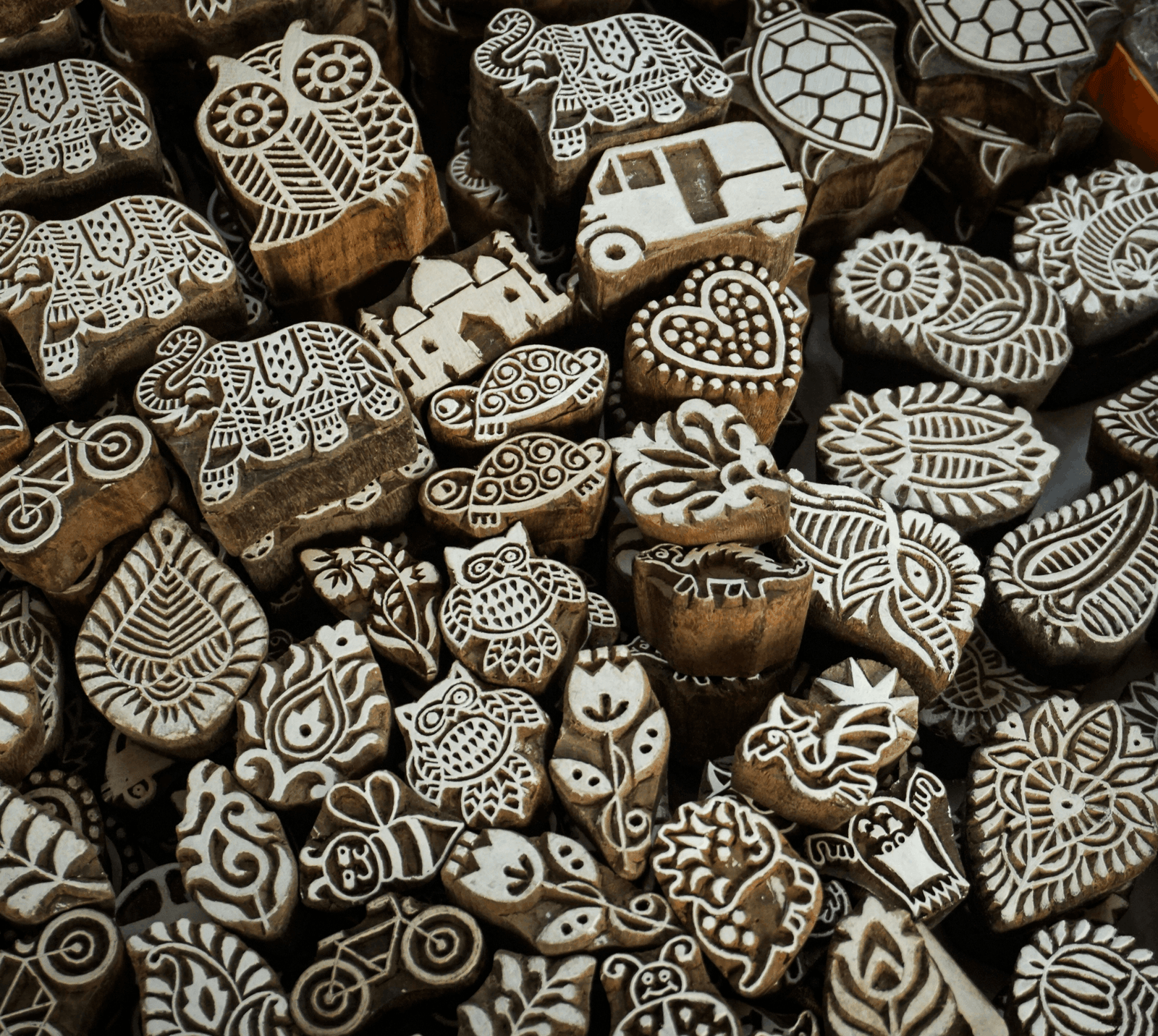
The wooden blocks themselves are works of art, carved from sheesham or teak by specialist block carvers in Bagru and the nearby town of Sanganer. Motifs are drawn from local flora, geometric grids, Mughal floral patterns and folk symbols. Some blocks in active use today are over a hundred years old.
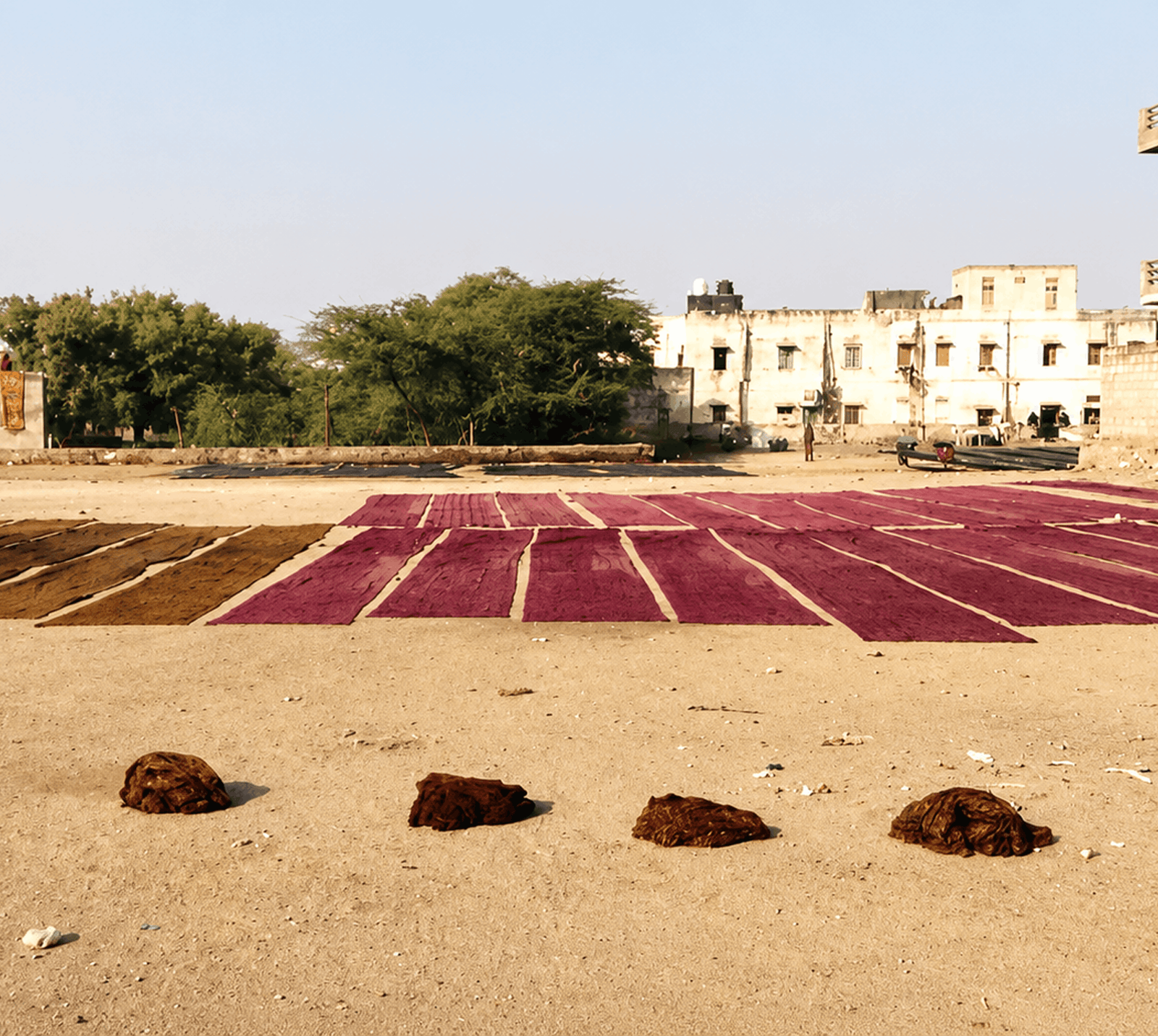
A walk through Chhipa Mohalla shows the full cycle of the craft. Family courtyards are stacked with blocks and dye buckets; large open fields are draped with freshly printed lengths of indigo and madder; and the walls themselves are stained with layers of accumulated colour from generations of work.
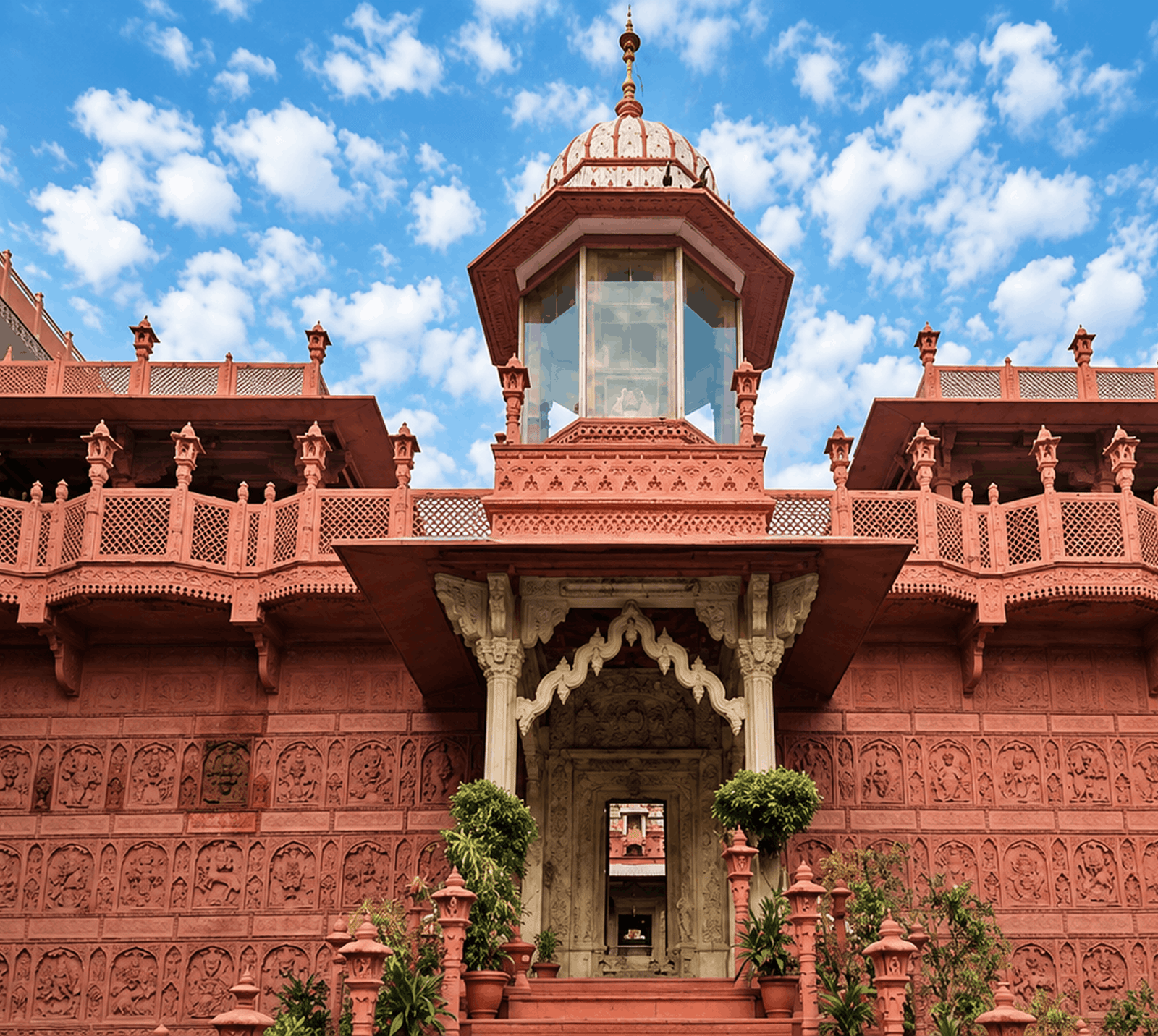
The older sister village of Bagru, located on the Tonk Road south of Jaipur, is famous for fine, floral block prints on white cotton and for traditional handmade paper.
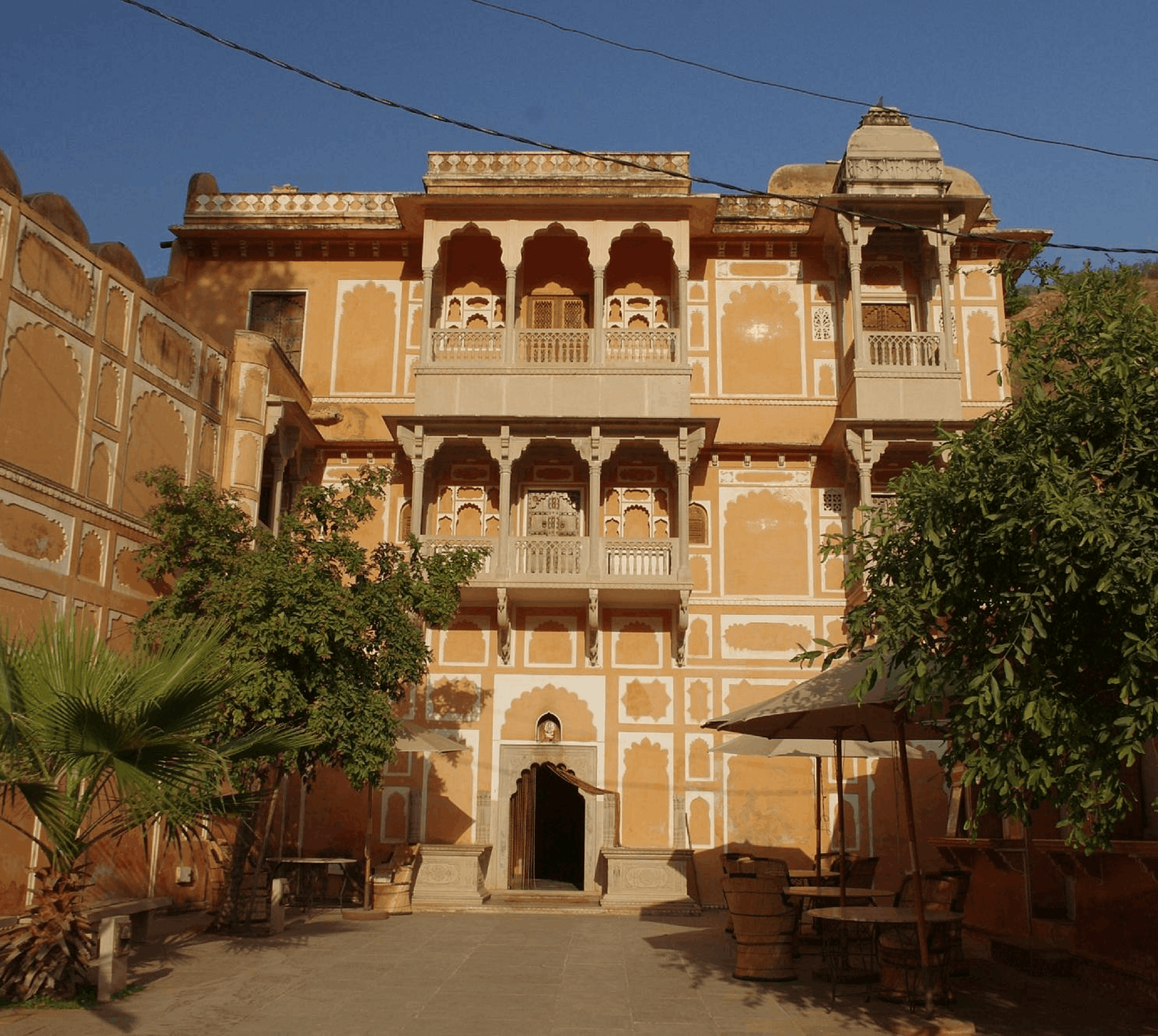
Housed in a restored haveli in Amer, this museum traces the history of Indian block printing through textile displays, live demonstrations and an archive of historic blocks.
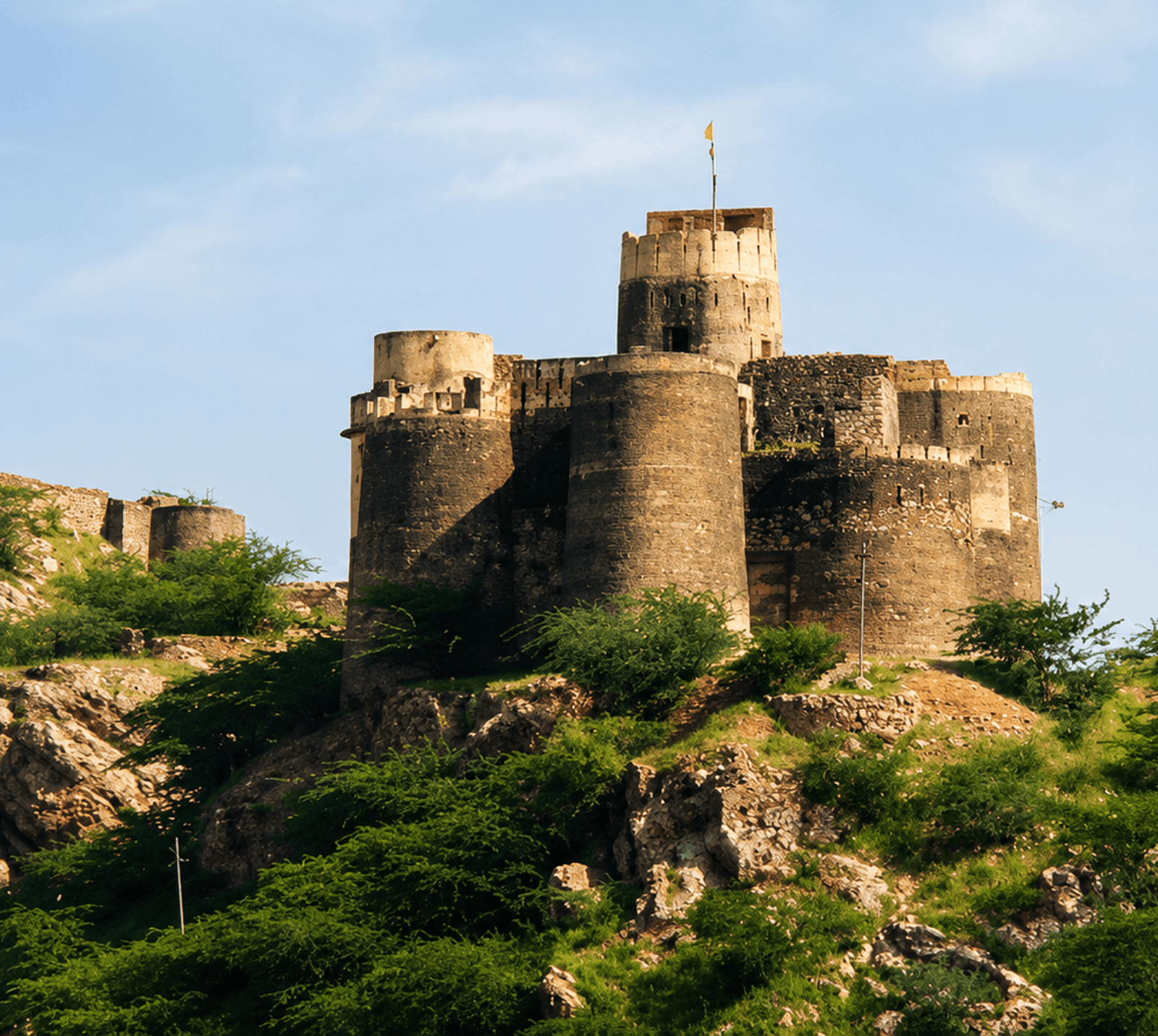
A 17th-century fortification in the town of Bagru, associated with the Battle of Bagru in 1748, was fought during the Jaipur succession crisis. The fort itself sees few visitors but adds historical context to the village.
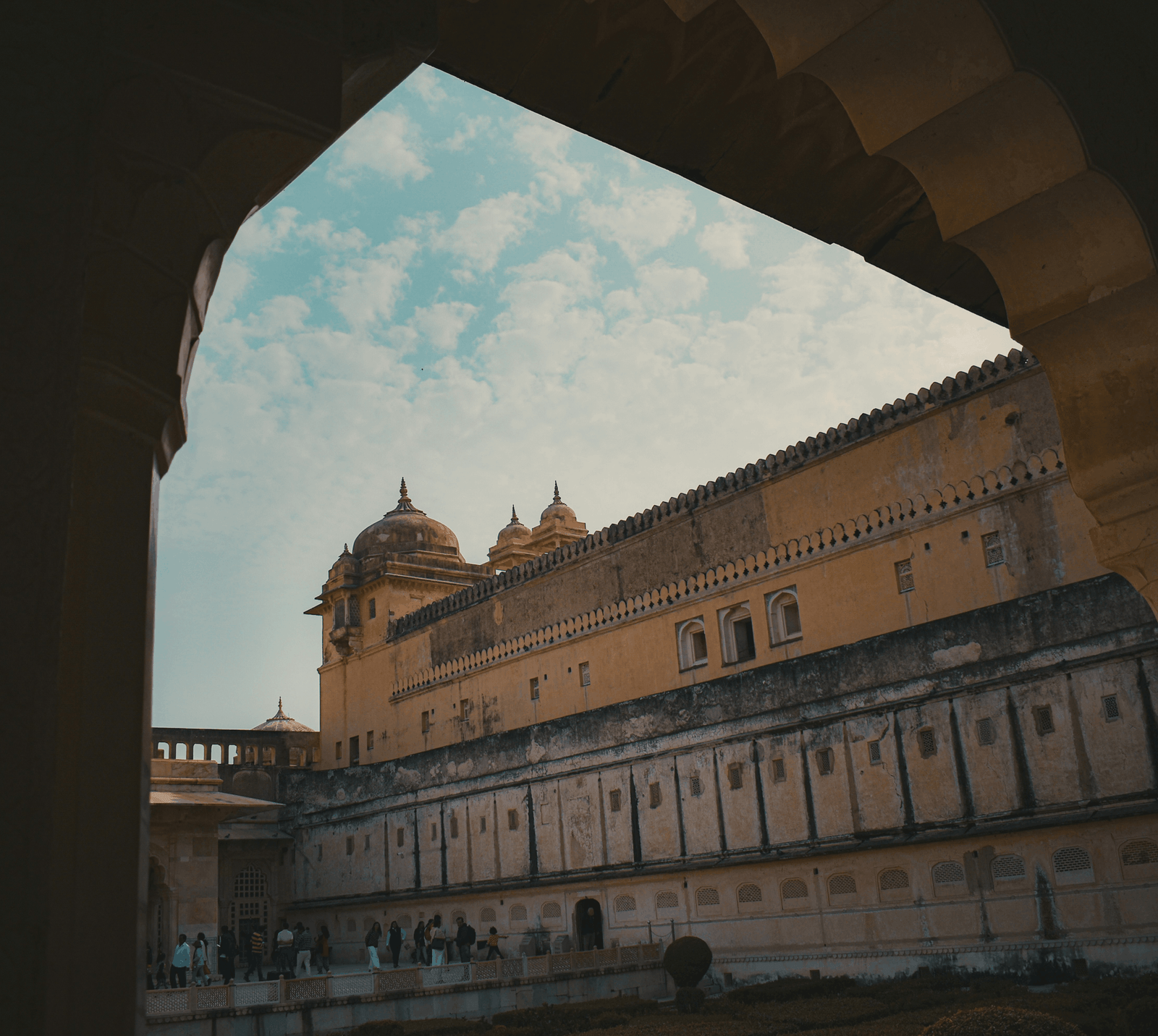
The City Palace, Hawa Mahal, Johari Bazaar, and Bapu Bazaar are all within an hour's drive and are where Bagru textiles ultimately reach the consumer market.