

Every year, when the first real rains arrive and wash the summer dust off the hills, Jaipur changes colour. The city dresses in green and throws one of the warmest celebrations in its calendar. The Teej festival in Jaipur is a monsoon party with deep religious roots, and for a couple of days the old city fills with green saris, the smell of fresh henna, and a royal procession that has wound through the same streets for generations. For a visitor, few occasions show the Pink City so completely at ease with itself.
Here is what Teej is, why the city makes such a fuss of it, and how to enjoy it if you find yourself in town.
What the Teej festival in Jaipur is all about
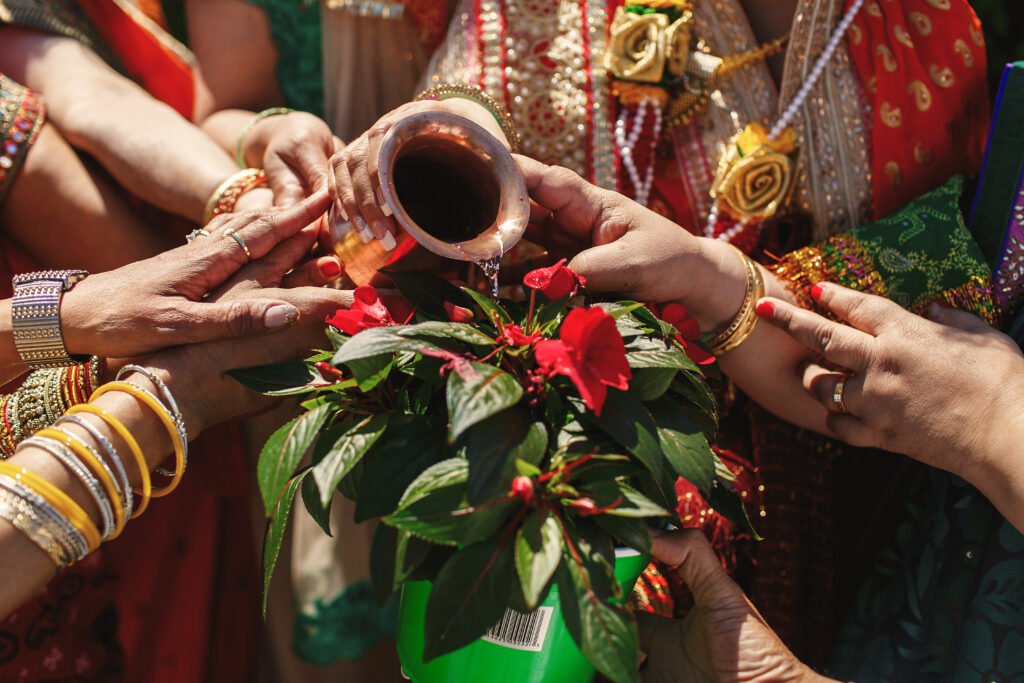
Teej is a Hindu festival celebrated mostly by women, and it honours Goddess Parvati and her marriage to Lord Shiva. Several versions fall across the monsoon months, but the one Jaipur marks most grandly is Hariyali Teej, the green Teej, named for the lush landscape it arrives with. It belongs to the Hindu month of Shravan, which falls in July or August depending on the lunar calendar. In 2026, it falls in mid-August.
Underneath the festivities sits something devotional. Married women keep a day-long fast, some going without even water, and pray for the long life of their husbands, while unmarried women pray for a good match. Parvati, worshipped during these days as Teej Mata, is the figure they look to, having won Shiva through years of patience. That devotional thread runs beneath all the noise and brightness, and it helps to know it is there.
Why the whole city wears green
The green is the first thing a newcomer notices. Women dress in green saris and lehengas, slip on green glass bangles, and gather in groups that turn a whole street the colour of the wet season. Green stands for the monsoon itself, for new growth and good fortune, and during Hariyali Teej it becomes something close to a uniform. A visitor who wears green to join the crowds will get a warm welcome, so there is no need to feel like an interloper.
Two other sights go with it. The first is lehariya, a tie-dye cloth printed in diagonal waves of colour, its name taken from the Hindi word for wave, made for exactly this season and sold all over the old city in the run-up to the festival. The second is mehndi, the detailed henna patterns women apply to their hands and feet in the days beforehand. Add the flower-decked swings, or jhoolas, hung from trees in courtyards and gardens, where women sing the old Teej songs as they swing, and you have the festival in miniature.
The royal procession through the old city
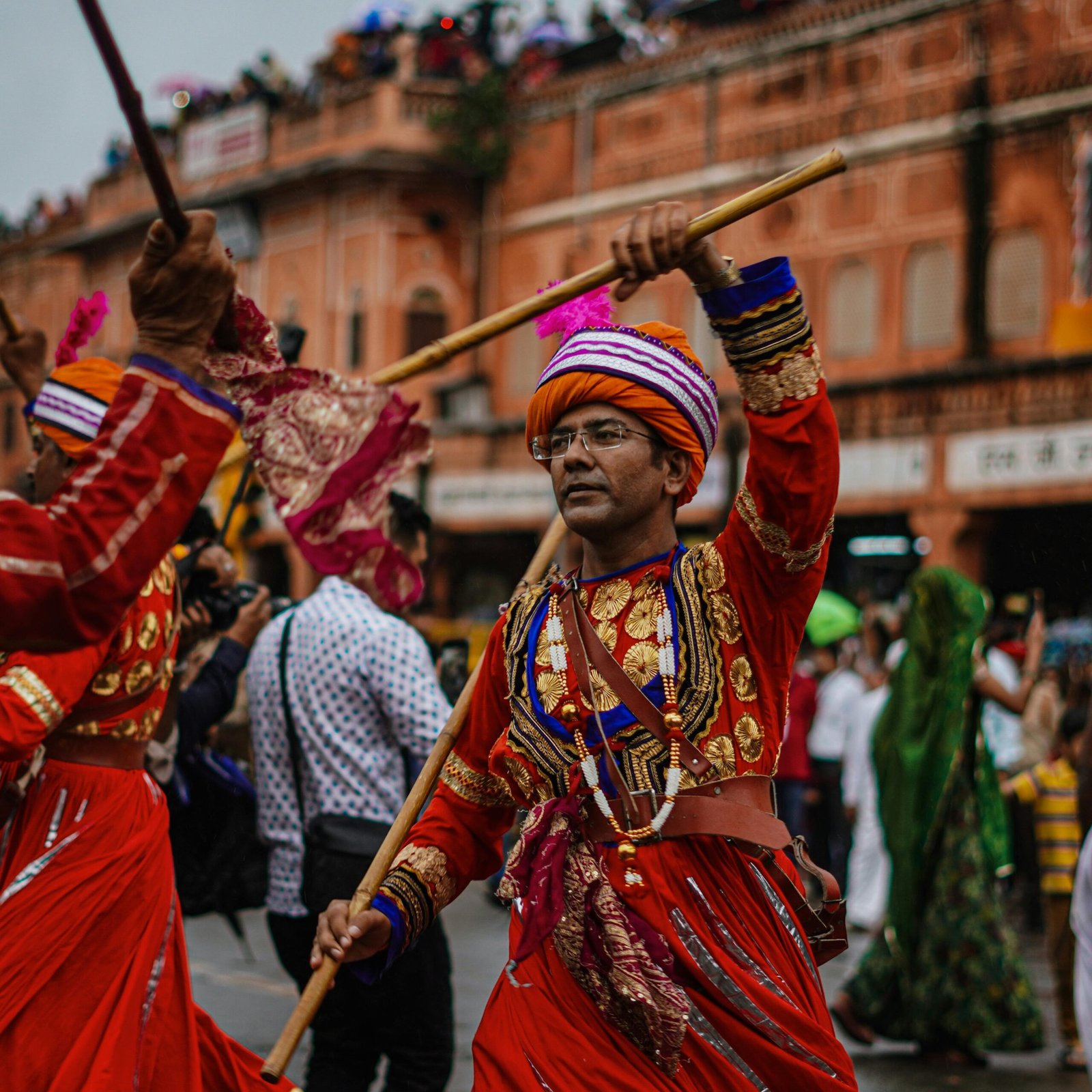
The grandest part of Teej is the procession, and it is genuinely a spectacle. The idol of Teej Mata is carried out from the City Palace in a palanquin of gold and silver, and a long train forms ahead of her, with decorated elephants, camels and horses, brass bands, and folk dancers performing the swirling Ghoomar and the lively Kalbeliya. The route sets out from the Tripolia Gate of the old city, threads through Tripolia Bazaar and the surrounding markets, all hung with marigold garlands, and finishes at the Chaugan Stadium. The whole thing is staged over two consecutive days and draws enormous crowds.
If you’re planning to attend, see our Teej Festival in Jaipur visitor guide for the procession route, timings, viewing locations and practical information to help plan your visit. Teej Festival in Jaipur visitor guide
It is worth saying that this is not a show put on for ticket-holders. There are no paid enclosures and no branded stages. The procession happens because it has happened here for centuries, and watching it is free. The state tourism department even sets aside a viewing area for foreign visitors near the Tripolia Gate, which is a kind gesture and a useful one given how thick the crowds get.
What to eat during Teej
No Jaipur festival passes without a signature sweet, and Teej belongs to ghevar. This is a disc of fried batter, made from flour, ghee and sugar syrup, fried until it sets into a golden honeycomb pattern and then soaked in syrup. The plain version is good, but the ones to look for are topped with rabri or malai, both thickened, sweetened milk, and finished with chopped pistachios and a scatter of cardamom. Ghevar appears for only a short window each monsoon, which is part of its appeal, and the sweet shops of Johari Bazaar turn it out by the trayload around the festival.
If you want to go further, look for feeni (or pheni), a delicate sweet of fried vermicelli threads, and malpua, a soft little pancake soaked in syrup. All of it is best eaten fresh, ideally while it is still raining outside.
Joining the celebrations
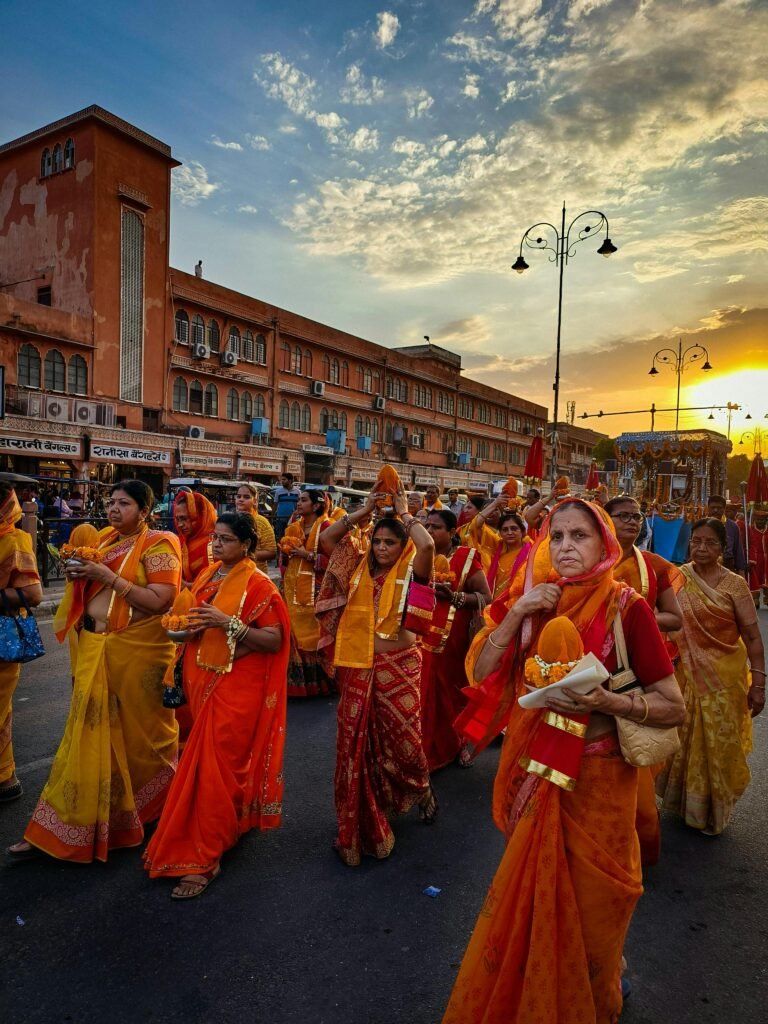
Teej rewards a little planning. Aim to reach the procession route well before it begins, because the good vantage points along Tripolia Bazaar go early. Carry a small umbrella, since this is the monsoon and a shower is always possible. Photography is welcome, though it is polite to ask before taking close portraits of women observing the fast, who are in the middle of something meaningful to them.
Where you stay can also influence the whole experience. The festival lives in the old city, and the further out you base yourself, the more of it you miss. A small heritage haveli in Jaipur, within walking distance of the bazaars, puts you in the thick of it. Dera Mandawa, our family-run mansion that has stood in the heart of the city since 1885, sits a short walk from the route the procession takes, close enough to hear the drums and follow them out to the street.
Its courtyards stay cool through the rains, its kitchen knows exactly what to cook in this season, and its hosts can tell you where to stand and when to arrive. For a festival that belongs so completely to the old city, that kind of address makes all the difference.
Want to see Teej from the heart of the old city? Get in touch to book your stay with us at Dera Mandawa.
