

Every October, ducks that spent the summer on lakes in Russia, Mongolia and China begin dropping out of the sky over Rajasthan. By December, the reservoirs around the city hold pintails, teal and wigeon by the hundred, while bar-headed geese, which breed on the Tibetan plateau and in Ladakh, graze the wet edges of village ponds. Most visitors miss all of it, driving past the lake on the Amer road with their eyes on the palace in the water. The birds in Jaipur are one of the city’s finest winter sights, and most cost nothing to watch. An early alarm, a warm layer and a pair of binoculars are enough.
The first two hours after sunrise, with the air still cold and the water still flat, are when the lakes and scrub forests come alive. What follows covers the spots worth the early start, the birds each one holds, and how to plan the morning. Few nature places in Jaipur are as rewarding at that hour.
Why winter brings the birds
Jaipur lies under the Central Asian Flyway, one of the great migration routes linking breeding grounds in the north with wintering grounds across the Indian subcontinent. As the northern lakes freeze, the waterfowl move south, and the reservoirs around the city, some of them centuries old, make ideal winter quarters. The first arrivals come in October. Numbers build through November, peak in December and January, then thin out from the end of February, with most migrants gone by early March.
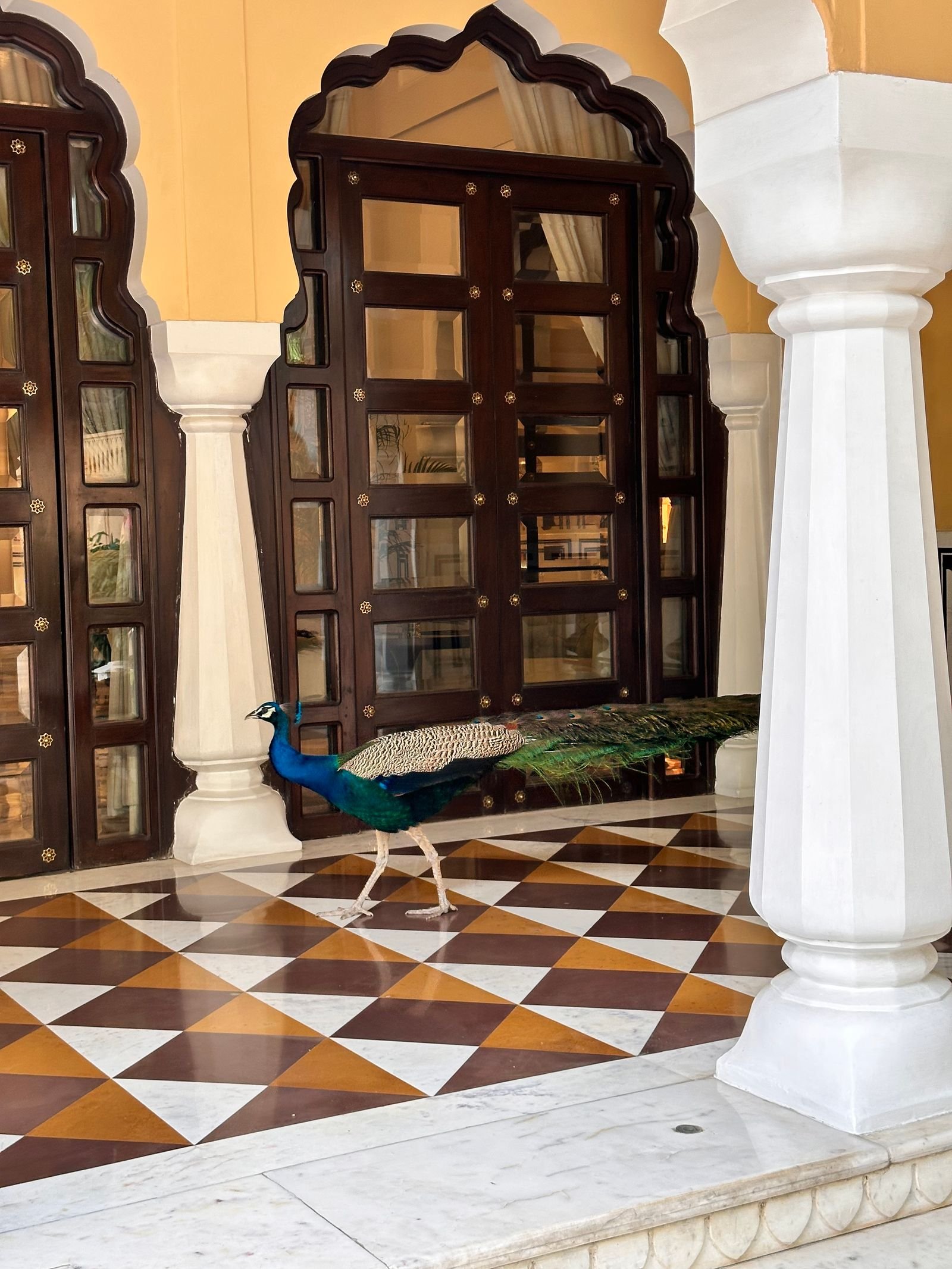
Winter is when the count of birds in Jaipur is at its highest, though the season does not rely on visitors alone. Egrets, herons, cormorants, peafowl and parakeets stay all year, so even a slow morning at the water is never empty. The cold months also bring raptors to the forested hills, among them the long-legged buzzard and the Eurasian sparrowhawk, hunting the same scrub as the resident shikra.
Where to see birds in Jaipur on a winter morning
Five places cover most of what the season brings. Three lie inside the city, making them the easiest nature places in Jaipur for anyone with a single morning to spare. The other two sit a short drive out but hold the biggest flocks. Between them, they show the birds in Jaipur at their very best.
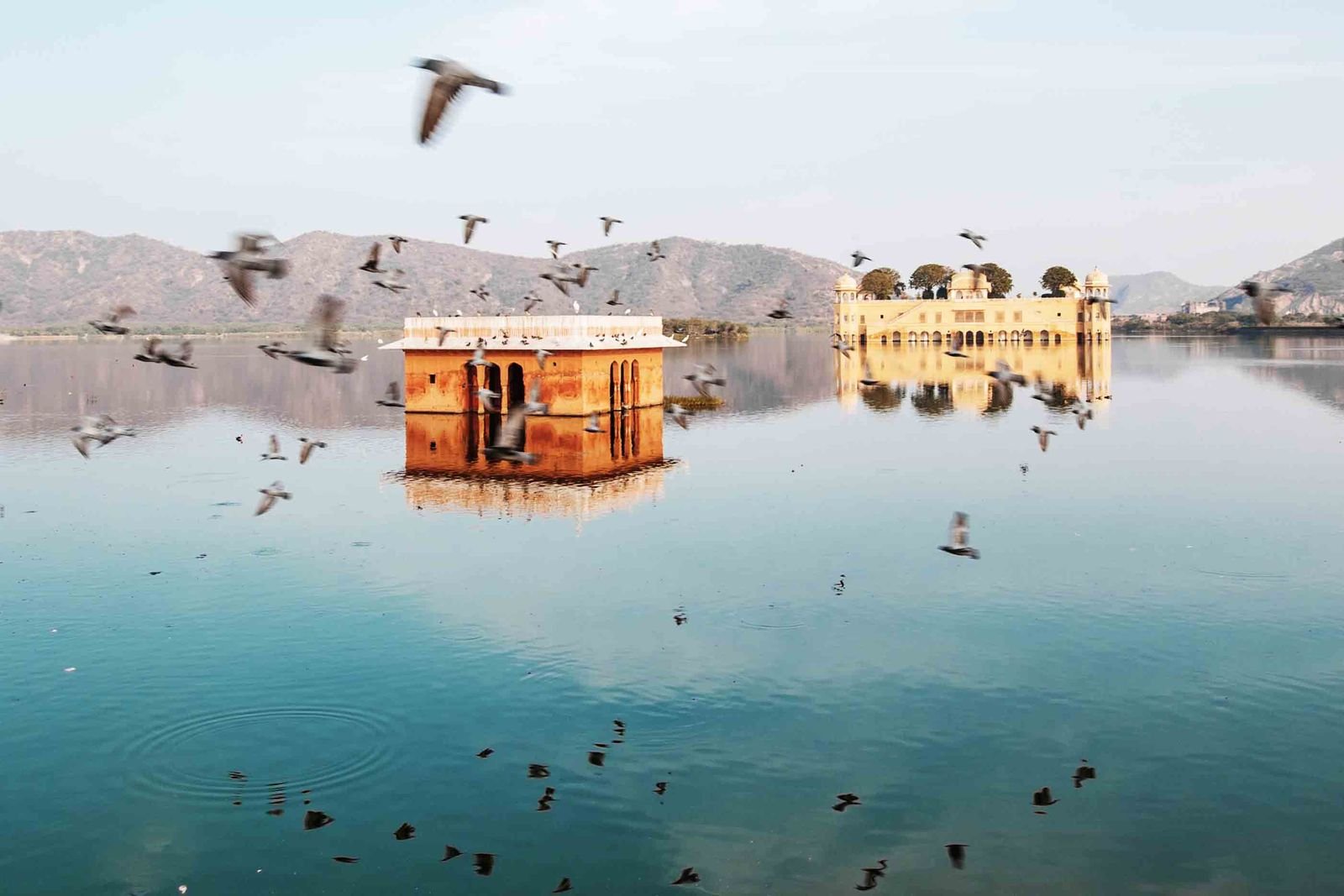
- Man Sagar Lake. Raja Man Singh of Amer dammed the Dravyavati River here about four hundred years ago, and the Jal Mahal palace still stands in the middle of the water. A long restoration cleaned the lake and built islands for nesting birds. More than 180 species have now been recorded around it. Cormorants, egrets, grey herons and black-winged stilts are present all year. From December they are joined by migratory ducks such as common teal, gadwall, Eurasian wigeon, northern pintail and ruddy shelduck, with rafts of coots alongside. The paved promenade on the Amer road gives a clear view across the water, while black-crowned night herons leave the trees at dusk for anyone who stays late.
- Jhalana. The forest on the city’s southern edge is famous for its leopards, yet it is just as rewarding for birds. Fossil sand dunes and Aravalli hillsides hold grey francolin, Indian peafowl, yellow-footed green pigeons, crested buntings and the spotted owlet, while the white-eyed buzzard and shikra hunt over the scrub. Walking is not allowed because of the leopards, so birding happens from the open safari vehicles, which suit a camera well.
- Smriti Van. At the foot of the Jhalana hills on Jawahar Lal Nehru Marg, this city forest park is free to enter. Of all the nature places in Jaipur, it is the gentlest introduction, a place to learn the common garden birds before tackling the lakes.
- Nevta Dam. A little over twenty kilometres south-west of the city, in Sanganer tehsil, this reservoir and its marsh have recorded nearly two hundred species, including the lesser whistling duck. Waders such as sandpipers and stilts work the muddy margins, with migrants present from October to March.
- Chandlai Lake. About thirty kilometres from the city, this lake has been on record since 1872, and one local birder, Kishan Meena, has logged more than 300 species there. Winter brings bar-headed and greylag geese, tufted and ferruginous ducks, and even pelicans. Conservationists warn that water pumped for farms, heavy fishing and sewage have sharply cut its winter numbers.
Looking for a bird sanctuary in Jaipur
A search for a bird sanctuary in Jaipur usually leads to the bird park at Panipech, opened in 2018 as part of the Dravyavati river project. The serious birding, though, happens at the wetlands further out, Nevta and Chandlai above all. For flamingos, the salt flats at Sambhar to the west draw flocks in the hundreds of thousands in a good winter.
The nearest sanctuary in the classic sense is Keoladeo National Park at Bharatpur, about 180 kilometres east, a UNESCO World Heritage Site with more than 360 recorded species. Its marshes fill with ducks, geese, coots and pelicans every winter, but the distance makes it a separate trip, leaving Jaipur mornings for the lakes closer to hand.
Planning a winter birding morning
The birds in Jaipur feed hardest in the first two hours of daylight, and in December and January the sun rises a little after seven. Some late December and January mornings start with haze or fog that can hold back the light for an hour, so a flexible plan helps.
- Go early. Reach the water by sunrise. By mid-morning, the ducks rest, drifting to the far side of the lake.
- Carry binoculars and a field guide. A pair of 8×42 binoculars suits lakes as well as forests, while a pocket field guide to the birds of the Indian subcontinent settles most arguments. Free apps help too, among them eBird, the checklist database run by the Cornell Lab of Ornithology.
- Keep your distance. Ducks startled into flight burn energy they need for the long journey home, so stay back from the water’s edge and move slowly. Playing recorded birdsong to lure birds closer disturbs them too, as does feeding them.
- Book hotel in Jaipur early. The peak birding months are also the busiest travel months, so the best-placed rooms go first. Jaipur’s winter festival calendar shows which weeks fill fastest.
Why hotels near City Palace suit an early start
The birding spots scatter in every direction. Man Sagar lies north on the road to Amer, Jhalana and Smriti Van to the south, Nevta to the south-west, Chandlai further out still. A base in the middle of the city keeps each within a manageable drive before dawn, when the roads are at their emptiest. Before booking, it is worth asking any hotel whether a driver can be arranged for an early start.
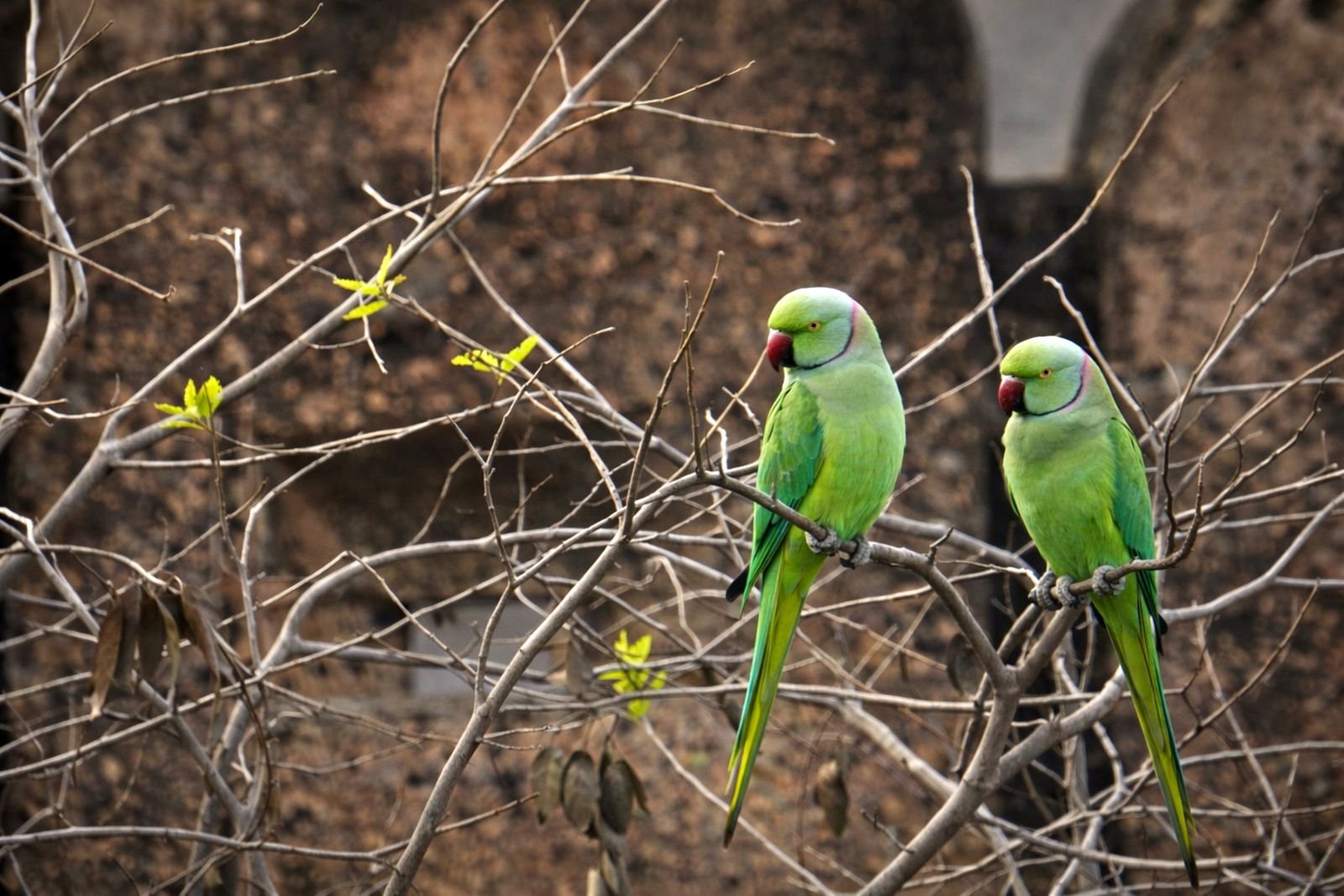
Staying central brings one more reward. Some of the commonest birds in Jaipur live right above the old city, from black kites circling over the rooftops to rose-ringed parakeets in the neem trees and peafowl calling from the hills to the north. Between birding mornings, the same central base puts the other places to visit in Jaipur within easy reach.
A base for the birding season
Of the hotels near City Palace, ours is the haveli just outside Chandpole Gate, built around 1885 by Thakur Jait Singh Ji of Mandawa, where his descendants still live. Man Sagar is a short drive up the Amer Road, close enough to be at the water for first light and back in the courtyard while the city is still waking. When your dates are fixed, write to us and tell us which mornings belong to the birds.
Frequently Asked Questions
Can you see birds in Jaipur outside winter?
Yes. The resident species stay all year, while the monsoon brings its own visitors to Jhalana, among them the Indian pitta, the Indian paradise flycatcher and several cuckoos. Summer is harder going, since the heat limits birding to the first hour after dawn.
What is the state bird of Rajasthan?
The great Indian bustard, a heavy, long-legged grassland bird that is now critically endangered. Its last real stronghold is the Desert National Park near Jaisalmer, so it is not a bird to expect around Jaipur.
Do you need a guide to see birds in Jaipur?
Not at Man Sagar, where most of the birds are in plain view from the promenade. A local birder earns the fee at the outer wetlands, where telling one brown duck from another at a distance takes practice. Jhalana safaris come with a driver who knows the forest tracks.
How do you book a Jhalana safari?
Safaris are booked online through the official forest department booking, with one shift in the morning and one in the evening. The morning shift is the better choice for birds. Weekend and holiday slots sell out, so booking a few days ahead is wise.
What should you wear for an early birding morning?
Layers. December and January mornings in Jaipur can start in single digits Celsius, then warm up fast once the sun is high. Muted colours draw less attention from wary birds, while closed shoes cope with muddy lake edges.
Which owls can be seen around Jaipur?
The spotted owlet is the one most likely to turn up, even in city gardens. Jhalana has records of the Indian eagle owl, the brown hawk owl and several scops owls, though these need a sharp-eyed guide or a lucky evening.
What is the Indian birding fair?
The Tourism and Wildlife Society of India has run birding fairs since 1997, with editions at Man Sagar Lake and, more recently, at Nevta. Birders, students and local volunteers gather for walks, talks and quizzes, so a trip timed to one makes a fine introduction.
Can children join a morning watching birds in Jaipur?
The promenade at Man Sagar is flat, paved and free, which makes it the easiest start for children. A reasonable pair of binoculars with a printed checklist of ten common species turns the outing into a game.
How far ahead should you book hotel in Jaipur for winter?
Two to three months ahead is sensible for December and January. The tightest weeks are Christmas to New Year and mid-January, when Makar Sankranti on 14 January and the Jaipur Literature Festival from 14 to 18 January 2027 bring crowds to the city.
