

Jaipur has long been admired for its royal architecture, artistic skill and deep cultural memory. Rajasthani food in Jaipur is central to this identity, shaped by families, kitchens, and celebrations that have guided cooking practices in the region for centuries. Rajasthani cuisine begins with the flavours that carry the story of the land. Dishes here are prepared with locally sourced ingredients and enriched by methods that have remained steady across generations.
Rajasthani food in Jaipur carries the influence of its history, climate and communities. Spices are selected with consideration, cooking techniques are passed from one household to another, and each recipe holds meaning. For travellers who wish to understand this heritage city more closely, the food itself becomes a guide, giving insights into the region’s values and way of life.
Why Rajasthani Cuisine Tastes the Way It Does
Almost every signature technique in Rajasthani cuisine traces back to one constraint: water. This is desert cooking, developed in a climate with little of it and few fresh vegetables for much of the year, and the kitchen adapted rather than compromised.
Yoghurt and buttermilk replace water in gravies, which is why so many curries here carry a faint sourness. Dried lentils, beans and berries stand in for green vegetables. Ghee is used generously because fat preserves, and a dish cooked in enough of it keeps without refrigeration. Breads are made from bajra and makki, grains that grow where wheat struggles, and baked hard so they last.
Amchur, dried mango powder, provides acidity where lemons were scarce. Asafoetida takes the place of onion and garlic in Marwari and Jain households. Once you understand the scarcity, the entire repertoire of Rajasthani cuisine reads as a set of intelligent solutions rather than a list of dishes.
Traditional Rajasthani Cuisine You Must Try
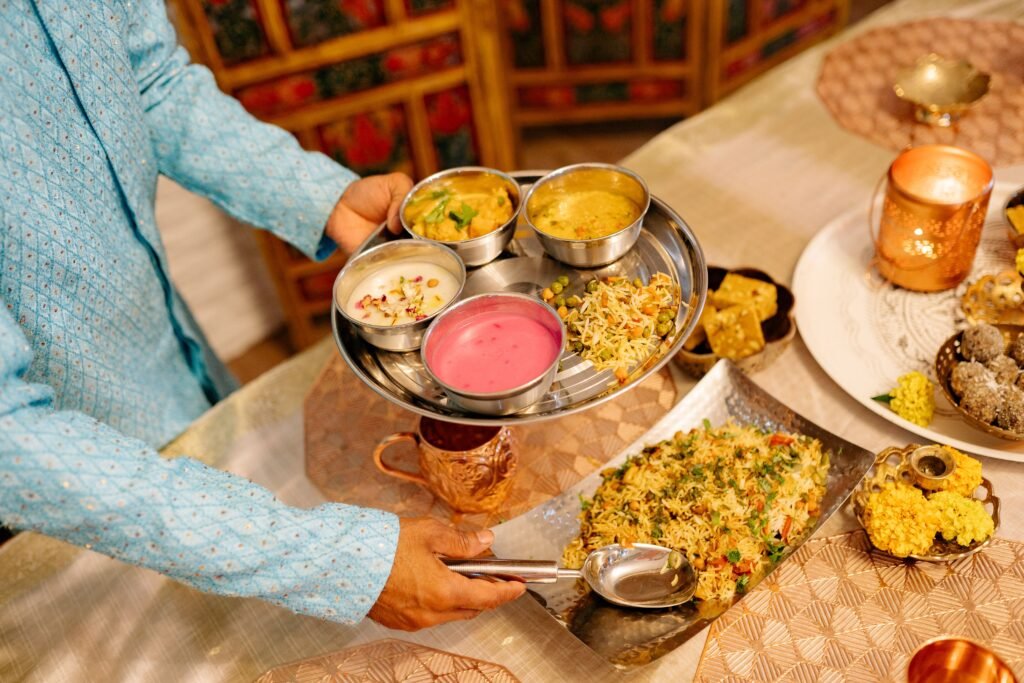
Rajasthani cuisine is a strong expression of the Rajasthani food culture that shapes this city’s identity. Recipes move through families, each generation adding its own experience to the pot while keeping the essence intact.
Dal Baati Churma remains one of the most famous Rajasthani dishes. The baati is baked until firm, the dal is prepared with warmth and depth, and the churma brings a gentle sweetness that balances the plate. It continues to be linked with gatherings, kindness and celebration. Laal Maas carries another tale. Once prepared in royal settings, it is known for its rich colour and steady heat. Slow cooking adds depth to the dish, and when paired with bajra roti or rice, it becomes a meal that expresses tradition and hospitality in every bite.
Some travellers first encounter these dishes in the grand dining rooms across the city. Yet the best Rajasthani food in Jaipur is still cooked in family kitchens, where recipes have been made the same way for generations rather than adapted for a printed menu. Other preparations such as Gatte ki Sabzi, Ker Sangri, Bajra Khichda and traditional Rajasthani pickles also hold a strong place in Jaipur’s culinary landscape, showing how cooks across the region have shaped flavour through knowledge and resourcefulness.
Laal Maas, Properly Explained
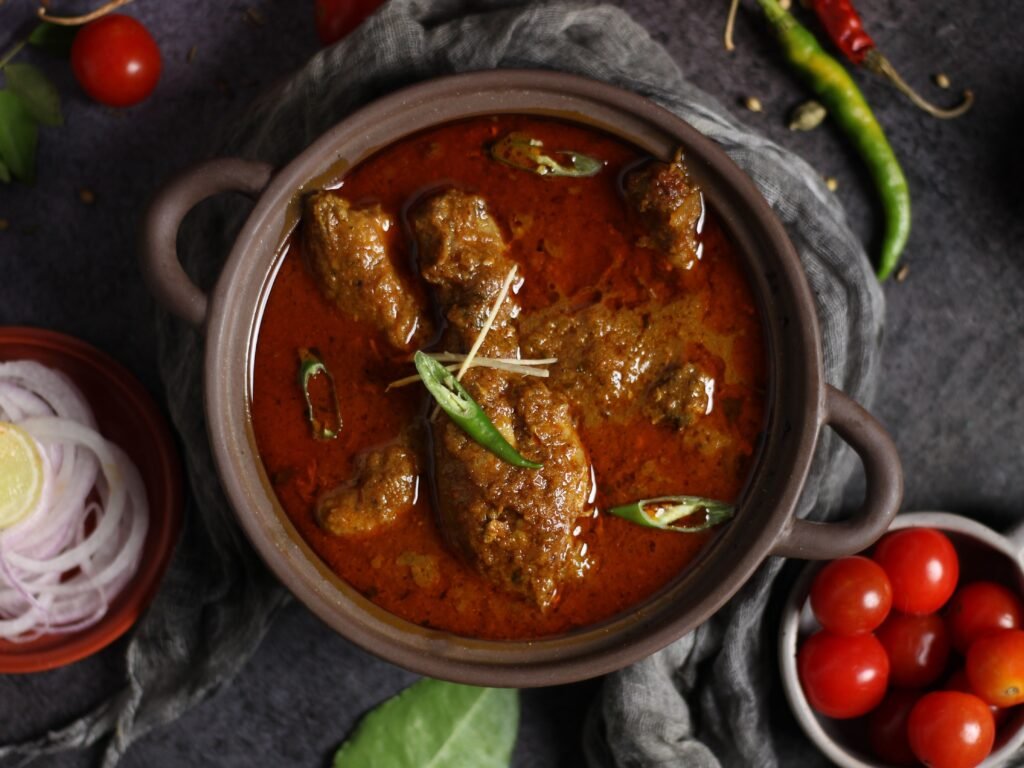
The dish deserves more than a mention. Laal Maas takes its colour from mathania chillies grown near Jodhpur, which are deeply red and far milder than the shade suggests. The heat is real but controlled, and anyone expecting punishment is usually surprised.
The base is yoghurt rather than tomato, with ghee, garlic and whole spices, and the meat is traditionally mutton though it began as a way of cooking game brought back from hunts, boar and venison included. Slow cooking is not optional. The gravy should reduce until the ghee separates and rises.
Many kitchens finish it with dhungar, placing a lit coal in a small bowl within the pot, pouring ghee over it and covering the vessel so the smoke enters the meat. Its counterpart, Safed Maas, uses the same technique with cashew, almond, and yoghurt, with no chilli at all. Together they show the range of Rajasthani cuisine better than any single plate.
The 8 Rajasthani Cuisine Dishes to Try First
1. Dal Baati Churma – Hard-baked wheat balls broken into ghee, served with dal and sweet crumbled churma. The defining plate of the region, and a heavy midday meal rather than a light one.
2. Laal Maas – Mutton in a yoghurt and mathania chilli gravy, slow-cooked until the ghee separates. Colour rather than punishing heat, and often finished with smoke.
3. Gatte ki Sabzi – Gram flour dumplings simmered in spiced yoghurt. Entirely vegetarian, entirely satisfying, and a good measure of any kitchen.
4. Ker Sangri – A desert berry and the dried bean pod of the khejri tree, cooked together with chilli and amchur. It predates refrigeration and tastes like the landscape it comes from.
5. Papad ki Sabzi – A papad turned into a curry. It sounds like a trick, and it works perfectly, and it tells you everything about resourcefulness in Rajasthani cuisine.
6. Kadhi – Thinner and sharper than the northern version, tempered with whole spices and eaten with rice at most meals.
7. Bajre ki Khichdi – Pearl millet cooked down with lentils and ghee, a winter dish that carries the cold months across rural Rajasthan.
8. Ghevar – A honeycomb disc of fried batter soaked in syrup, belonging to Teej and the monsoon. Seasonal, so do not expect it in April.
Beyond these eight, Panchkuta, Safed Maas, Mawa Kachori, Feeni, Gud Papdi and Malpua are among the many famous Rajasthani dishes all worth pursuing once the basics are covered.
The Depth of Vegetarian Cooking
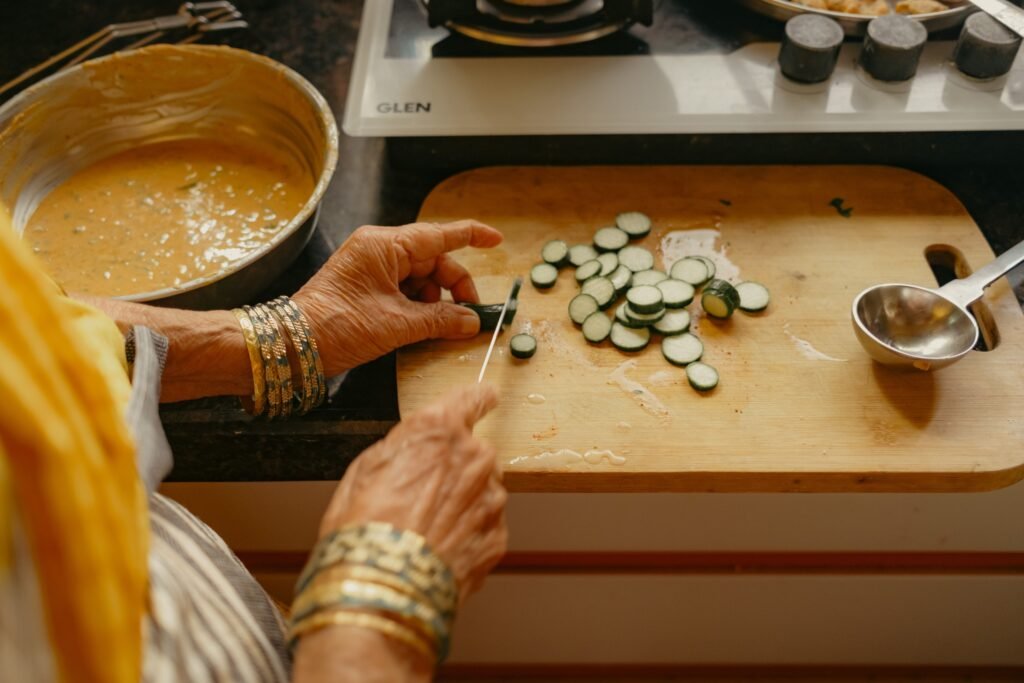
Rajasthan has one of the strongest vegetarian traditions in India, and it is not a limitation but a whole cuisine of its own. Marwari and Jain households cook without onion or garlic, which sounds restrictive until you taste what asafoetida, ginger and careful spicing do in their place.
The absence of fresh vegetables for much of the year pushed cooks toward legumes, gram flour and dried produce, and the results are inventive in ways that better supplied regions never needed to be. Gatte, papad ki sabzi, ker sangri and the various dals are all products of that pressure.
Jain guests can be accommodated easily in most kitchens here, including ours, provided it is flagged in advance.
When to Eat What
Timing matters more than most guides admit. Kachori and Mirchi Vada are morning food, sold hot from around eight and gone by mid afternoon. Lassi is an early afternoon drink. Ghevar is seasonal, at its best around Teej and Raksha Bandhan.
Dal Baati Churma is a heavy midday meal and a poor decision before a fort climb. Laal Maas suits an evening, particularly in winter, when the heat in it is welcome rather than punishing.
Season shapes the table as much as the clock. Winter brings methi, bajra and jaggery. Summer leans on ker sangri and chaas. The monsoon turns to ghevar and lighter dals. A kitchen following the season will not serve you the same thali in January and June. That seasonality is the single biggest difference between Rajasthani food in Jaipur cooked at home and the version served year-round to visitors.
Dera Mandawa, a Heritage Haveli in Jaipur
At Dera Mandawa, we enjoy sharing the flavours that have shaped our family kitchen for generations. Guests are welcomed into a home where traditional Rajasthani recipes are prepared with care and served in spaces that hold the character of a heritage haveli in Jaipur. It is a gentle introduction to the food culture of Jaipur, offered with sincerity and a sense of belonging.
Frequently Asked Questions
Why is Rajasthani cuisine known for its depth of flavour?
The cuisine uses carefully selected spices, slow cooking and ingredients that suit the climate and history of the region.
Where can visitors learn about traditional Rajasthani dishes?
Travellers can learn through local cooking sessions, markets and heritage kitchens that continue to use age-old methods.
What should first-time visitors try in Jaipur?
First-time visitors should try Dal Baati Churma, Laal Maas, traditional pickles and sweets that carry a strong regional character.
Is Rajasthani cuisine very spicy?
Less than its reputation suggests. Mathania chillies give Laal Maas colour more than heat, and much of the vegetarian repertoire is mild. Most kitchens will adjust on request, and it is worth asking rather than assuming.
Where can I learn to cook Rajasthani dishes in Jaipur?
Several heritage properties run cooking sessions in their own kitchens, which is different from a commercial class in that you cook alongside the person who normally makes the dish.
What is the best way to try Rajasthani cuisine on a short trip?
Order a thali rather than individual dishes on your first meal, since it gives you six or seven preparations at once and shows you what to pursue afterwards.
Are there heritage stays that focus on food culture in Jaipur?
Some heritage properties serve guests from their own family kitchens rather than a commercial one, with home-style meals built around what is in season.
Where can I eat Rajasthani cuisine in a family kitchen rather than a restaurant?
Some heritage havelis serve guests from their own kitchens rather than a commercial one, which means family recipes and seasonal cooking rather than a fixed menu. It is a different experience from a hotel dining room and worth seeking out.
What is dhungar?
A smoking technique. A lit coal goes into a small bowl set inside the pot, ghee is poured over it, and the lid goes on so the smoke settles into the meat. It is what gives a good Laal Maas its finish, and it takes about ten minutes.
What is Ker Sangri actually made of?
Ker is a small desert berry and sangri is the dried bean pod of the khejri tree, both foraged rather than farmed. They are soaked, then cooked with chilli and amchur. The dish exists because nothing fresh grew for months at a time.
Can Rajasthani food be eaten without onion and garlic?
Most of the vegetarian repertoire already is. Marwari and Jain kitchens cook with asafoetida in place of both, and dishes like gatte ki sabzi, papad ki sabzi and ker sangri are built that way rather than adapted. Flag it in advance and most kitchens will manage easily.
