

Anyone who has attended a winter wedding in Jaipur and then attended one in May knows the answer instinctively. Winter simply makes things easier. The city slows down, guests stay longer, and celebrations stretch comfortably through the day. For couples weighing dates, a winter wedding in Jaipur feels less like a gamble and more like a safe bet.
Jaipur is a city built for ceremony. Palaces, havelis and courtyards were designed to host people, movement, music and ritual. Winter allows these spaces to be used fully. You can hold a morning ceremony without rushing guests indoors, plan afternoon events without exhaustion setting in, and host evening celebrations that carry on without people checking the time for relief.
There is a reason Rajasthan has always chosen cooler months for its biggest gatherings. From royal weddings to seasonal festivals, winter has traditionally been the time to invite people over and keep them close.
Why winter works so well for a destination wedding in Jaipur
From late October to early March, Jaipur soothes into its most pleasant version. Days remain enjoyable and evenings feel celebratory rather than demanding. This matters when weddings are not single events but sequences that unfold across two or three days.
Guests arriving from different cities or countries adjust better during winter. Elders manage long rituals with greater comfort, children cope better with full schedules, and destination travellers actually step out to explore instead of retreating indoors. For a palace WINTER wedding in Jaipur, where walking through courtyards and terraces is part of the experience, the season keeps everyone engaged.
Anyone who has sat through a summer wedding in Rajasthan knows the unspoken drill: fans, shade and quiet exits. Winter changes that entirely. It feels more like a big family wedding from a Karan Johar film, where people actually stay for every function because they want to, not because they have to.
The Jaipur Wedding Season, Month by Month
The Jaipur wedding season runs from late October to early March, and the months are not interchangeable.
November is the strongest month overall. Comfortable days, cool evenings, and the season’s first wave of auspicious dates. It books out earliest.
December and January are the coldest. Nights fall to around eight degrees, which suits heavy lehengas and shawls but means outdoor dinners need heaters. Morning fog can delay guest arrivals, so build a buffer day.
February is arguably the best value. The same weather as November, fewer competing weddings, and rates soften noticeably after the first week.
Two constraints narrow it further. Hindu weddings are not held during Kharmas, roughly mid-December to mid-January, and auspicious dates are published annually with the good ones taken eighteen months ahead. The practical result is that the Jaipur wedding season offers perhaps fifty viable dates, and the best venues go first.
The Visual Side of a Winter Wedding in Jaipur
Ask any wedding photographer who works in Rajasthan, and they will undoubtedly favour winter. Light behaves better. Colours show up as they should. Jewellery, textiles and architecture model in harmony. For a royal winter wedding in Jaipur, this consistency matters. When you have multiple events across different locations, winter helps maintain a visual flow. Morning ceremonies, afternoon functions and evening celebrations look like they belong to the same story.
This is also when palace architecture looks its best. The pinks, yellows and sandstone tones of Jaipur are at their best in winter light, making photographs feel rich without being heavy.
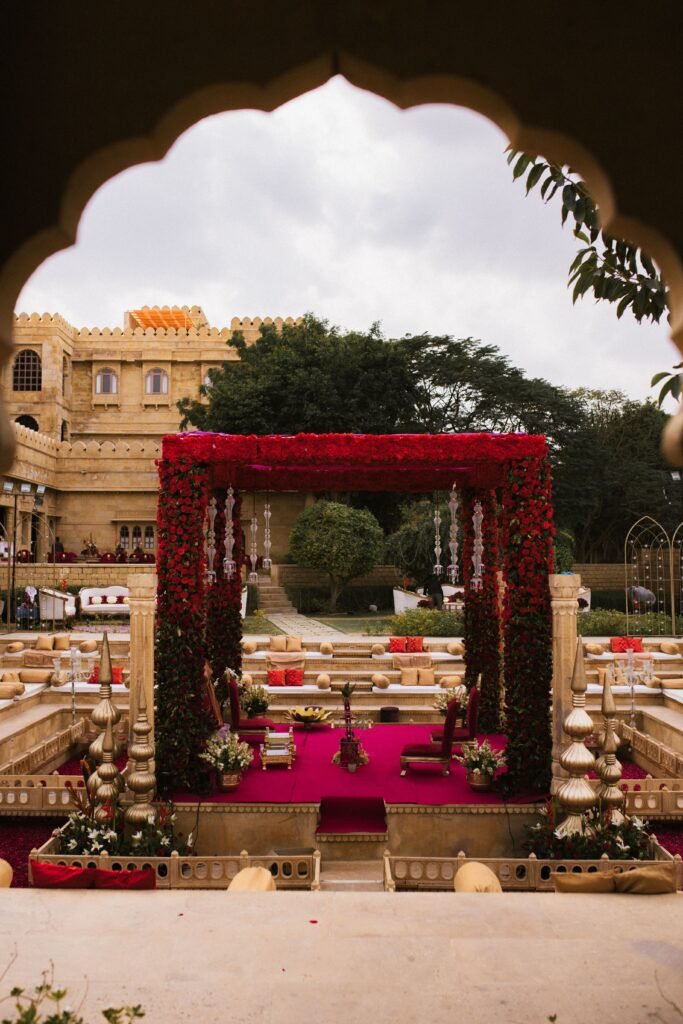
Palace venues feel complete in winter
A heritage wedding venue is easier to work with during winter. Courtyards can host ceremonies without time pressure. Lawns remain usable for dinners and performances. Indoor halls stay comfortable without competing with outdoor spaces.
Winter also simplifies planning. Decor holds through the day. Flowers stay fresh longer. Fabrics remain crisp. Lighting adds atmosphere rather than compensating for conditions.
If you have attended large winter gatherings in Jaipur, like open-air concerts or festivals, you already know how naturally the city handles scale during this season. A palace winter wedding in Jaipur benefits from the same ease.
Wearing tradition comfortably
Winter is when wedding clothes finally make sense. Brides can choose heavier lehengas, more resounding colours and layered jewellery without second thoughts. Grooms can wear bandhgalas, achkans or shawls that feel ceremonial. Guests enjoy this too. Silk saris, tailored jackets and traditional accessories feel natural. Nobody is negotiating comfort over appearance. In a palace wedding in Jaipur, winter attire looks intentional and complete.
There is an old belief in Rajasthan that weddings should look abundant. Winter supports that belief without forcing compromises.
Food and music that become part of the memory
Winter brings food into focus. Warm regional dishes, live counters, and extended dinners belong to the season, with outdoor seating that encourages people to settle in rather than circulate restlessly. As the evening progresses, the sound of a sarangi or dholak carries across the courtyard, the kind of music that belongs outdoors and draws guests closer. Conversations stretch, plates are refilled, and familiar folk tunes or classical pieces grab attention.
Historically, royal households planned their grandest feasts during cooler months for this very reason. Guests stayed longer, hosts served generously, and celebrations moved at a comfortable pace. That way of celebrating still sets the tone for weddings people remember.
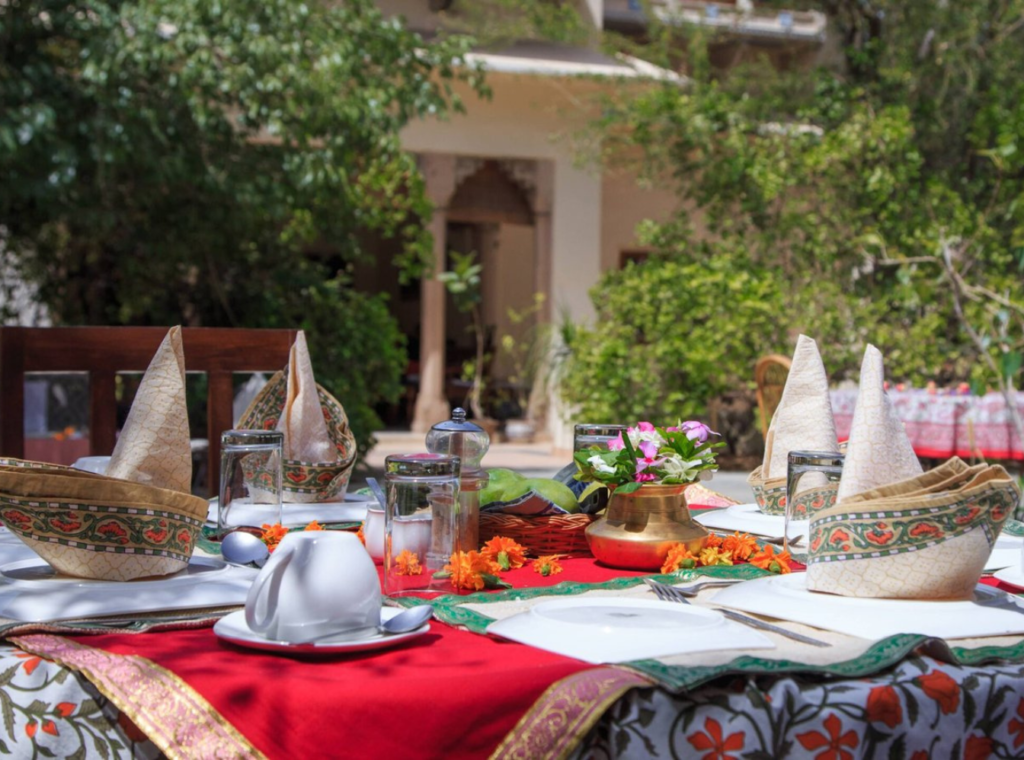
Guest experience beyond a winter wedding in Jaipur
A winter wedding in Jaipur is never just about the ceremony. Guests explore the city, shop in local markets and visit landmarks between events.
Walking through Johari Bazaar, visiting Amer Fort or sitting at a café in the old city feels manageable during winter. These small experiences influence how guests remember the wedding as a whole.
When people associate the celebration with comfort and enjoyment, the memories of the wedding stay with them longer.
Planning a wedding venue in Jaipur during winter
Winter is peak season, which means vendors arrive prepared. Decor teams understand palace layouts, caterers design menus suited to the climate, and performers are comfortable with outdoor stages.
Dates need to be secured well in advance, but the reward is stability. Weather disruptions remain minimal, and event schedules hold steady. Any heritage wedding venue benefits from these conditions.
For couples looking for a setting that balances family warmth with royal legacy, our haveli, Dera Mandawa, shows how winter weddings can feel personal while still honouring tradition.
When Is the Best Time for a Wedding in Jaipur?
If the question is purely about weather, November and February. If it is about availability, February and the last week of October. If it is about cost, anything outside the mid-December to mid-January peak.
The best time for wedding in Jaipur planning purposes is not always the best time to hold one. Book twelve to eighteen months out for a peak date, and expect a premium on any published shubh muhurat.
Couples willing to marry on a non-auspicious weekday in February often find the same venue at a materially lower rate, with the same light, the same weather and considerably less competition for vendors. It is the single most useful piece of flexibility in a winter destination wedding Rajasthan brief.
So, is winter the most forgiving season?
For many couples, yes. Winter supports long ceremonies, guest comfort, and confident planning, which is why most planners say the best time for a wedding in Jaipur falls somewhere in these five months. We have written separately about venue types, costs and permits.
In Rajasthan, winter has always been the season for gathering, sharing food, and celebrating together. Weddings simply follow what the land has known for generations.
Planning a winter destination wedding in Rajasthan that couples will remember? Get in touch for enquiries and to learn more about hosting your celebration with us.
Frequently Asked Questions
When exactly is the Jaipur wedding season?
Late October to early March. November and February are the strongest months for weather and availability. The mid-December to mid-January stretch is the coldest and carries Kharmas, when Hindu weddings are traditionally not held.
How far in advance should I book a winter wedding in Jaipur?
Twelve to eighteen months for a peak date, and longer if you are fixed on a specific auspicious day. Off-peak weekdays in February can sometimes be arranged in six months. Venues fill from the top of the season downward, so November goes first.
Is a winter wedding in Jaipur more expensive?
Generally yes, because it is peak season. The same venue on a non-auspicious weekday in February usually costs less than on a published shubh muhurat in November, so ask for both quotes before fixing the date.
What is the weather actually like for a Jaipur wedding season?
Days sit comfortably in the low twenties, nights fall to around eight degrees and occasionally lower. Heavy lehengas and shawls make sense. Outdoor dinners need heaters, and morning fog can delay guest arrivals, so build a buffer day into the schedule.
What is the best time in the Japur wedding season if I want fewer crowds?
The last week of October or the second half of February. Both give you the same light and weather as the peak months with materially less competition for venues, vendors and guest accommodation.
Can a wedding be held entirely outdoors during the Jaipur wedding season?
Through most of the season, yes. December and January evenings need heaters after about eight o’clock, and January mornings can start foggy. November and February hold up outdoors from morning through to late evening without assistance.
How many guests can a heritage venue host in winter?
Palace hotels handle three hundred and above. Wedding resorts on the city outskirts take one hundred and fifty to four hundred. A haveli courtyard suits thirty to eighty, which is where a winter wedding in Jaipur feels intimate rather than sparse.
What should guests pack for a winter wedding in Jaipur?
Layers. Heavy silks and shawls work for evening functions, lighter fabrics for daytime ceremonies. Anyone attending December or January events should bring something genuinely warm for after sunset, and closed shoes for courtyard flooring.
Are there restrictions on music and fireworks during Jaipur wedding season?
Loudspeakers are prohibited between ten at night and six in the morning under national noise rules, and Jaipur enforces this. States permit a limited number of exempted nights each year, so a late sangeet needs the venue to apply in advance. Fireworks require separate permission.
Does the Jaipur wedding season affect hotel availability for guests?
Significantly. Peak weeks see high occupancy across the city, and the week of the literature festival in mid-January is the tightest of the year. Block guest rooms when you confirm the venue, not afterwards.
