

People assume a heritage building looks after itself, that old walls simply endure. Anyone who lives in one knows better. A Rajasthani haveli is less a monument than a large, demanding, much-loved relative, forever needing attention somewhere. We know this because we live inside ours, in the middle of the old city, not as caretakers of a museum but as a family whose home happens to be more than a hundred years old. Keeping it standing, keeping it comfortable, is a slow craft in its own right. Here is what that work involves.
The Bones of a Rajasthani Haveli
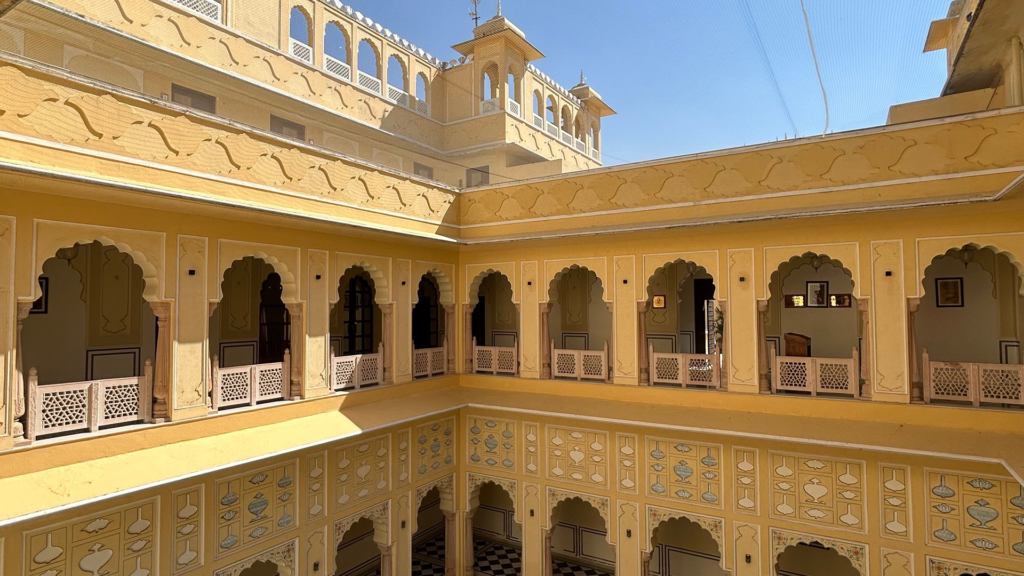
Start with what the building is. The word haveli comes from a Persian term for an enclosed place, which is the whole idea in a nutshell. These were the townhouses of merchants and nobles, built around one or more inner courtyards, known as a chowk, that pull light into the heart of the home. Around them sit the features you may have seen in photographs, the jharokha, an enclosed balcony that juts out over the street. There is the jaali too, a screen of stone or wood cut into fine lattice that lets in the breeze while keeping the sun and prying eyes out. Many walls carry frescoes, hand-painted in natural colour onto lime plaster, a craft the region has practised for centuries our haveli architecture guide goes deeper into how these features were designed for Jaipur’s climate.
None of it was built with a single sack of cement, which turns out to matter a great deal.
Why Lime, Not Cement
Here is the part that surprises people. An old wall like this needs to breathe. Built from sandstone and soft lime plaster, it was made to let moisture pass through, drying at the surface, the way period homes across Europe were built too. Modern cement looks tougher, but it traps water inside the wall, where it festers, lifts the plaster, and rots any timber it touches.
So the rule we live by is simple. When a patch of plaster fails, it is repaired with lime, worked by hand, never with the quick cement a modern builder would reach for. Lime is slower, costlier, far kinder to a building that has stood since the eighteen hundreds. Get this one thing wrong and you can do more harm in a weekend than a century of weather ever managed.
What the Monsoon Does to It
Weather sets the calendar. The real test comes with the monsoon, when weeks of damp air search out every weakness in the plaster and every gap in a roof our monsoon in Jaipur guide covers what the season does to the rest of the city too. That is when a breathing wall earns its keep, letting the moisture move through, drying once the skies clear, where a sealed modern wall would hold it fast. After the rains, we walk the building end to end, marking the spots that need attention before the next year. A small crack left alone in June can become a ruined wall by September. Summer brings its own trial, baking the sandstone, testing the old timber, though the thick walls and shaded courtyards keep the inside far cooler than the street.
Finding the Hands That Still Know How
None of this works without the right people. A fresco cannot be touched up with ordinary paint. A carved sandstone bracket cannot be fixed by someone who has never carved one. So a great deal of keeping the place alive is really about knowing the right craftsmen, the lime masons, the fresco painters, the woodworkers who understand old joints. These are skills passed down family lines, with fewer holders every year, as younger workers take steadier, better-paid jobs. When we find a good one, we hold on tight. The best of them return year after year, which is its own kind of inheritance. Their work is the difference between a building that ages with grace and one that slowly loses its face. Our guide to Rajasthan’s traditional craftsmen looks at these dwindling skills in more depth.
A Home to Live In, Not a Set to Admire
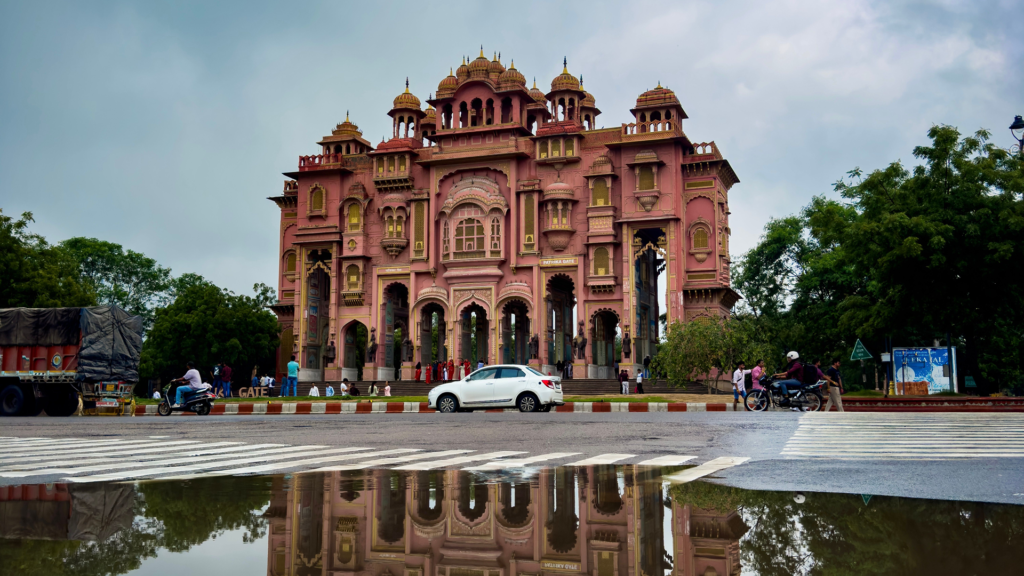
A building like this only survives if it earns its keep, which means people have to want to stay in it. That is the sly trick behind most of the heritage havelis in Jaipur, ours included. Plumbing, hot water, good beds, wifi, cooling all have to be threaded through century-old walls without scarring them, hidden with the same care a surgeon takes over a scar. Guests get the comfort they expect from any modern room, while the frescoes and courtyards stay untouched around them.
Being among the hotels in Jaipur city centre, a short walk from the palace and the markets, means the setting outside the door is as old as the walls within our heritage trail guide covers what’s within easy reach.. It is a thing no purpose-built hotel on the ring road can buy or fake.
The Proof Is in Who Stays
You do not have to take our word for any of this. Over the years, the guest book has filled with names we are proud of, from a founder of a global technology company, to a British actor you would know from the screen, to the judges of a famous television cooking show. They could stay anywhere in the world. That they choose an old family home in the heart of the city says more about the pull of the real thing than any advertisement could. People come for the frescoes, then remember the place for how it made them feel.
Come Stay a While
If a room inside a living piece of history appeals more than another identical box, we would love to host you. Among the boutique hotels in Jaipur, few can say their walls have stood, breathed, and been repaired by hand for well over a century. Write to us to check dates and availability, or ask anything you like about the house. As one of the best heritage hotels in Jaipur city centre, we are easy to reach and easier to fall for. The rooms are few, so an early word is always wise.
wasted.
Frequently Asked Questions
What makes a heritage haveli worth choosing over a regular hotel?
A Rajasthani haveli gives you real character a modern hotel cannot copy, courtyards, frescoes and history, with the comfort of proper rooms threaded in. You stay somewhere with a story, not another identical box.
Is an old haveli comfortable and well maintained?
Yes. The building is looked after constantly with traditional methods, and the rooms have modern plumbing, hot water, good beds and cooling. You get the feel of the past with the comforts of the present.
How does it compare with other boutique hotels in Jaipur?
Most boutique hotels in Jaipur are excellent, but many are built to look heritage. This is a genuine old family home, run by the people who live in it, which gives it a warmth and authenticity that is hard to manufacture.
Is it well located for sightseeing?
Very. As one of the hotels in Jaipur city centre, it sits within easy reach of the palace, the markets and the main sights, so you spend less time in the car and more time seeing the city on foot.
Is a heritage stay good for families or only couples?
Both. The space, the courtyards and the personal, family-run service suit couples, families and solo travellers alike. It tends to feel more like a home than a hotel.
How far in advance should I book?
Earlier than you might expect, especially in the cooler months from October to March. Heritage homes have only a handful of rooms, so the best dates go quickly.
