

Jaipur is best known for its palaces, bustling markets, and planned streets, yet its forts offer another perspective on the city. These structures were designed not only for defence but also for living, with courtyards, gateways, and terraces that carried the patterns of daily life. Choosing a heritage fort stay in Jaipur lets today’s traveller experience this heritage from within, surrounded by details as relevant now as they were centuries ago.
The Forts Around Jaipur and What Each One Is
Jaipur has three forts of consequence, and they are not interchangeable. Amer Fort, roughly eleven kilometres north, was the seat of the Kachwaha rulers before the city itself existed, and its Sheesh Mahal and terraced courtyards are what most visitors picture when they think of a fort stay in Jaipur.
Jaigarh sits on the ridge directly above Amer, connected by a fortified passage, and was the working military fort. It holds Jaivana, once the largest wheeled cannon in the world, and was never taken in battle.
Nahargarh runs along the Aravalli ridge overlooking the city and was built in 1734 as a retreat rather than a stronghold. Its Madhavendra Bhawan, a set of nine near-identical suites built for the maharaja’s queens, is the closest thing the city has to a palace stay in Jaipur, designed for living rather than defending.
None of these three operate as hotels. Understanding that is the starting point for planning a fort stay in Jaipur realistically.
Fort Stay in Jaipur
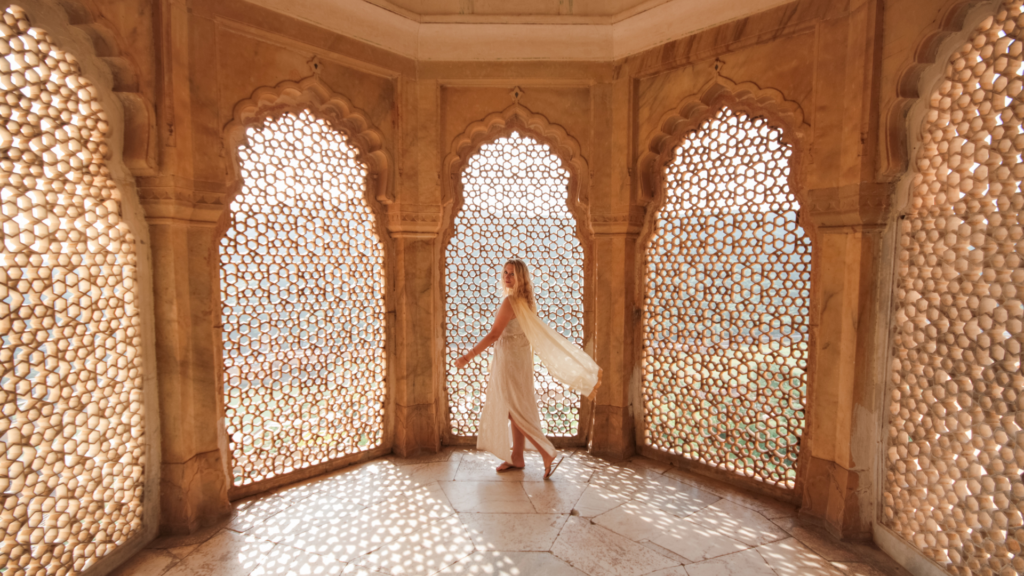
What distinguishes a fort stay is the way history is built into its spaces. Thick stone walls keep interiors cool even in the height of summer. Arched windows open onto expansive views, while narrow staircases lead to terraces that catch the evening breeze. Courtyards, once used for gatherings, remain natural centres of activity where guests now enjoy their morning tea or quiet conversation.
This lived-in quality sets a fort apart from a museum. The walls are marked by time, yet they remain practical and inviting. Guests can walk through shaded corridors, pause by fading murals, or sit beneath carved niches, not as visitors passing through but as residents moving with the quiet patterns of shade and sunlight the fort creates each day.
Comfort shaped by history
A Jaipur fort stay combines this sense of heritage with understated comfort. Rooms retain their original proportions, typically featuring high ceilings and alcoves, and are furnished with care. Linen beds, modern bathrooms, and simple seating areas ensure ease without taking away from the building’s character.
Hospitality, too, is shaped by tradition. Meals are often prepared with local produce and family recipes, served in spaces that reflect the fort’s layout: an open courtyard at lunch, a terrace under the stars at dinner. The experience is not about recreating a past lifestyle, but about allowing the architecture and culture of your fort hotel to frame daily life naturally.
What a Fort Stay in Jaipur Actually Involves
The properties marketed as fort hotels near Jaipur are mostly restored garhs and forts in the districts around Jaipur rather than inside it. Expect a drive of anywhere between forty minutes and three hours, and check that figure before booking, because a property described as being in Jaipur may sit well outside the city.
That distance is the real trade off. A hilltop fort delivers ramparts, scale and silence, and it also means every trip to the bazaars or to City Palace is a return journey by car. Guests planning a Jaipur fort stay for two or three nights often find they see less of the city than they expected.
Room counts tend to be higher than at a haveli, stairs are unavoidable, and the older wings can be cold in December and January. None of that is a reason to avoid a fort. It is a reason to be clear about what you are choosing.
The city beyond the walls
Staying in a fort also changes how Jaipur itself is seen. The city’s main attractions are mostly nearby, but returning to the stillness of the fort after exploring gives a different balance to the journey. The contrast between the noise of the streets and the calm of the fort emphasises the value of retreat.
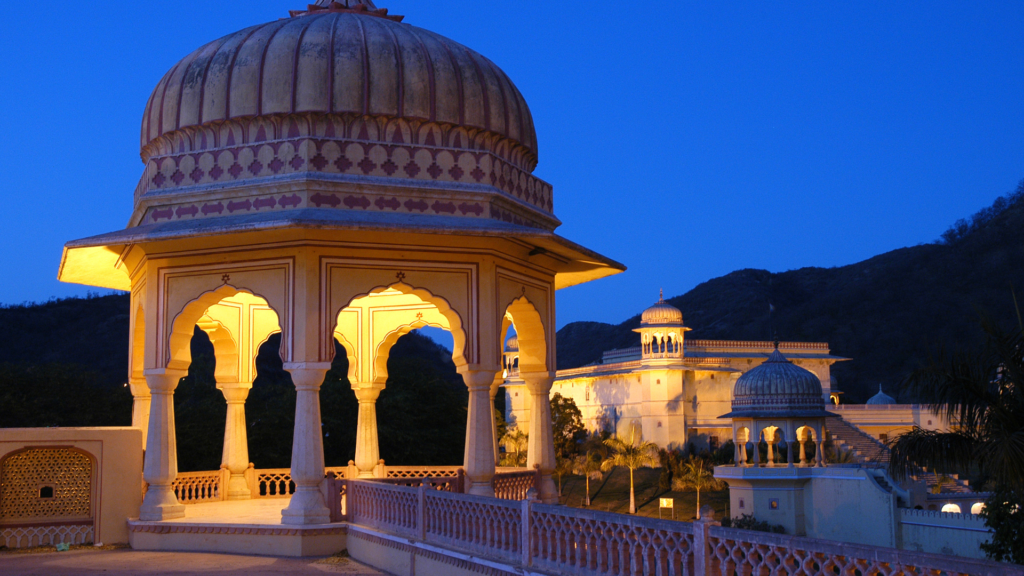
Even simple routines, such as watching the city lights from the terrace at dusk, create a link between the present and the past. Guests can imagine how earlier generations must have stood in the same places, watching over the same landscape, their daily lives shaped by the same walls.
Fort Stay in Jaipur or a Haveli in the Old City
It is worth saying plainly: Dera Mandawa is not a fort. It is a nineteenth century haveli, built in 1885 by Thakur Jait Singh Ji of Mandawa as a townhouse for visits to the Jaipur court, and it sits just outside Chandpole Gate rather than on a ridge.
The two offer genuinely different things. A fort hotel in Jaipur gives you elevation, defensive architecture and distance from the city. A haveli gives you the walled city on foot, courtyards rather than ramparts, and a household rather than a restored monument.
For travellers whose priority is the fort architecture itself, a fort stay is the right choice and worth the drive. For travellers who want Jaipur’s bazaars, temples and food within walking distance, and who value being hosted by a family that still lives in the building, a haveli in the old city does more. Many guests do both, taking a night at a fort and the rest in town.
Heritage as a lived experience
A fort stay in Jaipur also extends beyond architecture. Cultural practices often find a place here, whether through food, festivals, or music shared in private settings. Guests can learn how traditional dishes are prepared in the kitchen, join in kite flying or saree – and safa-tying during the season, or hear stories passed down within the royal family. These are not positioned spectacles but genuine elements of life within the fort, presented with the same ease as the hospitality itself.
What results is an experience where heritage is not distant or ceremonial. It is part of the day: in the flavours of a meal, in the conversations with the hosts, in the small rituals of living in the very space that has endured for generations.
A stay with perspective
Choosing a fort stay in Jaipur is about gaining a perspective on the city that ordinary hotels cannot provide. The forts are reminders of Jaipur’s layered history, but they are also places of continuity, where daily life continues much as it always has, shaped by stone, space, and tradition.
For the traveller, this shows something rare: the chance to experience heritage without stepping outside of comfort, and to carry away not only images of Jaipur’s renowned landmarks but also the memory of time spent within its most enduring walls.
At Dera Mandawa, the same sense of living within history is available in a haveli rather than a fort, a short walk from the walled city rather than an hour outside it.
Frequently Asked Questions
What makes a fort stay in Jaipur special?
Staying in a fort hotel in Jaipur presents a special blend of history, luxury, and culture, allowing guests to experience royal living while enjoying modern comforts.
Which forts in Jaipur offer exclusive stays?
Several restored forts around Jaipur have been converted into heritage hotels, and a palace stay in Jaipur is often what visitors are actually picturing when they search for a fort.
How far are the fort properties from central Jaipur?
It varies considerably. Some sit 40 minutes out; others are closer to 3 hours away in neighbouring districts. Always confirm the actual drive time rather than relying on a listing that says Jaipur, particularly if you plan to visit the old city more than once.
Is a fort stay in Jaipur better than a heritage haveli?
Neither is better, they answer different priorities. Forts offer scale, ramparts and isolation. Havelis in the old city offer walkability, smaller scale and a family run household. Choose by what you want your days to look like.
Can I visit Amer, Nahargarh and Jaigarh without staying in a fort?
Yes, and most travellers do. All three are open to visitors and are comfortably reached from central Jaipur, which lets you see the fort architecture by day and stay in the walled city at night.
What is the best time of year for a fort stay in Jaipur?
October to March, as with the rest of Rajasthan. Hilltop properties are noticeably colder in December and January, so pack accordingly, and older wings may not be heated.
What experiences are included in a Jaipur fort stay?
Guests can enjoy guided heritage walks, traditional Rajasthani dining, cultural performances, and scenic views from the fort terraces. Many stays also offer wellness sessions and curated activities.
Is a fort stay in Jaipur suitable for families?
Yes, a fort stay is ideal for families, couples, and even solo travellers, as it combines cultural immersion with leisure and comfort.
How does a fort stay differ from a regular hotel stay?
A heritage fort stay in Jaipur provides a sense of history and exclusivity. Guests are surrounded by centuries-old architecture, royal décor, and experiences that go beyond typical hotel offerings.
What type of cuisine is served during a fort stay in Jaipur?
Most heritage forts serve authentic Rajasthani cuisine along with gourmet Indian and international dishes, blending tradition with contemporary presentation.
Can guests take part in cultural activities at the fort?
Yes, many fort stays organise folk music and dance performances, craft demonstrations, and cooking experiences that connect guests with Jaipur’s heritage.
When is the best time to plan a fort stay in Jaipur?
The ideal time is from October to March, when the weather is pleasant for exploring the fort, enjoying rooftop views, and participating in outdoor activities.
