

Every year on the 15th of August, the sky above the Pink City changes character. From first light, small paper kites begin to rise above the rooftops, one here, a dozen there, until by afternoon the blue is dotted with colour from one horizon to the other. Independence Day belongs to the whole country, but there are few finer places to spend it than a rooftop in Jaipur, string in hand, watching the city celebrate. For us, kite flying on Independence Day is one of the warmest ways to mark the day, and our terrace fills with it every August.
If you have never seen an Indian sky on Independence Day, it takes a moment to take in. In much of northern India, the kites are the celebration itself, a tradition handed down through generations and tied, at its root, to the story of freedom.
The story behind kite flying on Independence Day
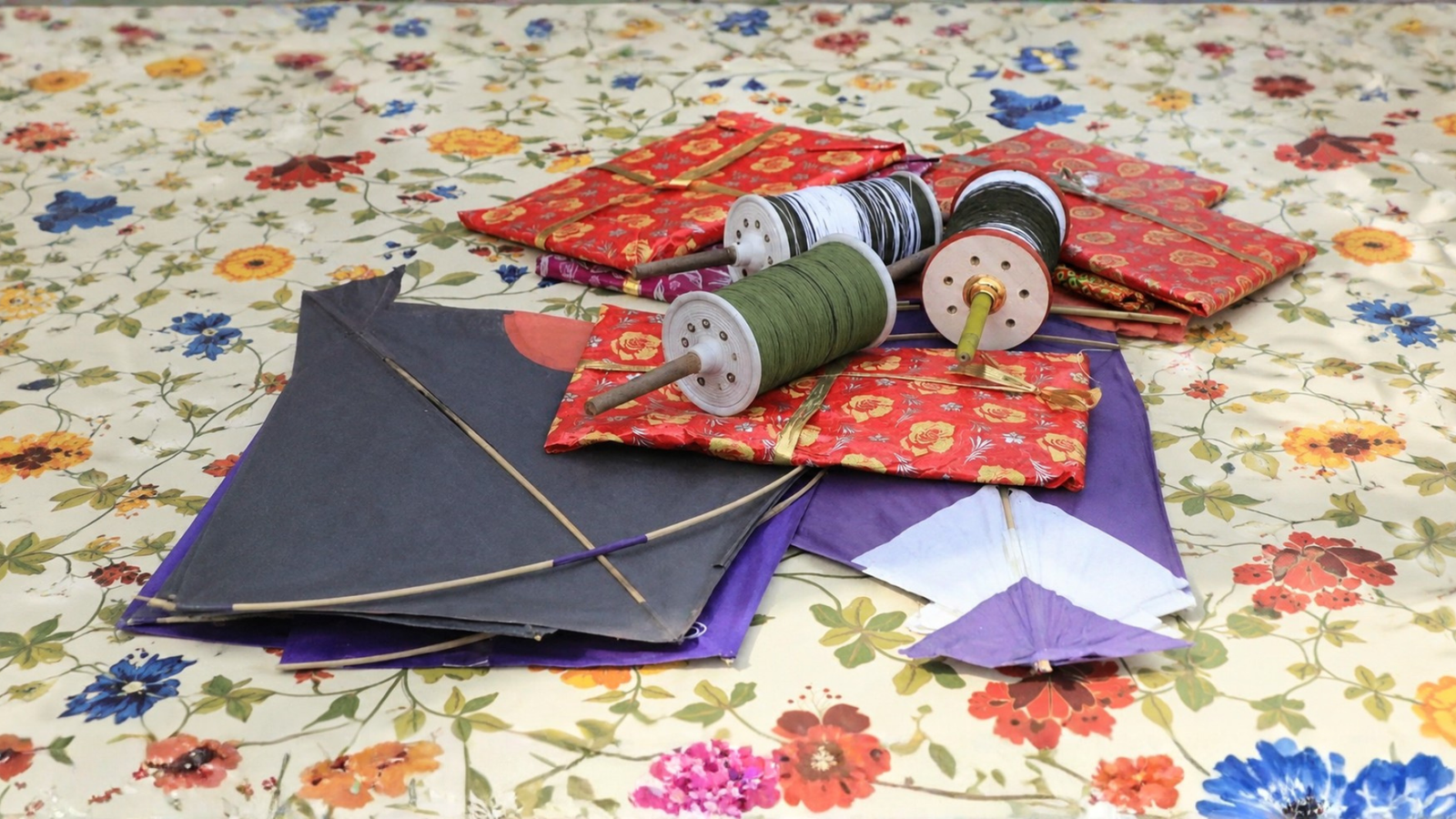
The link between kites and freedom goes back to the years before independence. During the protests against the Simon Commission in the late 1920s, when a British committee arrived to decide India’s future without a single Indian member, people took to flying kites inked with the words “Simon Go Back.” The slogan carried across the whole sky, where a banner on the ground could simply be torn down. It was a peaceful, public and unmistakable act of protest, and the unpretentious kite became an emblem of the freedom movement.
Honest histories admit there is no single written record marking the exact moment the custom began. What is clear is that after 1947, the kite took on a new meaning. A kite climbing into an open sky came to stand for a nation rising, for aspiration, and for the plain joy of being free. Cutting a rival’s string, the heart of the sport, carried the feeling of breaking loose.
Today, across Delhi, Lucknow, Rajasthan and well beyond, the 15th of August is a day of rooftops, wooden spools and skies full of colour. Many of the kites are flown in the tricolour of the national flag, or carry a patriotic line across the paper, and the whole thing becomes a shared celebration between neighbours who spend the rest of the year minding their own business.
Kite flying in Jaipur
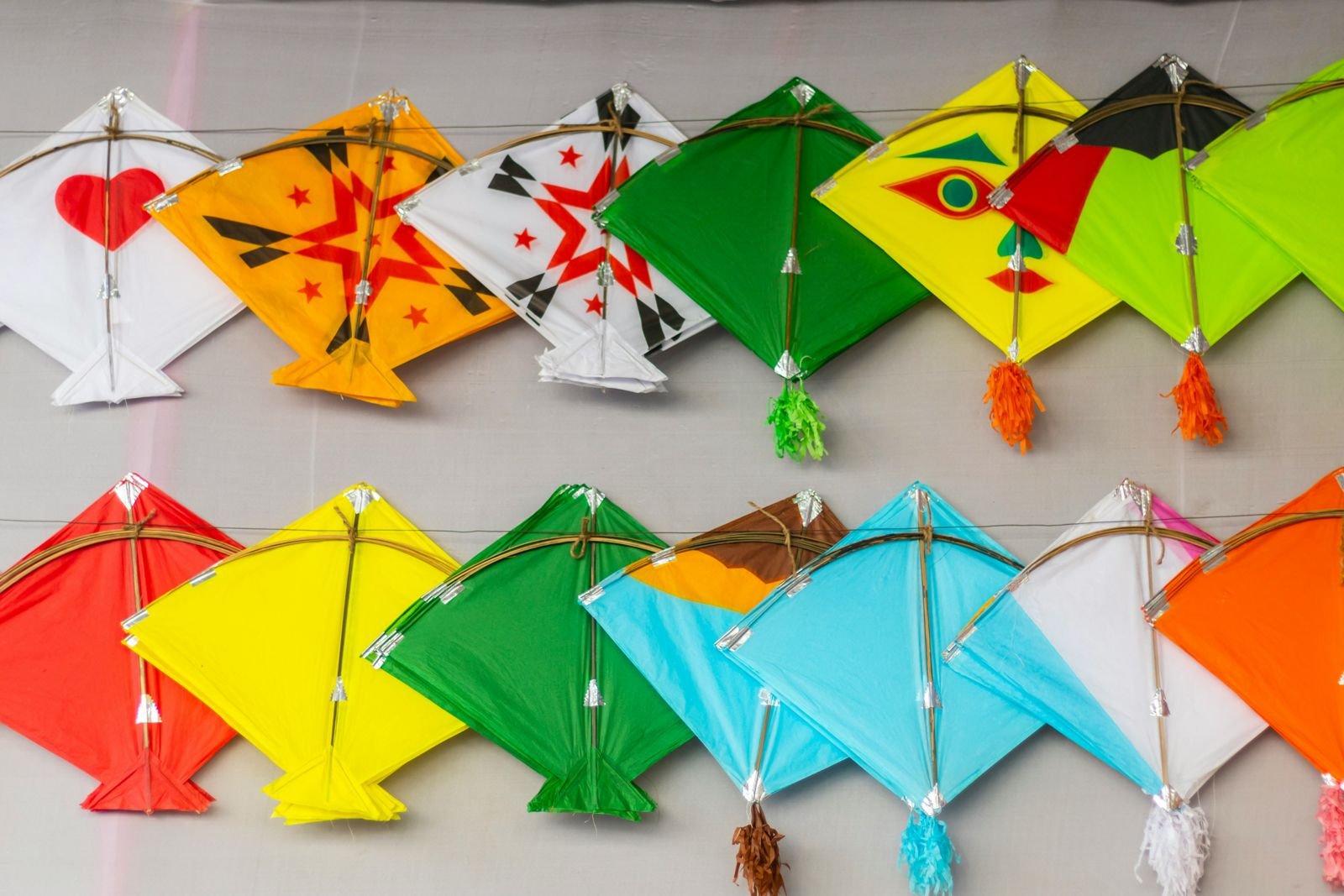
Jaipur takes to this more readily than most, because the kite is part of the life of the city all year round. The grandest kite day here comes in January, at Makar Sankranti, when the Pink City holds one of India’s most famous kite festivals and the rooftops stay busy for days on end. Independence Day is a gentler affair by comparison, though no less joyful. The Rajput courts of old are said to have held their own kite contests, and the enthusiasm has been passed down the generations ever since.
Kite flying is equally special on Independence Day, when Jaipur’s rooftops once again fill with colourful patangs and families gather to celebrate. Read our guide to celebrating Independence Day with kite flying in Jaipur.
So the vocabulary is second nature to a Jaipur child. The kite is a patang, light as a whisper and made of paper and split bamboo. The string is manjha, wound on a wooden spool and, in its traditional form, coated with fine glass to cut a rival’s line. The sport of duelling kites is patangbaazi, and the moment you slice through another flyer’s string, the whole terrace erupts with the cry of “Woh Kata”, meaning it is cut. None of it needs any translating once you have watched a round or two.
In the days beforehand, the stalls of the old city, especially around Tripolia Bazaar, fill with paper kites in every colour and spools of freshly wound string, and picking out a few of your own is half the fun.
From our terrace, on the day itself
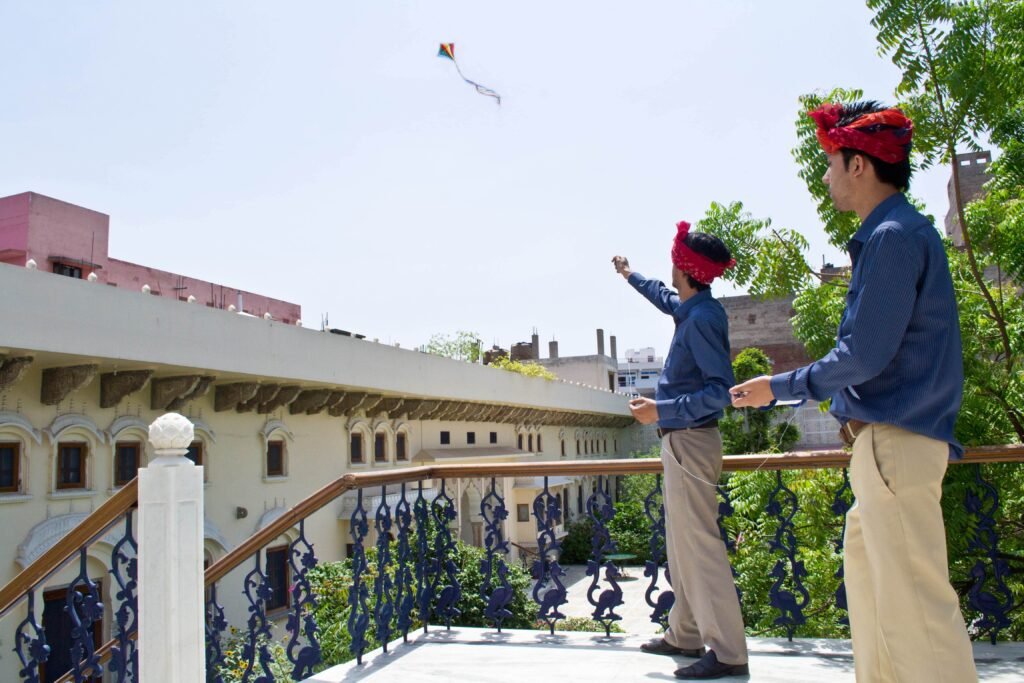
We love this day at the haveli. From the roof of our heritage hotel in Jaipur, the old city spreads out below, terrace after terrace, each with its own knot of families and its own kites in the air. The rooftop view is one of the real pleasures of an old haveli, high enough to catch the breeze that keeps a kite aloft and to watch the friendly battles playing out across the neighbouring roofs.
For guests who have never flown a kite, this is the gentlest of introductions. There is no skill you need to bring, only a willingness to laugh when a first attempt dives straight into the parapet. Someone will always show you how to let the string out in time with the wind, how to give a small tug to make the kite climb, and how to steer clear of a neighbour’s line unless you fancy a duel.
Between flights, there are the sweets of the season to enjoy and the shade of the courtyard below to duck into when the sun climbs high. Tea and cold drinks keep coming, the younger guests quickly form teams, and an hour on the roof has a way of turning into most of the morning.
This is where staying inside a living piece of Rajasthani heritage earns its keep. A festival like this belongs to the rooftops of the walled city, and to spend it in an old family home, among frescoes and carved stone, is to see it the way Jaipur has always seen it, from above, with the whole Pink City for company.
An invitation for the 15th of August
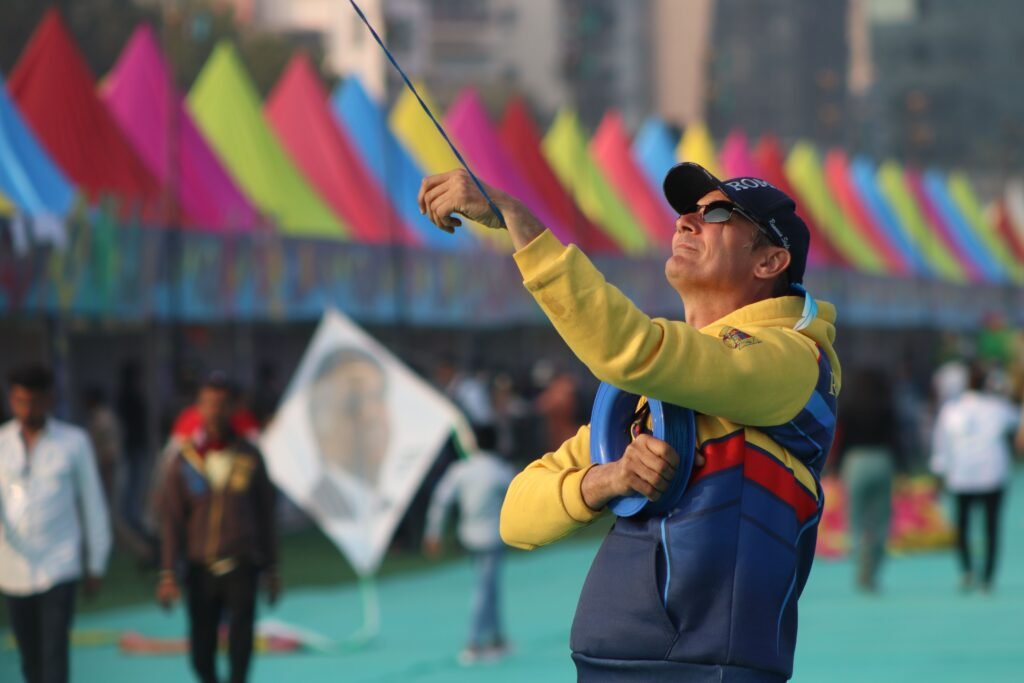
Independence Day in Jaipur is a warm, generous and sociable affair, and the kite is its happiest expression. Should you find yourself in the Pink City in the middle of August, we would be glad to place a spool of string and a paper kite in your hands and let you join in. The sky is wide, the breeze is willing, and there is always room on the terrace for one more.
Come and celebrate the day with us.
Get in touch to plan your stay at Dera Mandawa.
