

Some experiences speak directly to the heart of the city, and the rooftop kite-flying experience in Jaipur is one of them. From the moment the first kite rises into the sky, you feel part of a tradition that is playful, social, and deeply woven into our heritage. From the terrace of our haveli, guests discover that this pastime is more than an activity. It is a way of experiencing Jaipur in its most authentic spirit, high above the bustle of the streets, yet very much connected to the life of the city.
A Tradition That Belongs to the Skies
Rooftop kite flying in Jaipur carries a special charm. Our haveli terraces have long been a place where family, friends, and neighbours gather with spools of string and stacks of colourful paper kites. The ritual is timeless: the quick tug to catch the breeze, the gentle release as the kite steadies, and the laughter that follows when one kite outmanoeuvres another. For us, this is not only entertainment but a continuation of a custom that has bound people together for generations.
The tradition finds its most spirited expression during Makar Sankranti, celebrated each January when Jaipur’s skies fill with countless kites. From early morning until sunset, rooftops across the city become lively arenas of friendly rivalry. Yet the joy of rooftop kite flying in Jaipur is not limited to one festival. Throughout the year, the terrace remains a place to enjoy the calm of watching a kite dance with the wind, a reminder that small rituals can bring great delight.
Rooftop Kite Flying Season in Jaipur
Makar Sankranti falls on 14 January and is the biggest day, but the season extends beyond that. From late December through to the end of January, the wind is reliable, and the sky is rarely empty. Independence Day on 15 August is Jaipur’s second, quieter kite day.
Outside those windows, rooftop kite flying in Jaipur depends on the breeze rather than the calendar. The best hours are generally between eleven in the morning and four in the afternoon, when the thermals are working. Monsoon months are the exception, since wet paper tears and the wind is unpredictable.
If you are asking where to have a rooftop kite-flying experience in Jaipur rather than when, the answer is almost always a terrace rather than a park. The old city’s rooftops sit close enough together that lines actually meet, which is the whole point.
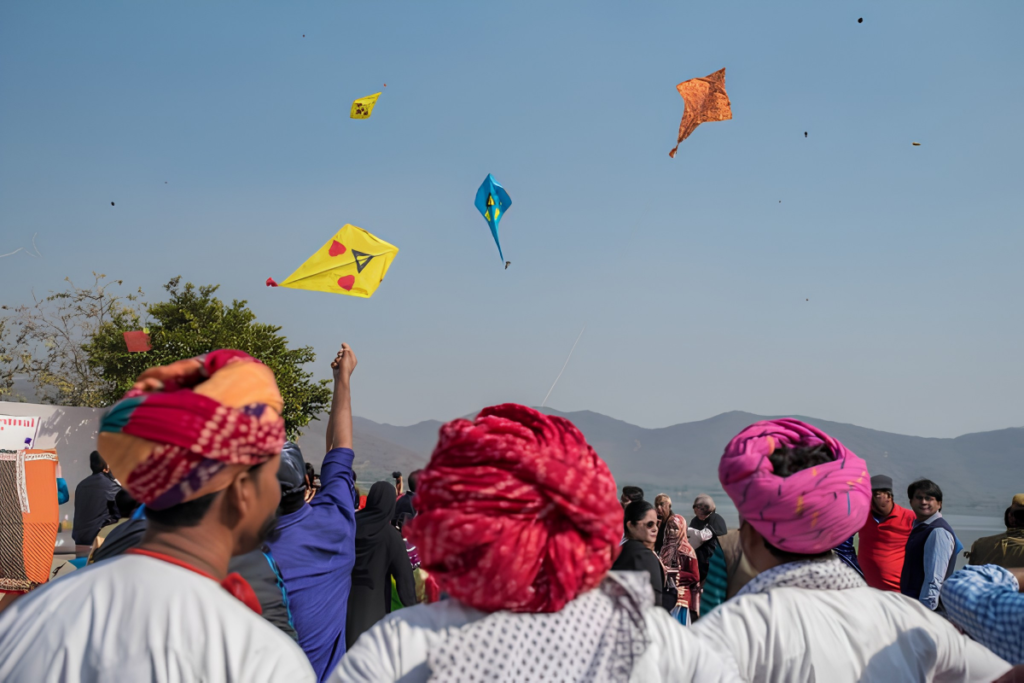
Makar Sankranti in Jaipur: What Actually Happens on the Day
Makar Sankranti falls on 14 or 15 January, and the city treats it as a full-day event rather than an evening one. Terraces fill by seven in the morning, before the wind has properly settled, and stay occupied until the light goes. Loudspeakers appear on rooftops. Families cook and eat on the terrace rather than going downstairs. These small yet important things make the Jaipur terrace kite-flying experience a more interesting one.
The call that carries across the neighbourhood is woh kaata, shouted when a rival line is cut, and it is answered from three roofs away within seconds. Til laddoos, gajak and feeni are passed around between flights. After dark, paper lanterns called tukkals go up on the same lines. Anyone planning rooftop kite flying in Jaipur around Makar Sankranti should know the city effectively stops working that day, and our terrace is booked well in advance.
What to Know Before Your First Rooftop Kite Flying Experience in Jaipur
The kite is the simple part. The line, called manjha, is what takes practice. Traditional manjha is coated in a paste of rice glue and powdered glass, which lets one line cut another, and it is also why beginners start with a lighter, uncoated line. Jaipur has restricted the sale of nylon and Chinese manjha because of the injuries it causes to birds and to people on the ground.
Wear closed shoes and expect your fingers to sting a little by the second hour. The best wind is generally between eleven in the morning and four in the afternoon. Nobody needs prior skill for the experience in Jaipur to be worth having, and most guests have a kite in the air within ten minutes.
A Personal Encounter with Heritage
Rooftop kite flying in Jaipur is not just about learning a skill. It is about being welcomed into a local tradition in a setting that preserves both history and atmosphere. We provide guests with finely crafted kites and traditional spools, sharing the techniques we learned as children. Guiding the string requires patience, rhythm, and a feel for the breeze. Smiles and a spark of achievement always accompany the first moment a kite lifts high above the terrace.
There is a deeper joy in seeing how quickly this experience brings people together. Families find themselves cheering for one another, couples laugh over playful contests, and solo travellers often discover new friendships as they share the terrace with others. Rooftop kite flying in Jaipur creates a sense of community that feels effortless, and this connection makes the tradition so enduring.
The Terrace as a Stage
The terrace itself is part of the experience. From here, the views stretch across Jaipur, with domes, rooftops, and the Aravalli hills framing the skyline. The sounds of the city rise faintly in the distance, while closer at hand, you hear the snap of a string, the rustle of paper kites, and the calls of other kite flyers on neighbouring terraces. As the afternoon light softens, the sky becomes a living canvas, dotted with vibrant shapes that rise, dip, and drift gracefully with the breeze.
We often serve tea on the terrace during kite flying, allowing guests to pause between flights and enjoy moments of conversation, further enhancing the rooftop kite-flying experience. There is no rush, only the pleasure of looking up at the colours against the sky and knowing that you are part of something timeless and local.
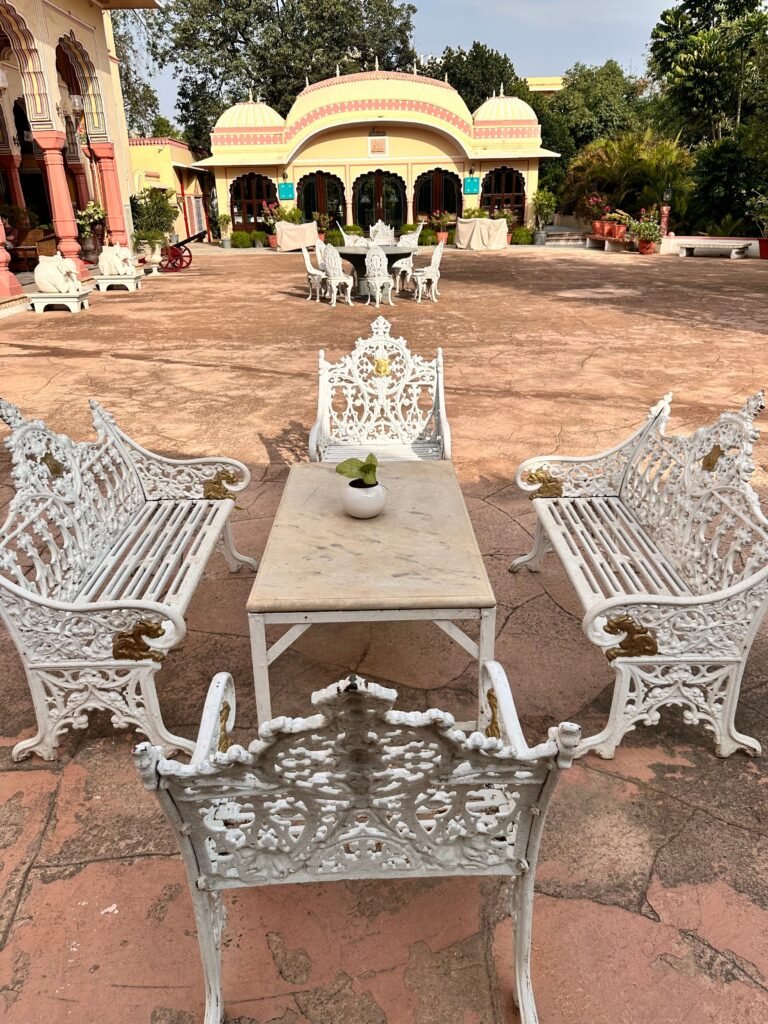
Why a Heritage Palace Terrace Rather Than a Hotel Rooftop
Height and neighbours are what make the difference. A heritage palace terrace in the old city sits among other occupied rooftops, so rival lines are within reach, and the shouting is real, not staged. A modern hotel rooftop is usually taller, more isolated, and surrounded by nothing that can answer back. Hence, the terrace kite festival in Jaipur is best experienced on a heritage palace.
The other difference is who is standing next to you. In a heritage palace that is still a family home, the person handing you the spool grew up flying from that same terrace, which turns a scheduled activity into something closer to being taught by a neighbour. This is one practical reason to choose a heritage stay in Jaipur over a conventional hotel.
Rooftop Kite Flying in Jaipur Beyond the Festival Spirit
For travellers who visit outside the festival season, the joy of rooftop kite flying in Jaipur remains just as captivating. In fact, many find that flying kites on a quieter day offers a more reflective experience, with less focus on competition and more on the rhythm of guiding the kite. The terrace provides the freedom to practise, learn, and enjoy without the intensity of the festival crowds.
The beauty of the kite flying experience in Jaipur lies in its adaptability. It is as exhilarating for a first-time flyer as it is nostalgic for those who may have tried it long ago. Children delight in watching their kites soar, while adults rediscover the thrill of a pastime that transcends age and background.
A Lasting Impression
Travel is often measured in the grand sights one visits or the fine meals one enjoys. Yet the experiences that remain longest are usually the simplest – those that connect us directly to a place and its people. Kite flying in a heritage palace setting allows exactly this. It is an encounter with tradition, a playful activity, and a chance to see Jaipur not only from above but from within.
When the day ends and the kites are finally reeled back in, there is always a sense of contentment on the terrace. For us, this is the true luxury of travel: not just staying in a historic home, but living the traditions that still give it life.
Join us for the terrace kite festival in Jaipur and feel the simple joy of watching your kite take flight.
Frequently Asked Questions
Why is rooftop kite-flying in Jaipur so popular?
Kite flying in Jaipur is deeply linked to tradition, especially during Makar Sankranti. Clear winter skies and a festive spirit make it one of the city’s most anticipated cultural activities.
When is the best kite-flying season in Jaipur?
The most popular time is Makar Sankranti in January, when the skies above Jaipur fill with colourful kites. However, you can also enjoy terrace kite flying on other clear days throughout the year.
What is special about kite-flying on a Jaipur rooftop?
Terrace kite flying in Jaipur lets you take in panoramic views of the Pink City while joining a festive tradition. From a heritage stay like Dera Mandawa, you can enjoy the activity in an authentic setting.
Can visitors take part in the terrace kite festival in Jaipur during their stay?
Yes, many heritage stays and local hosts in Jaipur encourage guests to join in kite flying. It is an interactive cultural experience that connects travellers with the city’s traditions.
What kind of kites are used in the Jaipur terrace kite-flying?
Light paper kites with thin bamboo frames are most common in Jaipur. They are designed for competitive flying, making the experience both fun and skill-based.
Is Jaipur terrace kite-flying dangerous?
The activity itself is safe on a walled terrace with supervision. The genuine risks are manjha-related: cut fingers from the coated line and bird injuries, which is why glass-coated and nylon lines are regulated. Beginners fly on a plain line, and gloves are available.
Do I need to book the kite-flying experience in Jaipur in advance?
For ordinary days, a few hours’ notice is usually enough. For Makar Sankranti itself, book weeks ahead, since the terrace fills with returning guests and family. You can enquire here.
What else can I do at the heritage palace on the same trip?
Saree and safa tying sessions and gourmet cooking sessions both run on request, and either pairs well with an afternoon on the terrace. We’ve also written about flying kites here on Independence Day, which is Jaipur’s second, quieter kite season.
How is kite-flying connected to Makar Sankranti in Jaipur?
Makar Sankranti marks the sun’s transition into Capricorn and is celebrated with enthusiasm across Rajasthan. In Jaipur, the day is known for kite flying, rooftop gatherings, and festive sweets like til laddoos.
What other cultural experiences can be combined with kite-flying in Jaipur?
Along with kite flying, visitors can enjoy Rajasthani folk music, traditional food, and explore Jaipur’s historic monuments. Staying at a heritage property like Dera Mandawa makes it easier to engage in these experiences.
Is rooftop kite flying in Jaipur suitable for all ages?
Yes, children, adults, and the elderly alike enjoy kite flying in Jaipur. It is a family-friendly activity that brings everyone together in a joyful celebration.
Where to fly kites in Jaipur if I am not staying at a haveli?
Public gatherings happen at the Jaipur Polo Ground and around Jal Mahal during Makar Sankranti. Outside the festival, terrace access is limited, which is why most visitors arrange it through their accommodation.
