

The groom rides in on a white horse at around half past nine in the evening, because nobody schedules a Rajasthani summer wedding under the Rajasthan sun in June. The brass band has been going for almost an hour. Someone you have not been introduced to yet is trying to get to dance. And this is only the second night of the wedding. If your reference point is a wedding that starts at four and finishes by nine, you are in for a very different sort of experience.
What guests rarely get told ahead of time is how long the whole thing actually lasts. You are not attending a Rajasthani summer wedding so much as moving in with the family for several days, eating their food, wearing their colors and slowly losing track of which ceremony is currently underway.
A Rajasthani Summer Wedding in Jaipur Lasts Days, Not Hours
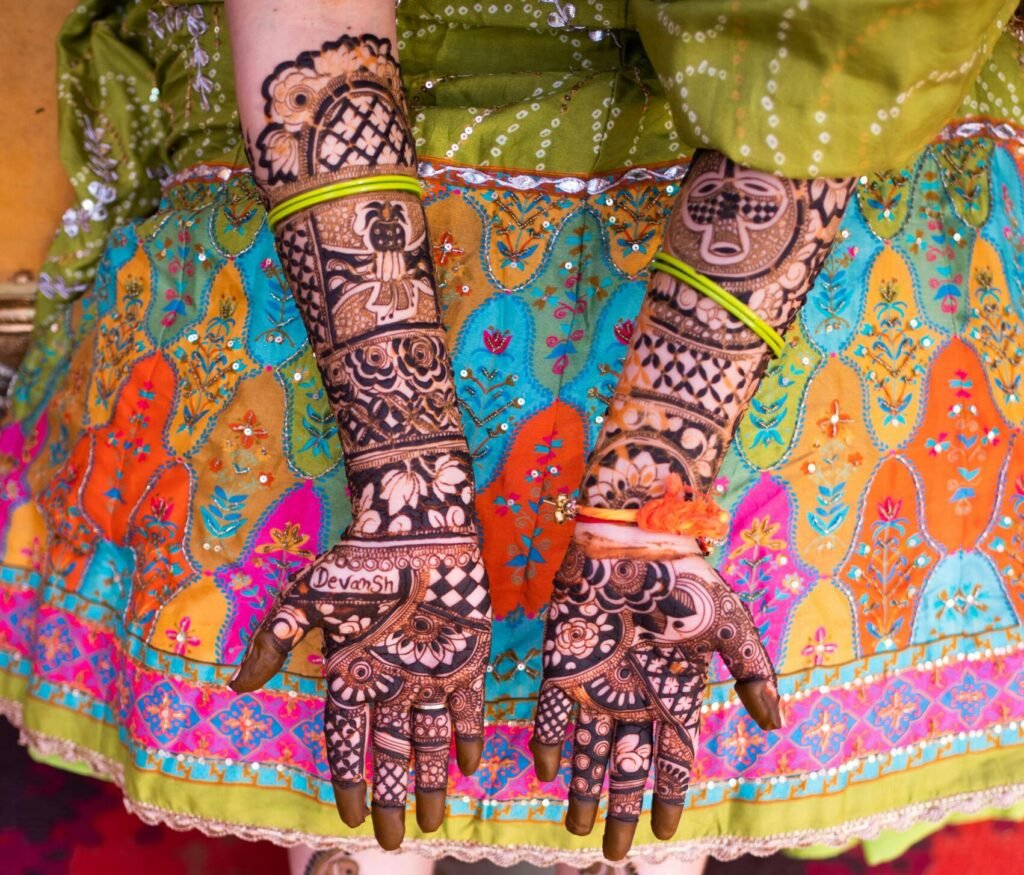
One afternoon does not cover it. The lead-up to the actual wedding alone includes a mehendi session where henna is drawn in patterns so fine they look printed, a haldi morning where the couple is covered in turmeric paste by everyone within reach, and a sangeet night where the two sides of the family compete to out-dance each other. Each function comes with its own not-very-strict dress code, which is how a three-day invitation turns into a four-outfit problem you did not anticipate.
No one expects you to know the steps. The uncles will get you onto the dance floor regardless, and your willingness to try matters far more than your ability. Hospitality is taken seriously here, and a guest rarely finishes one plate before the next helping arrives without being asked for.
What To Wear, And What To Leave At Home
A few things are worth knowing before you pack. Red is the bride’s colour, and you should let her have it. White tends to look underdressed at an event built entirely on colour. Black is considered inauspicious for the ceremony and is best left at home. Beyond those three, the brighter and bolder your outfit, the better you will fit in.
For women, a lehenga or a saree is the standard choice, and an anarkali is the easier option if you have not draped six metres of fabric before. For men, a sherwani or a bandhgala works well, and a clean kurta-pyjama never looks out of place. If you want to look like you know the region, find something in bandhani or lehariya, the tie-dye and wave-pattern fabrics Rajasthan is best known for. At some point in the evening, a relative will appear with a safa and tie it on your head, and the right move is to thank them and wear it.
The Procession, The Sword, And The Sacred Fire
The groom’s arrival, called the baraat, is the loudest entry you will see all year. He rides in on a decorated mare, surrounded by the brass band and a wall of relatives dancing backwards so they never lose sight of him. At the entrance, he does something that catches most first-time guests off guard. He pulls out a sword and strikes the toran, a decorated archway above the doorway, to drive off bad luck before he steps inside.
The garland exchange, or jaimala, rarely goes smoothly because the groom’s friends lift him out of reach, preventing the bride from placing the garland over his head. The actual marriage happens later, around a sacred fire, where the couple takes seven pheras, one circle around the flame for each vow. Keep a half-eye on the shoes throughout, because the bride’s sisters will have stolen the groom’s pair and will not return them without a cash payment. The negotiation that follows is half of the entertainment.
The Food Never Stops Arriving
The feeding does not let up at any point. A wedding spread runs to dal baati churma, the ghee-soaked wheat balls Rajasthan is built on, plus gatte ki sabzi, ker sangri from the desert scrub, and a steady run of sweets led by the syrup-heavy ghevar and the rich mawa kachori. In more traditional set-ups, the men of the bride’s family serve the food themselves, walking down the rows of seated guests with steel buckets.
The trick is to eat small and pace yourself. The next round of food is rarely more than half an hour away, and anyone who clears their plate at the first sitting will be too full to enjoy dessert.
Why The Celebrations Happen After Dark
By mid-morning in May and June, Jaipur has already crossed forty degrees, so a summer Rajasthani wedding simply works around the heat. The main events shift to the evening, the courtyards fill up once the sun goes down, and your job as a guest is to wear something light and breathable, drink more water than feels necessary, and accept that at least one silk outfit is not going to make it through the night.
The couples who plan well let the building do half the work. A palace wedding in Jaipur, held inside a thick-walled heritage property, stays cool while everything outside is baking, because these places were built to handle desert summers long before air conditioning. A destination wedding in Jaipur at the right venue offers shaded courtyards that draw in the night air and rooms that hold their cool well into the morning.
Dera Mandawa, a family-run haveli from the 1880s in the heart of Jaipur, hosts weddings inside its original courtyards and even runs safa-tying sessions for guests who want to wear one properly.
Go to one of these, and you will come home a little dazed, a few kilos heavier, and aware that you have just been at a different kind of wedding altogether.
