

Step out into a Jaipur afternoon in May, and the air feels like it has weight. The sun does not warm you so much as press down on you. Now imagine living through this kind of summer a few centuries ago, with no fans, no air conditioners, no insulated windows. The people who built the great havelis of Rajasthan did not have any of that, and yet they figured it out. Haveli architecture in Jaipur is, at its core, a beautifully engineered answer to a brutal climate problem, and once you understand how the buildings work, you start to see them less as nostalgic mansions and more as some of the smartest passive cooling designs ever attempted on the subcontinent.
The merchants, nobles and thakurs who commissioned these homes were not architects in any formal sense. They worked with stonemasons, carpenters and craftsmen who had been handing down knowledge for generations. That knowledge was almost entirely about one thing. How do you keep a building cool when the temperature outside is touching 45 degrees, and there is nowhere to escape it?
The Cooling Logic Built Into Haveli Architecture
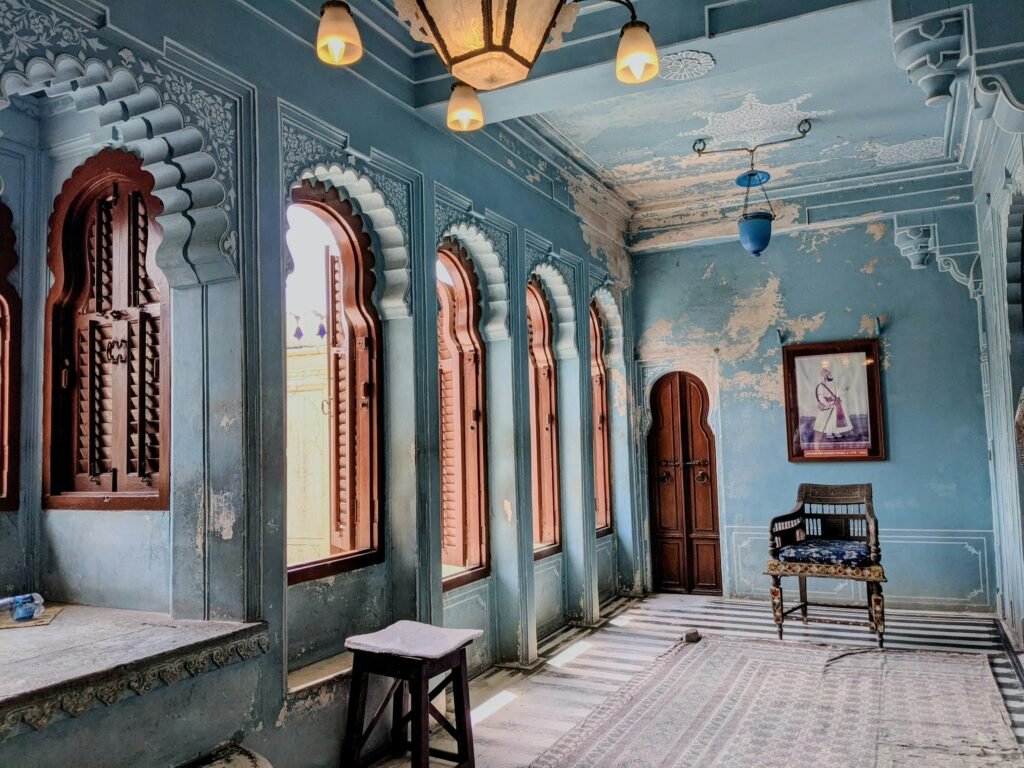
Most people think of a traditional Rajasthani haveli as a pretty face, the carved sandstone facade, the painted walls, the heavy timber doors. The aesthetics get all the attention. But behind every decorative flourish sits a thermal decision. The deep verandahs, the inward-facing layout, the modest exterior windows and the high ceilings- none of it is random. The whole building functions as a single climate machine, and every element has a job.
The basic principle is simple enough. Hot air rises and cool air sinks. The stone takes a long time to heat up. Shade is precious, and the cross breezes are gold. Every clever bit of haveli design is a way of exploiting one of those facts.
The Courtyard As A Cooling Engine
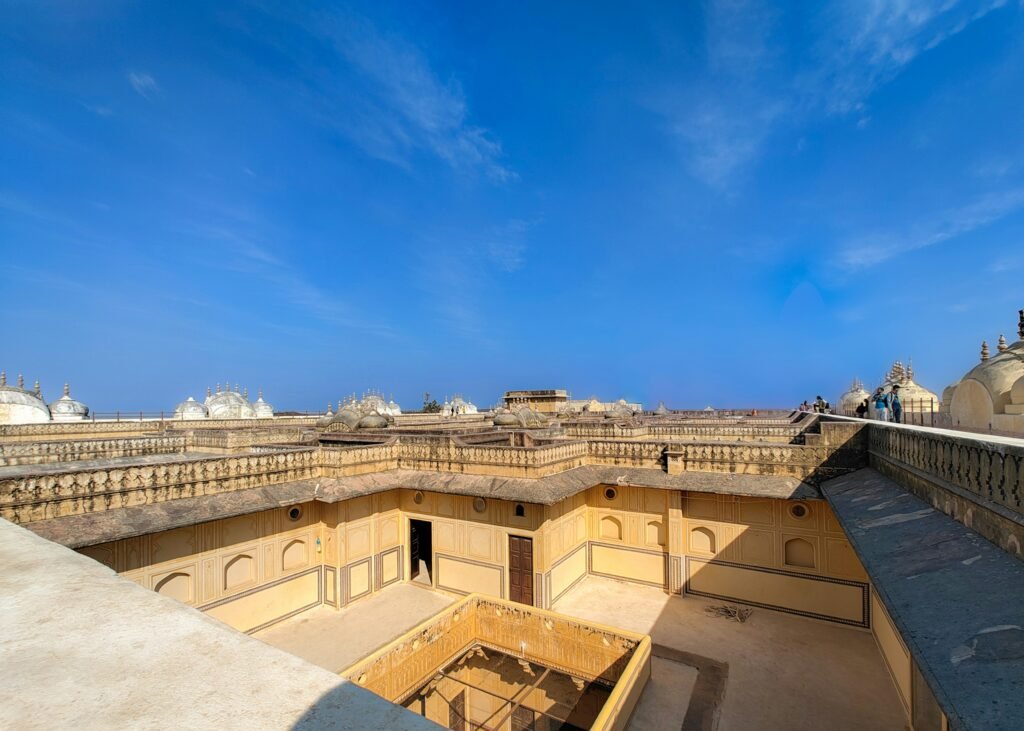
Walk into almost any old Rajasthani haveli, and the first thing you find is a central courtyard, what locals call a chowk. This is not a decorative gesture.
Here is what is happening. During the day, the open sky above the chowk lets hot air escape upwards through what physicists call the stack effect.
As that hot air leaves, cooler air gets pulled in through the jharokhas, jaalis, and shaded ground-floor openings. The courtyard becomes a kind of natural chimney, drawing the warm stale air out of every room that faces it.
At night, the logic flips. The cool desert air settles into the courtyard, the stone absorbs the chill, and by morning, the whole building has a reservoir of coolness to lean on. Larger havelis sometimes had two or three courtyards layered to manage different functions. The mardana for the men, the zenana for the women, and service chowks for the staff, each one with its own microclimate.
Walls That Worked Like Insulation
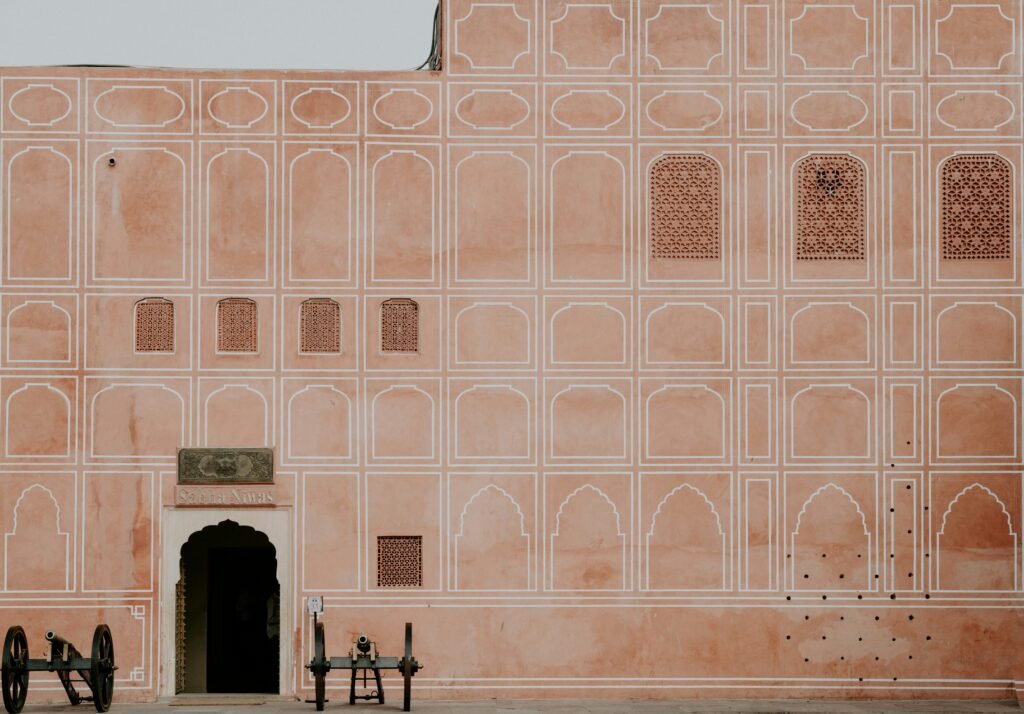
Look at the outer walls of a haveli, and you will notice something. They are absurdly thick. We are talking anywhere between 18 inches and four feet in places. That is not showing off. That is thermal mass doing its work.
Local Rajasthani sandstone, lime mortar and sometimes mud or brick form a wall that takes hours to heat up. By the time the surface gets warm, the sun has gone down. By the time the heat would actually reach the interior, it is already night, and the wall is cooling again from the outside. The hot day never quite makes it inside.
White or pale lime plaster on the exterior does its bit too. Pale surfaces bounce back the harshest sunlight rather than soaking it up, which is why so many old buildings in hot regions are painted in chalky whites, creams and pale ochres.
How Jaalis And Jharokhas Engineered Airflow

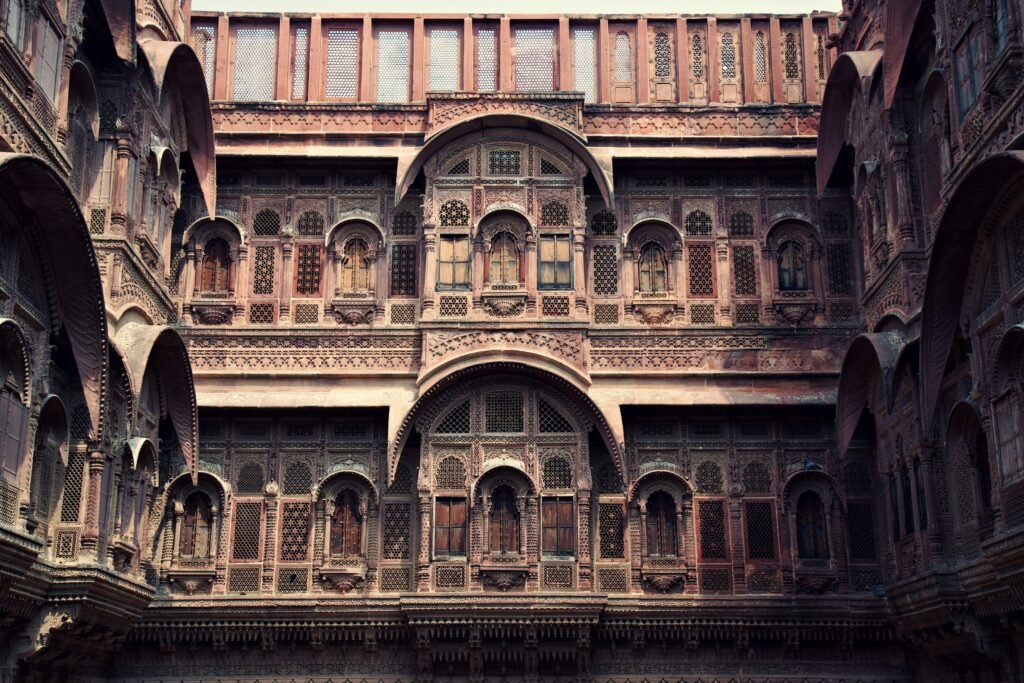
Now we get to the showpieces. Jaalis, the perforated stone or wooden screens, are perhaps the most ingenious bit of the whole system. A jaali does three things at once. It cuts the harsh glare of direct sunlight into a soft, diffused light. It lets women in purdah look out without being seen. And, most importantly, it acts as a pressure differential device.
When wind hits the small holes in a jaali, it is forced to speed up as it passes through. The result is a cooler, faster draught on the inside of the screen than the still air outside. It is the Venturi effect, executed in sandstone, centuries before anyone bothered to name it.
Jharokhas, the projecting enclosed balconies, work on a related principle. By pushing out from the main wall and putting openings on three sides, they catch breezes from multiple directions. A well-placed jharokha could turn a single hot afternoon breeze into a constant cross-draught through an entire room. Add a chhajja, the deep projecting overhang above windows, and the building gets a permanent visor that keeps the worst sun off the openings below.
Water As A Cooling Tool
Many of the grander havelis included a water feature in the central chowk, sometimes a small fountain, sometimes a shallow pool, sometimes a simple stone basin. This was not decoration. As water evaporates, it absorbs heat from the surrounding air. A modest fountain in a courtyard can drop the local temperature by several degrees, especially when combined with the stack effect drawing that cools and humidifies air through the surrounding rooms.
Underground Rooms For The Worst Of Summer
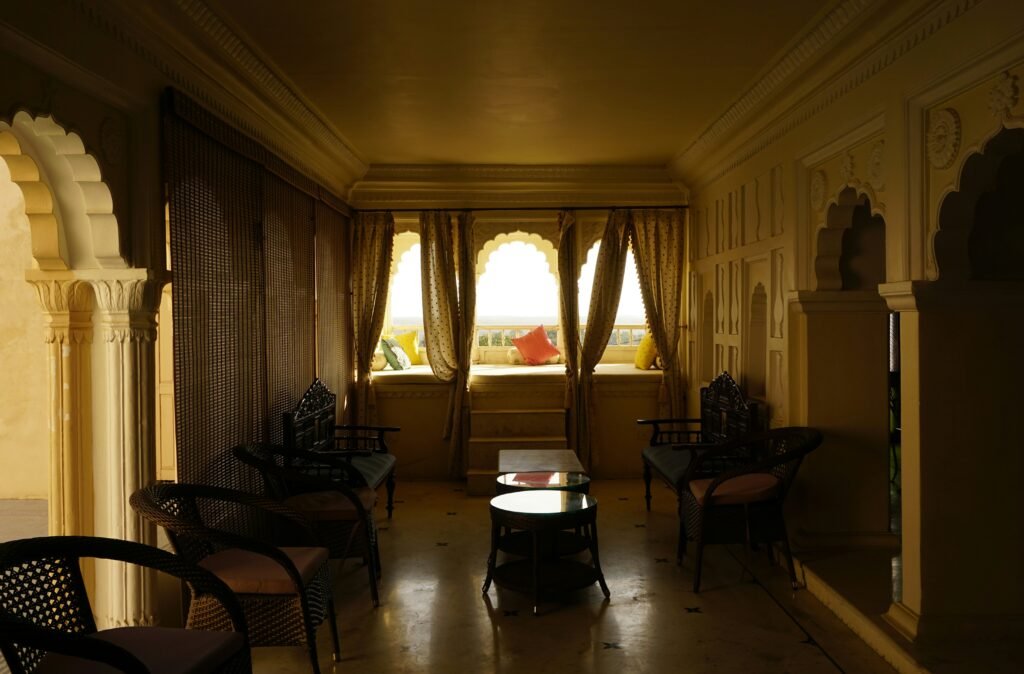
Underground Rooms For The Worst Of Summer. When May and June got truly impossible, the family simply went underground. Tehkhanas, the cellar rooms cut below ground level, stay remarkably cool year-round because the earth itself acts as insulation. A few feet below the surface, the temperature barely shifts even when the desert above is roasting.
These were not dingy basements. The good ones were finely finished with painted ceilings, niches, and small light wells that brought in just enough daylight without the heat. Families would move down for the afternoons, take their meals there, and only come back up once the sun had dropped.
Why Any Of This Still Matters
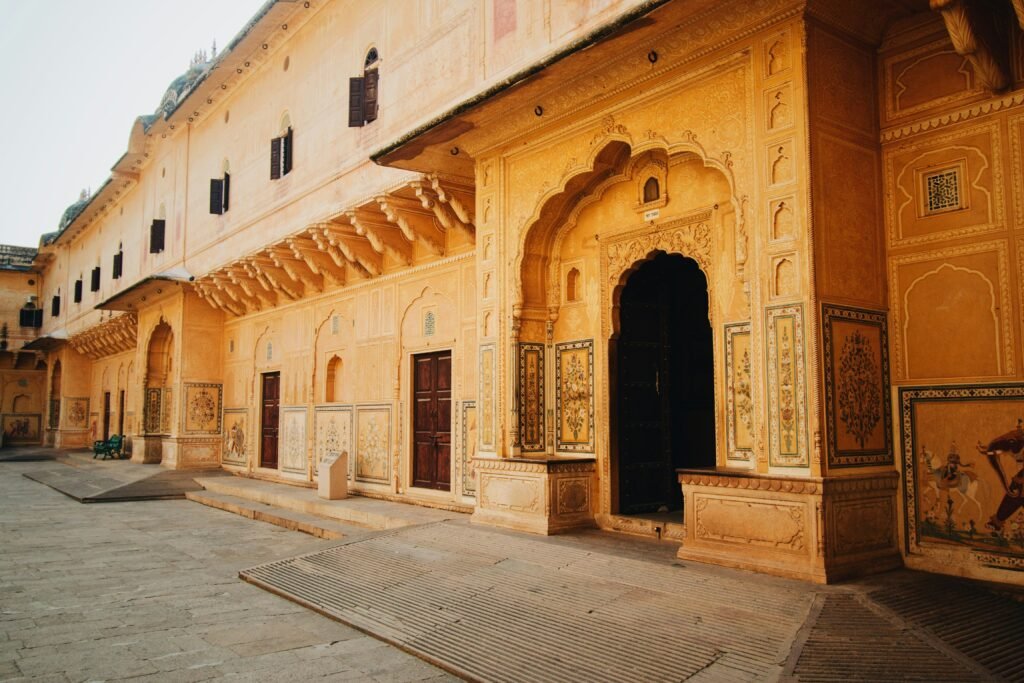
The genius of vernacular Rajasthani architecture is that it solved the heat problem without electricity, without imported materials, and without the planet paying the price. We have largely forgotten how to build like this. Most new construction in Jaipur today is glass, concrete and air conditioning, all of which work against the climate rather than with it.
If you want to actually feel how a haveli handles a Jaipur summer, the best thing to do is stay in one. Dera Mandawa, a heritage haveli in jaipur located in the Pink City, still functions as the working courtyard home it has always been. Spend an afternoon in its chowk, and you stop reading about thermal mass and start trusting it. That is the kind of education and experience no textbook can give you.
Ready to book your summer stay at Dera Mandawa? Contact us today, and we’ll take care of the rest.
