

Jaipur is a centre of handcrafted textiles, where traditional block print stores carry fabrics that reveal centuries of craft and design. For lovers of texture and pattern, these shops show how artisans continue to practise Rajasthani block printing at its finest. Beyond grand showrooms, hidden workshops and fabric shops bring purpose, colour, and skill into every yard of cloth.
1. Anokhi and the Anokhi Museum of Hand Printing
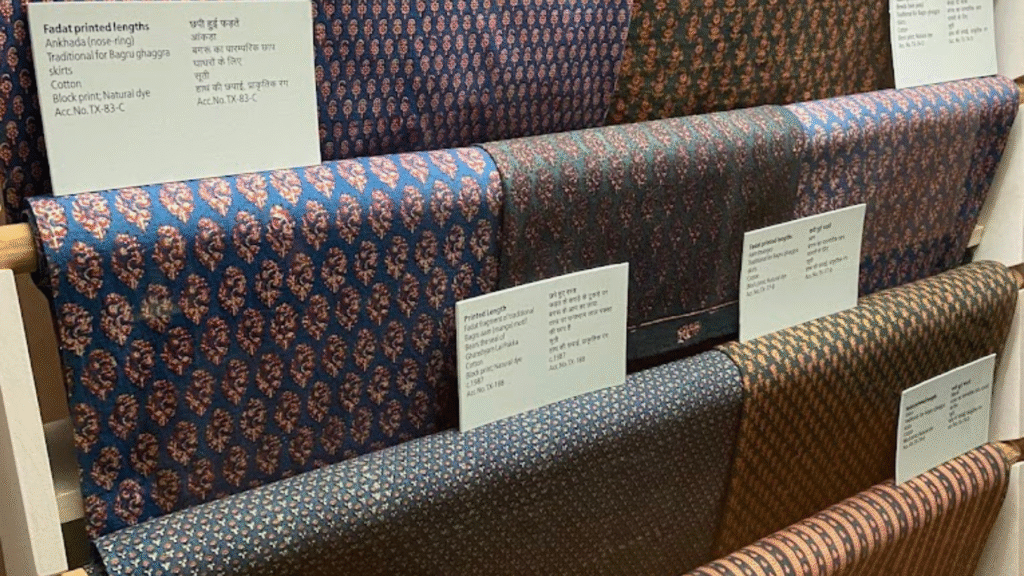
Anokhi is a benchmark name in Jaipur for well-curated block-printed garments and home textiles. The brand’s museum at Keri Gate also includes a small shop and is a great place to learn about hand-printing techniques before you buy. The museum shop lets you see swatches and traditional samples alongside contemporary lines.
* Closed Mondays and through the hottest weeks of summer, so check before travelling out to Keri Gate.
2. Bagru and the Chhipa Neighbourhood
For classic Bagru prints, head beyond the city to the Chhipa workshops, where dabu mud resist and natural indigo are still used on full lengths of cloth. What sets Bagru apart from the rest of Rajasthani block printing is that the cloth is dyed first and the pattern emerges where the resist has blocked the colour, which is why the results run darker and more geometric than Sanganeri work.
Buying here means buying at source. Yardage, furnishing fabric and finished quilts are all sold from the same premises where they were printed, usually at a fraction of city prices, and the printers are happy to explain what you are looking at. We have covered the Bagru process in detail separately.
3. Sanganer: Workshops and Masterclasses
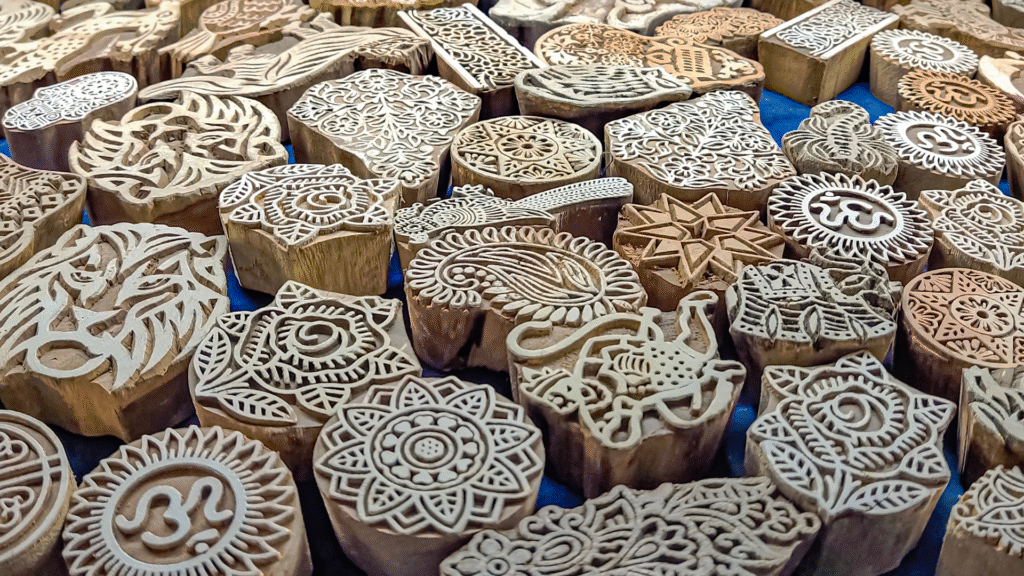
Sanganer is the historic home of another local block-printing style. Several artisan studios offer hands-on workshops where visitors can print their own stoles and scarves with guidance from a master printer. These sessions also allow direct comparison of motifs and colours across original Sanganeri patterns. Booking in advance is recommended for small-group classes.
4. Rajasthani Block Printing in Small Studios and Labels
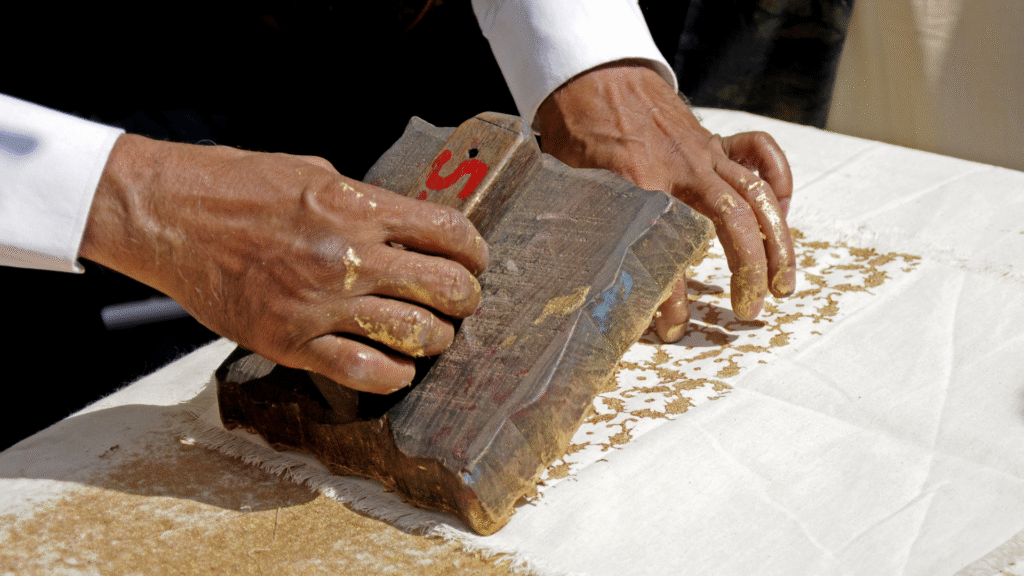
Beyond the larger names, Jaipur has many smaller studios and family firms that print by hand and sell directly from their premises. Shops such as Shivalaya and other craft ateliers focus on sustainable methods and hand-stamped pieces. These studios often stock yardage, stitched garments, and home textiles printed in small batches, making them ideal for sourcing made-to-measure items or special fabric runs for fashion or interiors.
5. Boutiques with Contemporary Design
Several contemporary labels collaborate with Jaipur printers to produce modern designs that preserve Rajasthani block printing rather than imitate it. Internationally recognised brands and local boutiques have selected prints and ready-to-wear lines that translate block prints into city wear and interiors. For shoppers who prefer a finished piece rather than raw fabric, these shops are an excellent choice among Jaipur textile shops.
* Most are fixed price, which suits anyone who would rather not negotiate.
6. The Bazaars: Johari, Bapu and Tripolia
The bazaars are where most visitors first encounter Rajasthani block printing, and they remain the fastest way to compare a dozen shops in an afternoon. Johari Bazaar, Bapu Bazaar and Tripolia Bazaar are the convenient hubs for textile shopping in Jaipur, ranging from retail stalls to established shops where you can compare quality, thread counts and print clarity. For larger yardage or wholesale enquiries, specialised dealers and roadside wholesalers on Amer Road are well known among those who favour handmade textiles from Jaipur.
Two fixed-price shops are worth adding to the same day: Soma on Jacob Road for quilts and table linen, and Cottons Jaipur in Civil Lines, which sells block-print fabric that Jaipur tailors will happily work with, by the metre rather than as finished pieces.
Getting to Sanganer and Bagru
Both villages sit outside the city and neither is on a tourist circuit, which is part of why the prices are better.
Sanganer is about fifteen kilometres south, roughly thirty minutes by car and close to the airport, so it works well on an arrival or departure day. Bagru is thirty kilometres west and takes about an hour each way. Doing both in one day is possible but rushed, and you will see more if you choose one.
Go in the morning. Printing starts early in the workshops; the light is better for judging colour, and by mid-afternoon many have moved on to drying and washing. Smaller units keep irregular hours, so a call ahead saves a wasted drive.
Neither village has much signage. Most drivers know the main printing lanes, and any of the Jaipur textile shops in town can point you toward a specific karkhana if you have seen work you liked.
Buying Block Print Fabric in Jaipur that the Tailors Can Work With
If you are buying yardage rather than a finished garment, a few things decide whether it becomes something you wear.
Cotton and mulmul take the print best and are what most Rajasthani block printing is done on. Silk and linen exist but cost considerably more and behave differently under the block. Standard width runs around 42 to 44 inches, so calculate metres accordingly: roughly 2.5 metres for a kurta, 6 for a saree length, and more for curtains than you think.
Ask whether the fabric has been pre-shrunk. Hand-printed cotton that has not been pre-shrunk will lose two to three per cent on its first wash, which matters if it has already been cut.
Most shops in Jaipur that sell block-printed fabric by the metre will recommend a local tailor, and turnaround is often a day or two. Agree on the price before they cut the cloth.
Caring for Block Printed Fabric
Natural dyes behave differently from synthetic ones, and the first wash decides how a piece ages.
Wash it alone the first time, in cold water, with a spoon of salt or a splash of vinegar to help set the colour. Some bleeding is normal on hand-printed cloth and is not a fault. Avoid strong detergent and never bleach, since alkaline soaps quickly dull vegetable dyes.
Dry in shade rather than direct sun. Indigo and madder fade faster in Jaipur light than almost anything else. Iron on the reverse while the fabric is still slightly damp.
Treated this way, block-print fabric softens and improves over the years rather than wearing out, which is the real argument for buying handwork over a printed copy.
Textile Shopping in Jaipur: Practical Tips
- Examine the print closely for clarity and registration; slight variations indicate handwork.
- Ask about the fibre content and any post-printing treatments to care for the fabric properly.
- If you buy yardage and want tailoring, many shops will recommend local tailors who work with block-printed cloth.
- For workshops and masterclasses, check timings and reserve in advance to ensure a small-group experience.
Where to Rest After a Day of Textile Hunts
Jaipur’s block print scene is best explored slowly, with time to compare prints and speak with printers and merchants. After a day of textile shopping in Jaipur, retreat to a place that reflects the city’s style and hospitality.
Dera Mandawa, a heritage haveli outside Chandpole Gate, offers graceful rooms and thoughtful hospitality, a calm base from which to continue your textile discoveries.
We invite you to stay with us and let Jaipur’s prints and artisans become part of your travel story.
Frequently Asked Questions
Where can I find the best block print stores in Jaipur?
Some of the most reputed block print stores in Jaipur include Anokhi, Soma, Cottons Jaipur and the artisan workshops in Bagru and Sanganer. Each presents fine craftsmanship, natural dyes and patterns that reflect the city’s textile heritage.
What makes Rajasthani block printing special?
Rajasthani block printing is known for its intricate hand-carved wooden blocks, natural colours and detailed motifs inspired by flora, fauna and Mughal art. Every piece is hand-stamped, giving it subtle variations that reflect the artisan’s skill.
Which areas in Jaipur are known for textile shopping?
For the best textile shopping in Jaipur, visit Johari Bazaar, Bapu Bazaar and Tripolia Bazaar for fabrics and ready-to-wear pieces. Bagru and Sanganer are ideal for those who want to explore traditional printing techniques and buy directly from local artisans.
Can I watch the block printing process in Jaipur?
Yes. Many workshops in Bagru and Sanganer welcome visitors who wish to see Rajasthani block printing in action. Some also arrange short demonstrations or hands-on classes where guests can try printing a small piece of fabric themselves.
Are Jaipur textile shops suitable for buying home furnishings?
Absolutely. Many Jaipur textile shops sell block-printed textiles for home use, including curtains, table linen and cushion covers. These pieces are hand-printed on cotton or linen and add a refined yet traditional look to interiors.
How can I tell if a textile is handmade or machine-printed?
To identify the handmade textiles Jaipur is famous for, look for slight irregularities in pattern and colour. Hand block printing leaves soft edges and visible overlaps, while machine printing appears perfectly uniform.
What type of fabric is best for Jaipur’s block prints?
Lightweight cotton and mulmul are commonly used for Rajasthani block printing, though silk and linen are also popular for premium collections. The choice depends on the intended use: apparel, upholstery, or home décor.
When is the best time to explore Jaipur’s textile shops?
The ideal months for textile shopping in Jaipur are from October to March, when the weather is pleasant for walking through markets and visiting artisan areas like Sanganer and Bagru. Mornings are generally quieter and better for browsing.
What is the difference between Sanganeri and Bagru printing?
Sanganer prints fine floral repeats on a bleached white ground, which is why Sanganeri work reads as light and delicate. Bagru dyes the cloth first and creates the pattern with dabu, a mud resist, using earth pigments that produce darker, bolder, more geometric results. Both are printed by the Chhipa community, and both sit at the centre of Rajasthani block printing.
How much should block print fabric cost per metre in Jaipur?
It varies with fabric, number of colours and whether the dyes are natural. Simple two-colour cotton from a Sanganer or Bagru workshop is inexpensive. Fine multi-colour work on mulmul, or anything using natural indigo and alizarin, costs several times that. Buying at source rather than in a city boutique usually reflects the printer’s price more closely.
Are Jaipur textile shops open every day?
Most city shops open through the week, though many close on Sundays. Anokhi’s museum shop closes Mondays. The Bagru and Sanganer workshops keep shorter and more irregular hours, so call ahead rather than arriving unannounced.
