



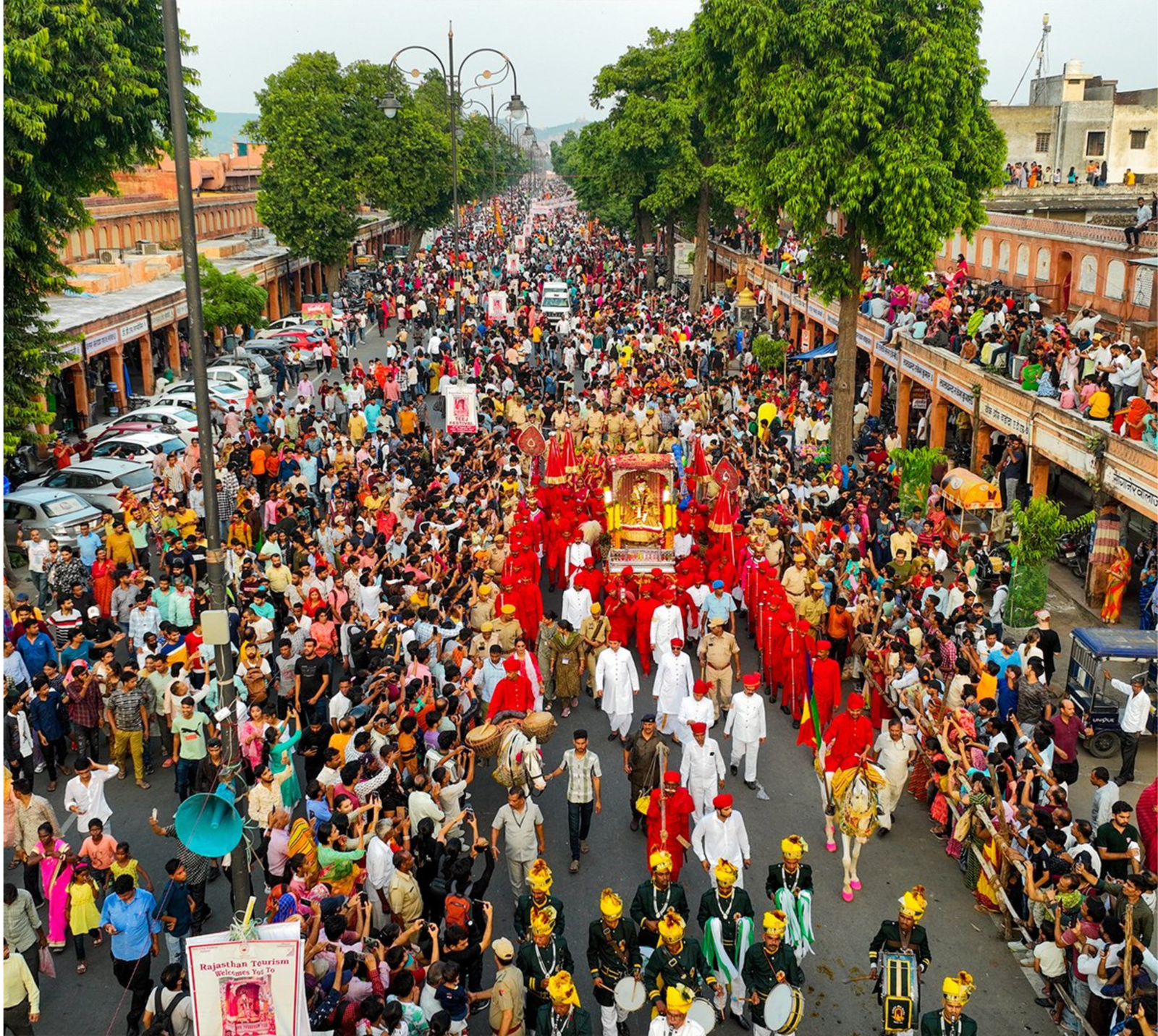
The Teej Mata sawari emerges from the City Palace through the Tripolia Gate in the late afternoon and travels through Tripolia Bazaar, Chhoti Chaupar, Gangauri Bazaar and Chaugan Stadium. The procession includes caparisoned elephants, camels in painted livery, horses, palace guards in traditional uniforms, brass bands and folk troupes performing Kalbeliya, Ghoomar and Chari dances. A second procession follows the next afternoon, drawing equally large crowds.
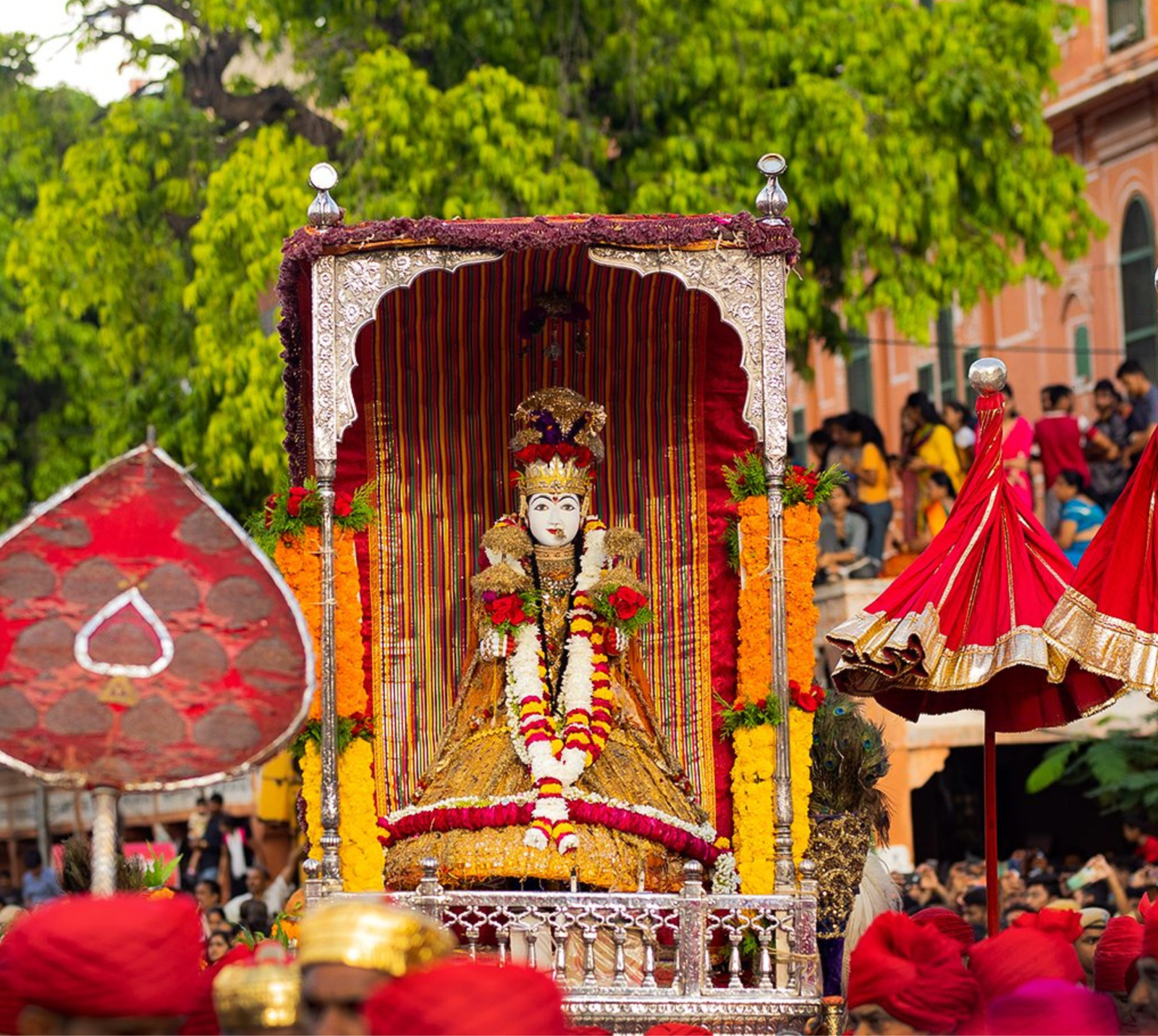
At the heart of the procession is the gilded palanquin carrying the idol of Goddess Teej, an image of Parvati richly dressed and decorated with jewels and flowers. The palanquin is carried on the shoulders of bearers in traditional dress, and is the most photographed moment of the parade.
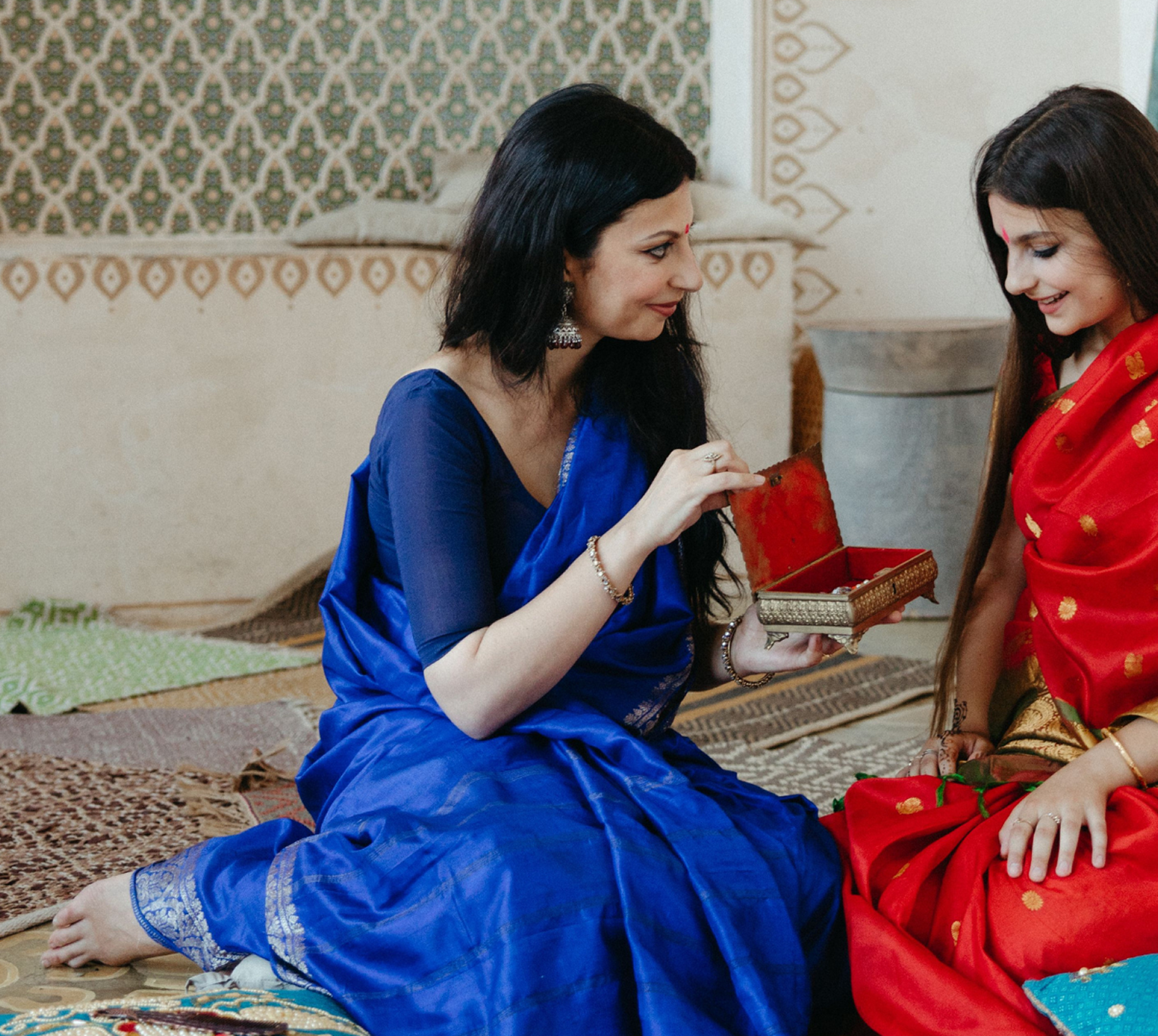
Women across the city wear lehariya saris and dupattas, a tie-dyed Rajasthani textile featuring diagonal wave patterns in bright colours. Green and red are the dominant shades, and Jaipur's bazaars stock fresh lehariya weeks before the festival.
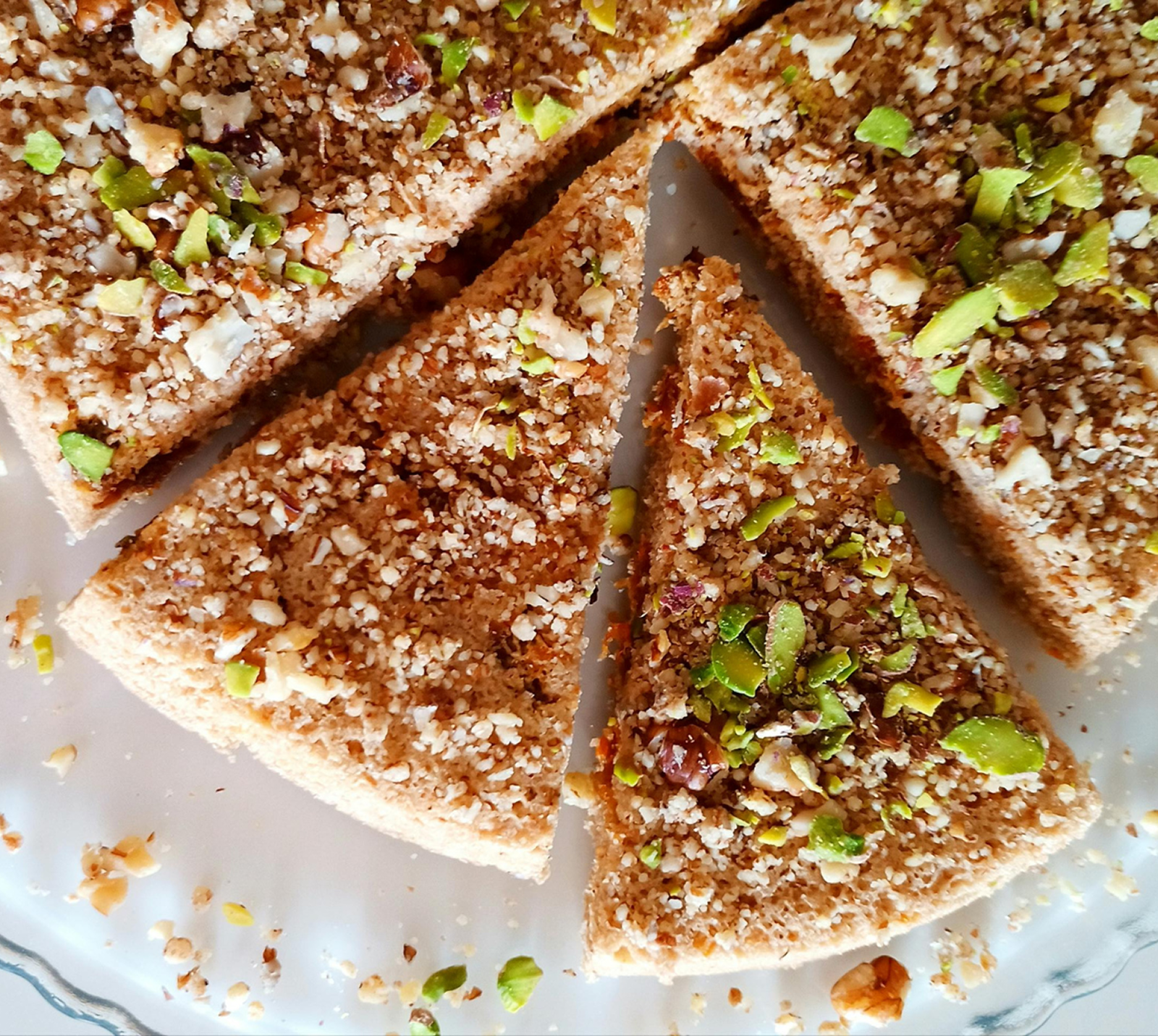
No Teej celebration is complete without ghewar, the honeycombed, disc-shaped sweet made of flour, ghee and milk, fried in ghee and soaked in sugar syrup, topped with cream, rabri or dry fruits. Sweet shops in Johari Bazaar, MI Road, and Chaura Rasta begin preparing it as early as July. Other festive foods include feeni, gujiya and malpua.
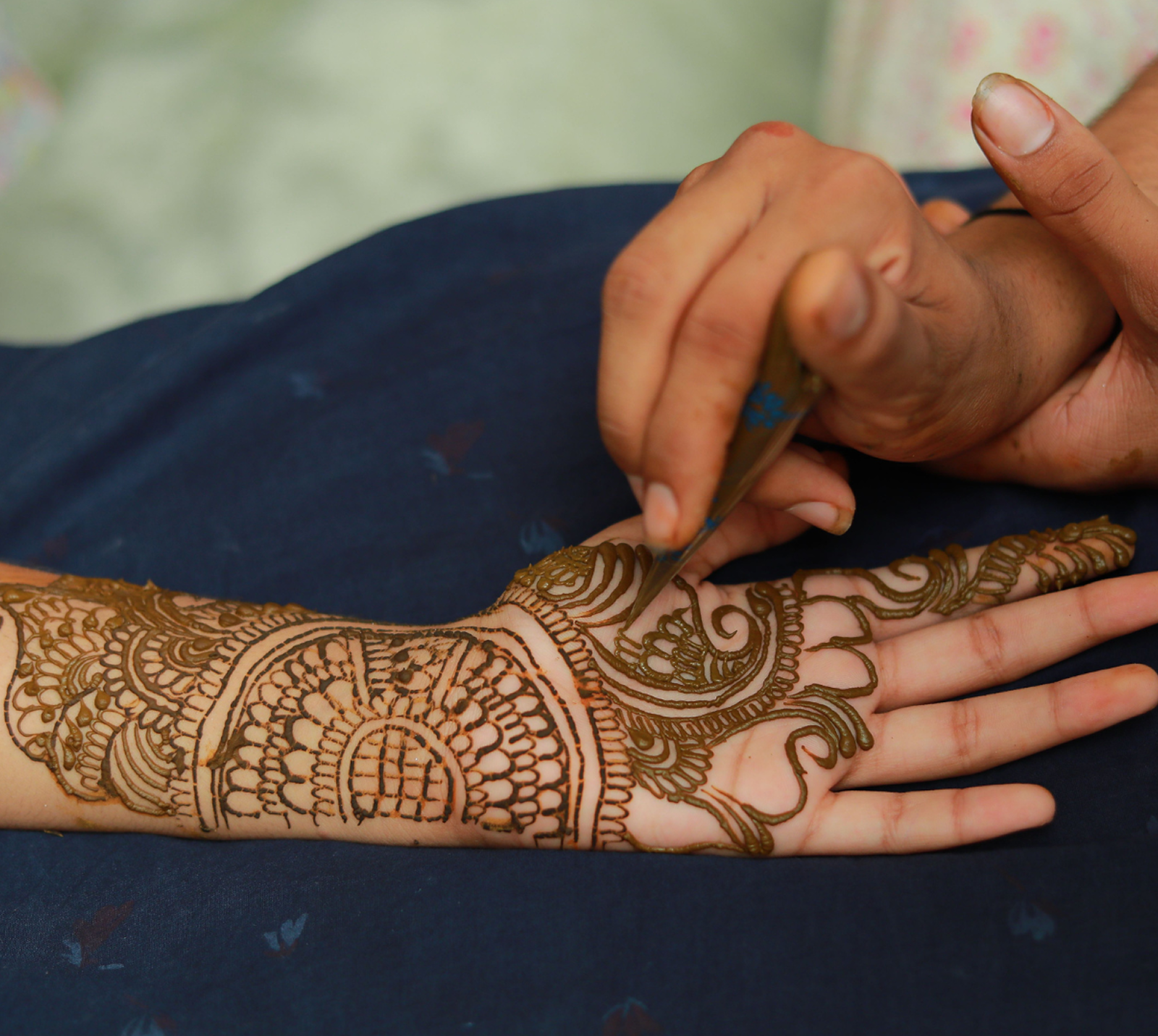
Across homes and havelis, women apply intricate henna designs on their hands and feet, gather around jhoolas (swings) hung from neem trees and sing traditional Teej songs. Many heritage hotels and boutique stays in Jaipur host private mehndi and swing sessions as part of their cultural programming during the festival.
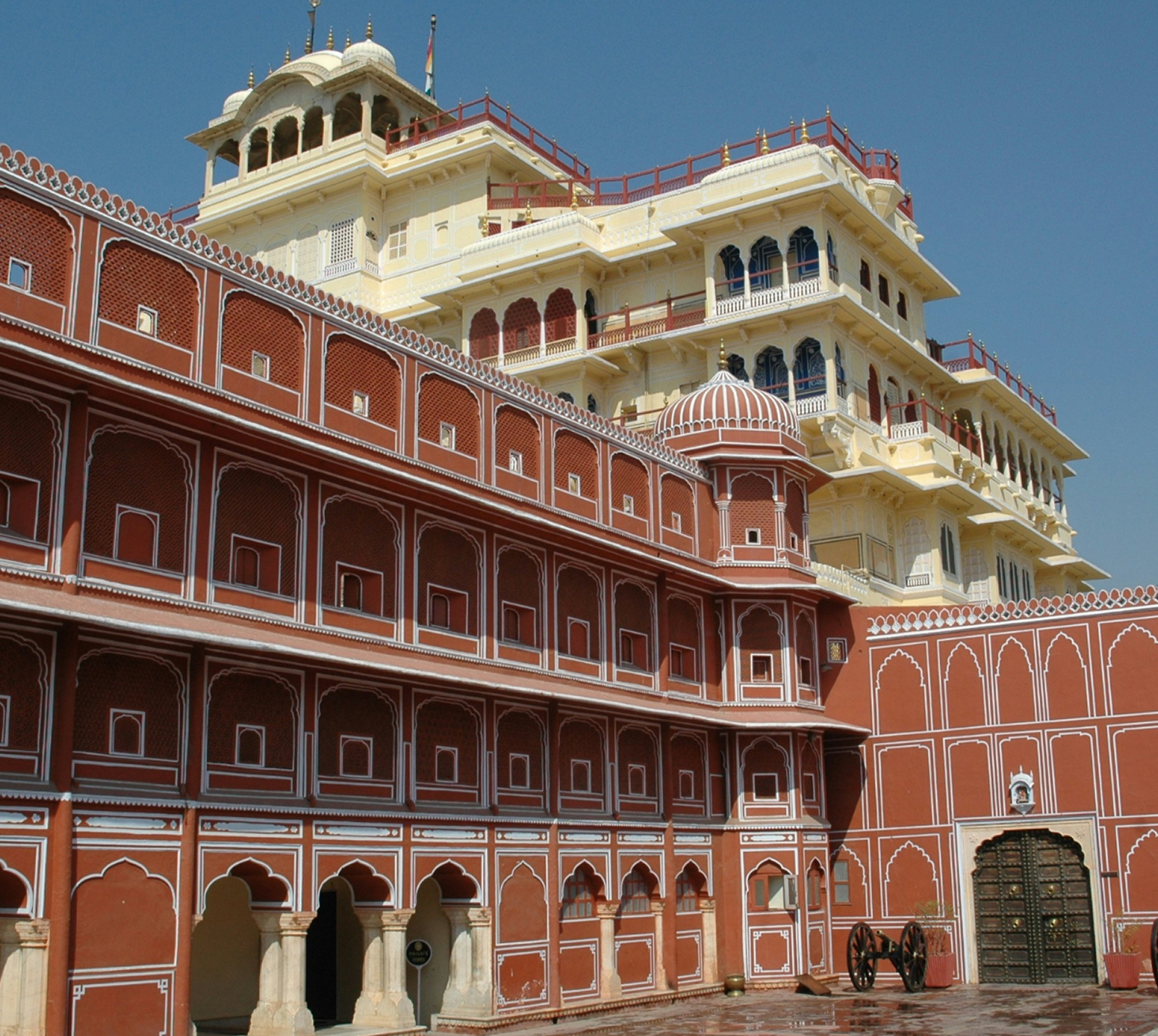
The historic royal residence and starting point of the procession, with its museums, courtyards and ceremonial gates.
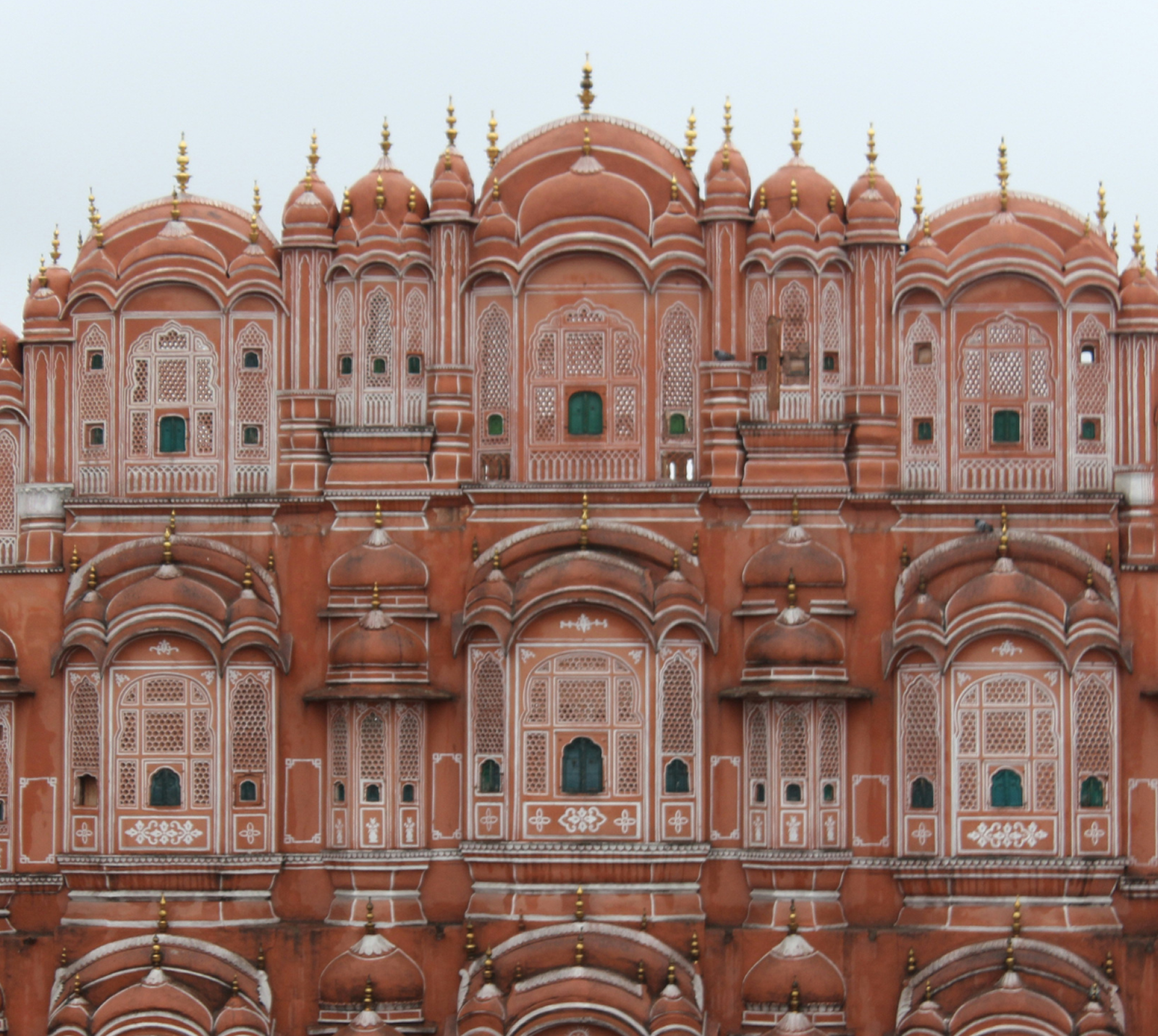
The iconic Palace of Winds with 953 jharokhas, just a few steps from the procession route.
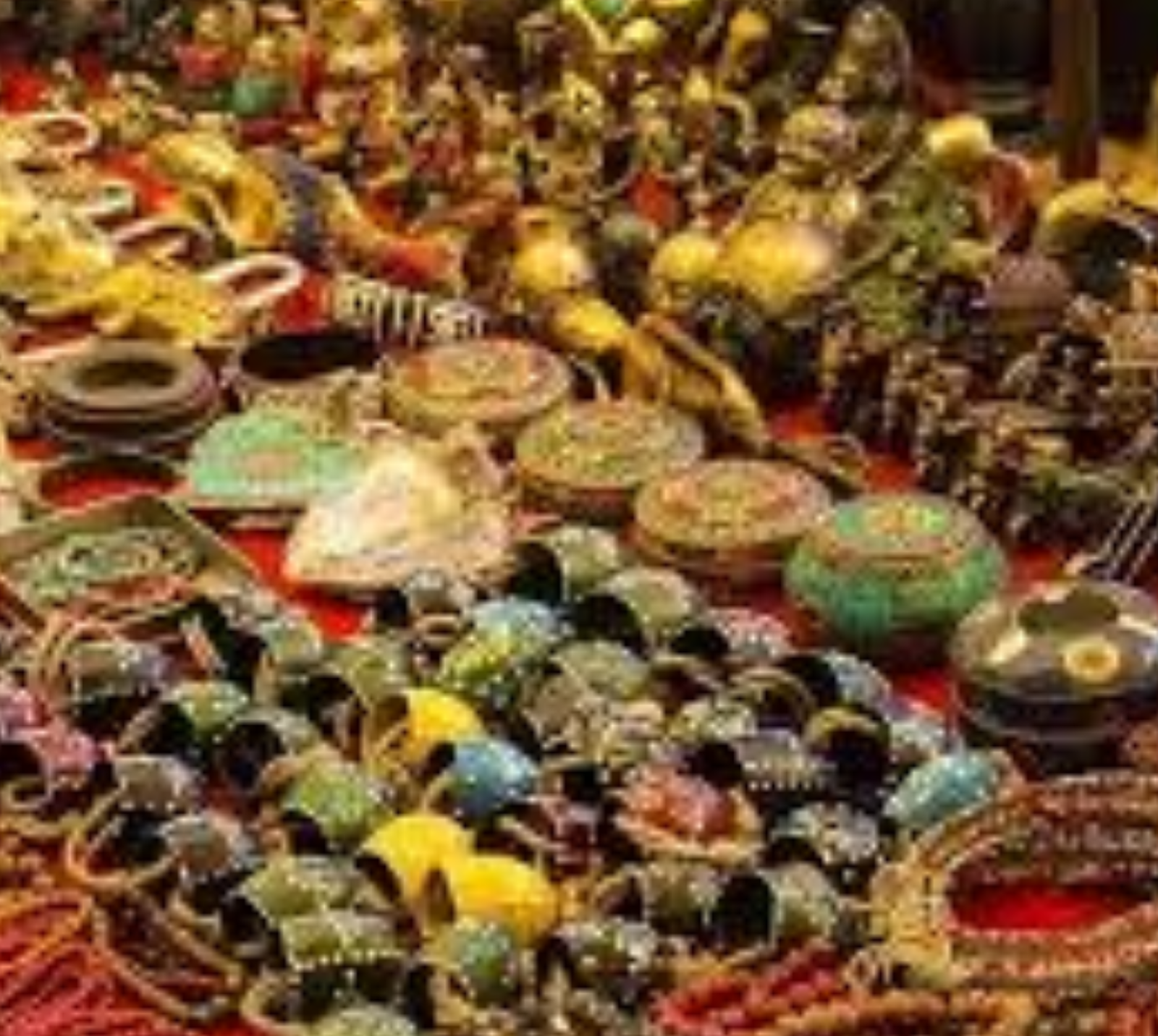
The legendary jewellery market where lehariya, bandhej and silver are sold in abundance during festival week.
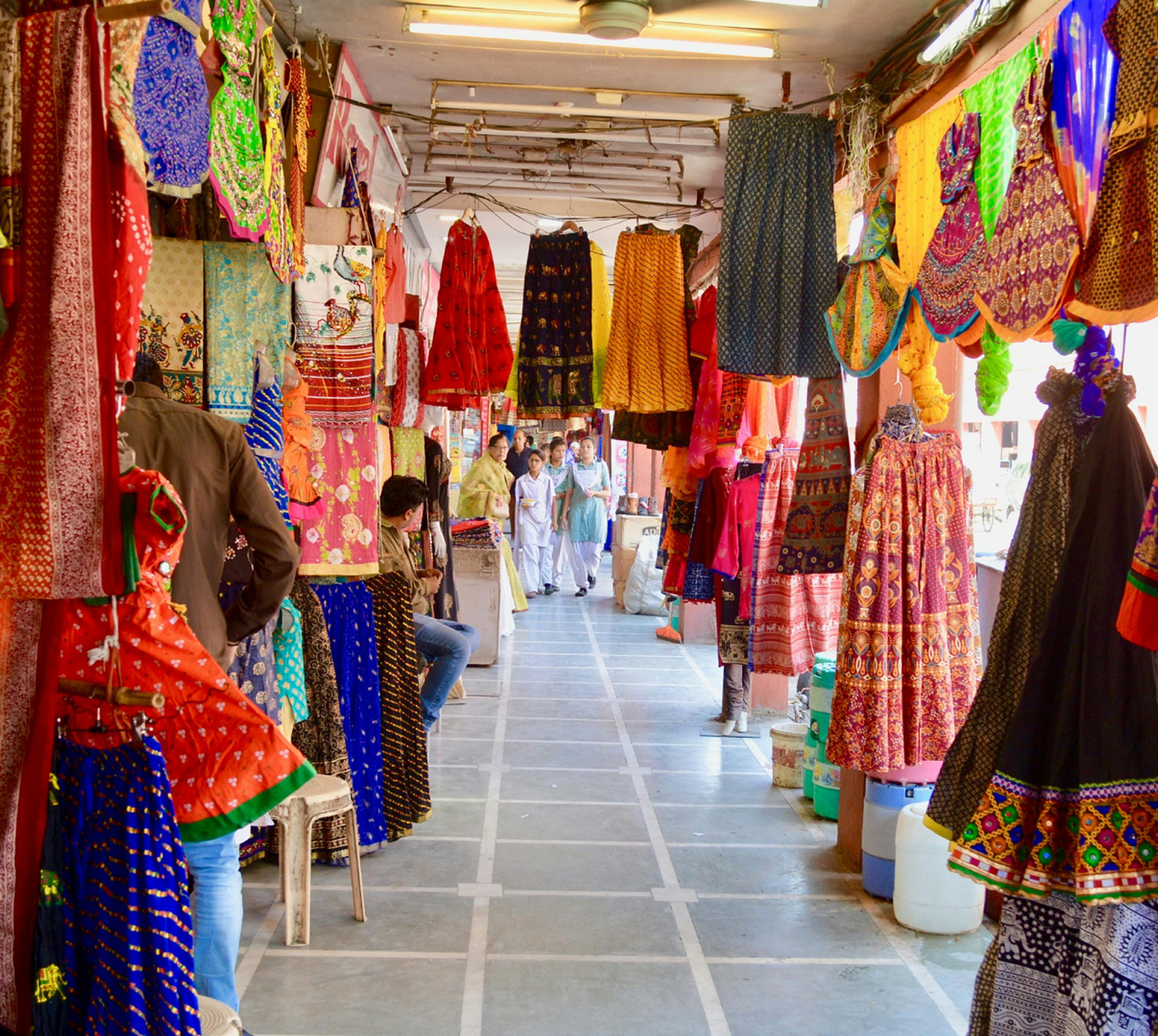
A working bazaar full of brass, ironmongery and lac bangles, transformed into the heart of the procession route.
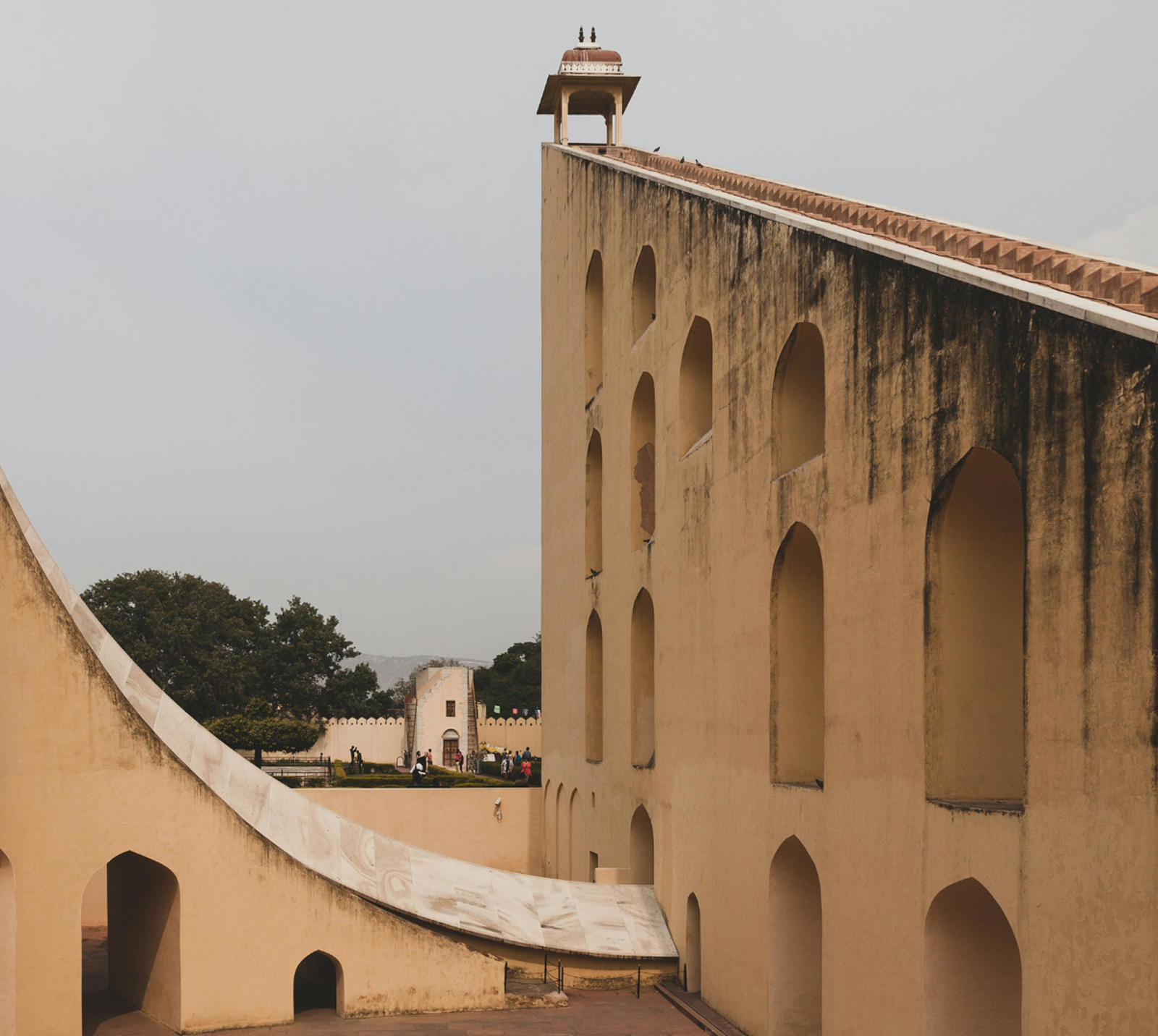
The 18th-century astronomical observatory of Sawai Jai Singh II is a short walk from the City Palace.