


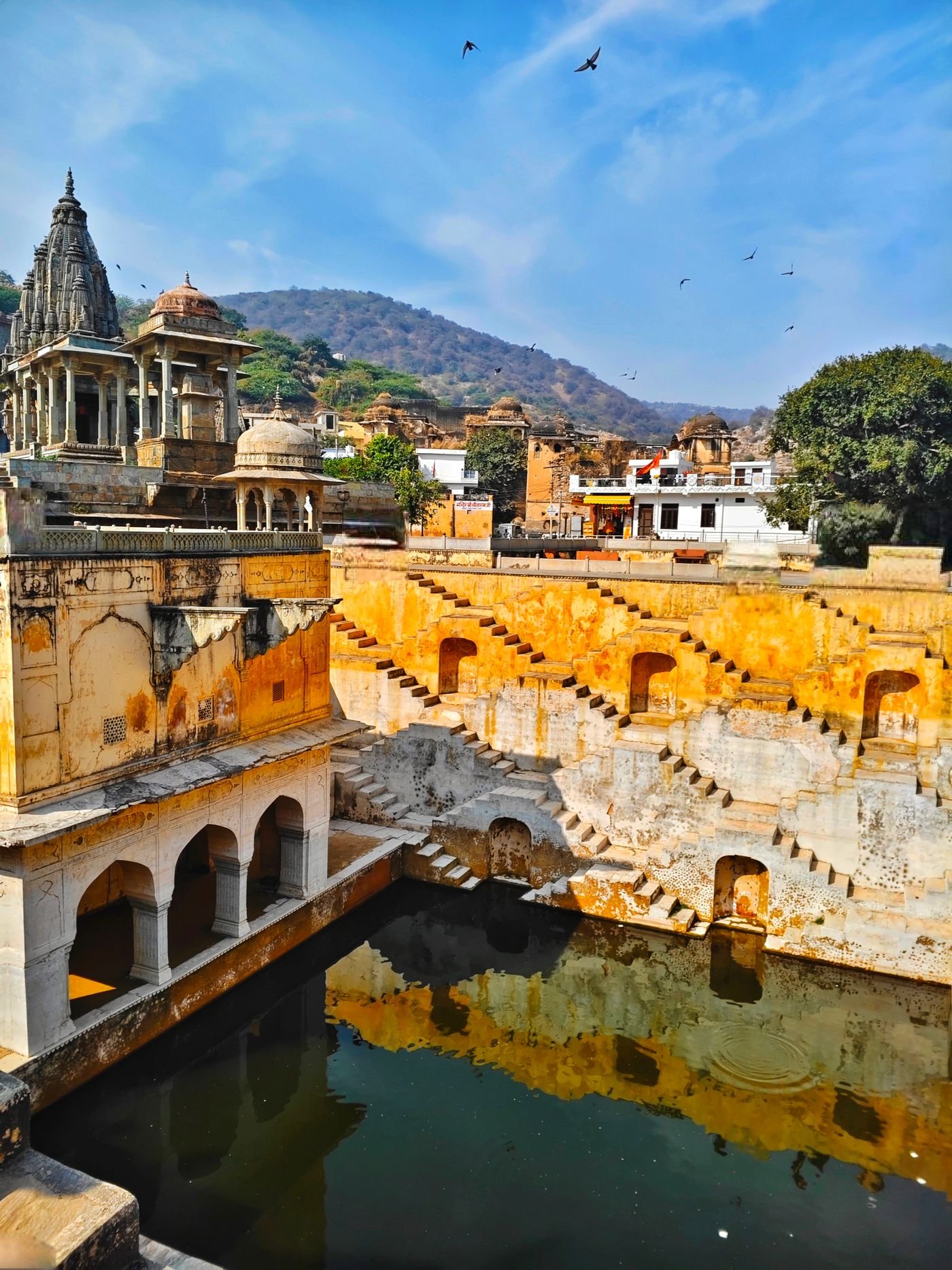

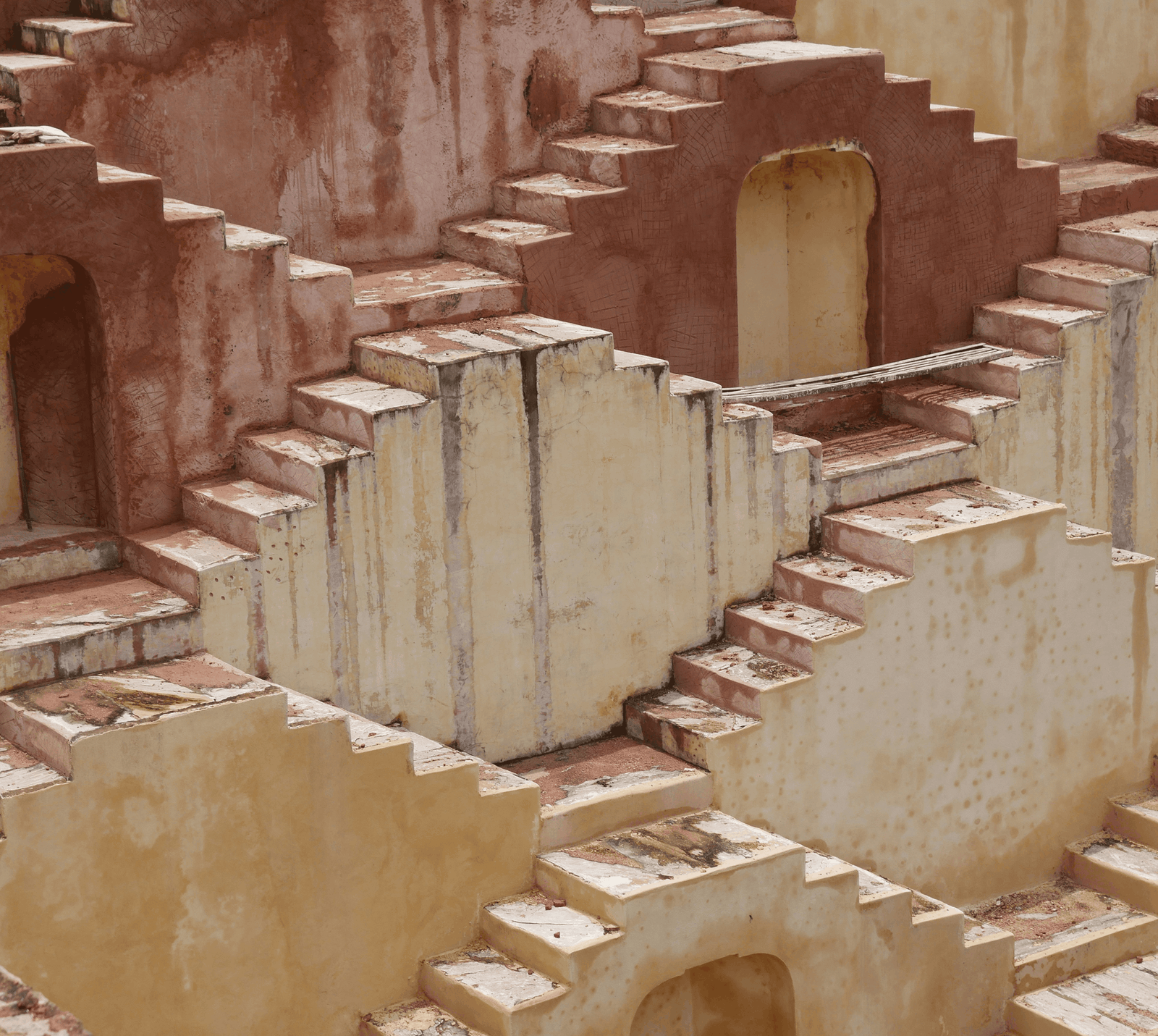
The defining feature of Panna Meena ka Kund is its network of crisscrossing stone staircases, which descend the walls in a perfectly symmetrical zigzag. Seen from the upper edge, the steps form a mesmerising geometric pattern that has made the kund one of the most photographed stepwells in Rajasthan.
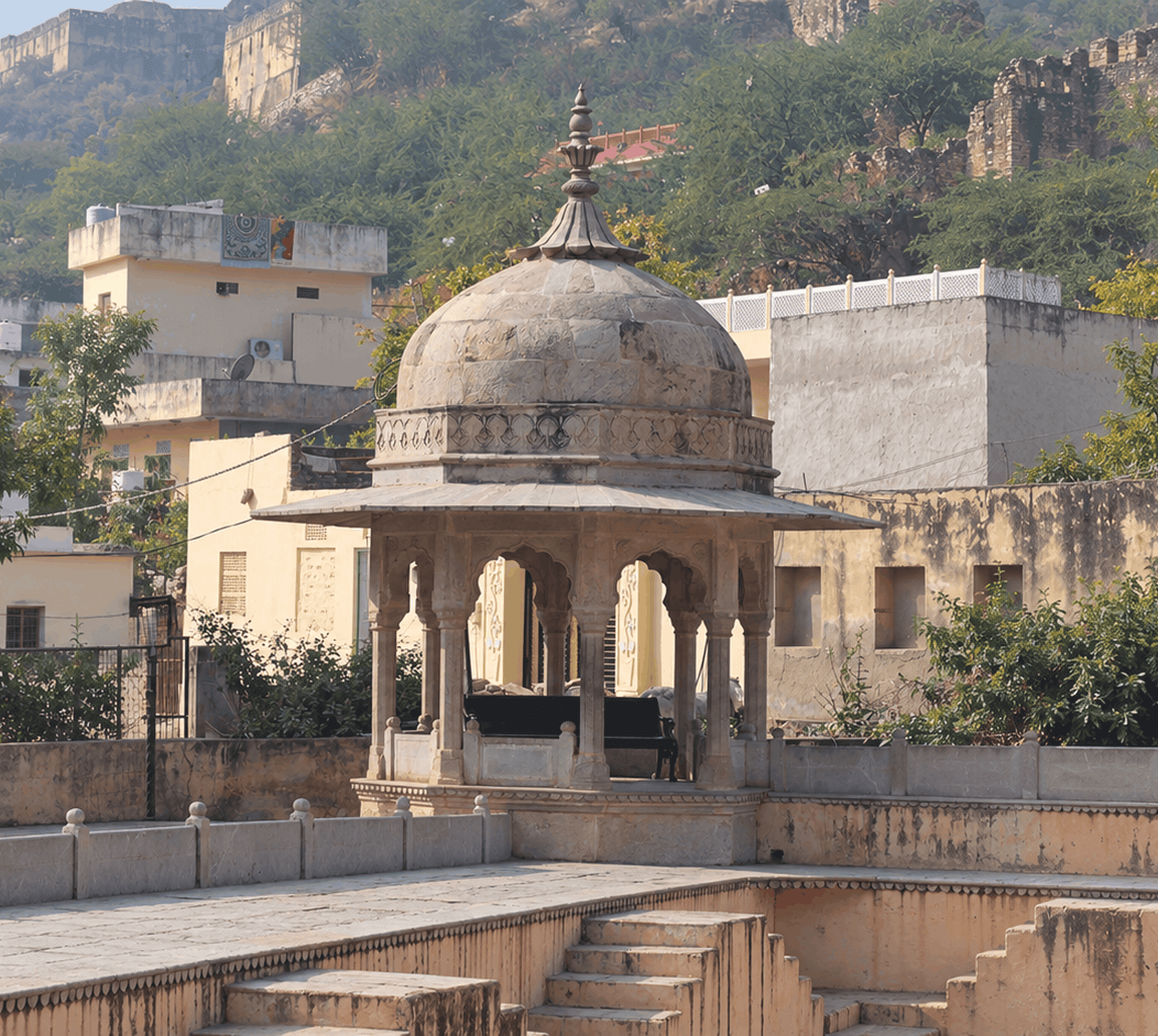
An octagonal chhatri, or domed pavilion, stands at each of the four corners of the tank. These provided shade and a place to sit for those who came to collect water, and they frame the stepwell's symmetry from above.
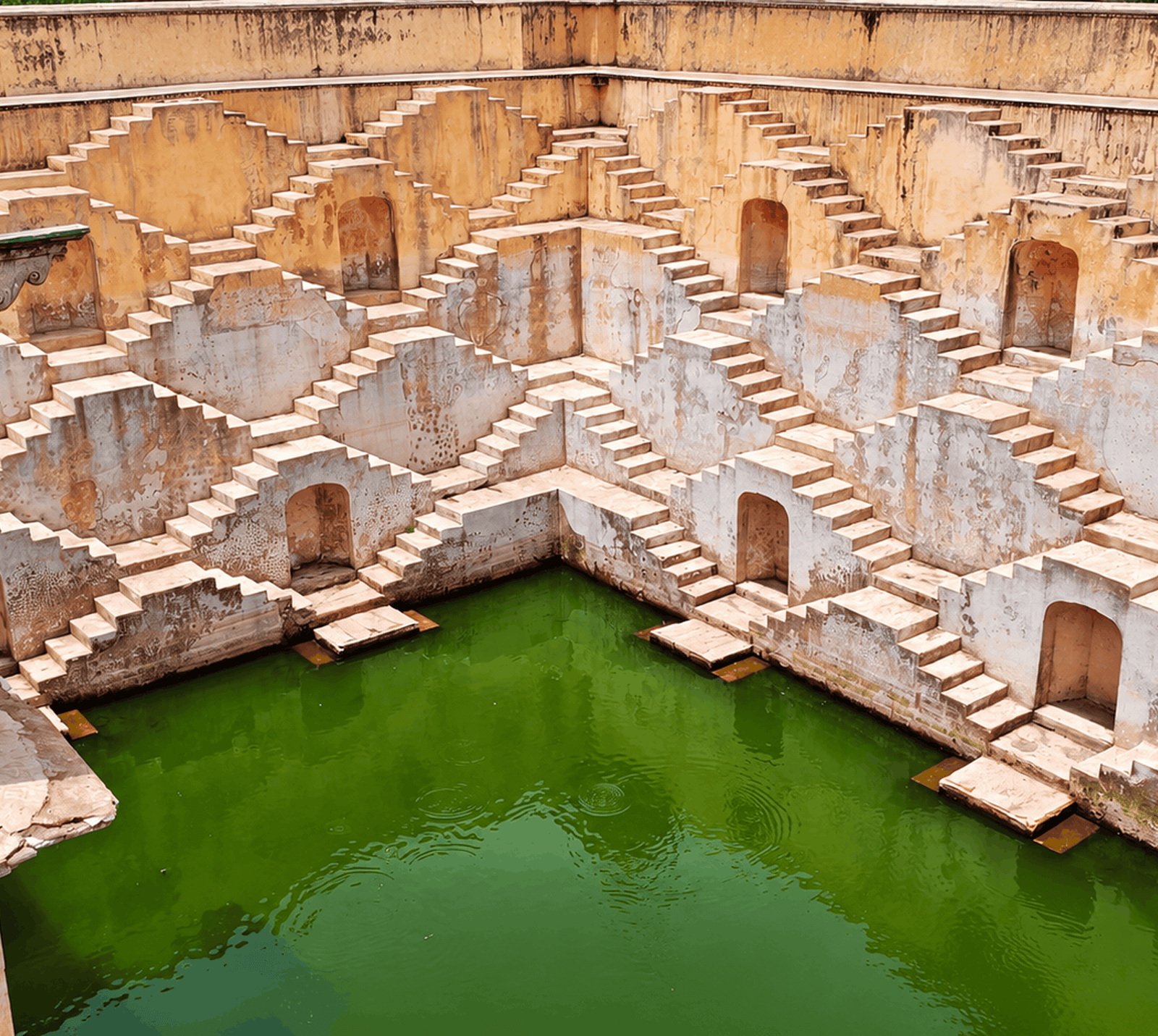
The kund descends in eight storeys, built so that water could be reached at any level as it rose and fell with the seasons. Niches and small platforms are set between the stair levels, adding to both the design and the structure's usefulness.
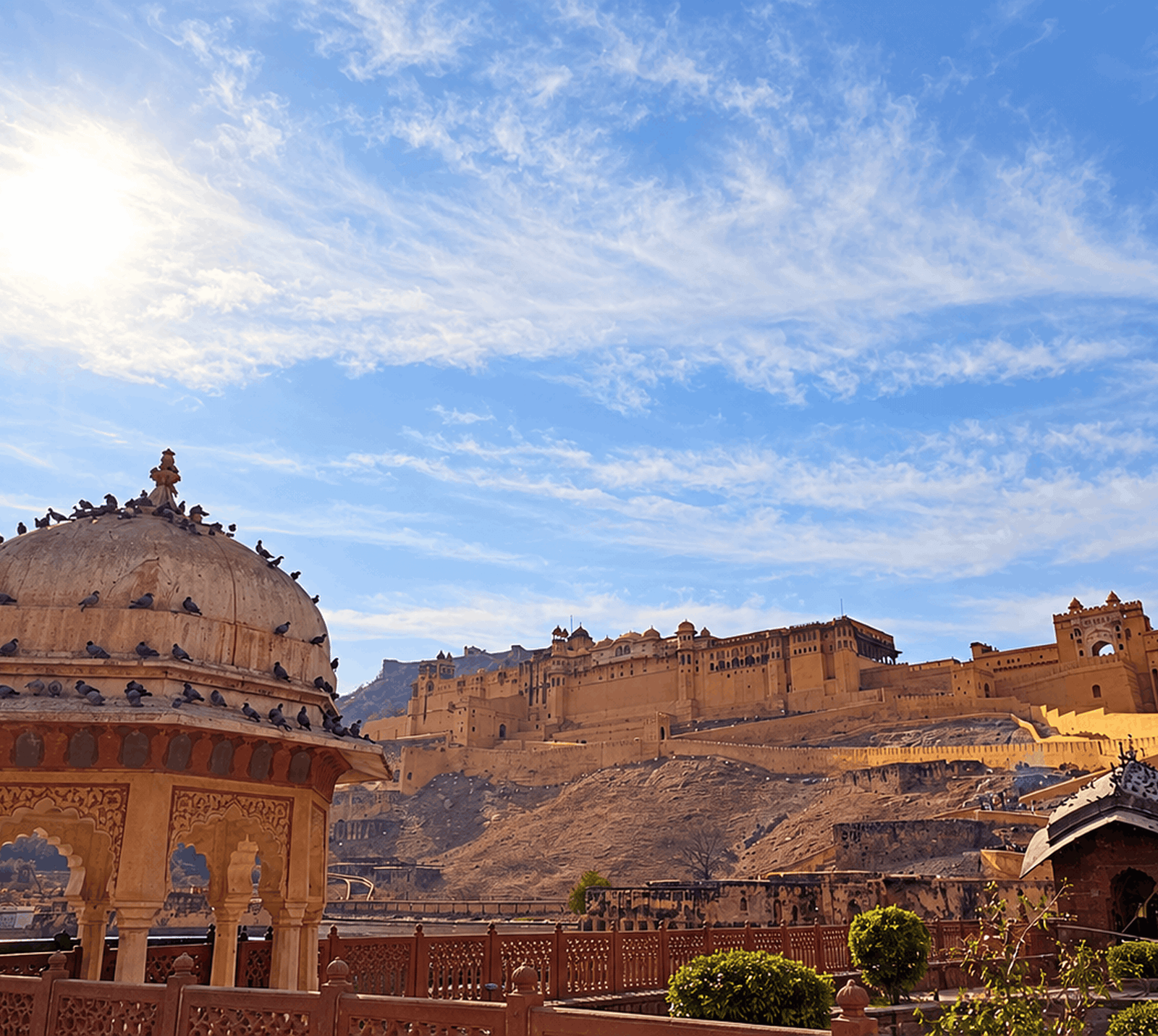
Unlike the busy Amer Fort just up the road, Panna Meena ka Kund is usually calm and uncrowded, which is a large part of its appeal. It makes a peaceful, atmospheric stop for those wanting a few minutes of quiet and some of the best stepwell photography in Jaipur.
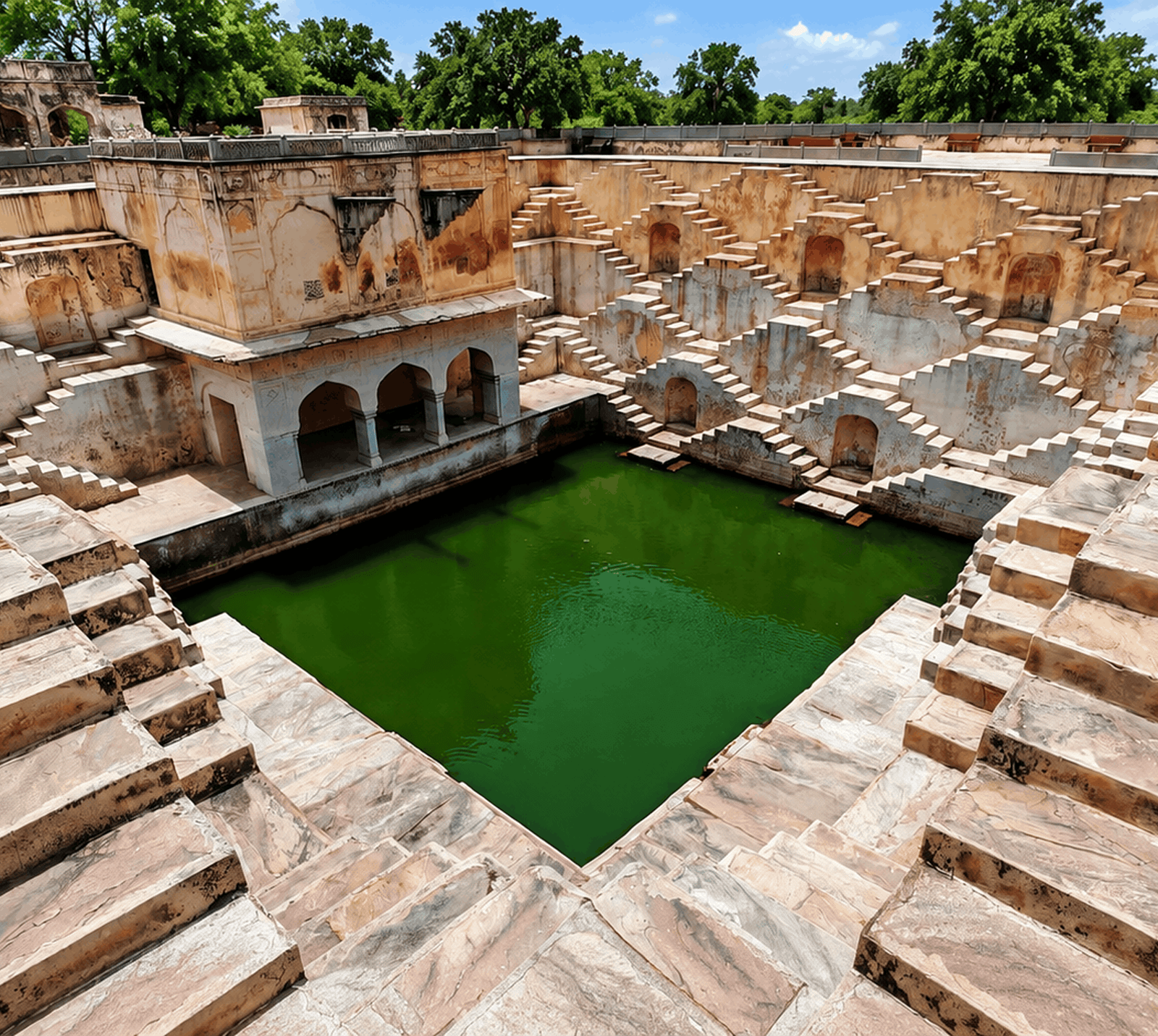
The kund's dramatic geometry has made it a favourite backdrop for photo shoots and film crews, and it is a well-known spot for travel and fashion photography. Its proximity to Amer Fort makes it easy to combine the two in a single morning.
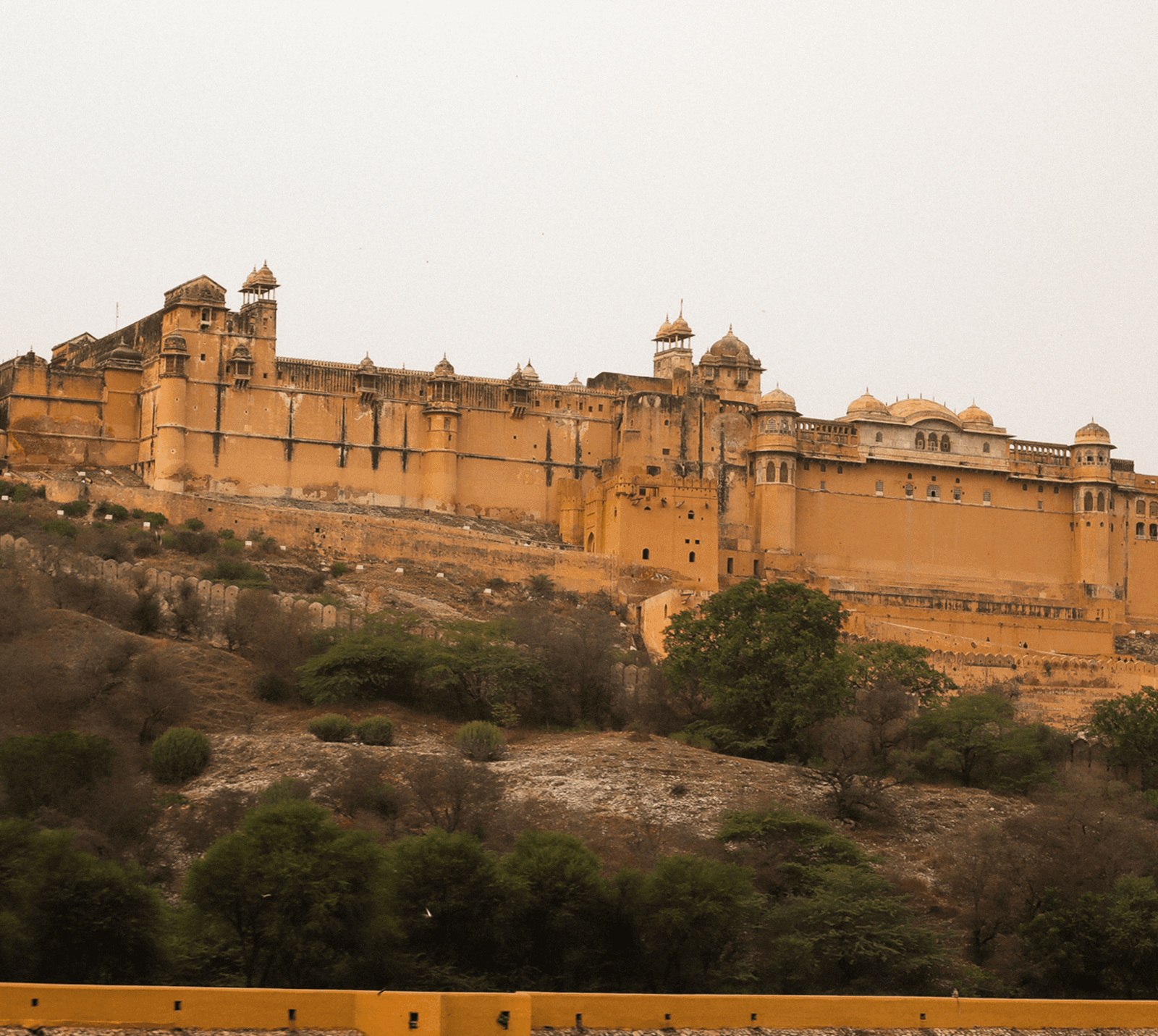
The UNESCO-listed hill fort of the Kachwaha dynasty, about 1 km away, with its Sheesh Mahal, Ganesh Pol, and sweeping views over Maota Lake.
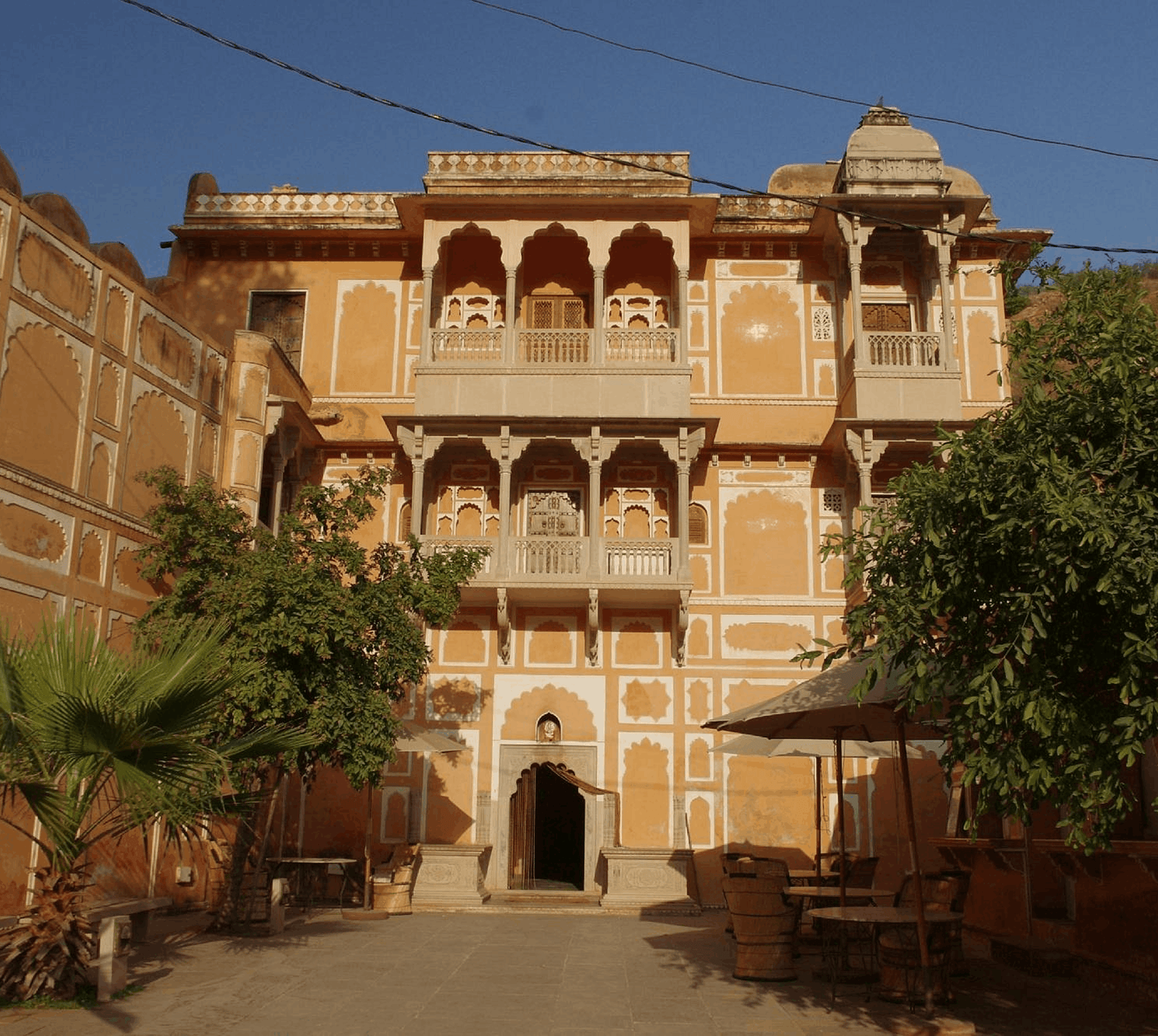
Housed in a restored haveli close to the kund, this museum traces the craft of hand block printing through textile displays, demonstrations, and an archive of carved blocks.
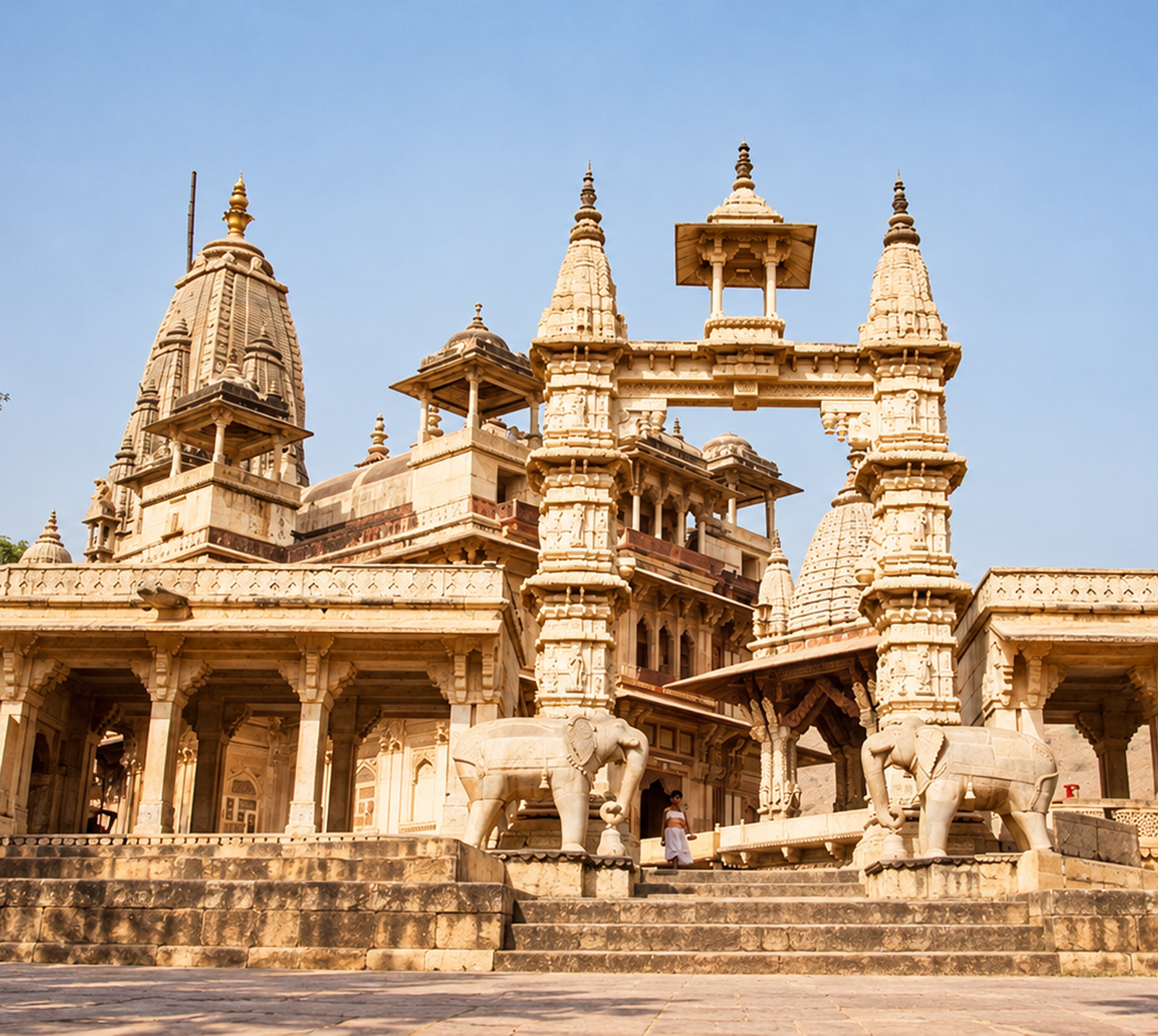
A 16th to 17th century temple in Amer town dedicated to Krishna and Meera Bai, known for its carved torana gateway and marble work.
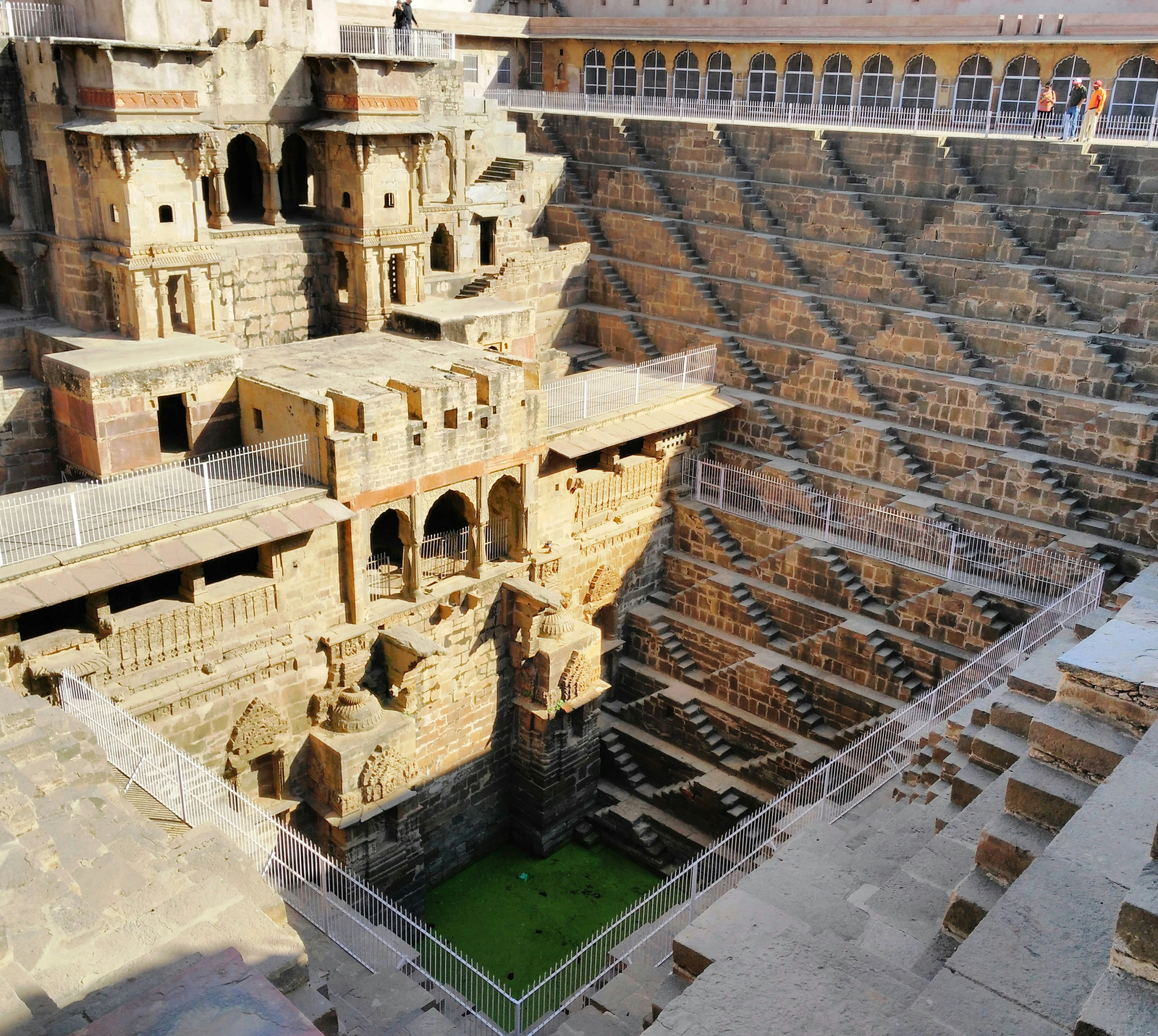
Visitors often compare this kund with Chand Baori at Abhaneri. Panna Meena ka Kund is the smaller and more accessible of the two, close to Amer Fort, while Chand Baori is far larger, older, and about 95 km from Jaipur. Seeing both gives a fuller picture of Rajasthan's stepwell tradition.