


Amer Fort, also known as Amber Fort, is one of Rajasthan’s most majestic and best-preserved heritage forts, overlooking the serene Maota Lake. Located about 11 kilometres from Jaipur, it is an architectural masterpiece that beautifully integrates Rajput and Mughal styles. Built in 1592 by Raja Man Singh I, the fort served as the primary residence of the Kachwaha rulers before Jaipur was established.
With its grand courtyards, marble halls, and intricate frescoes, Amer Fort Jaipur showcases Rajasthan’s royal history and architectural splendour. From the decorated Sheesh Mahal (Mirror Palace) to panoramic hilltop views, every corner carries the elegance and artistry of a bygone era.
Amer Fort, known locally as Amer ka Kila and also called Amber Fort, was built in 1592 by Raja Man Singh I, a general under Mughal emperor Akbar, on the site of a much older settlement founded around 967 CE. It served as the seat of the Kachwaha Rajput dynasty until 1727, when the capital moved to the newly founded city of Jaipur. Today it forms part of the UNESCO-listed Hill Forts of Rajasthan, valued for its mix of Rajput and Mughal architecture.
Long before Raja Man Singh I began work on the fort seen today, the area was a small settlement founded by Raja Alan Singh of the Chanda clan of Meenas in 967 CE. In the centuries that followed, Amer passed into the hands of the Kachwaha Rajputs, who gradually established the region as their base before building the fort that stands here now.
Construction of the present-day fort began in 1592 under Raja Man Singh I, who built over the remains of the earlier settlement. His descendant Mirza Raja Jai Singh I expanded the complex in the seventeenth century, adding further courtyards and palace buildings, and Sawai Jai Singh II continued this work in the early eighteenth century before turning his attention to a new capital nearby.
In 1727, Sawai Jai Singh II moved the Kachwaha capital from Amer to the newly founded city of Jaipur, and Amer Fort’s role changed from active royal seat to preserved architectural landmark. It remains under the care of the Rajasthan government today and was inscribed as a UNESCO World Heritage Site in 2013, as part of the Hill Forts of Rajasthan.
Built from red sandstone and white marble, Amer Fort brings together Hindu and Mughal architectural traditions in a style sometimes called Indo-Islamic. The complex is arranged around four main courtyards, each serving a different purpose within the royal household.
The Diwan-i-Aam (Hall of Public Audience), Diwan-i-Khas (Hall of Private Audience), Ganesh Pol Gate, and Sheesh Mahal are its most celebrated spaces, each carrying detailed mirror work, marble carvings, and lattice screens that speak to the wealth of the Rajput court. Positioned on the Aravalli hills, the fort also functioned as a defensive stronghold, linked to Jaigarh Fort by a tunnel once used as an escape route during battles.

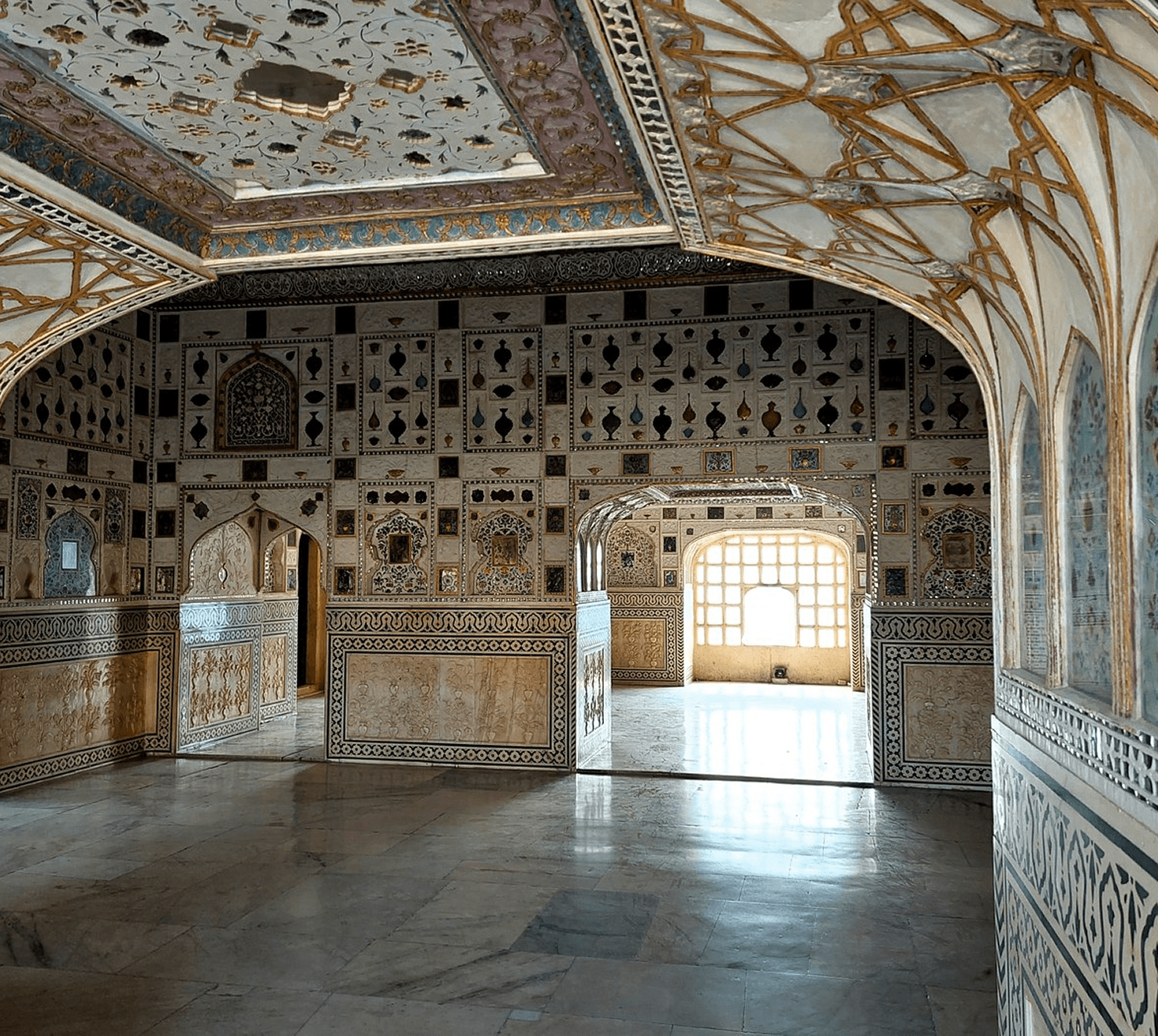
One of Amer Fort’s most famous sections, the Sheesh Mahal, is adorned with intricate mirror mosaics and coloured glass that shimmer beautifully under candlelight.
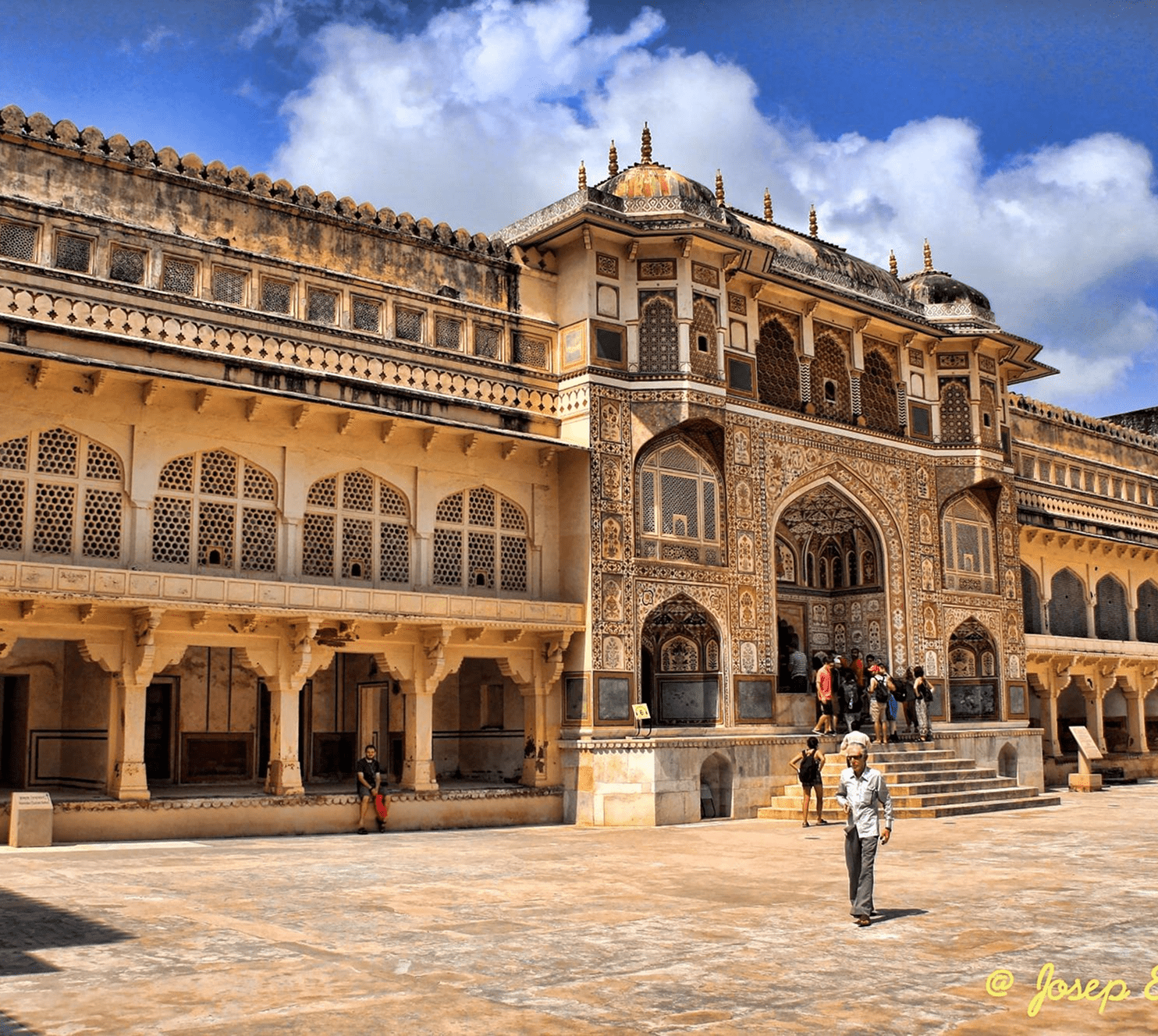
The stunning gateway that leads to the private palaces of the Maharajas is decorated with frescoes and delicate floral motifs symbolising prosperity and power.
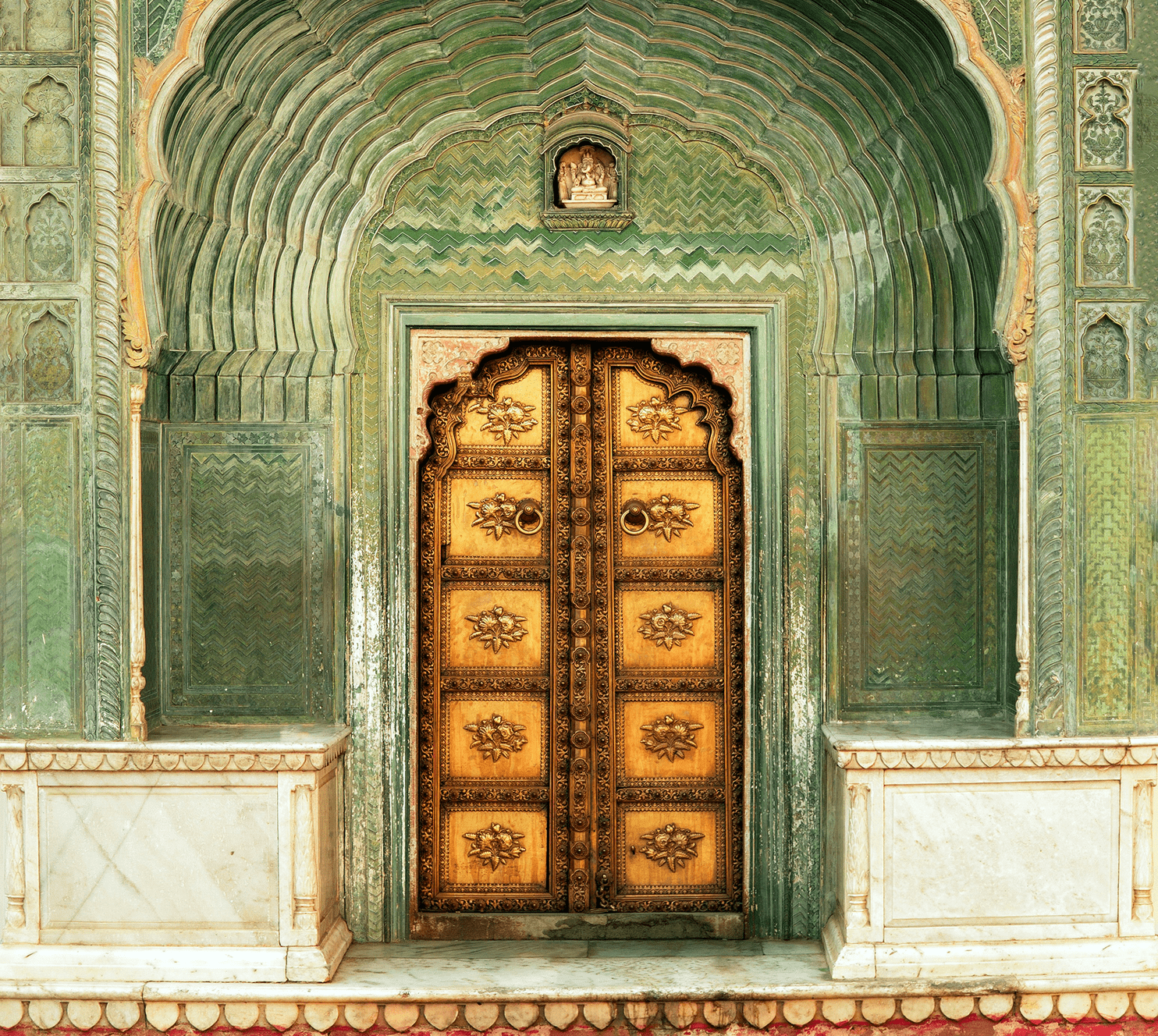
These audience halls once hosted royal meetings and celebrations. Their marble pillars and arches reflect Mughal influences blended with traditional Rajasthani elements.
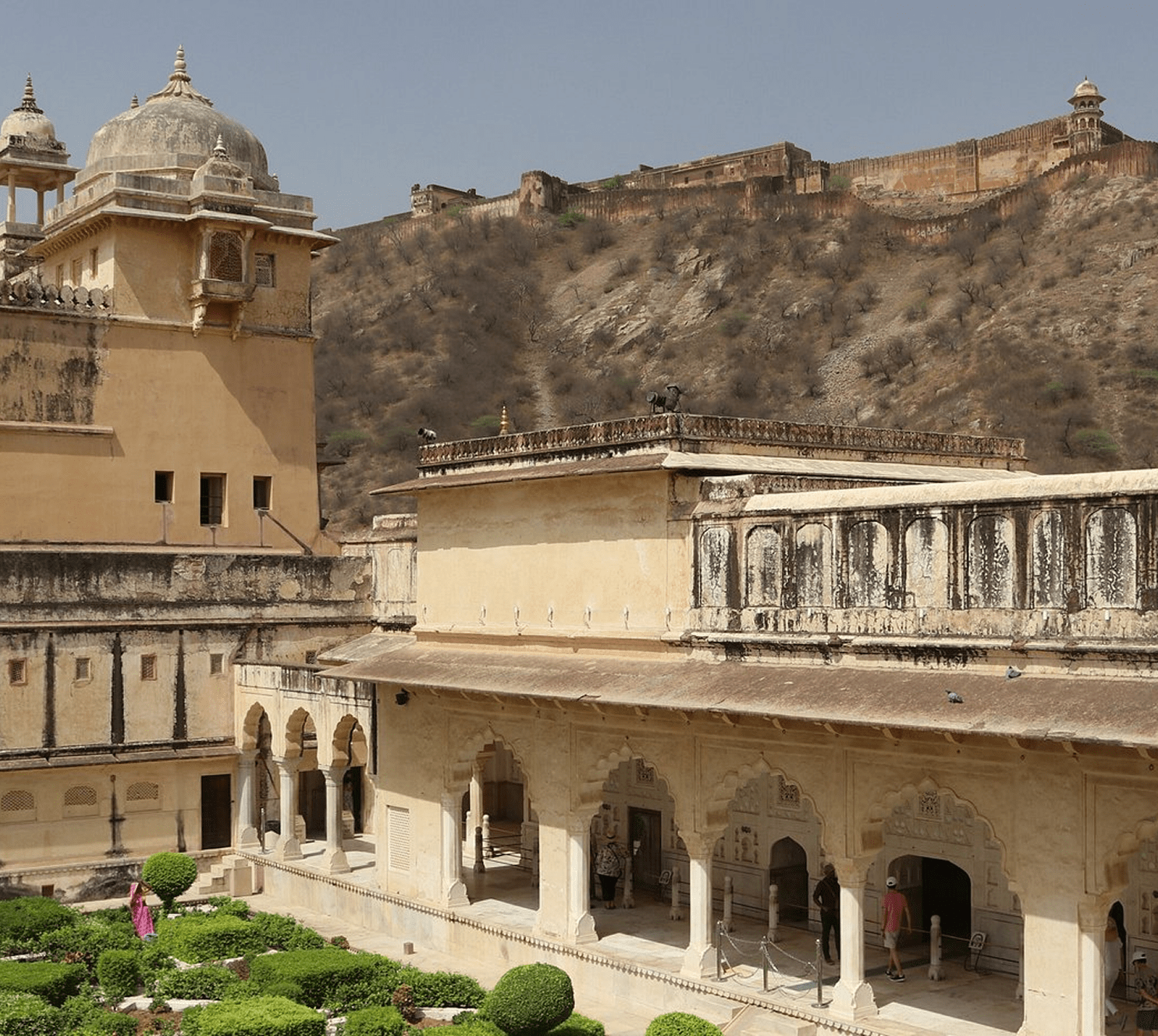
An ingenious cooling chamber, with perforated sandalwood doors and flowing water, provided natural air conditioning for the royals.
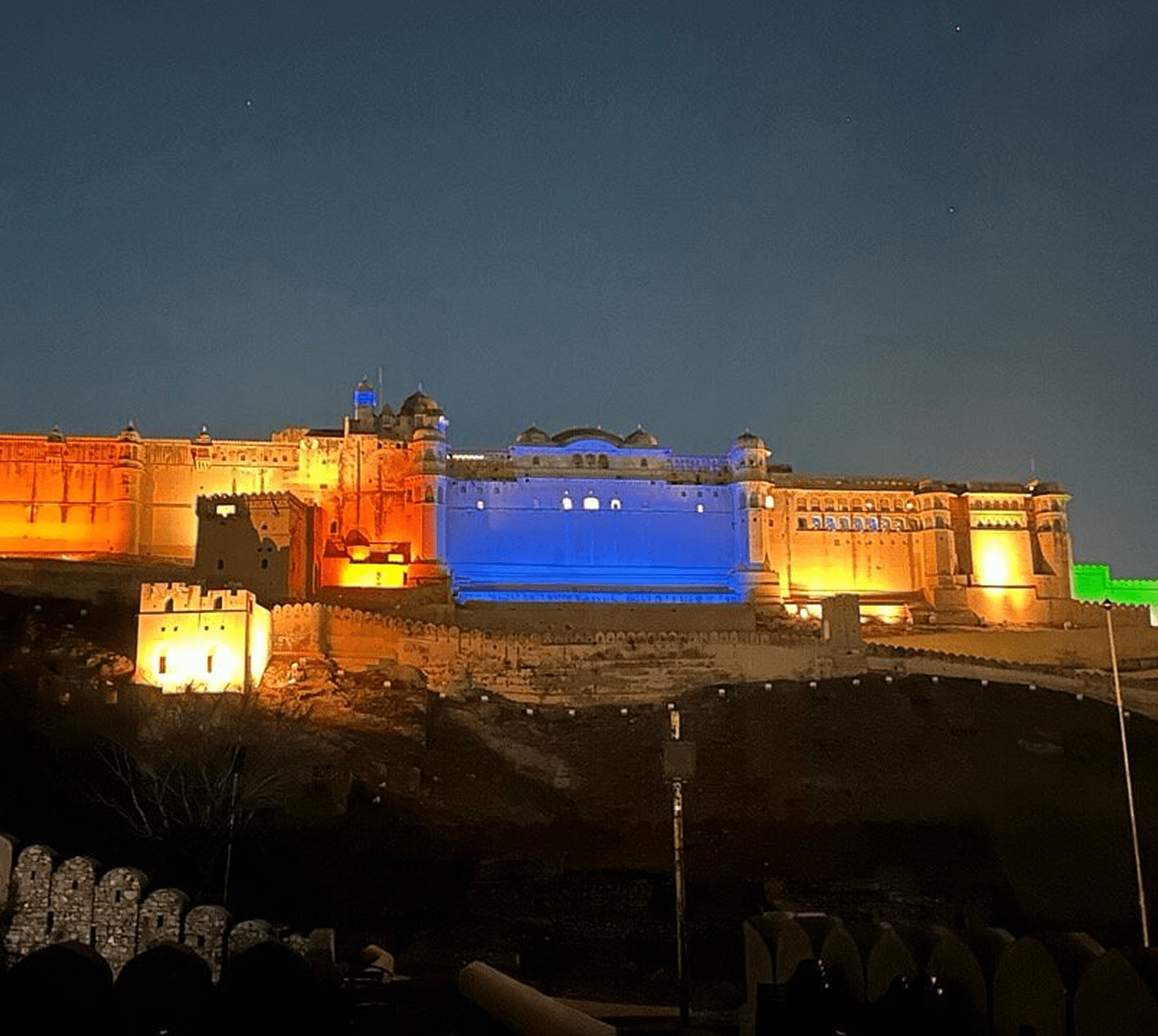
Held every evening, this show narrates the fort’s royal history through music and storytelling, illuminating the fort’s façade with dramatic lighting.
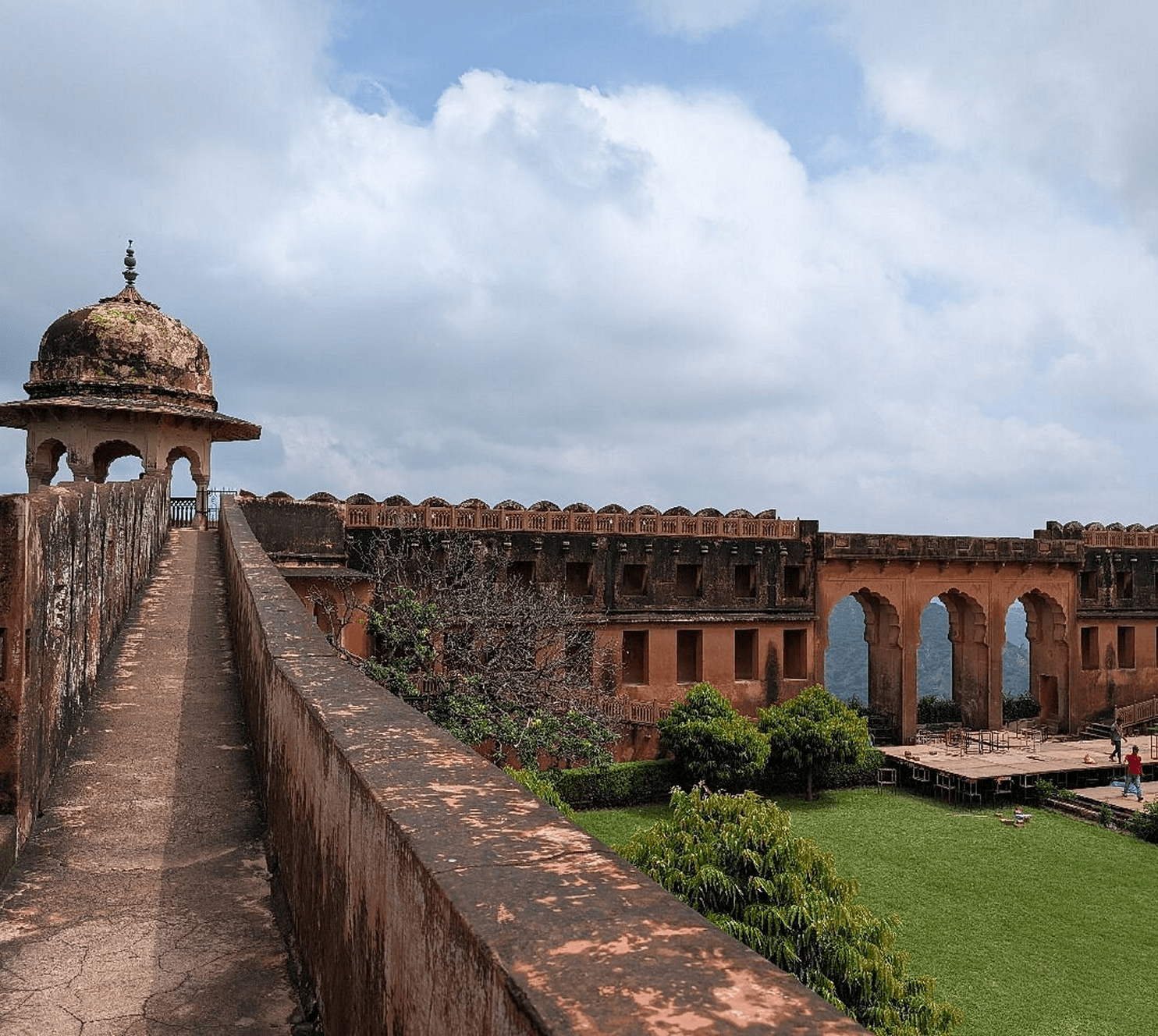
Known for its military architecture and the world’s largest cannon on wheels.
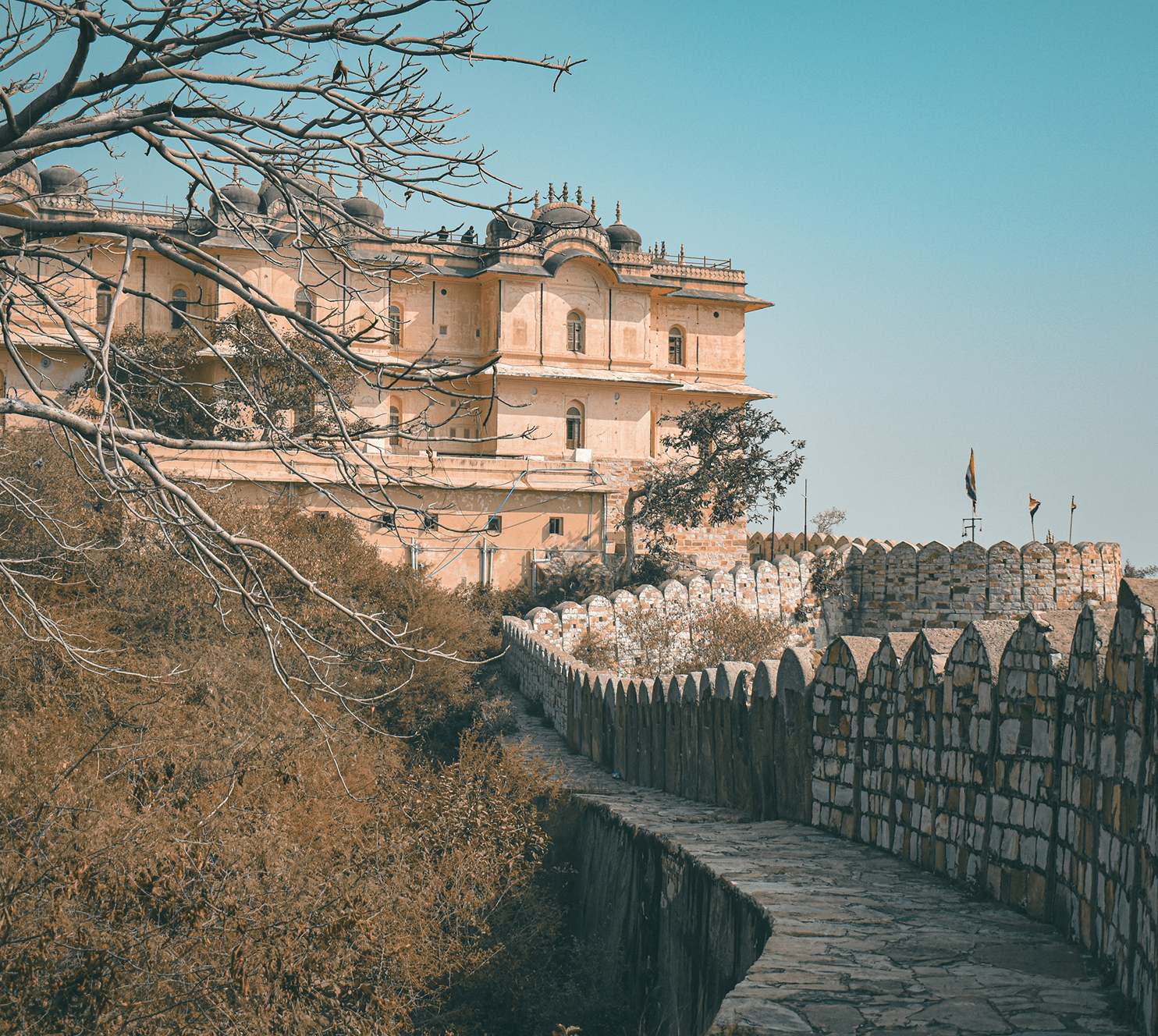
Has panoramic views of Jaipur city.
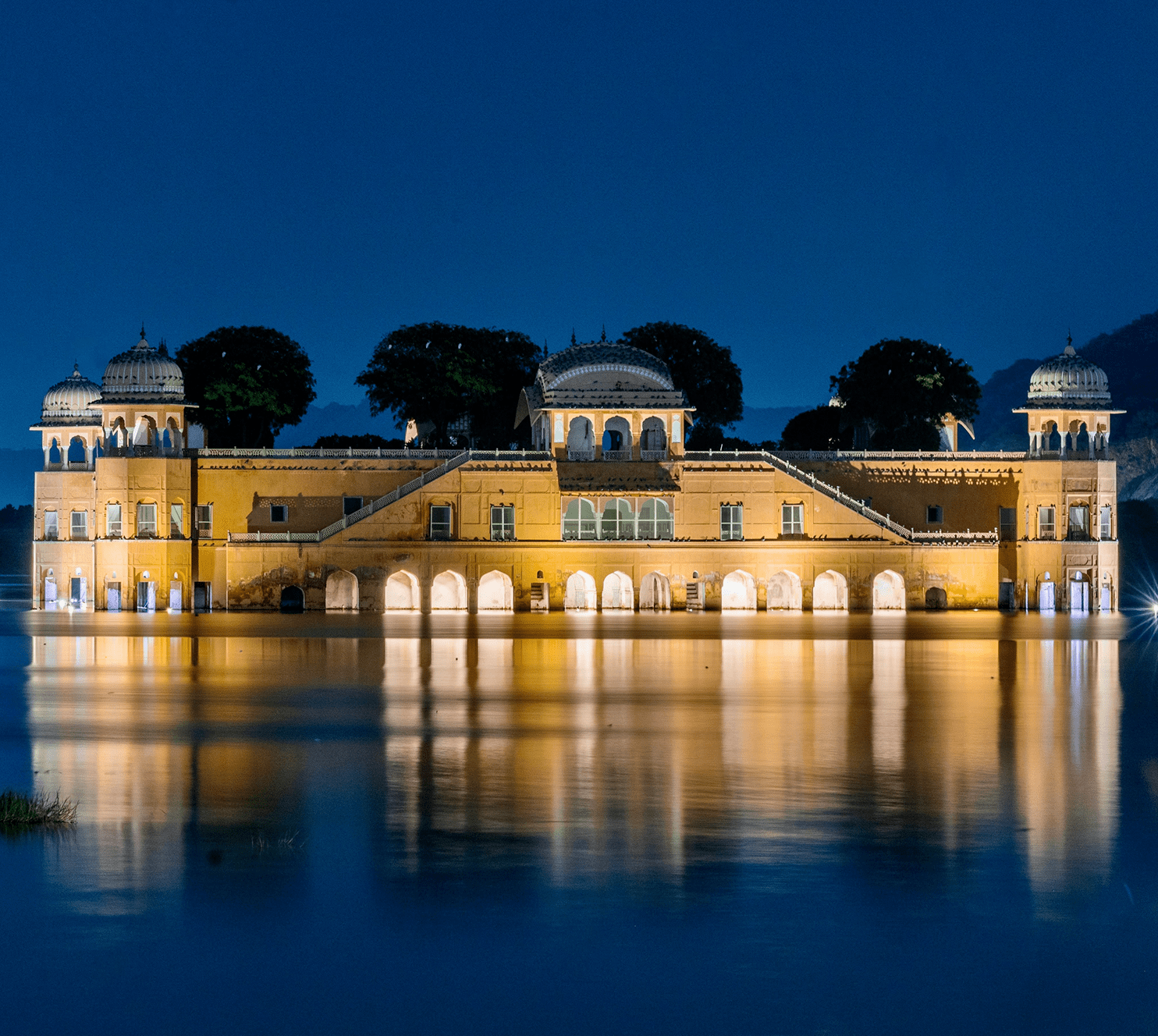
A picturesque water palace on Maota Lake, visible en route to Amer.
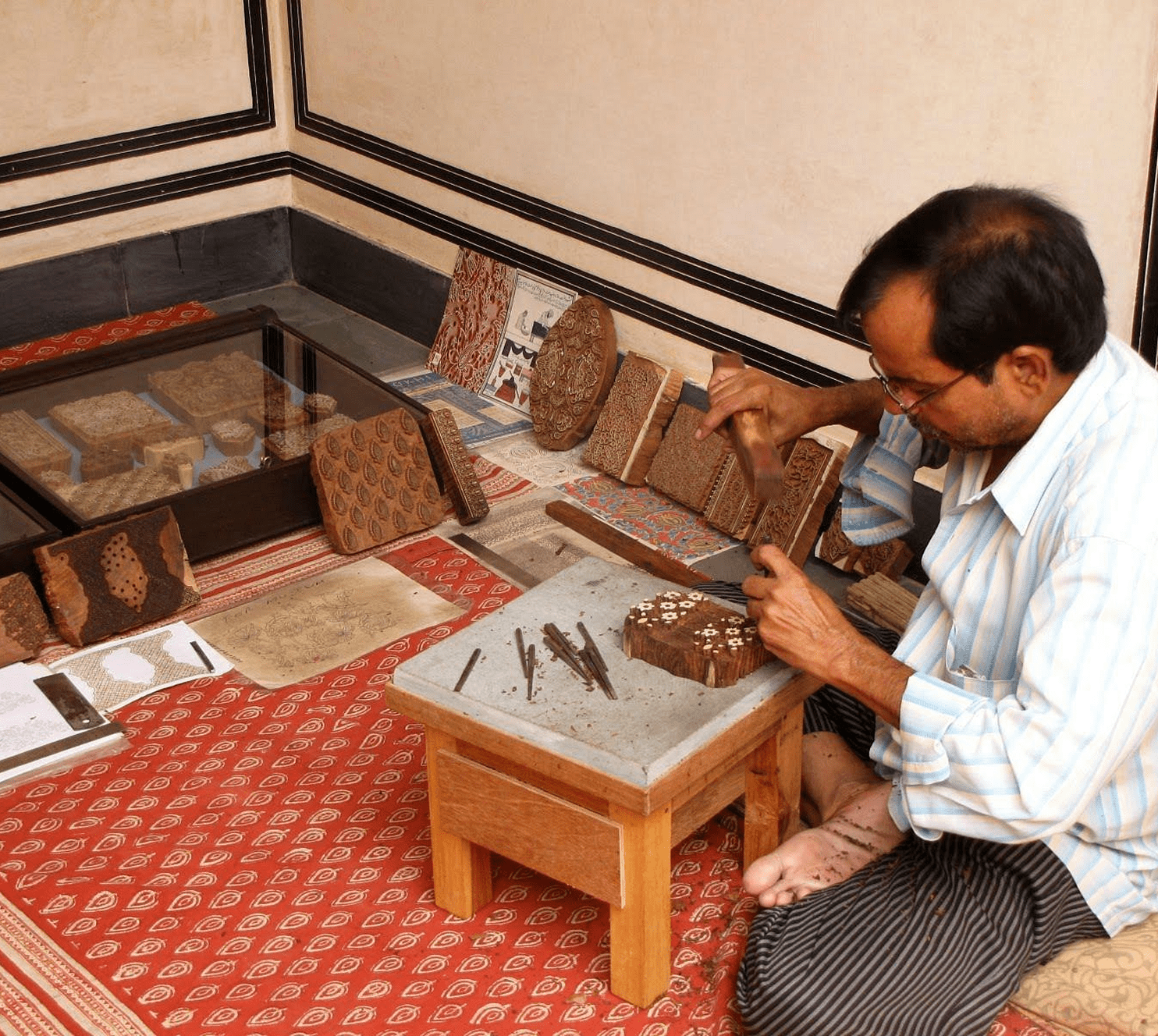
Celebrates Jaipur’s textile heritage, located near the fort.
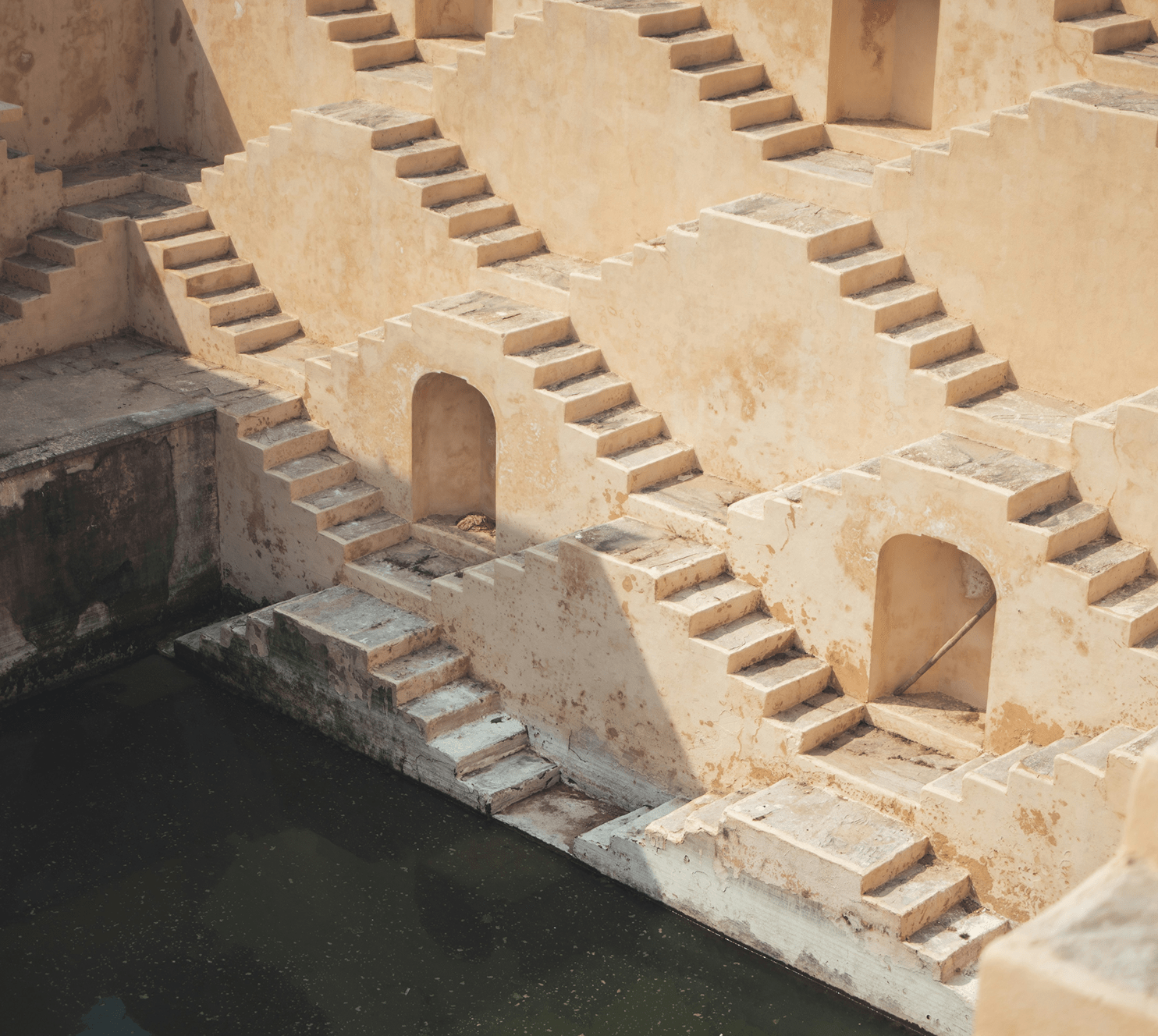
A photogenic 16th-century stepwell close to Amer Fort.
The site was first settled in 967 CE by Raja Alan Singh of the Chanda clan of Meenas. The fort seen today was built afterwards, beginning in 1592 under Raja Man Singh I of the Kachwaha dynasty, and expanded by his successors over the following century.
Amber and Amer are two spellings of the same name, with Amber being the anglicised version widely used internationally and Amer the form used locally. Amer ka Kila is simply the Hindi name for the same monument, kila meaning fort.
Amer became the Kachwaha capital in the centuries before Raja Man Singh I’s 1592 construction, and his building work turned it into the dynasty’s grandest seat of power. It remained the political centre of the Kachwahas, and later the Jaipur royal family, until 1727.
Once Sawai Jai Singh II founded Jaipur in 1727, Amer Fort stopped functioning as an active royal residence and was gradually preserved as a heritage site. It has since been maintained by the Rajasthan government and was inscribed as a UNESCO World Heritage Site in 2013.
Yes, entry is ₹100 for Indian visitors, ₹500 for foreign visitors, and ₹20 for students with a valid ID.
Yes, a secret tunnel connects Amer Fort to Jaigarh Fort and was used during battles as an escape route.
The best time to visit is from October to March, especially early in the morning.
Yes, it is part of the UNESCO-listed Hill Forts of Rajasthan, recognised for their cultural and architectural importance.
Yes, there is a designated parking area from where jeeps and electric vehicles take visitors up to the fort.