

Beyond its palaces and busy markets, Jaipur is home to spiritual places that reflect centuries of faith and tradition. These sacred landmarks reveal a story of devotion, artistry and architectural elegance, and the spiritual places in Jaipur worth the most time are rarely the busiest.
The Sanctity of Govind Dev Ji Temple
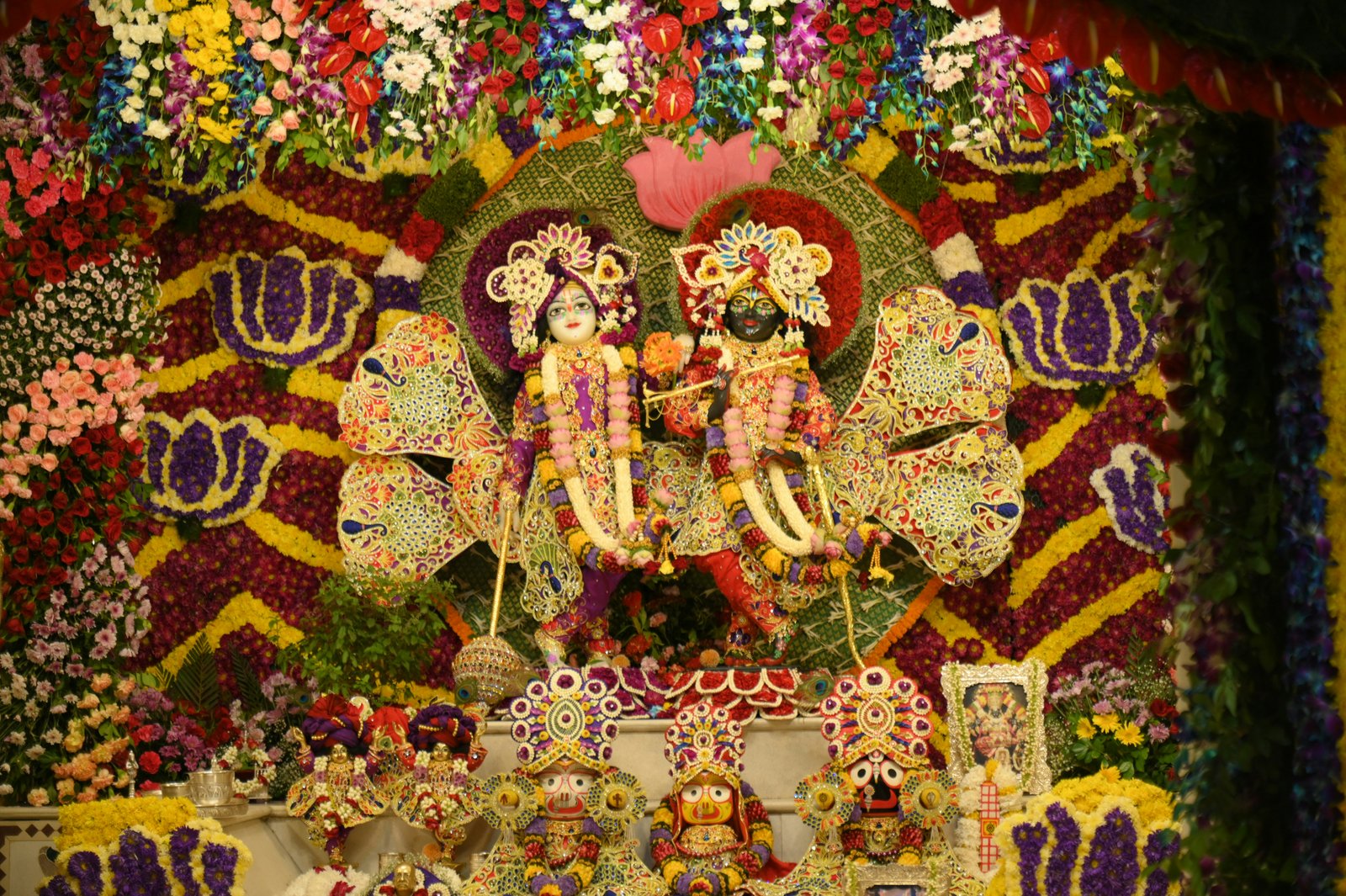
Within the City Palace complex stands the Govind Dev Ji Temple, one of the most revered spiritual places in Jaipur and most famous temples in Jaipur. Dedicated to Lord Krishna, it draws devotees from across Rajasthan. The idol, brought from Vrindavan, is said to resemble the Lord’s earthly form. During the aarti, the temple fills with the sounds of prayers and bells, creating an atmosphere of pure devotion.
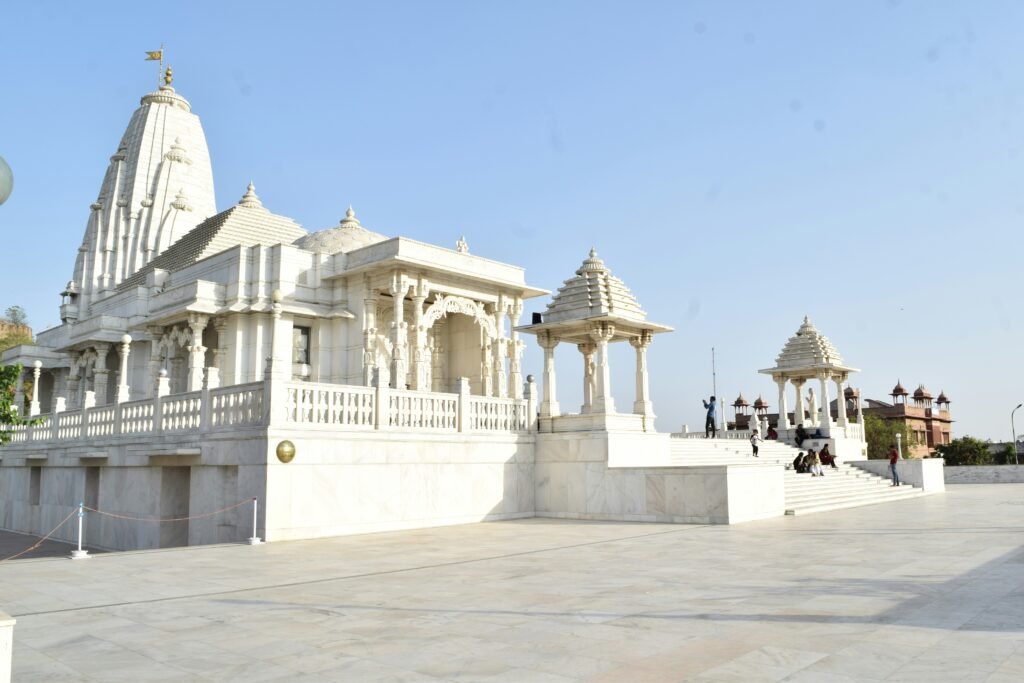
Birla Mandir: White Marble and Serenity
Set against the backdrop of Moti Dungri Hill, the Birla Mandir is a modern marvel in white marble and a one-of-a-kind spiritual places in Jaipur. Its walls depict scenes from Hindu scriptures, and its luminous interiors evoke peace and simplicity. Dedicated to Lord Vishnu and Goddess Lakshmi, the temple is among Jaipur’s most visited sacred sites, admired for its peaceful setting and timeless beauty, especially at dusk when the marble glows softly in the fading light.
Moti Dungri Temple: Faith Above the City
Near Birla Mandir, on a small hill, stands the Moti Dungri Temple, dedicated to Lord Ganesha. The temple’s elaborate stonework and detailed carvings display classic Rajasthani architecture. It is one of the first stops for many travellers seeking blessings before exploring the city, symbolising protection and prosperity.
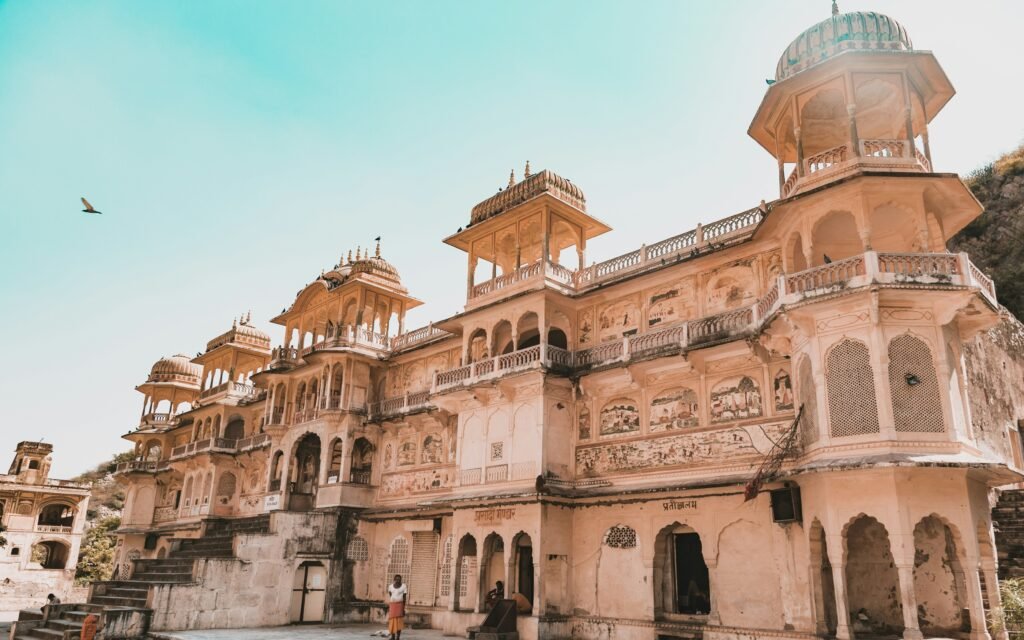
Galta Ji: Shrines Around a Sacred Spring
Known as the Monkey Temple, Galta Ji is a centuries-old shrine complex built around a natural spring. Surrounded by the Aravalli hills, it remains one of the most atmospheric spiritual places in Jaipur. The water from the sacred kunds is considered holy, and pilgrims come here to bathe and pray. The soft pink sandstone structures and views of the hills lend the site a subtle glamour.
Akshardham Temple: Modern Faith, Eternal Design
Among Jaipur’s more recent sacred sites, Akshardham Temple stands out for its intricate carvings and harmonious layout. Dedicated to Lord Swaminarayan, the temple combines spiritual reflection with fine craftsmanship. The peaceful gardens, marble pathways, and elaborate sculptures make it a place where tradition meets modern devotion.
Aarti Timings and When to Visit
Timing matters more at these sites than at any monument, because what you are going to see is a ritual rather than a building.
Govind Dev Ji Temple holds seven aartis daily, and the doors close between each one. Mangla starts around 4.30 am in winter, then Dhoop, Shringar, Rajbhog, Gwal, Sandhya, and Shayan run through to about 9.30 pm. Sandhya aarti in the early evening is the one most visitors choose, and the courtyard fills well before it begins. Timings shift by roughly half an hour between summer and winter, so confirm on the day.
Birla Mandir opens roughly from 6 am to noon and from 3 pm to 9 pm. The marble is lit after dark, which is when most people photograph it.
Moti Dungri Temple is busiest on Wednesdays, the day associated with Ganesha, when queues can be long.
Galta Ji is best in the first two hours after sunrise, before the heat sets in and the monkeys become assertive.
Akshardham on JLN Marg closes on Mondays and has a midday break.
Of all the spiritual places in Jaipur, Govind Dev Ji rewards precise timing the most.
The Connection Between Faith and Craft
Visiting the temples in Jaipur is not only an act of worship but also a journey through artistry. Each structure reflects the city’s skill in stone carving, fresco work, and spatial design. The devotion that shapes these temples mirrors the craftsmanship that defines Jaipur’s larger cultural identity.
Famous Temples in Jaipur and Their Architecture
The famous temples in Jaipur show the range of Rajasthani architecture more clearly than the palaces do, because they were built across four centuries to very different briefs.
Govind Dev Ji sits inside the City Palace complex and reads as a pavilion rather than a shrine, with a broad pillared hall and no towering shikhara, built so the ruler could see the deity from his own apartments. Moti Dungri Temple is the opposite, compact and heavily carved, with the jharokha windows and bracketed balconies that define classical Rajasthani architecture in the region.
Galta Ji is pink sandstone worked into a natural gorge, its pavilions, frescoes and stepped kunds following the rock rather than a plan. Birla Mandir, completed in 1988, is white Makrana marble with stained glass, which places it closer to modern temple building than to anything local.
Akshardham Temple returns to hand-carved stone at scale, executed by craftsmen working in the same tradition that produced the older sites.
Visiting Respectfully: What to Know
Shoes come off before you enter, and most temples have a counter or shelf for them. Cover shoulders and knees. Long trousers or a skirt below the knee, and a scarf for the head at some shrines, will keep you comfortable everywhere without needing to think about it.
People are usually asked to put phones away inside the sanctum, even where photography is permitted in the courtyard, and Govind Dev Ji restricts cameras during aarti. You should accept prasad with your right hand. Leave leather belts, bags, and wallets outside at Jain temples.
At Galta Ji, keep food and plastic bags out of sight, since the macaques will take them. Donation boxes are inside; anyone approaching you outside a temple offering to guide you for a fee is freelancing, not affiliated.
None of this is onerous, and observing it changes how you are received at the spiritual places in Jaipur.
A Half Day Temple Route
The sites aren’t conveniently located together, so grouping them by geography saves a lot of driving.
Start inside the walled city with Govind Dev Ji Temple, which sits within the City Palace complex and can be combined with the palace itself and Jantar Mantar in one morning. From Chandpole, it is a short walk.
Next, take Moti Dungri Temple and Birla Mandir together, since they share a hillside south of the old city and take no more than an hour and a half to visit.
Keep Galta Ji for a separate early morning, roughly ten kilometres east, and Akshardham Temple on JLN Marg for an afternoon when it is open.
Two half days comfortably cover all five. Trying to do it all in a single day means rushing between rituals, which is the only way to see these spiritual places in Jaipur and come away with nothing.
Spiritual Tourism Jaipur: The Temple Festival Calendar
Most visitors see these places on an ordinary weekday, which is a perfectly good way to see the buildings and a poor way to see what they are for.
Janmashtami, in August or September, overwhelms Govind Dev Ji. The temple stays open through the night, and the courtyard holds tens of thousands. It is the single most intense religious gathering in the city.
Ganesh Chaturthi brings the same scale to Moti Dungri, where the queue can run for hours, and the road up the hill closes to traffic.
Annakut, the day after Diwali, sees mountains of food offered at Govind Dev Ji and Birla Mandir. Shivratri in February or March belongs to the Shiva shrines, and Navratri in autumn to the Durga temples.
The spiritual tourism in Jaipur is less about tickets than timing. Go on a festival day, and you will queue; go the morning after, and the decorations are still up, and the crowds have gone.
Continuing the Journey of Discovery
To fully experience Jaipur’s sacred heritage, one must pause and stay in a place that reflects its spirit. Dera Mandawa, a heritage haveli near Chandpole, showcases that connection. The property embodies the same authenticity, artistry, and calm that define the city’s holy spaces.
Frequently Asked Questions
Which are the most historic temples in Jaipur?
The oldest and most historic temples in Jaipur include Govind Dev Ji Temple and Galta Ji. These sites reflect centuries of devotion and feature remarkable traditional architecture.
What are the most serene spiritual places in Jaipur?
For calm reflection, spiritual places in Jaipur, such as Birla Mandir and Moti Dungri Temple, have peaceful surroundings and a chance to experience the city’s sacred atmosphere.
Are there any sacred sites in Jaipur that are off the usual tourist path?
Yes, several less-visited sacred sites in Jaipur, such as the Jagat Shiromani Temple and the Ram Niwas Garden temple, are peaceful spots and showcase superb local craftsmanship.
Can religious tourism in Jaipur be combined with cultural experiences?
Absolutely. Religious tourism in Jaipur lets visitors explore temples, attend local rituals, and see traditional Rajasthani architecture, often alongside heritage markets and palaces.
What is the best time to visit Jaipur’s temples?
Early mornings and evenings are ideal, as the temples are less crowded and the rituals create a calm, reflective atmosphere. Festivals like Janmashtami and Diwali give a richer spiritual experience.
Are non-Hindus allowed inside the temples in Jaipur?
Yes, all the major temples welcome visitors of any faith. The same expectations apply to everyone: remove footwear, dress modestly, and stay outside the sanctum, where it is marked.
Is there an entry fee for the spiritual places in Jaipur?
Entry to the temples themselves is free. Govind Dev Ji sits inside the City Palace complex, which charges separately for the palace, though you can reach the temple without a palace ticket. Shoe deposit counters may charge a token amount.
Where should I stay to easily reach the temples?
Somewhere inside or just outside the walled city keeps Govind Dev Ji within walking distance, and Birla Mandir and Moti Dungri a short drive away. A heritage property near Chandpole works well for early-morning starts, when these sites are at their best.
Are photography and videography allowed in Jaipur’s sacred sites?
Photography rules vary. Some temples in Jaipur allow discreet photography, while others, such as Govind Dev Ji Temple, may restrict cameras during rituals. Check locally and respect temple guidelines.
How can I experience Jaipur’s spiritual heritage while staying comfortably?
A heritage haveli, such as Dera Mandawa, offers elegant accommodation near key temples, combining luxury with easy access to the city’s sacred and cultural sites.
Are guided tours available for temples and sacred sites in Jaipur?
Yes, many local guides offer specialised tours of Jaipur’s temples, covering their history, architecture, and associated rituals to enrich the spiritual discovery experience.
