

On a November morning in 2025, a leopard walked into Civil Lines, the leafy grid of ministers’ bungalows at the political heart of Jaipur. It slipped through a school campus, took shelter in the official residence of a state minister, then waited out the commotion until forest teams tranquillised it hours later. Nobody had to explain where it came from. The forest at Jhalana lies a few kilometres south, and around thirty leopards live there, hemmed in by colonies, highways and an industrial estate. Jaipur now has three leopard safaris on its fringes, so a leopard safari in Jaipur can begin within half an hour of leaving the old city.
For a traveller, that closeness is a gift. Big cats that elsewhere mean a long drive to a remote park are here a morning’s outing from the bazaars, easy to fit around a day of forts and palaces.
How leopards came to share a city
For generations, the scrubby Aravalli hills south of the walled city were a hunting ground of the Jaipur royal family. Later they were grazed by cattle and cut for firewood, until the Rajasthan Forest Department set the land aside under Project Leopard in 2017. Jhalana became the first leopard conservation reserve in India, and protection brought growth. Counts rose from about a dozen leopards in 2012 to some forty across Jhalana and its sister forest by 2022, in an area one ranger reckoned could comfortably hold ten or twelve.
The surplus shows. With wild deer scarce, the cats live largely on peafowl, partridges and rodents, while hungrier individuals slip into nearby colonies at night after stray dogs. Around the same period, leopards were also reported near Durgapura, Jagatpura, Vidyadhar Nagar and even Rambagh Circle. Officials blame a shrinking prey base and habitat, and have cleared invasive plants inside the reserve to increase the chital population.
About a dozen straying incidents were recorded in the year to March 2026, and the forest department announced plans to fit Jhalana’s leopards with GPS radio collars to follow their movements. The same pressures that worry residents are what make a leopard safari in Jaipur so rewarding, since a small forest holding a large population leaves the cats little room to hide.
Jhalana, the city’s first leopard reserve
The Jhalana Leopard Reserve covers about twenty square kilometres of rocky hills and fossil sand dunes on the city’s southern edge, close to Malviya Nagar. A three-storey royal hunting lodge still stands at its heart, a reminder of the forest’s earlier life, and makes a fine lookout at sunrise. Safaris run in open jeeps carrying up to six visitors with a driver and guide, along set tracks through the scrub.
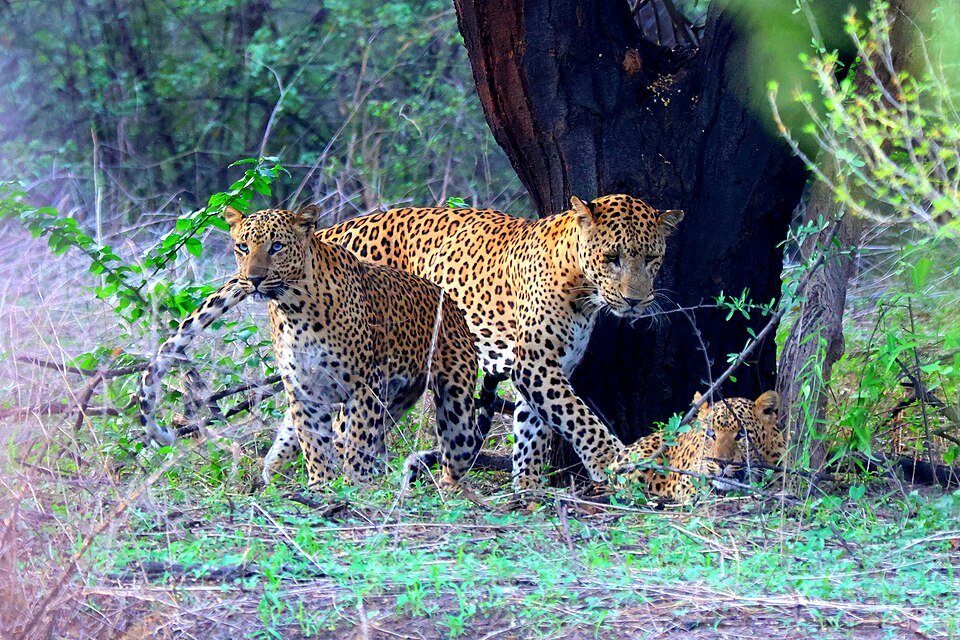
Daylight sightings are common here. Leopards rest on warm rocks, cross the tracks between thickets or watch the jeeps from a ledge, and guides listen for the alarm calls of peafowl that can give away a cat moving through the scrub. Between sightings there is plenty more to look for. Striped hyenas, jackals, desert foxes, jungle cats, nilgai and monitor lizards share the forest, while the birds of its scrub include the spotted owlet and, in the monsoon, the Indian pitta. For a first leopard safari in Jaipur, the older reserve is the obvious starting point, with the most cats and the longest experience of visitors.
Amagarh, across the highway
The Jaipur to Agra highway divides Jhalana from its younger neighbour. The Amagarh Leopard Reserve opened on 22 May 2022, the International Day for Biological Diversity, in about fifteen square kilometres of hills on the eastern side of the city. Somewhere between fifteen and twenty leopards live there, alongside hyenas, jackals, civets, sambar and nilgai, with around 250 bird species recorded.
Amagarh feels wilder, with only around ten jeeps cleared for its tracks each day. Its gate lies near the temple gorge at Galta, and the drives pass the old Amagarh fort as well as the Galta temples, so the scenery carries as much history as wildlife. A second leopard safari in Jaipur works well here. Sightings take more patience, but the reward is a forest that feels a long way from any city.
Beed Papad, the newest reserve in the north
The youngest of the three opened on 5 June 2025, World Environment Day, in the Maila Bagh and Beed Papad forests of the Nahargarh sanctuary, the same range of hills that carries the fort on the ridge. Jeeps enter from the Vidyadhar Nagar side and follow about nineteen kilometres of tracks past waterholes, grassland and an old royal hunting lodge at Maila Bagh. Around twenty leopards range across the wider Nahargarh forest, sharing it with sambar, nilgai, hyenas, jackals, porcupines and wild boar, while more than 200 bird species have been recorded. Being so new, the reserve has far less written about it, which suits travellers who like to arrive before the crowds.
Lions and tigers behind fences
Search for a jungle safari in Jaipur and one more name appears. The Nahargarh Biological Park, also inside the Nahargarh sanctuary, opened Rajasthan’s first lion safari in 2018 and has since added a tiger safari. Both run through large fenced enclosures, so the animals are certain to appear but are not wild in the way the leopards of Jhalana are. Anyone after a wild jungle safari in Jaipur should treat the park as a supplement to the three leopard reserves, not a substitute.
Choosing the right leopard safari in Jaipur
The three reserves suit different travellers. The Jhalana Leopard Reserve gives the best odds along with the easiest logistics, which makes it the choice for anyone with a single morning to spare. The Amagarh Leopard Reserve rewards a second outing, or travellers willing to trade a few sightings for a handful of vehicles in a rougher, emptier landscape. Beed Papad suits repeat visitors curious to see the newest forest. Two drives in different reserves, on separate days, give the fullest picture of how leopards live around Jaipur.
October to March brings the kindest weather, with November to February the most comfortable months for sitting in an open jeep at dawn. Weekend and holiday drives sell out early, so booking a leopard safari in Jaipur online a week or two ahead is wise in the cooler months. Anyone set on seeing a leopard should allow an extra day in the city for a second attempt.
Location matters more than it first appears. All three gates lie within about half an hour by road of the old city, to the south, the east and the north, and the first drives start early. Hotels near Hawa Mahal and the walled city sit in the middle of the three, which keeps the pre-dawn journey short whichever reserve the day belongs to.
Watching leopards with care
A good drive depends as much on the people in the jeep as on the cats. Voices kept low carry less across the scrub, while a camera with the flash switched off disturbs nothing. Drivers must keep to the marked tracks, so there is no point pressing them to edge closer to a resting leopard. When several jeeps gather at one sighting, a short wait usually brings a clearer view as others move on, and a leopard left in peace is more likely to stay in sight.
Coming back from the forest
Among the hotels near Hawa Mahal, ours is a haveli a short way past Chandpole Gate, built around 1885 by Thakur Jait Singh Ji of Mandawa and still lived in by his family. All three reserves lie within about half an hour of our door, close enough for the first jeeps of the morning and an afternoon in the bazaars after. When your dates are set, write to us with the reserve you have in mind, and we will help plan the stay around it.
Frequently Asked Questions
Is a sighting guaranteed on a leopard safari in Jaipur?
No. These are wild animals in open forest, so no drive can promise one. The density of leopards at Jhalana works in a visitor’s favour, and booking two drives raises the odds further.
What time of day suits a jungle safari in Jaipur?
Both shifts have their merits. Morning drives catch leopards still active after the night, in cool air, while evening drives end at dusk as the cats begin to move again.
How long does a safari last?
Each shift runs for about two and a half hours. Visitors are expected at the boarding point roughly half an hour before the start.
Is Jhalana open during the monsoon?
Yes. Safaris run all year, with timings shifting by season. The monsoon turns the hills green, though thicker cover can make leopards harder to spot.
Are Jhalana and Amagarh the same reserve?
On paper, yes. Those two forests were notified together as a single conservation reserve under the Wildlife Protection Act, Rajasthan’s 21st, but each runs its own safaris from its own gate.
What should you take on a leopard safari in Jaipur?
The identity document used for booking, since it is checked at the gate. Binoculars, a long camera lens and a scarf against the dust all help, along with a warm layer, as open jeeps get cold on December and January mornings.
Can you cancel or change a safari booking?
Generally not. Online bookings are non-transferable and cannot be cancelled, and the name on each ticket must match the visitor’s identity document, so check the details before paying.
