



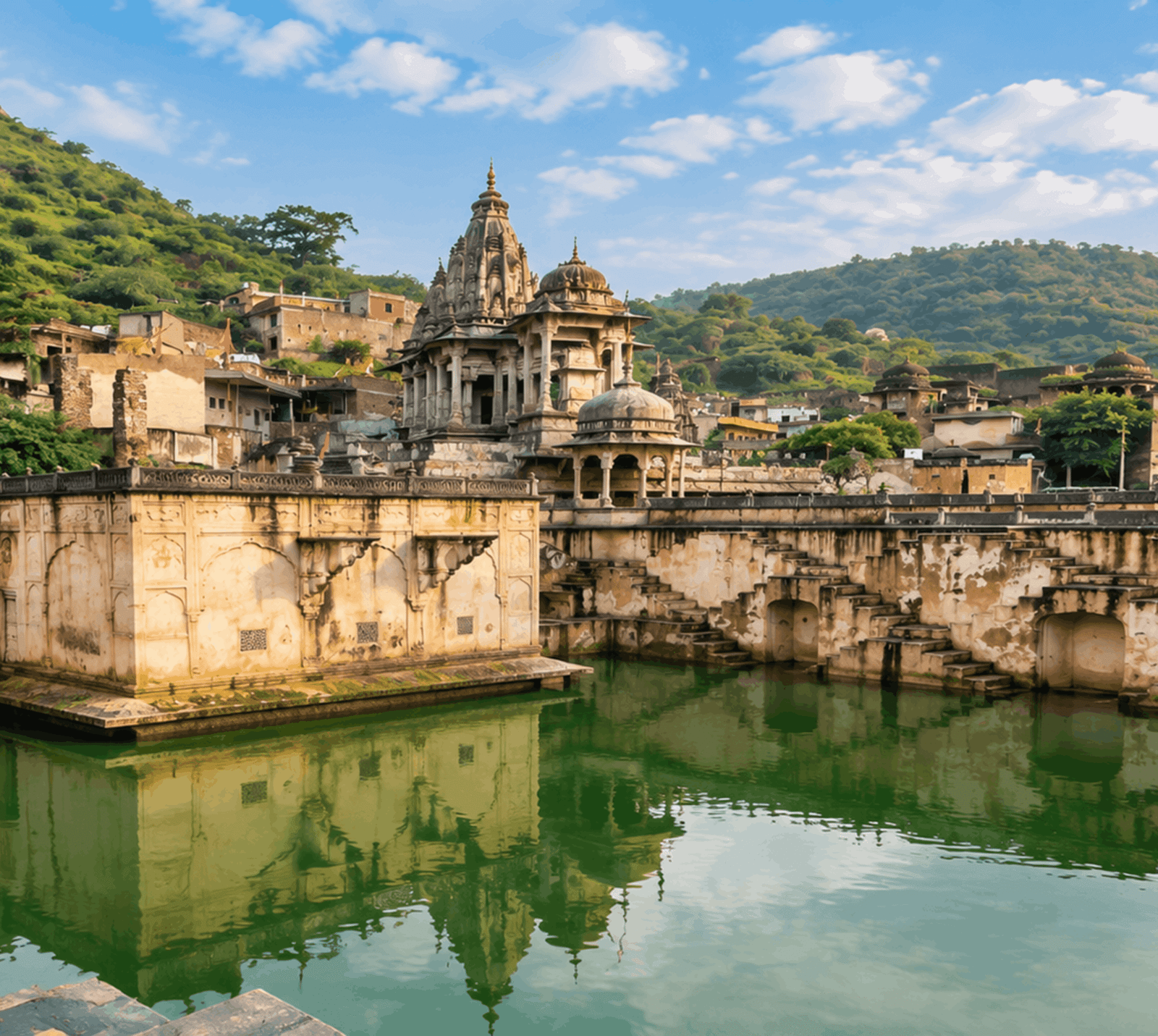
The seven holy water tanks fed by the natural spring are the heart of Galtaji. The Galta Kund is the most sacred of them, believed to have curative properties and to never run dry even in the peak of Rajasthan's summer, and a dip here is considered particularly auspicious during Makar Sankranti and Kartik Purnima.
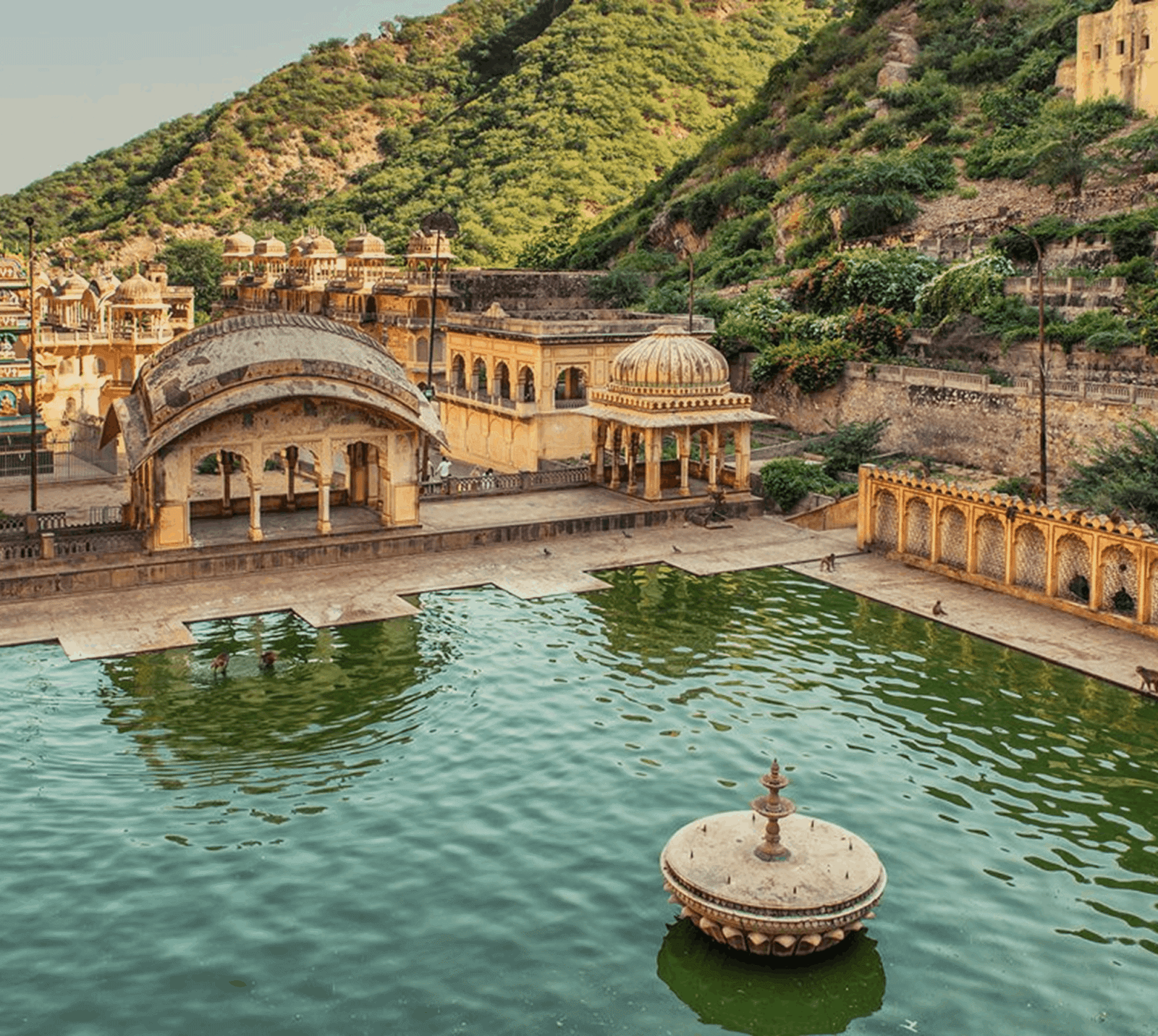
The water enters the complex through the Gau-Mukh, a stone spout carved in the shape of a cow's head, from which the perennial stream is said to flow. According to tradition, the spring was granted to the sage Galav as a divine gift, and some devotees believe it carries the spiritual presence of the Ganga.
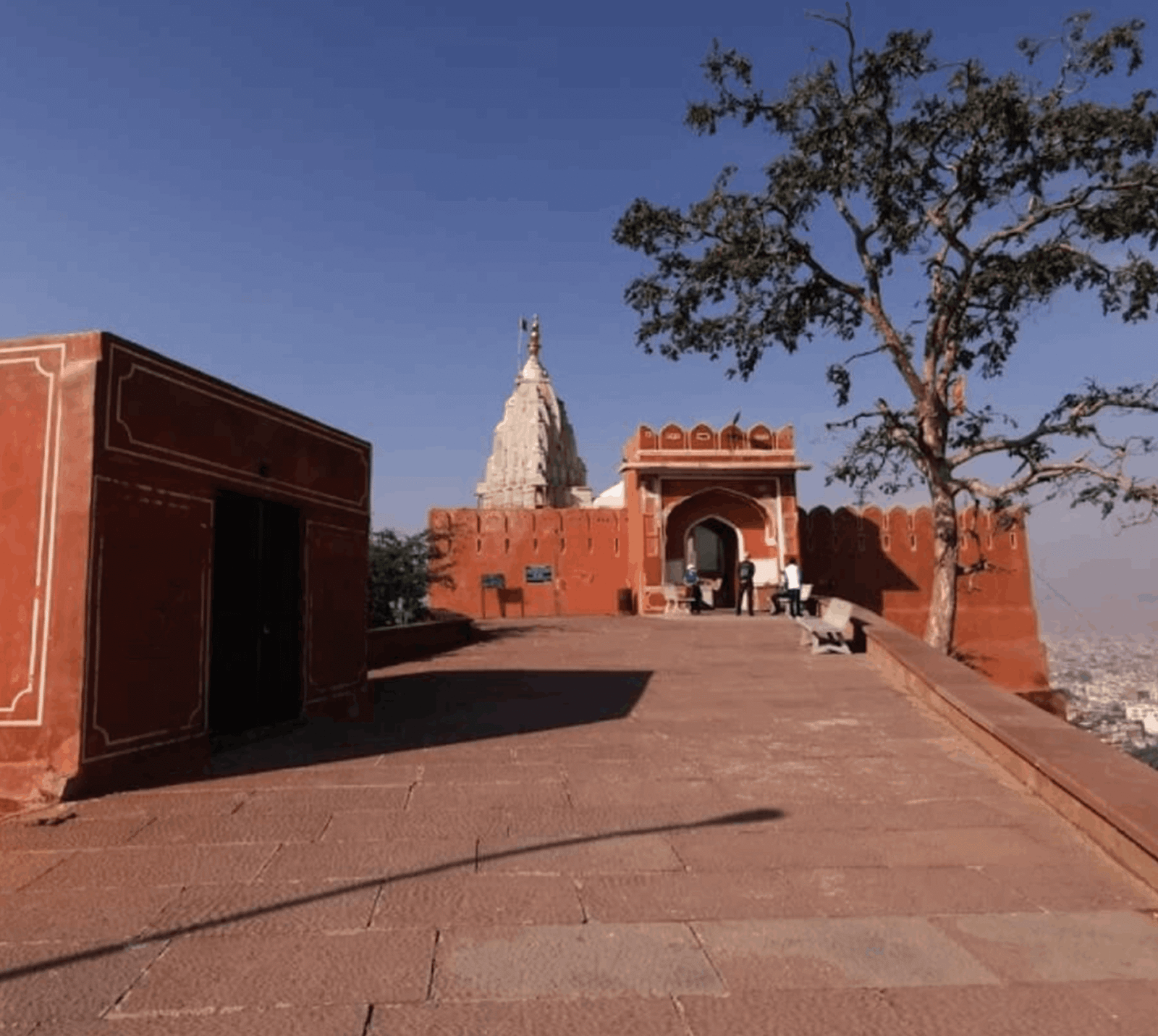
Built by Diwan Rao Kriparam on the highest peak above the gorge, this smaller shrine to the Sun God is reached by a climb of stone steps and gives panoramic views over Jaipur, the surrounding Aravalli hills, and the Galtaji complex itself below. Sunset is a particularly rewarding time to be up there.
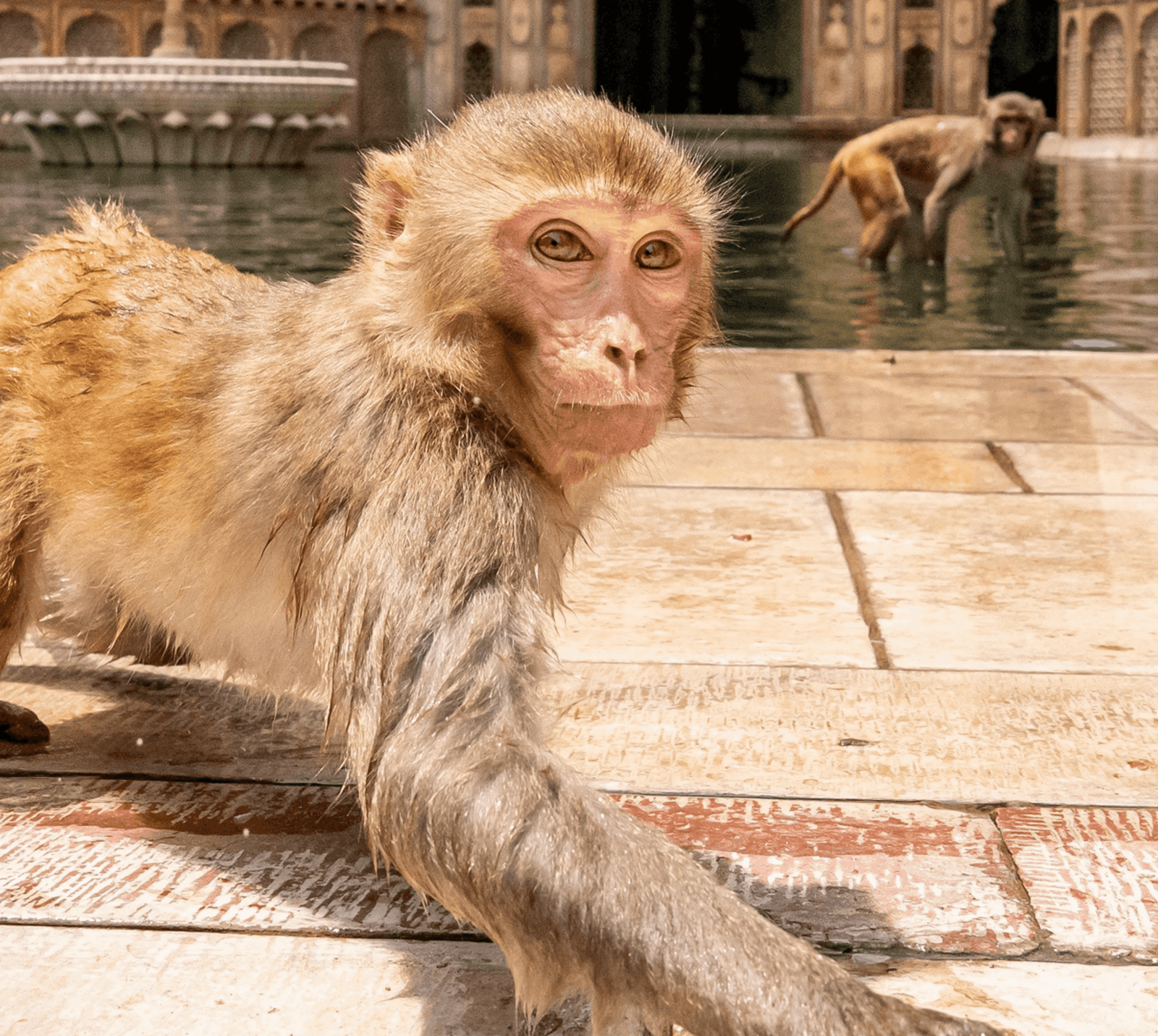
Galtaji is home to large troops of rhesus macaques and langurs, which gave the temple its international nickname. The resident macaques were featured in National Geographic's Rebel Monkeys and Monkey Thieves, along with a Wildest India episode, and they are famously bold about snatching food from visitors' hands.
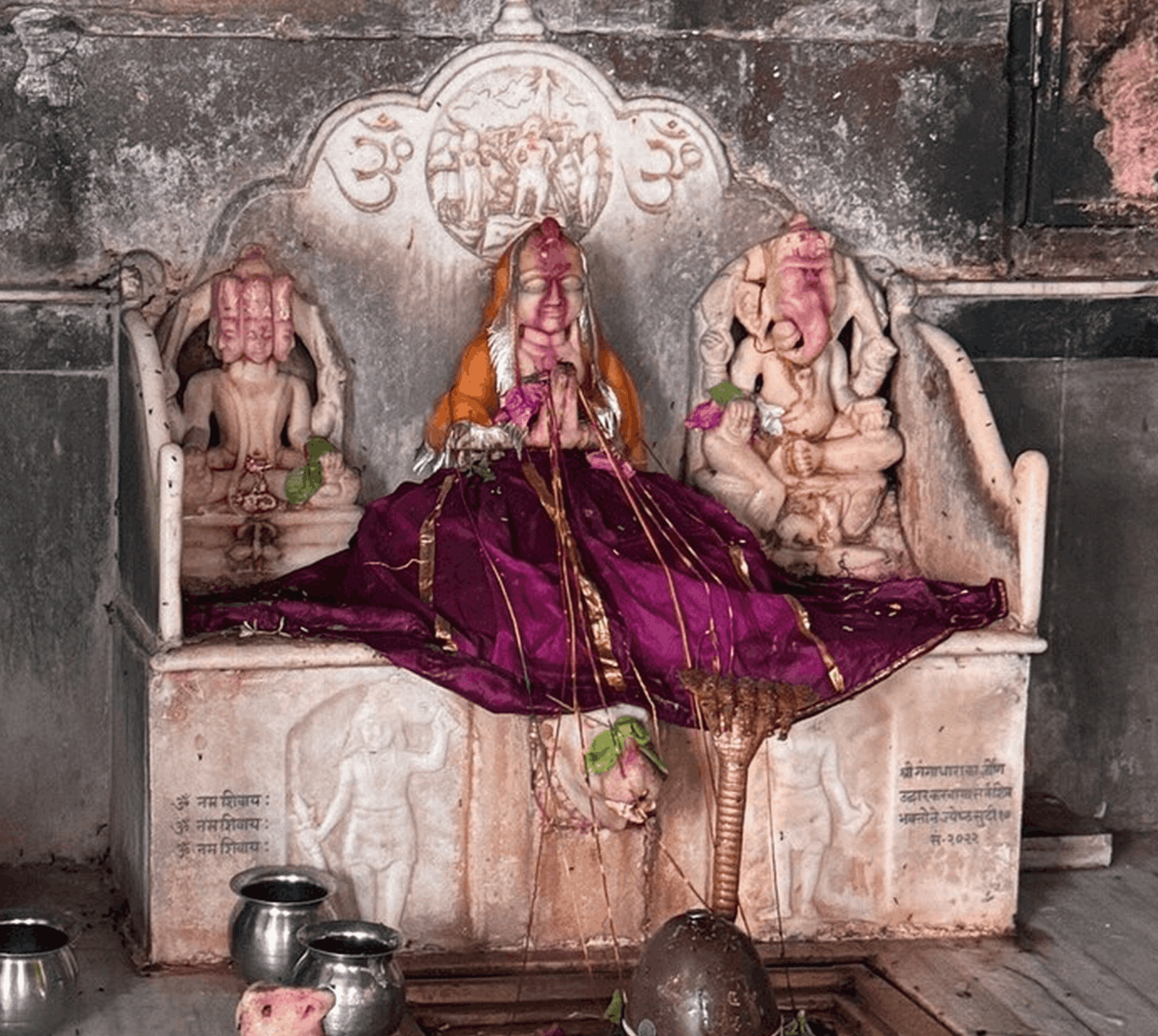
Beyond the main temple, the complex houses smaller shrines to Lord Ram, Lord Krishna, Lord Hanuman, Lord Brahma, and Lord Ganesha, along with an ancient cave believed to be Galav's meditation site. It has been a seat of the Ramanandi Vaishnava tradition since the early 1500s.
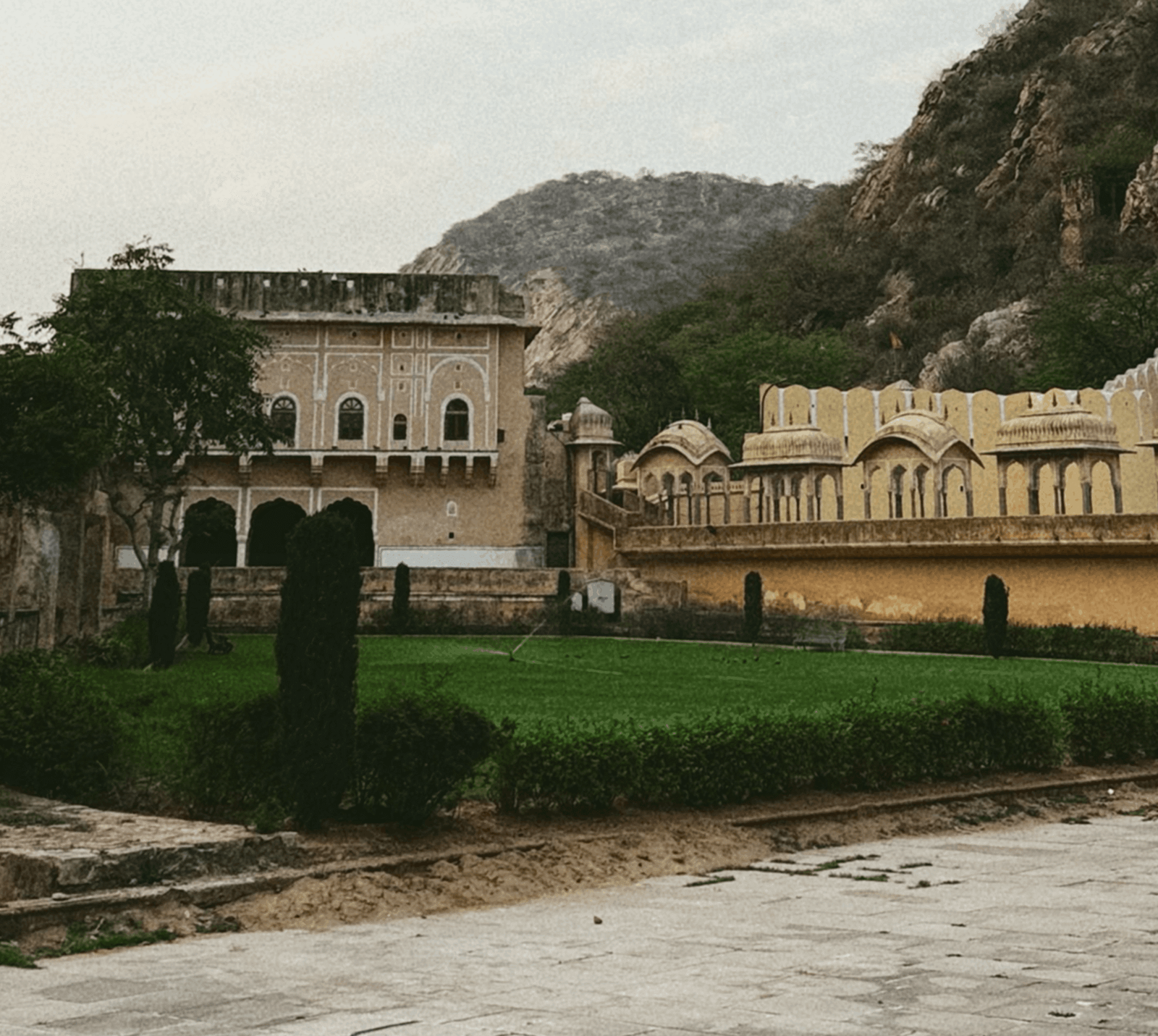
A landscaped terraced garden about 3 km away on the Agra Road, built by Sawai Jai Singh II in 1728 for his Sisodia queen, known for its frescoes, fountains and pavilions.
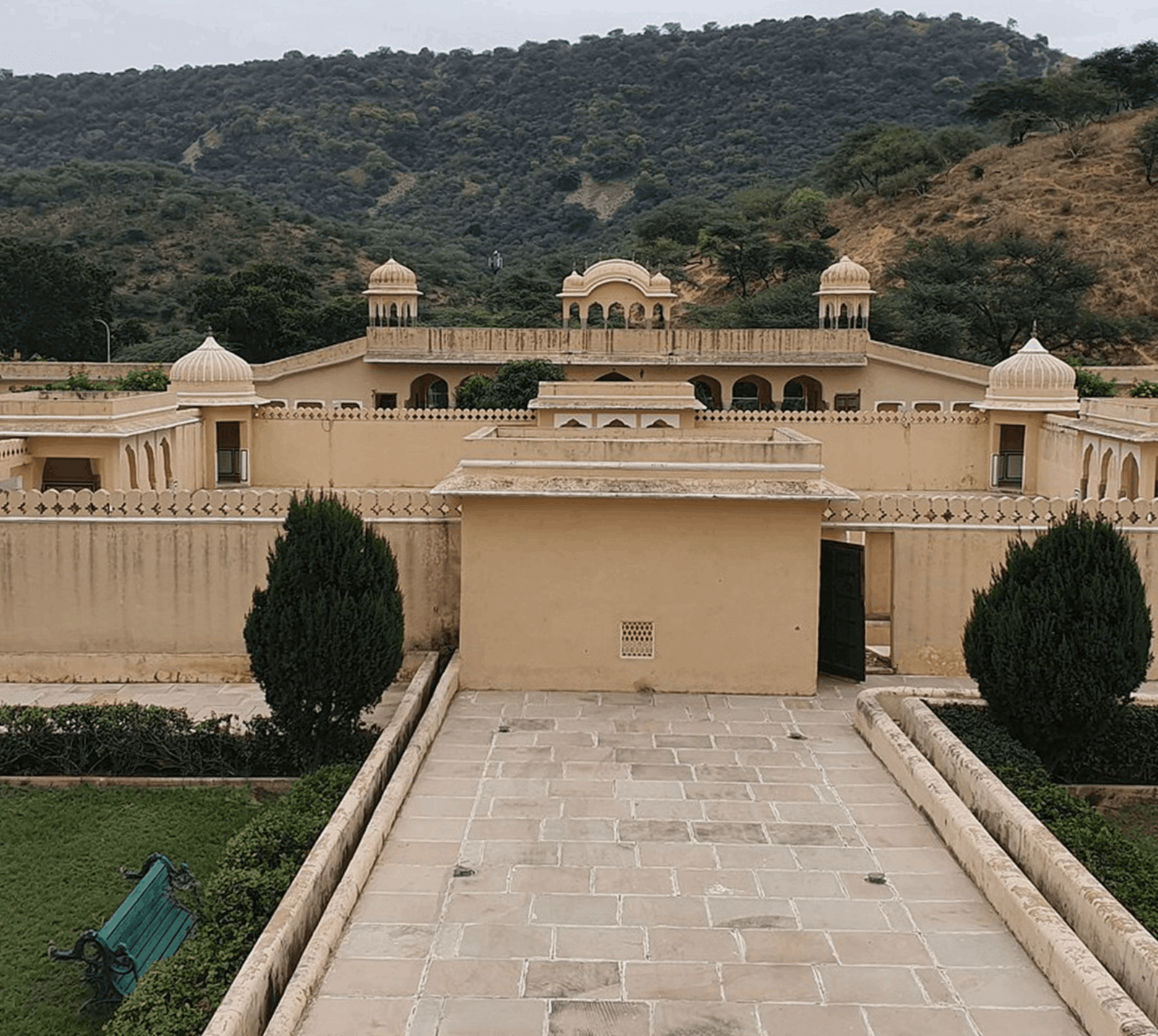
A short distance from Sisodia Rani Garden, this landscaped garden is named after Vidyadhar Bhattacharya, the chief architect who planned the city of Jaipur.
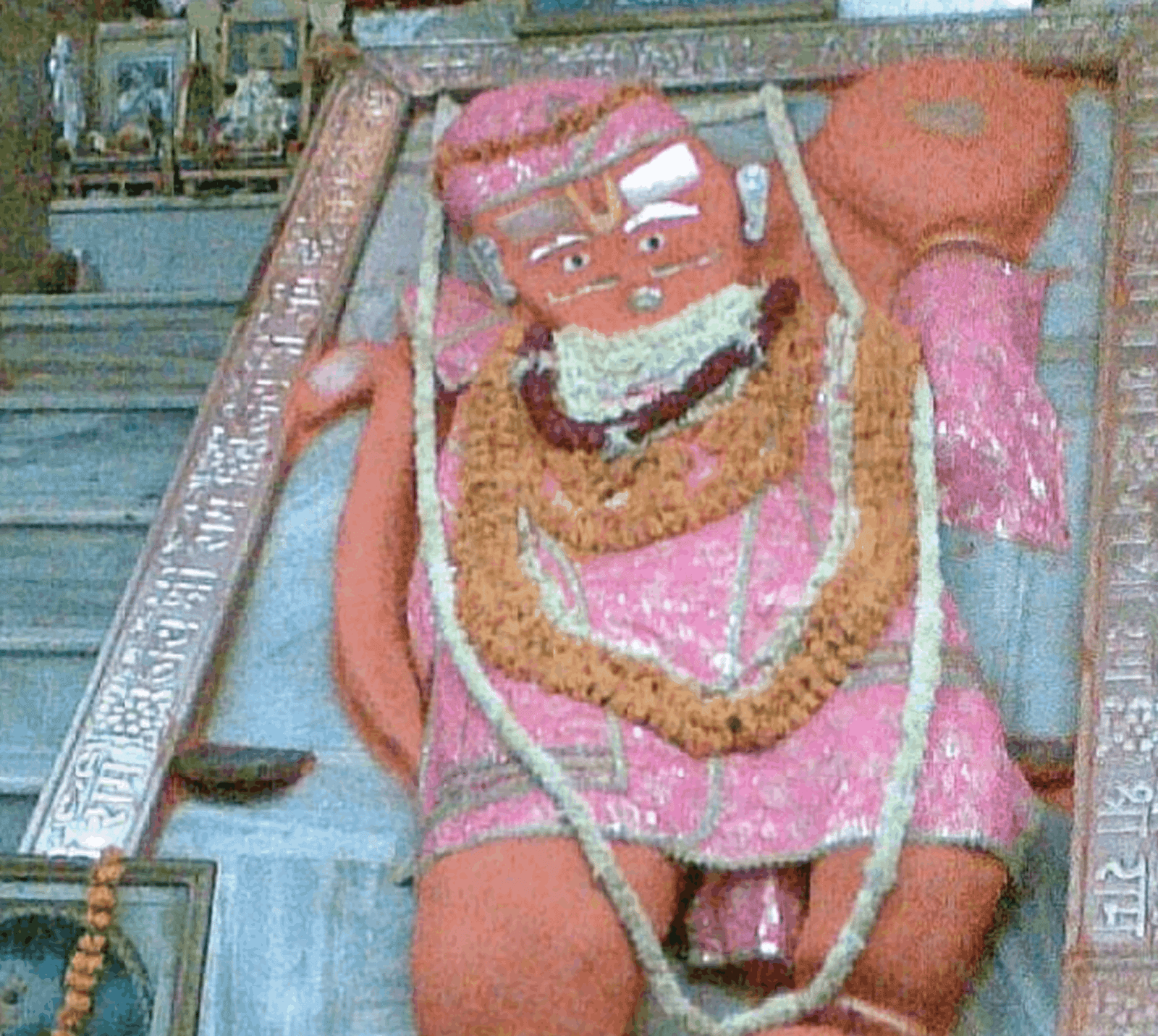
A hilltop Hanuman temple in a nearby valley, popular with local devotees and known for its Tuesday and Saturday crowds.
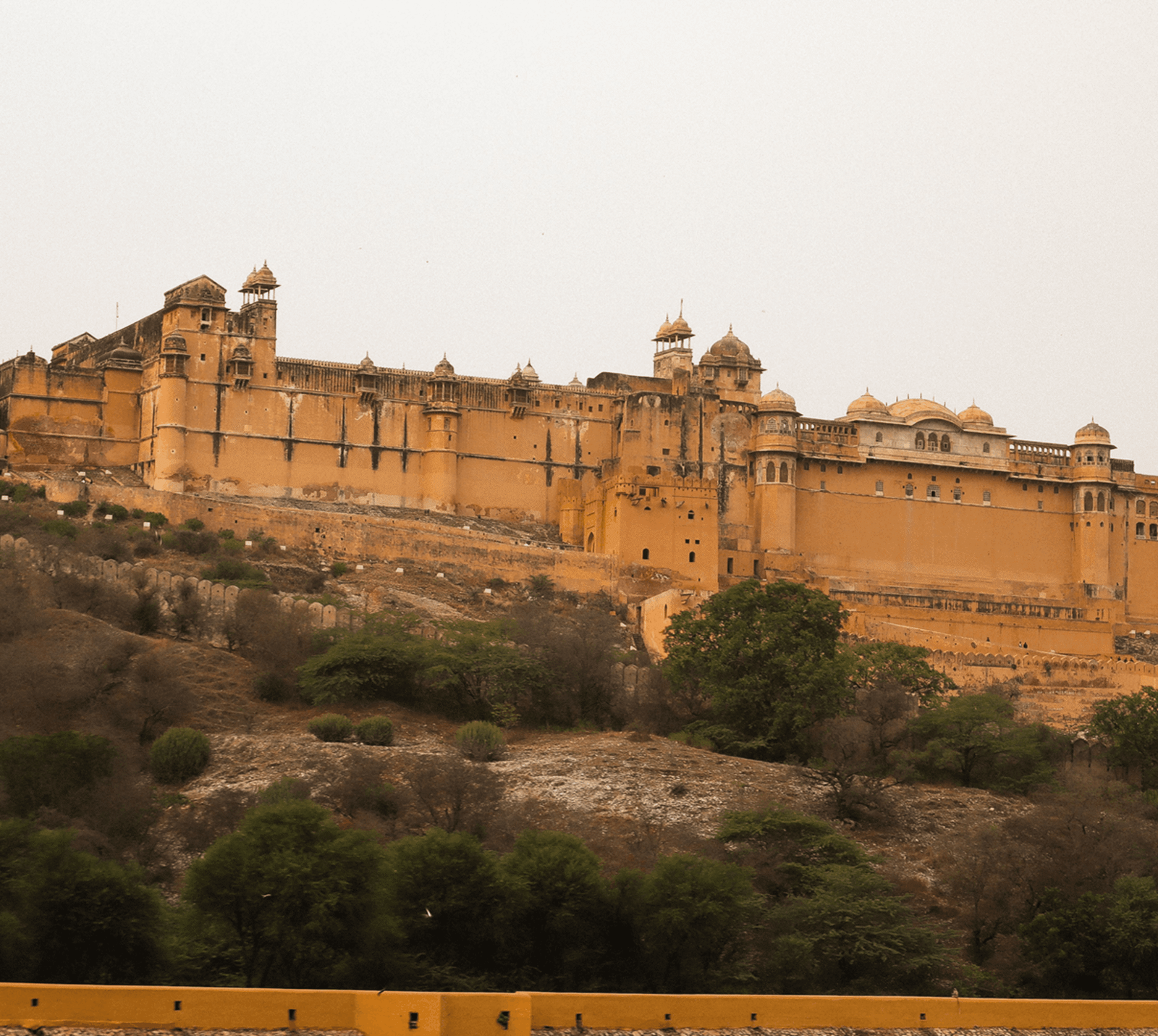
Around 15 km away, the UNESCO-listed hill fort of the Kachwaha dynasty, the historic seat of Jaipur's rulers before the founding of the modern city.