

Birla Mandir

lotus

Overview

Birla Mandir Jaipur, also known as the Laxmi Narayan Temple, is one of the city’s most graceful modern landmarks, set on an elevated platform at the base of Moti Dungri Hill. Carved entirely from white marble, this Hindu temple in Jaipur stands in soft contrast to the terracotta tones of the Pink City. It was built by the industrialist Birla family through the B.M. Birla Foundation and opened for darshan in 1988.

Dedicated to Lord Vishnu, known as Narayan, and Goddess Lakshmi, the deity of wealth and good fortune, Birla Mandir draws devotees and travellers in equal measure. From its luminous marble carvings to the peaceful gardens that surround it, every part of the Laxmi Narayan Temple Jaipur carries a sense of calm and artistry rare in a temple of such recent making.

Location

Tilak Nagar, at the foot of Moti Dungri hill, about 3 km from Jaipur city centre

Timings

8:00 AM to 12:00 noon for the morning session
4:00 PM to 8:00 PM for the evening session
Open on all seven days of the week

Entry Fee

Indian Visitors: Free
Foreign Visitors: Free
Adjacent Museum: Free
Donations are optional and accepted inside the temple

Time Required

1 to 2 hours, including the temple, the museum, and the gardens
Around 30 to 45 minutes for the main shrine alone
lotus

History and Architecture of Birla Mandir

Construction of Birla Mandir Jaipur began in 1977, and the temple was completed and opened for darshan on 22 February 1988. Local tradition holds that the Maharaja of Jaipur gave the land to the Birla family for a token sum of one rupee, a gesture in keeping with the family’s long record of building temples across India.

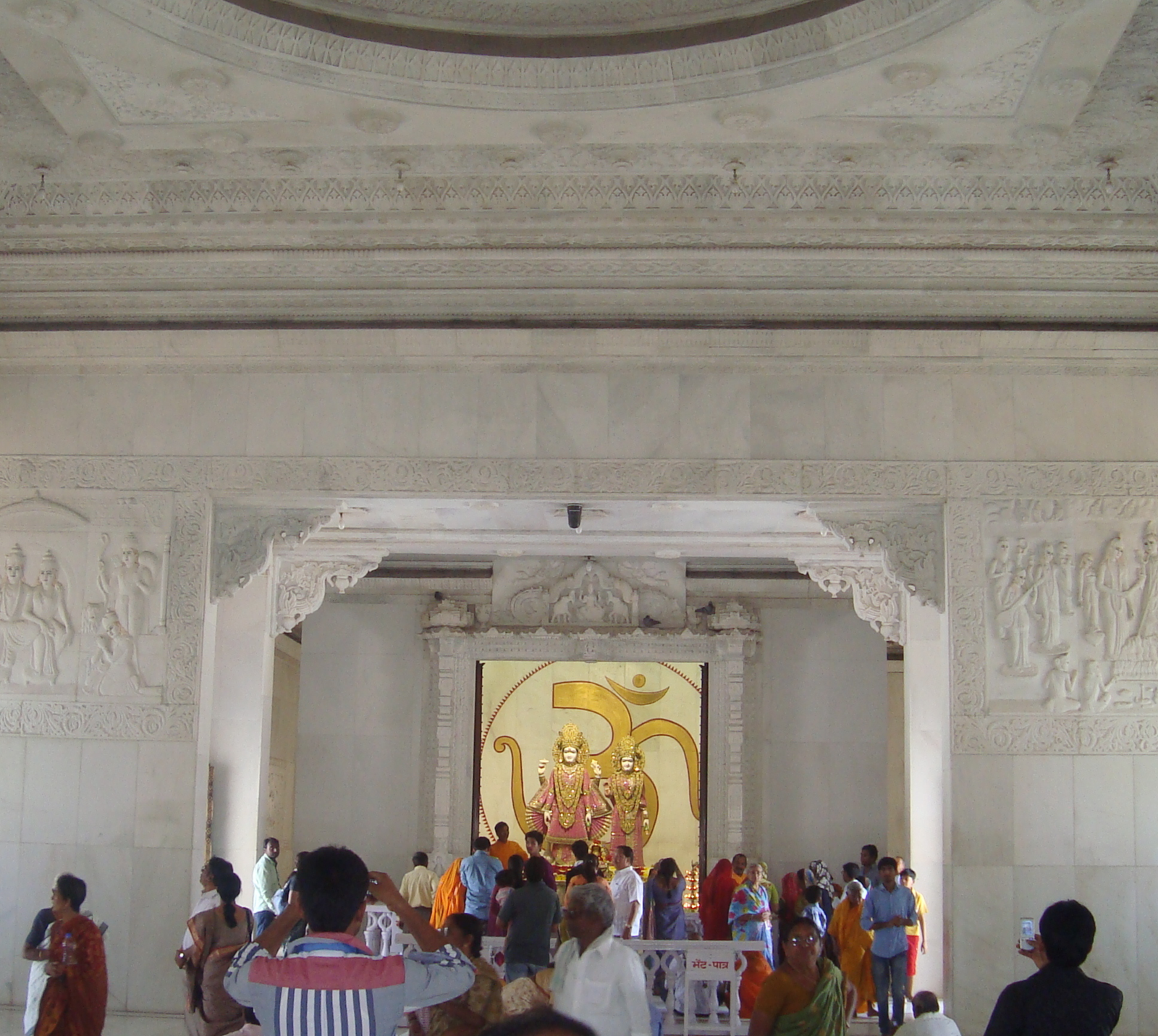
Built solely of fine white marble, the Laxmi Narayan Temple brings together classical Hindu temple design and a cleaner modern sensibility. Three tall domes crown the building, and the exterior is worked with detailed sculptures drawn from mythological themes. The walls and pillars carry carved verses from the Gita and the Upanishads, alongside images of gods and goddesses.

One of the more unusual features of this white marble temple in Jaipur is its inclusive spirit. The outer walls depict great thinkers and spiritual figures from many traditions, including Socrates, Buddha, Confucius, and Christ, a nod to the values that guided its founders. Painted stained glass windows line the interior, and sunlight passing through them lights the prayer hall in colour.

fish

Main Attractions and Highlights at Birla Mandir

A quick overview of the features worth your attention at the temple.
Birla Mandir in Jaipur, also known as the Laxmi Narayan Temple, is a prominent modern Hindu temple built entirely from pure white Makrana marble.

The Marble Idols of Laxmi Narayan

The images of Lakshmi and Narayan sit at the heart of the temple, carved from a single piece of marble and dressed in fine garments and ornaments, with the sacred Om on the wall behind them.
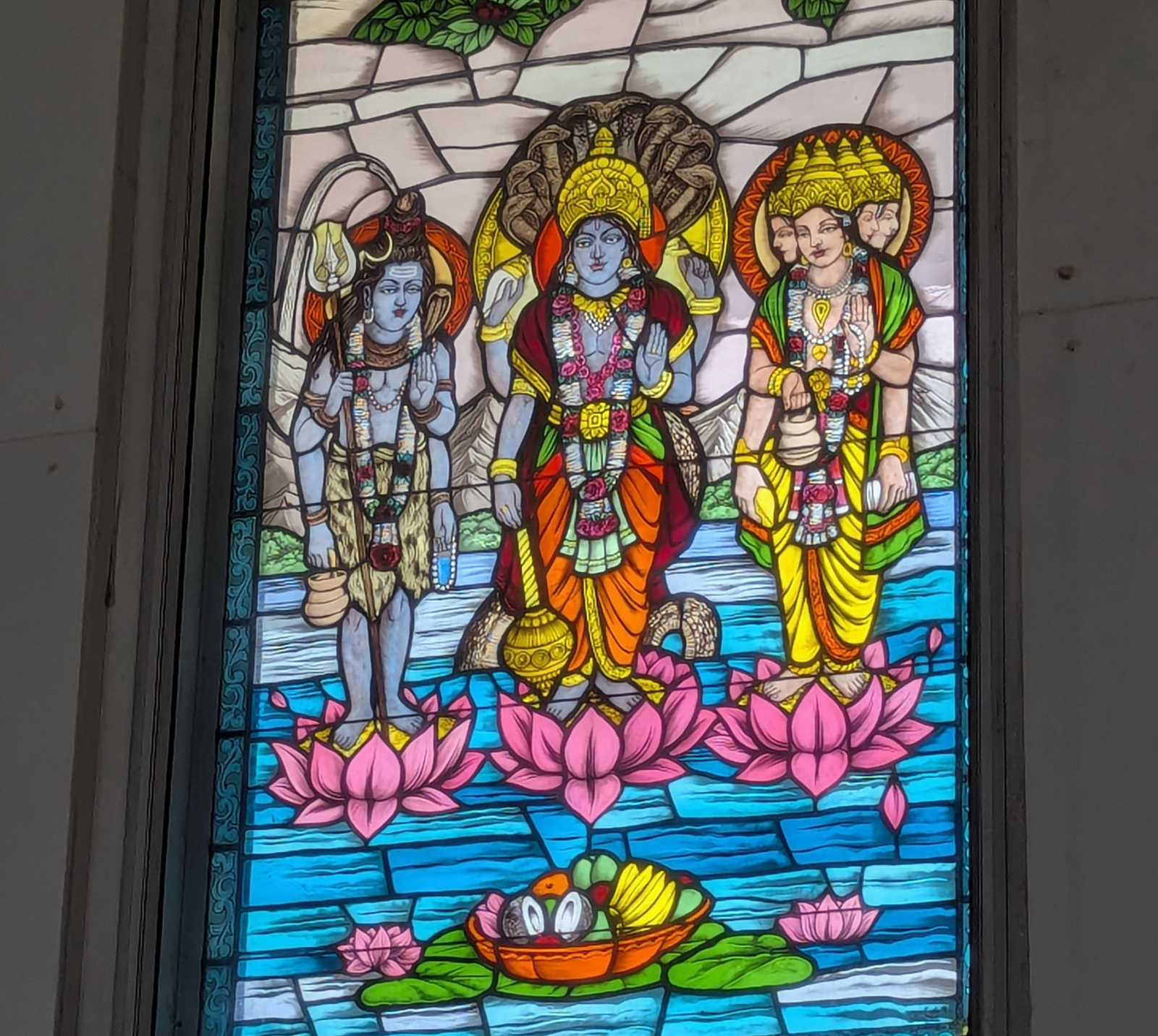
A vibrant stained-glass window at the Birla Mandir in Jaipur, Rajasthan.

Stained Glass Windows

Painted glass panels along both sides of the hall depict scenes from Hindu mythology. When sunlight streams through them, the prayer hall fills with soft, shifting colour.
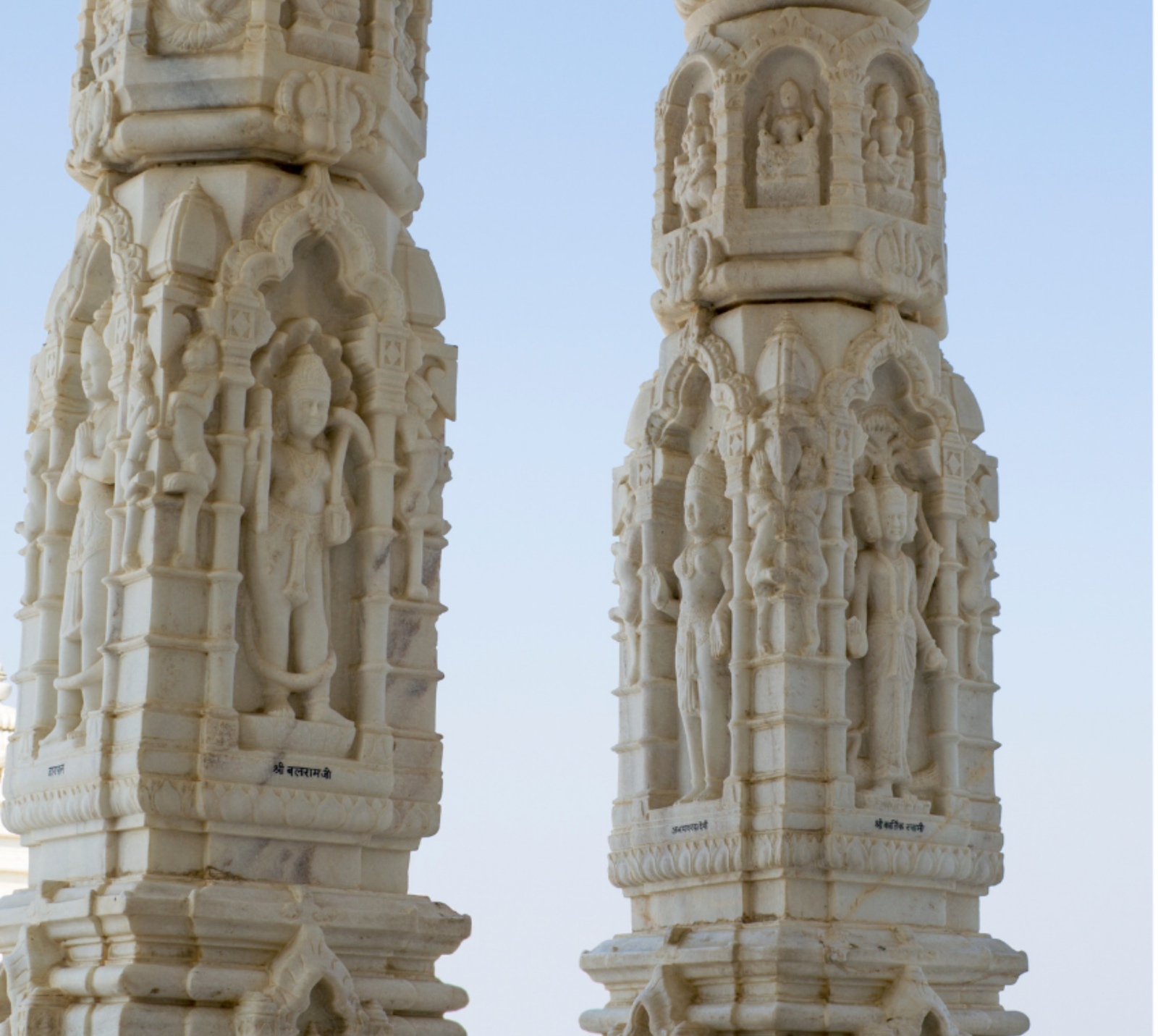
The image shows intricately carved exterior white marble pillars and sculptural reliefs at the Birla Mandir (Lakshmi Narayan Temple) in Jaipur, Rajasthan, India.

Carved Exterior Sculptures

The outer surfaces of the Birla Temple Jaipur carry sculptures based on mythological themes, along with figures of philosophers and spiritual leaders from across the world's faiths.
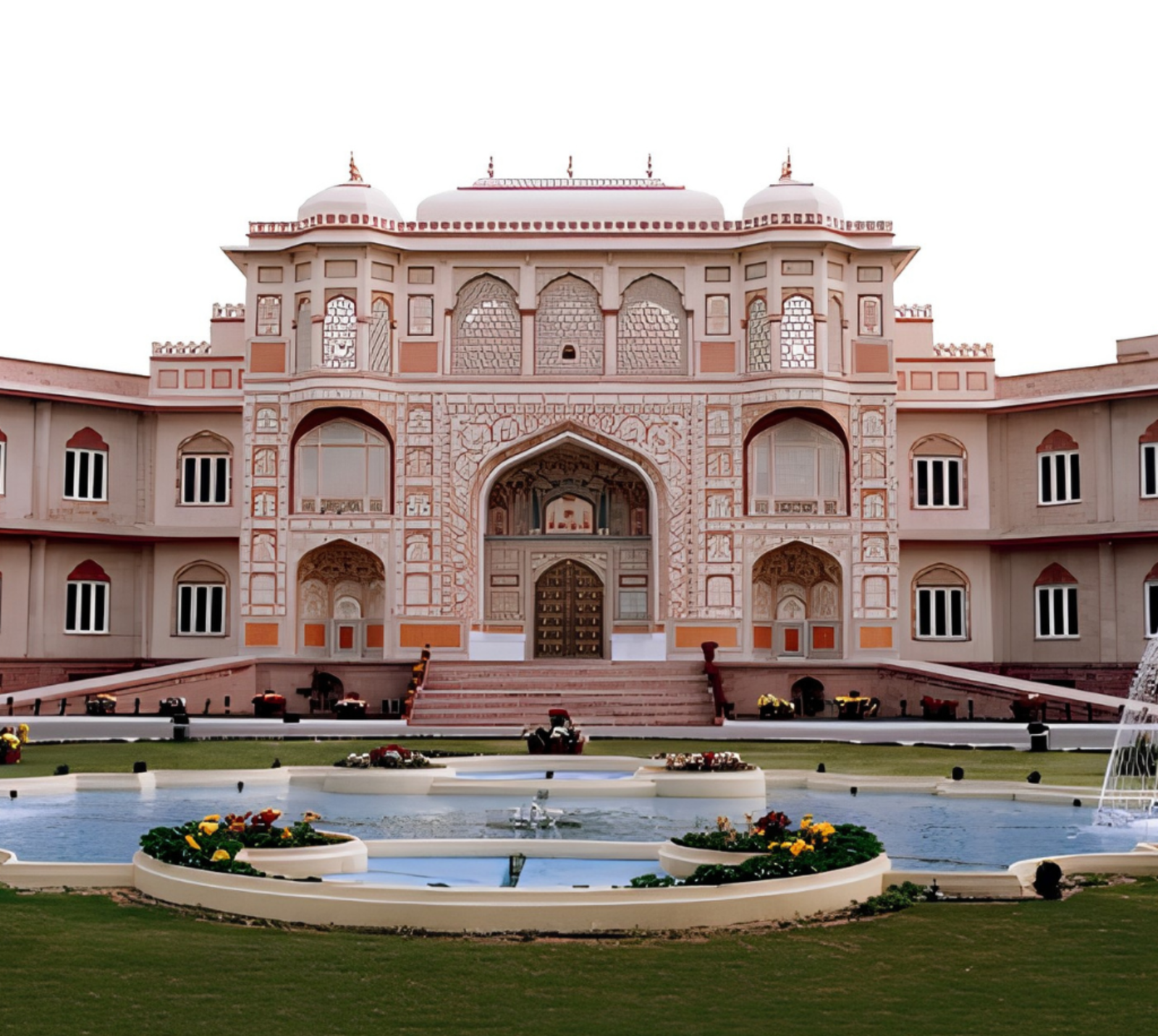
Birla Auditorium building, which houses the B M Birla Planetarium and science center complex at Statue Circle in Jaipur, Rajasthan.

The Birla Museum

A small museum on the premises holds ancestral artefacts and historically significant items belonging to the founding Birla family. Entry is free, and it makes a natural stop during your visit.
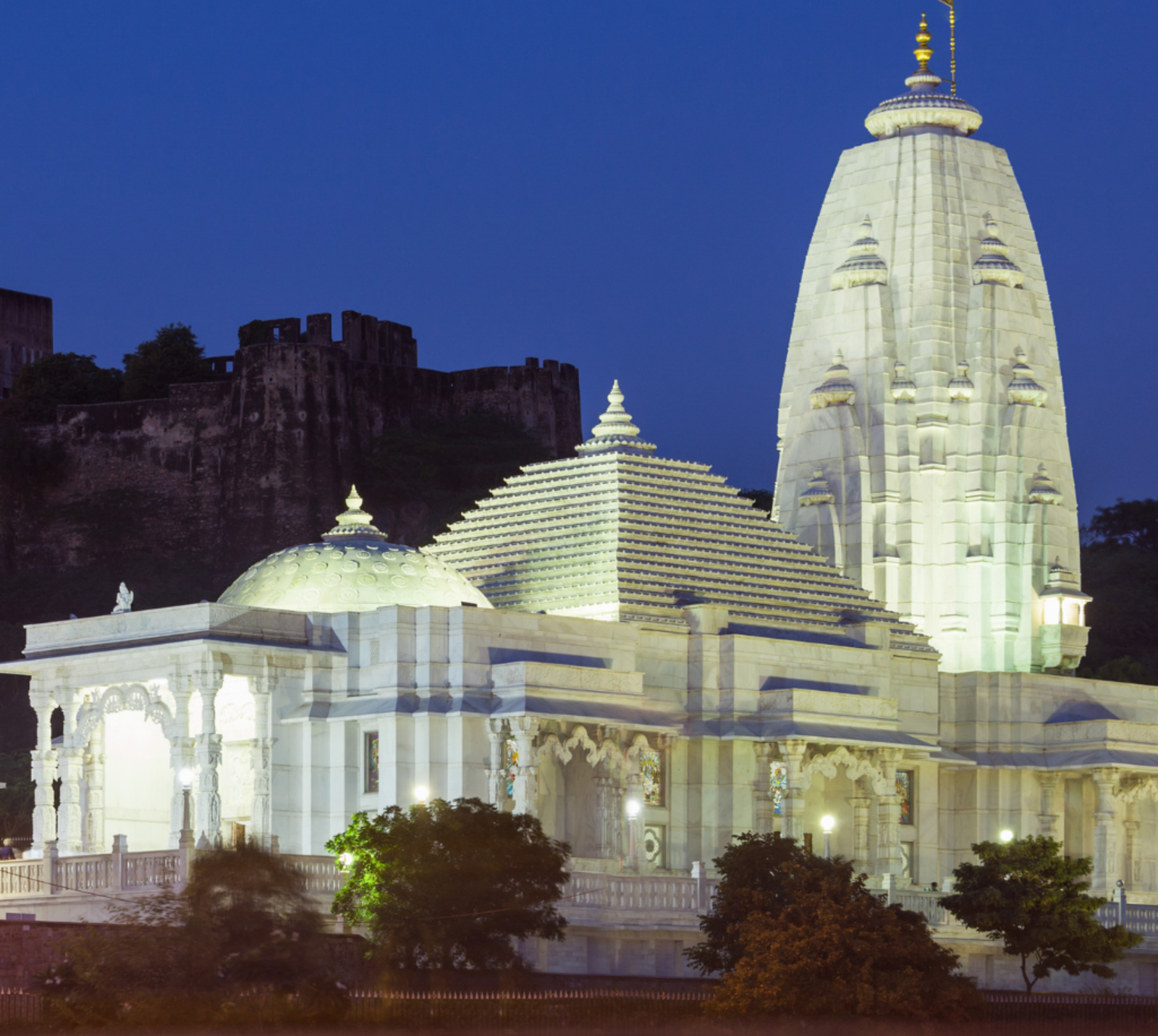
the magnificent Birla Mandir (also known as the Laxmi Narayan Temple) in Jaipur, Rajasthan, beautifully illuminated at dusk with the historic Moti Dungri fort visible in the background.

Evening Illumination and Aarti

After dusk, the white marble is lit from below and appears to glow against the night sky. The evening aarti, held around 7:00 PM, is a peaceful, atmospheric ritual well worth staying for.
Visitor Information, Timings, Entry and How to Reach

Essential details to help you plan your visit with ease.

Best Time to Visit Birla Mandir

Entry Fee

How to Reach

Tips for Visiting Birla Mandir

Planning your visit to the Birla Mandir with these practical tips will enhance your experience:
fish

Nearby Attractions to Birla Mandir

Discover the notable sights and cultural landmarks located close to Birla Mandir.
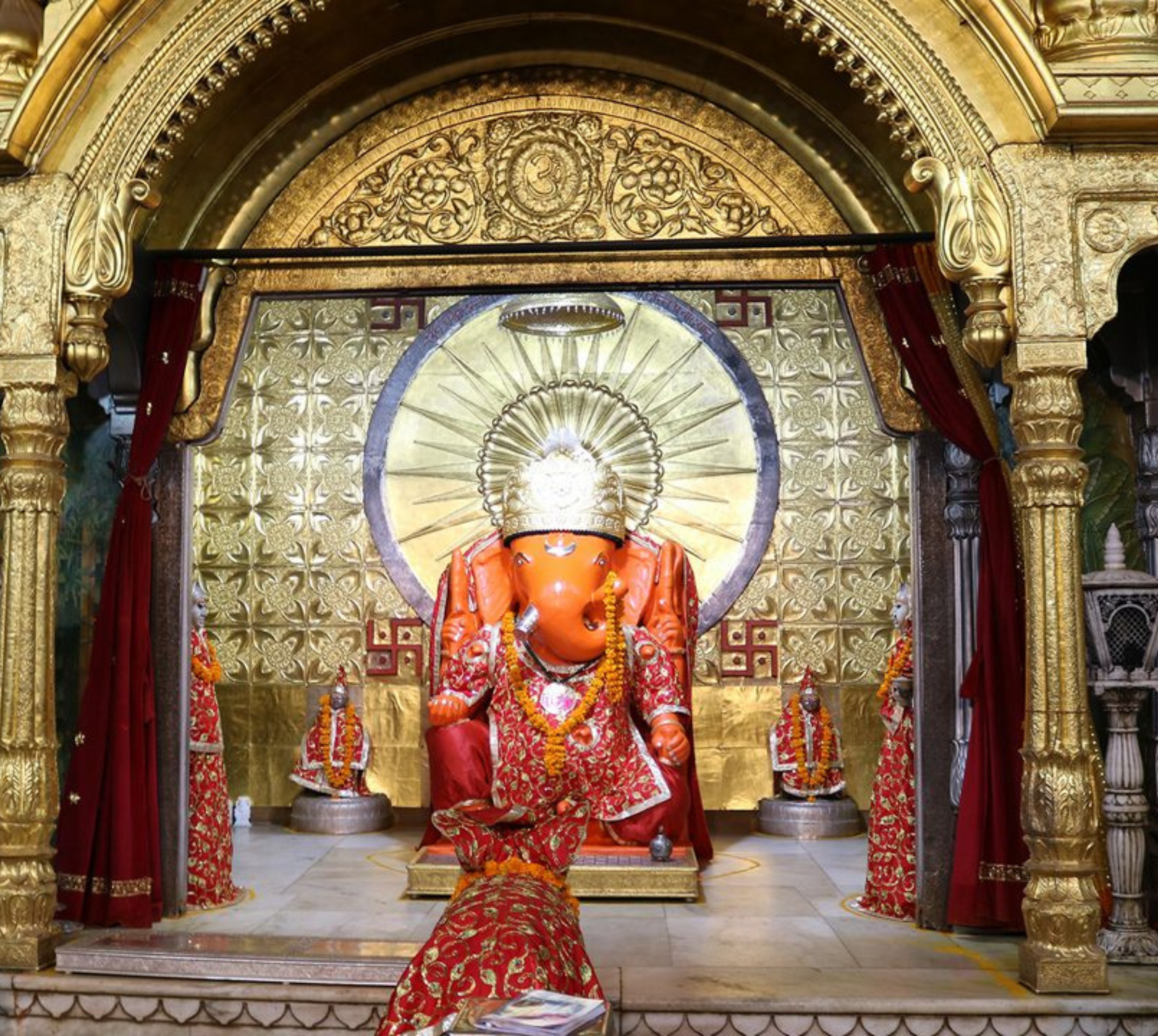
Moti Dungri Ganesh Temple scaled

Moti Dungri Ganesh Temple

A much-loved Ganesh temple on the hillock directly above, established in 1761 and only steps away.
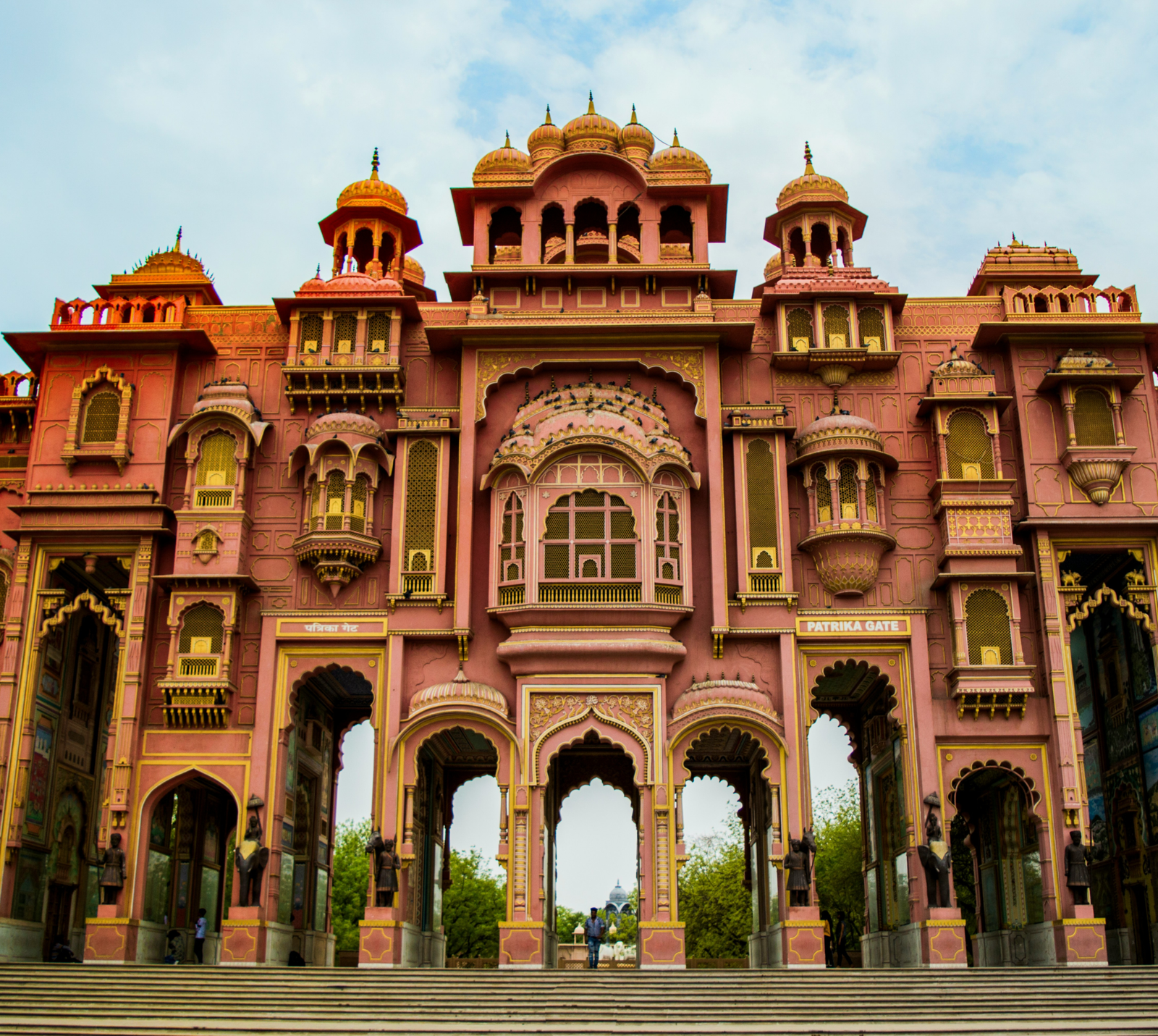
Patrika Gate in Jaipur, Rajasthan, is a vibrant modern landmark built in 2016 by the Patrika Group as the grand entrance to Jawahar Circle Garden. Serving as the conceptual "ninth gate" of the Pink City, its architecture and colorful interior frescoes pay homage to Rajasthan's rich royal heritage and traditional design.

Jawahar Circle Garden

One of Asia's largest circular gardens, known for its rose beds and the photogenic Patrika Gate.
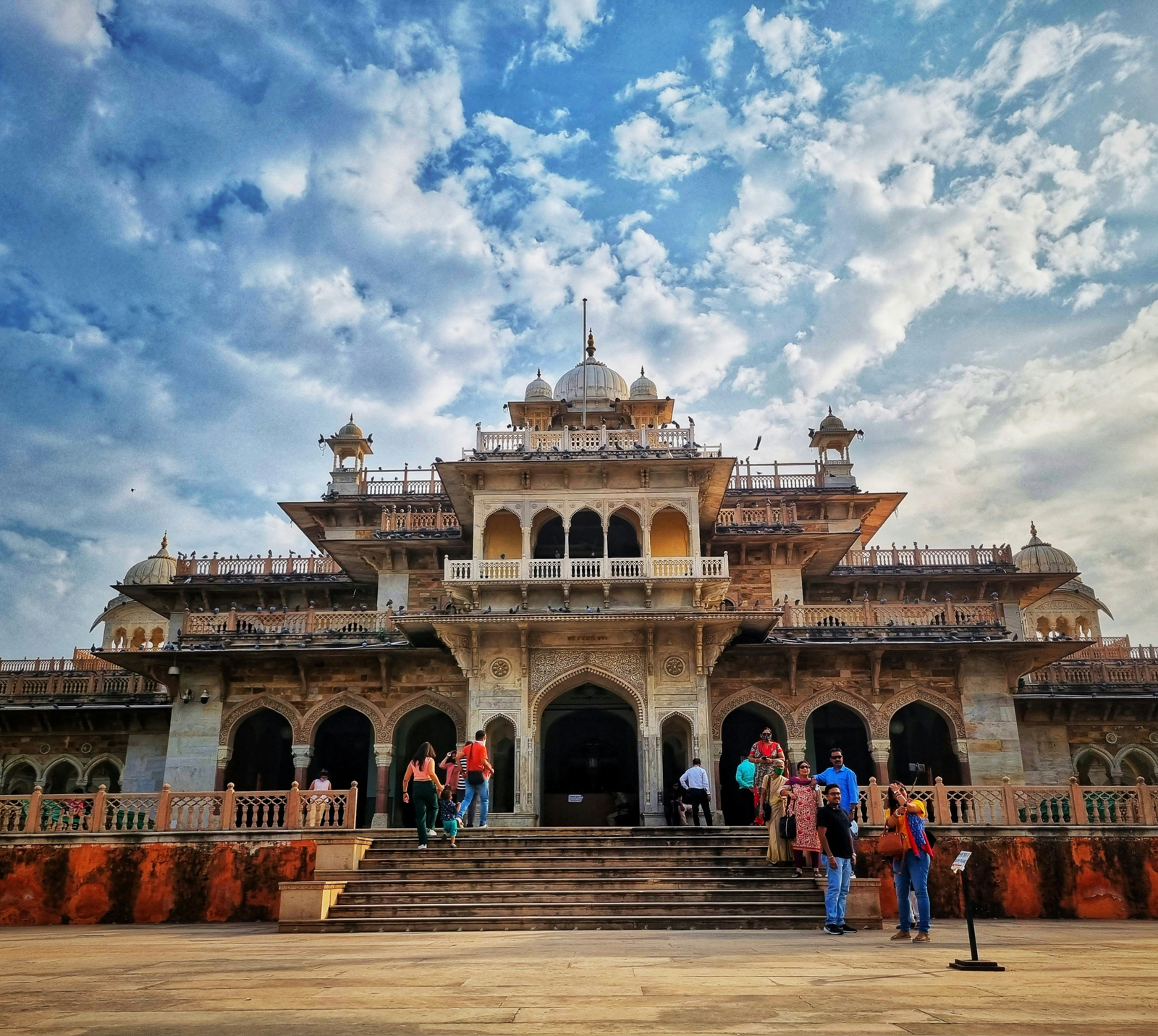
Albert Hall Museum in Jaipur, Rajasthan, is the oldest museum in the state, functioning as the State Museum of Rajasthan.

Albert Hall Museum

Rajasthan's oldest museum, housed in a striking Indo-Saracenic building a short drive away.
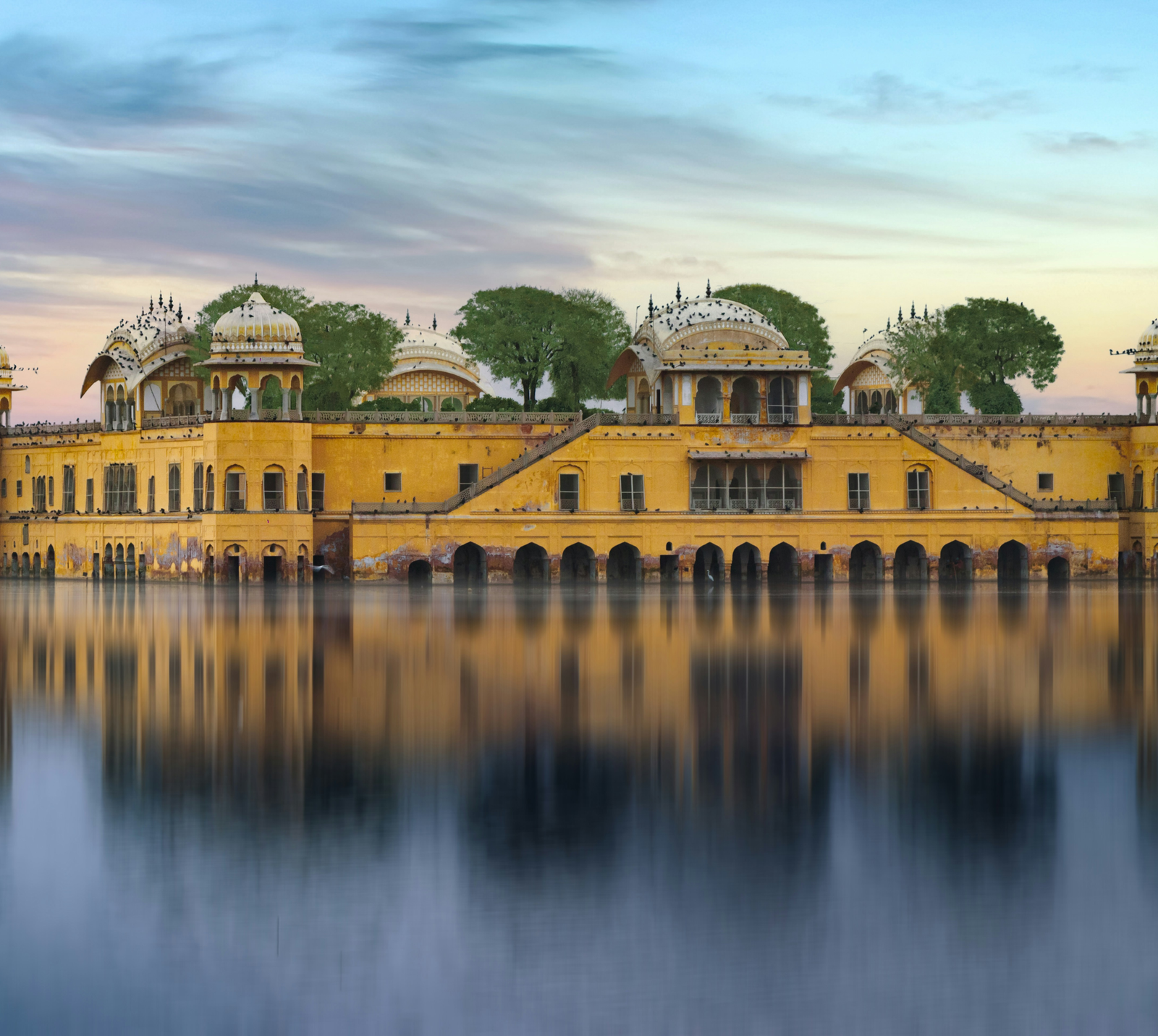
Jal Mahal (Water Palace) is a striking five-story historical palace situated in the middle of Man Sagar Lake in Jaipur, Rajasthan, built with a harmonious blend of Rajput and Mughal architectural styles.

Jal Mahal

The picturesque water palace set in Man Sagar Lake, a lovely stop for sunset photography.
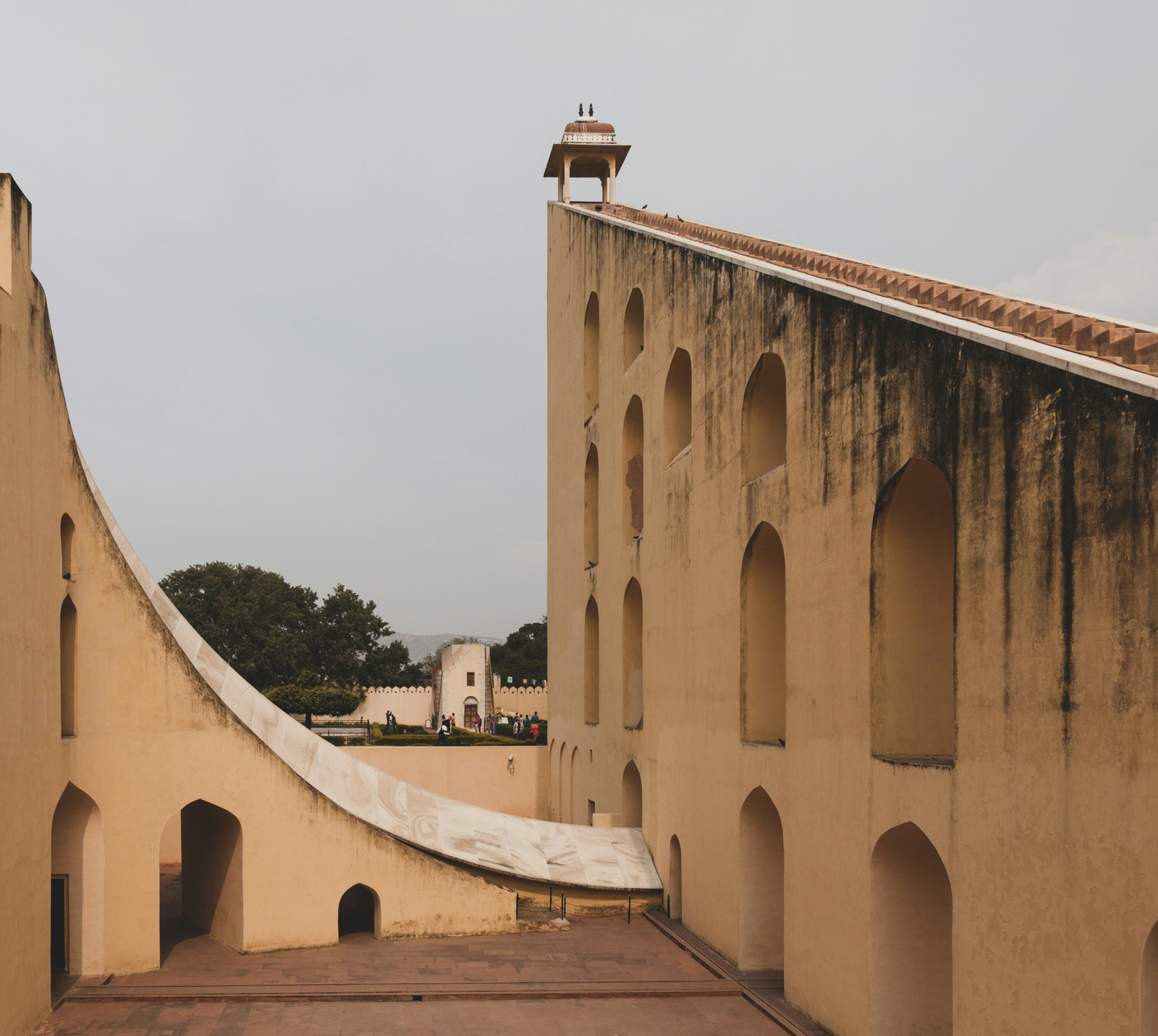
Vrihat Samrat Yantra at the Jantar Mantar observatory in Jaipur, Rajasthan, India.

Jantar Mantar

The UNESCO-listed astronomical observatory built by Maharaja Sawai Jai Singh II, a short drive from the temple.

Suggested Itinerary

Evening visit to Moti Dungri Ganesh Temple, then walk down to Birla Mandir for the aarti, followed by the illuminated marble after dark and a stroll through the gardens.

FAQs

Find quick answers to common questions before planning your visit to Birla Mandir Jaipur.
1. Why is Birla Mandir Jaipur famous?
It is famous as a white marble Laxmi Narayan Temple that brings together modern and traditional design, known for its carved sculptures, stained glass windows, and glowing evening illumination.
It was built by the industrialist Birla family through the B.M. Birla Foundation, opening for darshan on 22 February 1988.
The temple is dedicated to Lord Vishnu, known as Narayan, and Goddess Lakshmi, which is why it is also called the Laxmi Narayan Temple.
No, entry is free for all visitors, Indian and foreign alike, and the adjoining museum is free to enter as well.
The temple is open daily from 8:00 AM to 12:00 noon and again from 4:00 PM to 8:00 PM.
Photography is permitted in the gardens and of the exterior, but cameras and phones are not allowed inside the main prayer hall.
The best time is early morning or evening, ideally between October and March, with the evening especially rewarding for the illuminated marble and aarti.
Yes, the Moti Dungri Ganesh Temple sits just behind it, and Jawahar Circle Garden, Albert Hall Museum, and Jal Mahal are all a short distance away.

Book your stay with us now