

Most cities wear many colours. This one wears a single shade. Step inside the old walls of Rajasthan’s capital and almost every building, shopfront and gateway glows the same warm terracotta pink, held to that one colour by law. Travellers reach for their cameras. Sooner or later comes the obvious question. So why is Jaipur called the Pink City, and did someone really paint a whole city to match? The short answer involves an astronomer-king, a grid drawn on paper, a rather anxious welcome laid on for British royalty. It is a better tale than the postcards let on.
So Why Is Jaipur Called the Pink City
Here is the heart of it. In the middle of the nineteenth century, the city was not pink at all. Its buildings were a mix of white and a dull, sallow yellow. Then, in 1876, Albert Edward, the Prince of Wales, eldest son of Queen Victoria, set out on a long tour of India. Word reached the ruler, Maharaja Sawai Ram Singh the Second, that the prince would call on his city.
Every princely state along the route was competing to flatter the future king. Ram Singh meant to win. He had the entire old town washed in pink, the colour of welcome and hospitality across this part of the world. Thousands of workers set to it. By the time the prince arrived, the streets glowed rose from gate to gate.
The name that trailed him home again, the Pink City, has never once worn off. It was, in the end, a piece of clever diplomacy dressed up as decoration.
The City That Came First
To understand the colour, it helps to know the place was planned long before it was painted. When was Jaipur founded? In 1727, by Maharaja Sawai Jai Singh the Second, a ruler as interested in the stars as in warfare, who moved his capital down from the old hill fort at Amer to the open plains below. He wanted a city fit for a new age, so he had it drawn as a precise grid of wide avenues and square districts, the work of a gifted scholar named Vidyadhar Bhattacharya.
Nine neat blocks, straight roads crossing at right angles, a ring of walls with grand gates, all set down before a single house went up. This makes it one of the earliest planned cities in India, laid to a logic you can still trace on foot today. That same king built the giant open-air observatory, the Jantar Mantar, whose stone instruments still tell the time. The pink city arrived a century and a half later. Order was there from the very start.
The Pink That Was Made to Stay
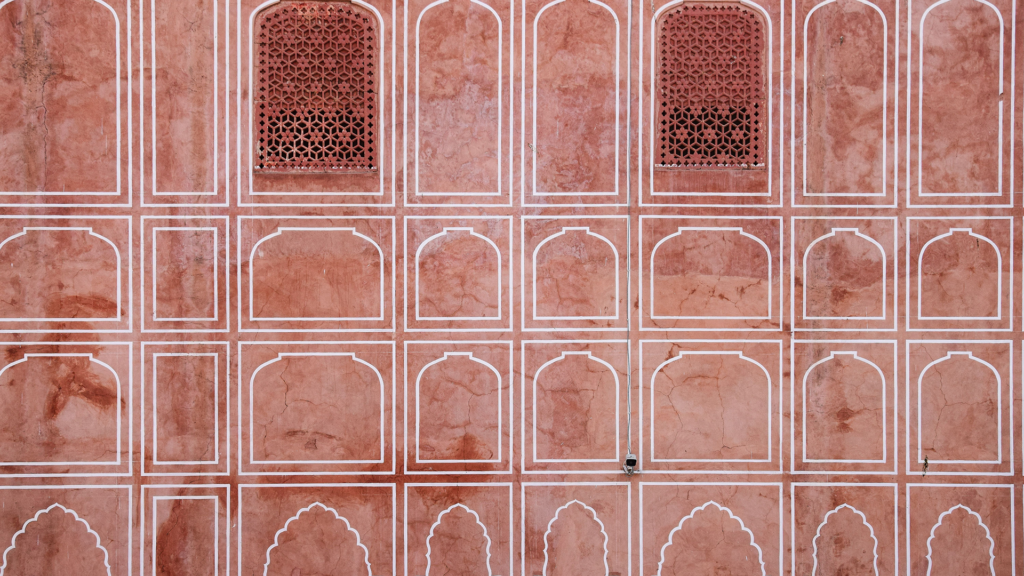
A grand gesture might have faded within a season. This one was made permanent. So taken was the court with the new look that in 1877, Ram Singh the Second passed a law requiring every building inside the old walls to keep its pink face. The rule still stands today. Its officials can fine owners in the heritage zone whose walls drift from the approved shade.
The old quarter is repainted to order. Look closely at any wall. The colour is not really pink at all but a deep terracotta, closer to the skin of a peach, mixed in the old days from lime and local earth. It is a small thing that changes how you see the place. The famous colour is not an accident of local stone. It is a dress code, kept up for nearly a hundred and fifty years. Every few years, the walls are washed again in the same warm tone.
Is All of Jaipur Pink
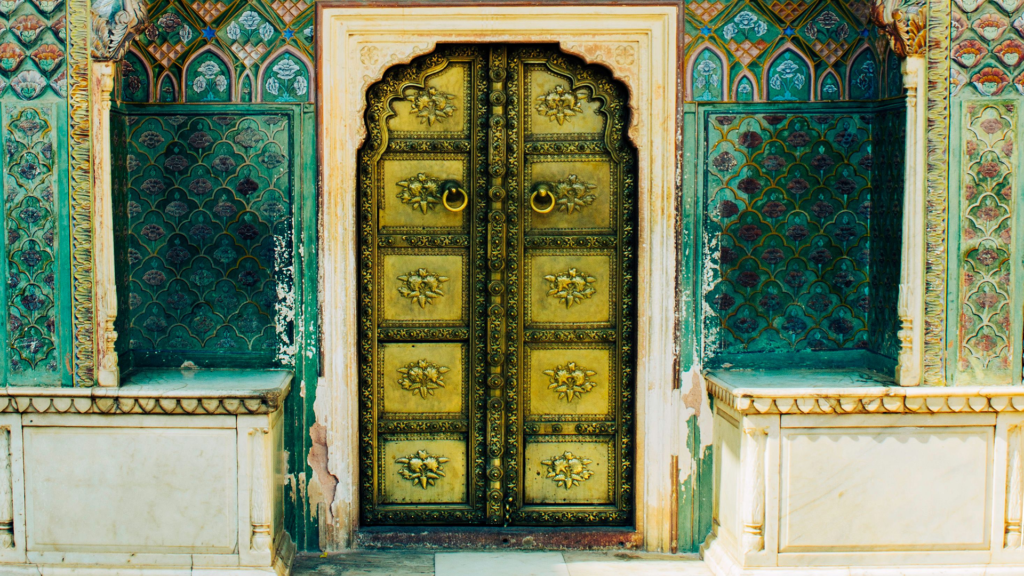
This is where many first-time visitors get confused. Only the walled old city is bound by the pink rule. Beyond the historic gates, modern Jaipur sprawls in every colour you please, with glass cafes, leafy suburbs and traffic like anywhere else. One of the more useful facts about Jaipur to carry with you is that the pink you came to see lives inside the old walls, so that is where you want to be.
In 2019, that same walled city was named a UNESCO World Heritage Site, an honour that recognised not just the colour but the whole planned marvel beneath it. The pink, it turns out, is only the paint on something far older.
The Face of the Pink City
No single building says pink city quite like the Hawa Mahal, the Palace of Winds, which earns the billing. Built in 1799 by Maharaja Sawai Pratap Singh, a grandson of the founder, its street front climbs five storeys of red and pink sandstone, pierced by 953 tiny latticed windows. It was never a palace to live in, but a screen, raised so the women of the court could watch the street processions below without being seen, as the custom of the day required.
Among the neatest facts about Jaipur is that this most photographed of walls is barely a room deep, a honeycomb front with a working city behind it. It stands on the main bazaar street of the old town, which is why so many travellers looking for hotels near Hawa Mahal land in the thick of the pink, a short walk from the markets and the gates.
When the Pink Looks Its Best
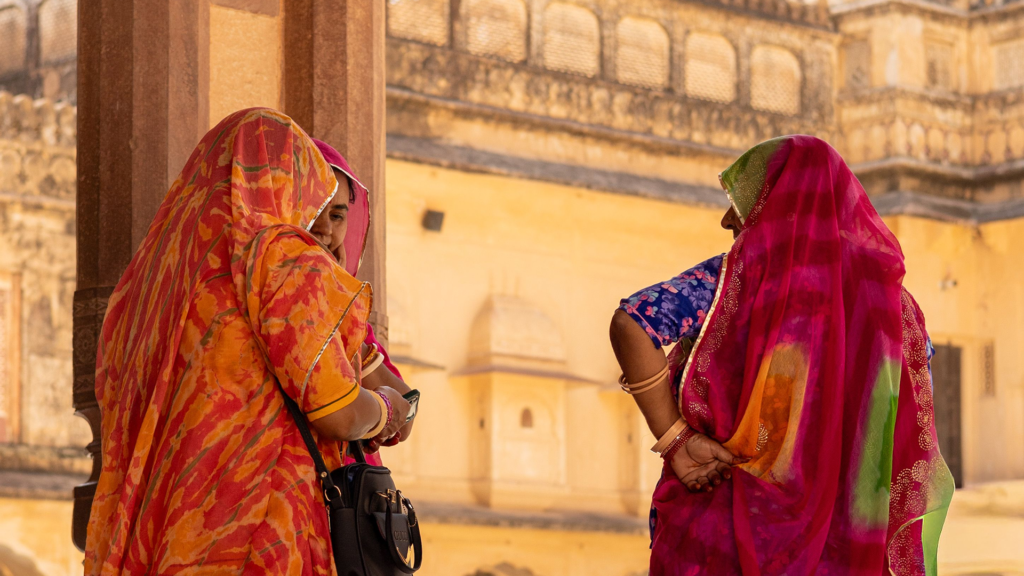
A word for anyone bringing a camera. The colour is at its most striking in the last hour before sunset, when the low light deepens the terracotta to something near rose gold, the whole old town warming from within. Early morning runs it close, with soft light and empty lanes before the traffic wakes. The harsh midday sun, by contrast, flattens the pink city to a dusty beige, which is why a few first-timers wonder what the fuss was about. Time your wandering for those golden hours, find a rooftop, watch the Pink City finally live up to its name.
Base Yourself Behind the Gates
That is where we come in. We are a family-run haveli inside the old city, close enough to those pink gates that you can walk to the Hawa Mahal before the crowds arrive. Guests who look for hotels near Hawa Mahal tend to want the real thing, an old home within the walls, not a modern block out on the ring road, which is exactly what we keep.
Come see the pink first-hand, best of all at sunset, when the whole old town turns the colour of a ripe peach. Write to us for dates. We will gladly help with the rest.
Frequently Asked Questions
Is Jaipur pink because of the local stone?
No, that is a common mix-up. The old city is pink because it was painted, not quarried that way. The real answer to the question, why is Jaipur called the Pink City, is a coat of terracotta wash laid on in 1876, not any natural rock.
What colour was Jaipur before it turned pink?
Mostly white, with patches of a dull, sallow yellow. The change happened all at once in 1876, for a royal visit. It is one of the neater facts about Jaipur that its trademark colour is younger than the city by about a century and a half.
Do residents still have to keep their buildings pink?
Inside the old walls, yes. A law from 1877 still requires it, and the city can fine owners whose walls stray from the approved shade. Beyond the historic gates, modern Jaipur is free to be any colour it likes.
Is Jaipur the oldest city in Rajasthan?
No, and that surprises people. The hill capital at Amer came first. If you are wondering when was Jaipur founded, the answer is 1727, which makes it fairly young by Indian standards, a planned city built from scratch on open ground.
Where should you stay to be surrounded by the pink?
Inside the walled old city, not the modern sprawl beyond the gates. Travellers who search for hotels near Hawa Mahal tend to land in the right zone, close to the markets, the palace and the best of the terracotta streets.
