

Someone hands you a piece of barfi when travelling in India at a shop you almost walked past, and it is warm, and the silver on top catches the light in a way that makes you hold it for a second before eating it. Or you take a spoonful of rabri that has this deep, golden, almost sunset quality to it, and you think, hang on, what exactly am I tasting here? That is saffron. And that is the moment you begin to notice saffron and silver leaf in Rajasthani sweets, and how they quietly shape not just flavour, but the entire experience.
Saffron’s Role in Rajasthani Sweets
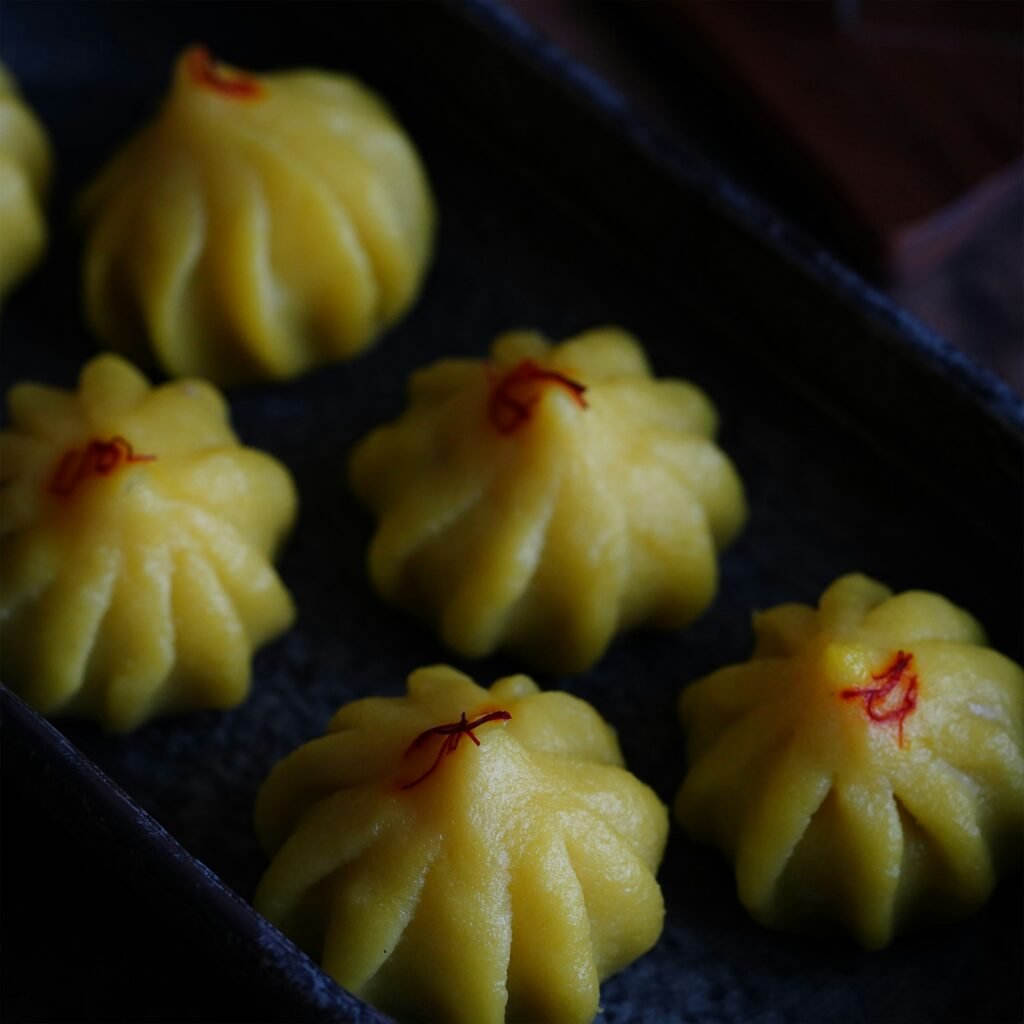
Let’s start with kesar, because most people underestimate it. They think of it as food colouring with a good reputation. It is not. Saffron is the dried stigma of a crocus flower, and each flower gives you exactly three threads. You need well over four thousand flowers to get a single ounce. Kashmir has been growing it since around the fifth century, though Iran still produces roughly ninety per cent of the global supply. When someone in a Rajasthani kitchen reaches for the saffron tin, they are reaching for one of the most labour-intensive ingredients on earth.
And they are not doing it casually. In Rajasthani cuisine, saffron is an occasional food. It is the difference between a regular ghevar and the one grandmothers make during Teej. A regular ghevar gets soaked in sugar syrup, and that is perfectly fine. A Teej ghevar gets devoured with saffron-laced rabri and a scatter of pistachios, and suddenly it is not just a sweet anymore. It is a whole tale about what this particular day means to a family.
You will find kesar in dozens of traditional recipes across the state. Malpua in Jodhpur, those gorgeous thick pancakes fried in ghee until the edges go crisp, often sit in a saffron-spiked syrup before they reach your plate. Kesar churma ladoo takes the classic coarse wheat and jaggery combination and threads it with bloomed saffron. Basundi simmers for hours, the milk reducing into something thick and deeply comforting, with saffron doing the known work of turning it gold. Even the famous Jodhpuri saffron lassi uses kesar not just for flavour but as a gesture. Handing someone a glass of that drink is a way of saying you matter enough for the expensive spice.
The Curious Case of Silver Leaf in Rajasthani Sweets
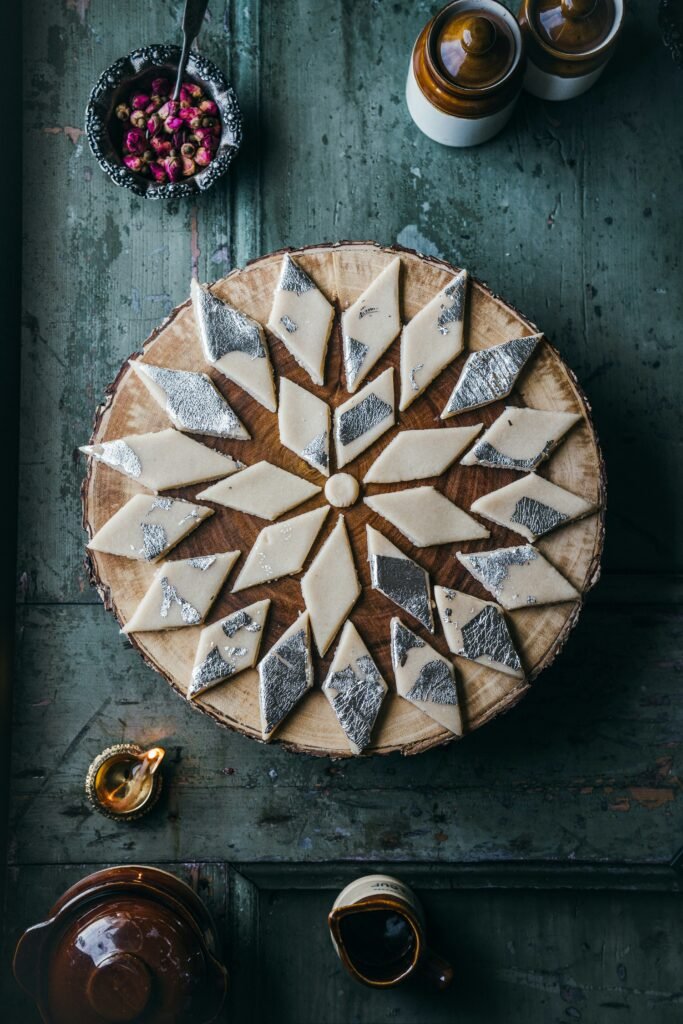
Now for the strange one. Vark (sometimes spelt warq) is pure silver that has been hammered into sheets thinner than a single micrometre. It is laid on top of mithai with extraordinary care, usually with a breath rather than a touch, because it will crumble the moment it meets your fingers. You eat it, and it tastes of absolutely nothing.
So why has an entire subcontinent been putting flavourless metal on its desserts for centuries?
Partly because of Ayurveda. Texts going back over two thousand years mention rajata bhasma, or silver ash, as a cooling and purifying agent. Ancient practitioners believed it could calm internal heat and support the body’s defences. Modern research has confirmed that silver does have antimicrobial properties, though the amount one consumes on a single piece of kaju katli is so tiny it barely registers. The science may be thin, but the cultural association between silver and purity lodged itself deep and never left.
And partly because of the Mughals, who borrowed from Persian courtly traditions the rather magnificent idea of covering your food in precious metal. When the imperial kitchens wanted to signal that a dish was prepared for royalty, they finished it in silver or gold. The practice filtered down from Delhi and Lucknow to Jaipur and across Rajasthan, where it merged with local sweet-making traditions and stayed permanently. Today, a box of festival barfi without its silver finish feels somehow incomplete. Not wrong, exactly. Just underdressed.
The craft behind Vark is genuinely fascinating. Traditional vark artisans, concentrated in cities like Jaipur and Lucknow, would hammer silver between sheets of parchment until they achieved near-impossible thinness. These were hereditary trades, skills passed from father to son over generations. The sheets were packed between backing paper and peeled away only at the last possible second. It is a dying art now, largely replaced by machine production, though the older method had a quality that machines struggle to replicate.
Why Any of This Should Matter to You
You can absolutely visit Rajasthan, eat a dozen different sweets, and enjoy every one of them without knowing any of this. Nobody is going to quiz you.
But there is a different kind of enjoyment available if you do know. When you understand that the gold in your rabri is not just colour but a spice that someone had to bloom in milk for half an hour, or that the silver on your barfi connects back through Mughal courts and Ayurvedic clinics and generations of artisans hammering metal into something impossibly delicate, the sweet in your hand becomes a more interesting object. You are no longer merely eating.
This is what a genuine Rajasthani food experience presents when you engage with it properly. Not just flavour, but context. Not just taste, but meaning. And the best version of it tends to happen not in restaurants but in homes, where recipes have been passed down, and the person making your food can actually tell you why the saffron goes in at a specific moment and not five minutes earlier.
A place like Dera Mandawa, where the family’s own matriarch leads cooking sessions using household recipes that don’t usually appear on any restaurant menu, is exactly the kind of setting where these details stop being trivia and start feeling personal.
Rajasthani sweets are small things. But the stories folded inside them are not small at all. And once you have heard those stories, you will never eat a piece of silver-topped, saffron-streaked mithai quite the same way again.
