

Jantar Mantar, Jaipur

ico lotus 1

Overview

Jantar Mantar Jaipur is a fascinating combination of science, art, and heritage, standing as one of the world’s largest and best-preserved astronomical observatories. Built in the early 18th century by Maharaja Sawai Jai Singh II, the founder of Jaipur, this UNESCO World Heritage Site reflects India’s advanced understanding of astronomy and time measurement.

Located near the City Palace and Hawa Mahal, Jantar Mantar features a collection of nineteen massive geometric instruments used to observe celestial bodies, track time, and predict eclipses. It remains a remarkable example of India’s scientific ingenuity during the Rajput era and a must-visit site for travellers interested in history, architecture, and astronomy tourism.

Location

Near City Palace, Pink City, Jaipur

Timings

9:00 AM – 5:00 PM (Daily)

Entry Fee

₹50 (Indians), ₹200 (Foreigners), ₹15 (Students)

Time Required

1–1.5 hours
ico lotus 1

History & Architecture of Jantar Mantar

Commissioned in 1728 by Maharaja Sawai Jai Singh II, Jantar Mantar was part of a series of five observatories built across India — in Delhi, Ujjain, Varanasi, Mathura, and Jaipur. Of these, Jaipur’s is the most extensive and most accurate.
Jai Singh II, an avid scholar of mathematics and astronomy, aimed to refine the astronomical tables and improve the accuracy of calendars used in Hindu and Islamic traditions. The instruments, made of stone and marble, were designed for naked-eye observation and remain impressively precise even today.
In 2010, UNESCO recognised Jantar Mantar Jaipur as a World Heritage Site for its cultural and scientific significance, representing a fusion of Indian science, architectural excellence, and royal patronage.
ico fish 1

Main Attractions & Exhibits at Jantar Mantar

Games, recipes and traditional attire that have shaped our culture over generations are now thoughtfully curated into experiences for you to enjoy.
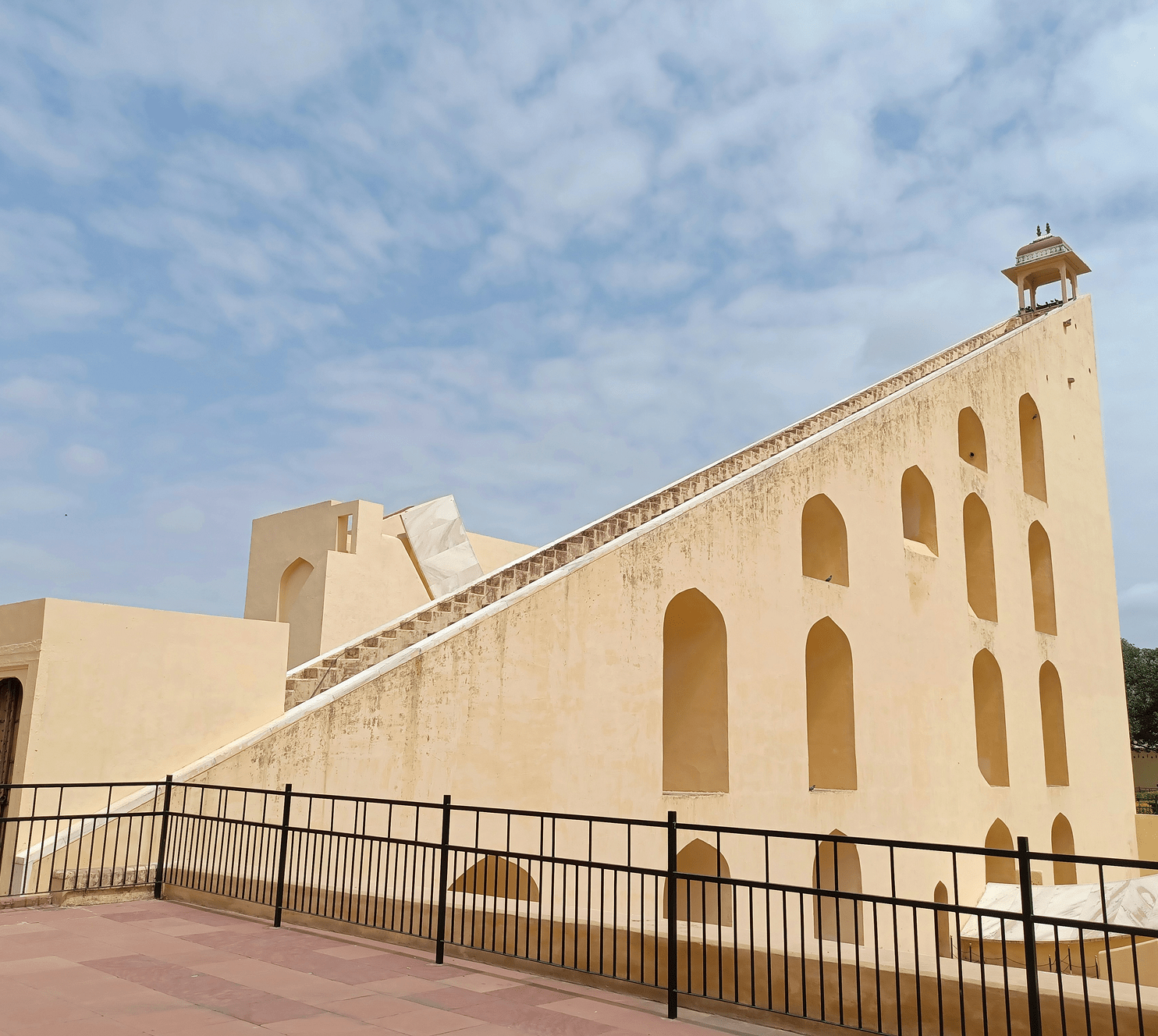
The image features the Vrihat Samrat Yantra, the world's largest stone sundial, which is located within the Jantar Mantar observatory in Jaipur, India.

Samrat Yantra (The Supreme Instrument)

The world’s largest sundial, standing 27 metres tall, can calculate the time with an accuracy of two seconds. Its shadow moves visibly every minute, offering a fascinating demonstration of solar timekeeping.
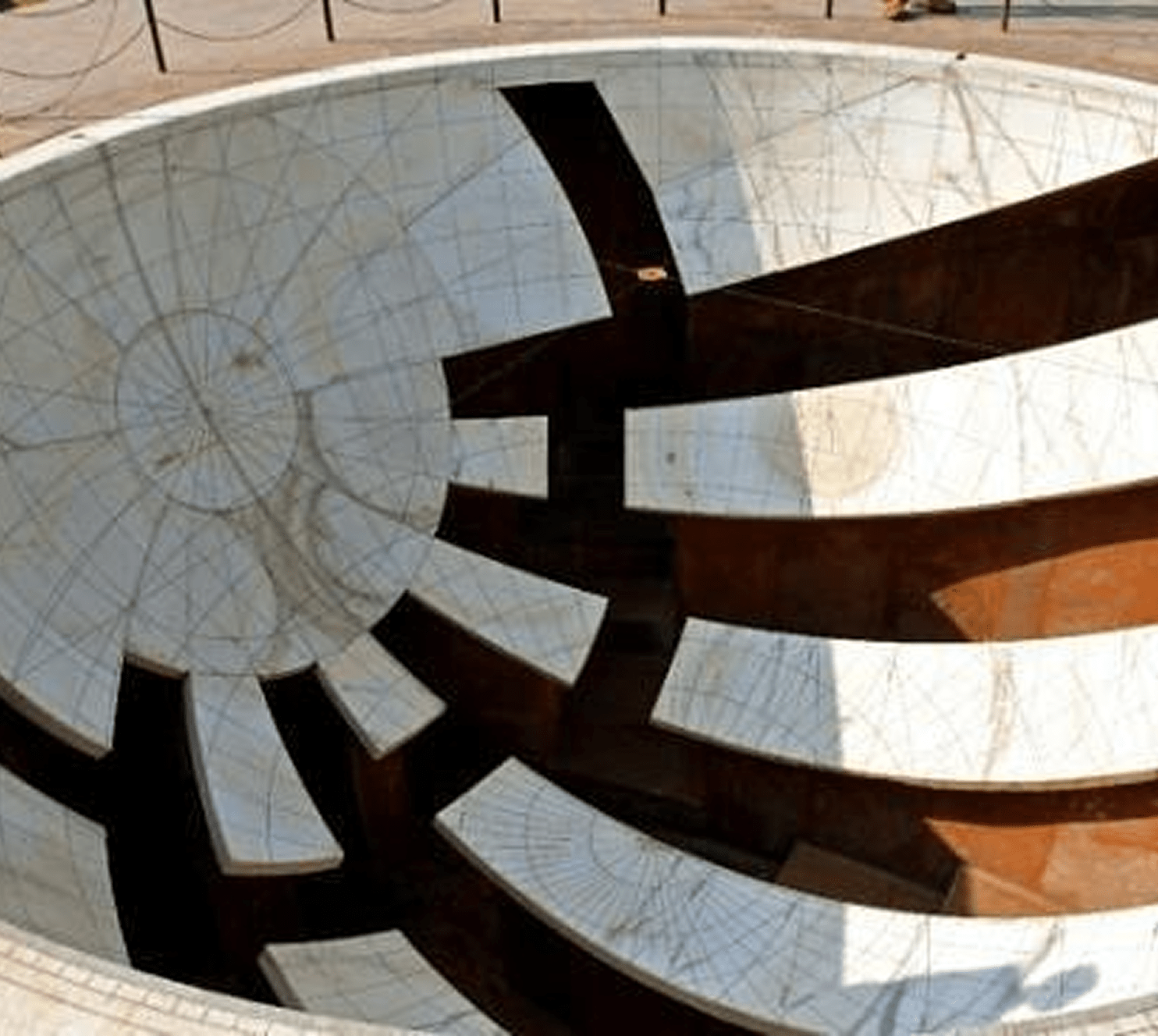
The image shows a portion of the Jai Prakash Yantra, one of the nineteen astronomical instruments at the Jantar Mantar observatory in Jaipur, India.

Jai Prakash Yantra

Two hemispherical structures that map the sky’s coordinates onto marble surfaces. They help observers visualise the movement of celestial bodies and understand how ancient astronomers tracked the sun and stars.
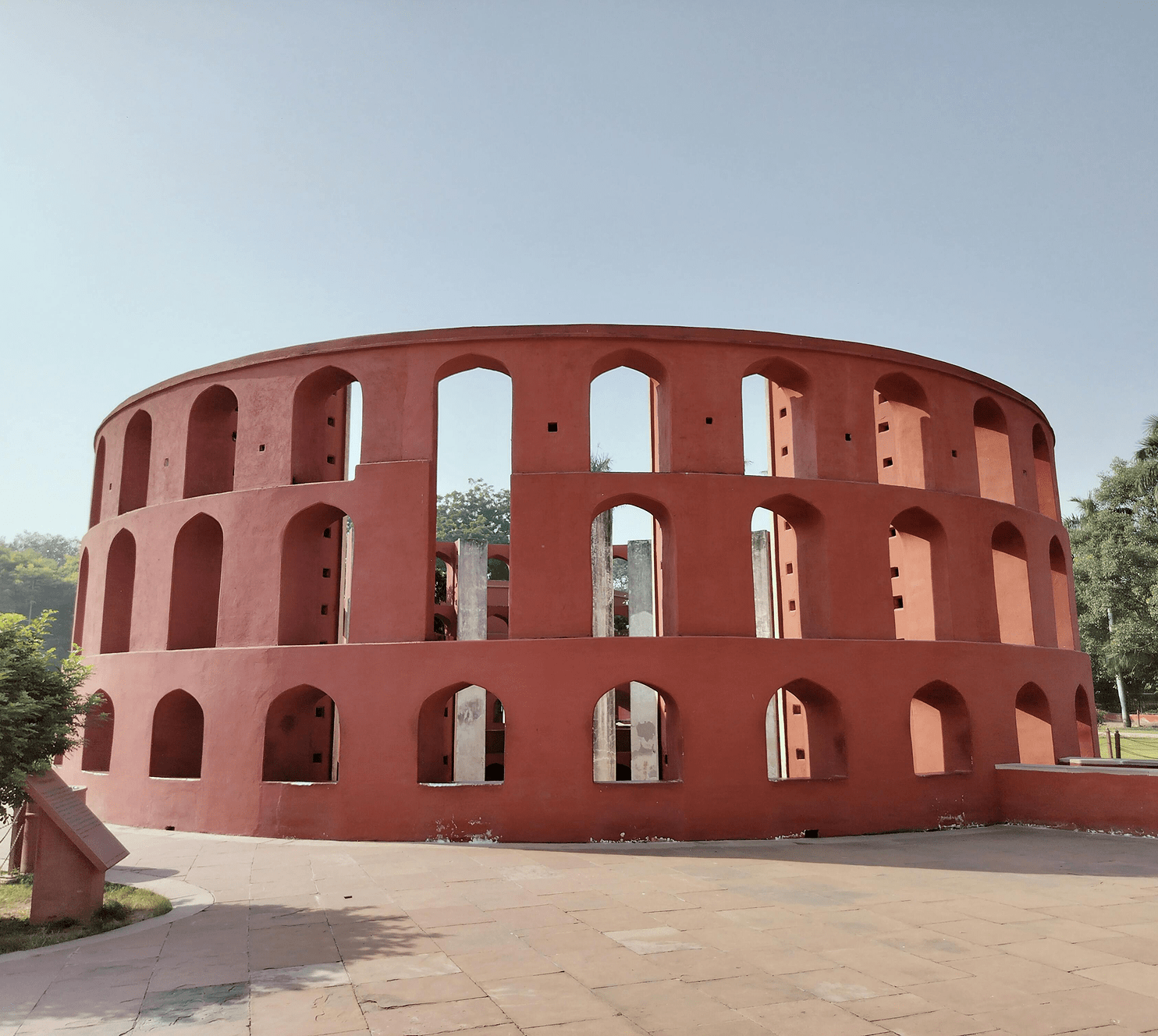
The image shows the Rama Yantra instrument at the Jantar Mantar observatory in New Delhi, India.

Rama Yantra

A pair of cylindrical structures used to measure the altitude and azimuth of celestial objects. Visitors can even stand inside to see how the instruments align with the sky.
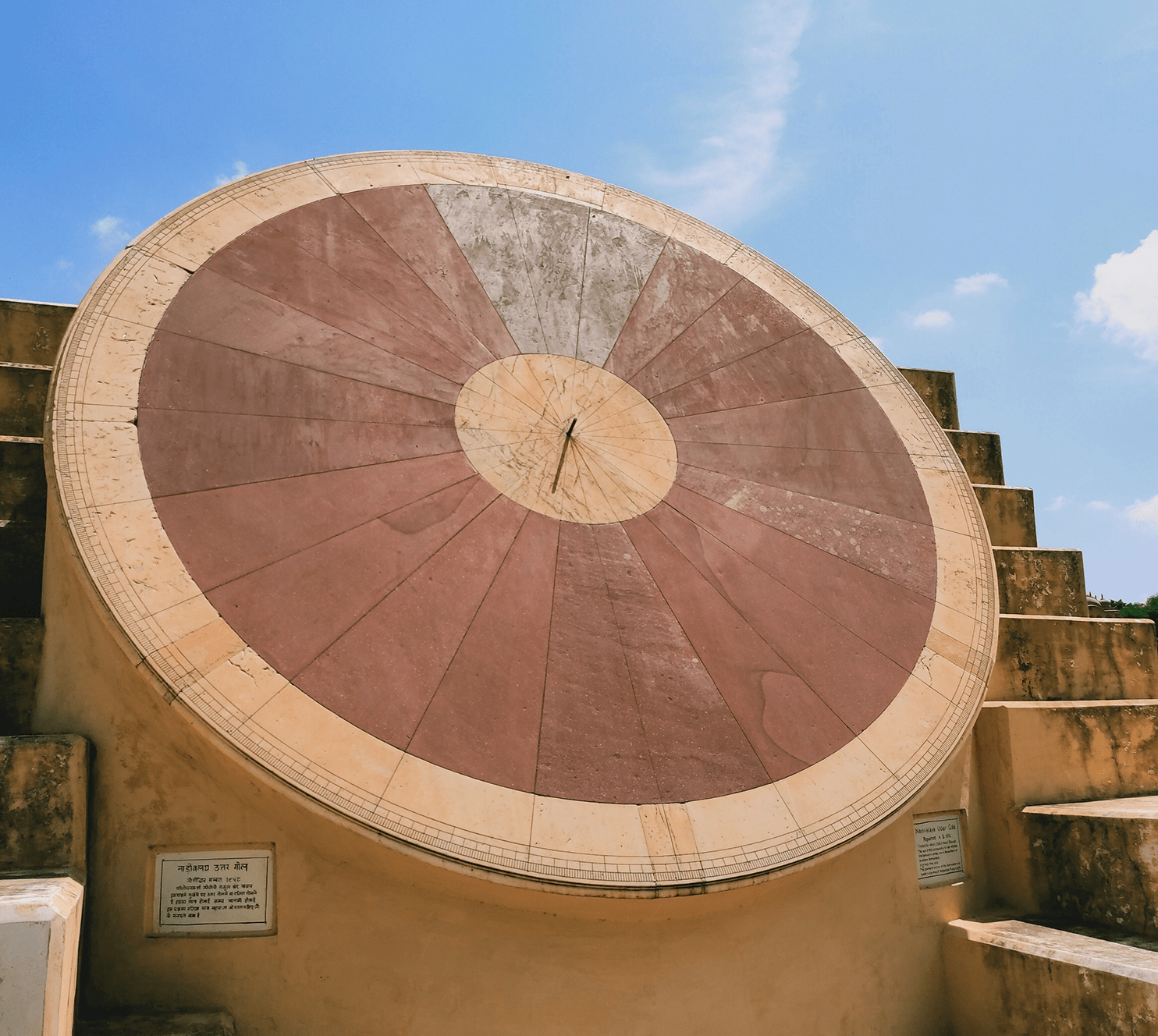
The image shows an astronomical instrument at the Jantar Mantar observatory in Jaipur, India. This specific instrument appears to be the Samrat Yantra, the world's largest sundial.

Nadivalaya Yantra

A dual-sided dial representing both hemispheres, used to measure the sun's position at different times of the year.
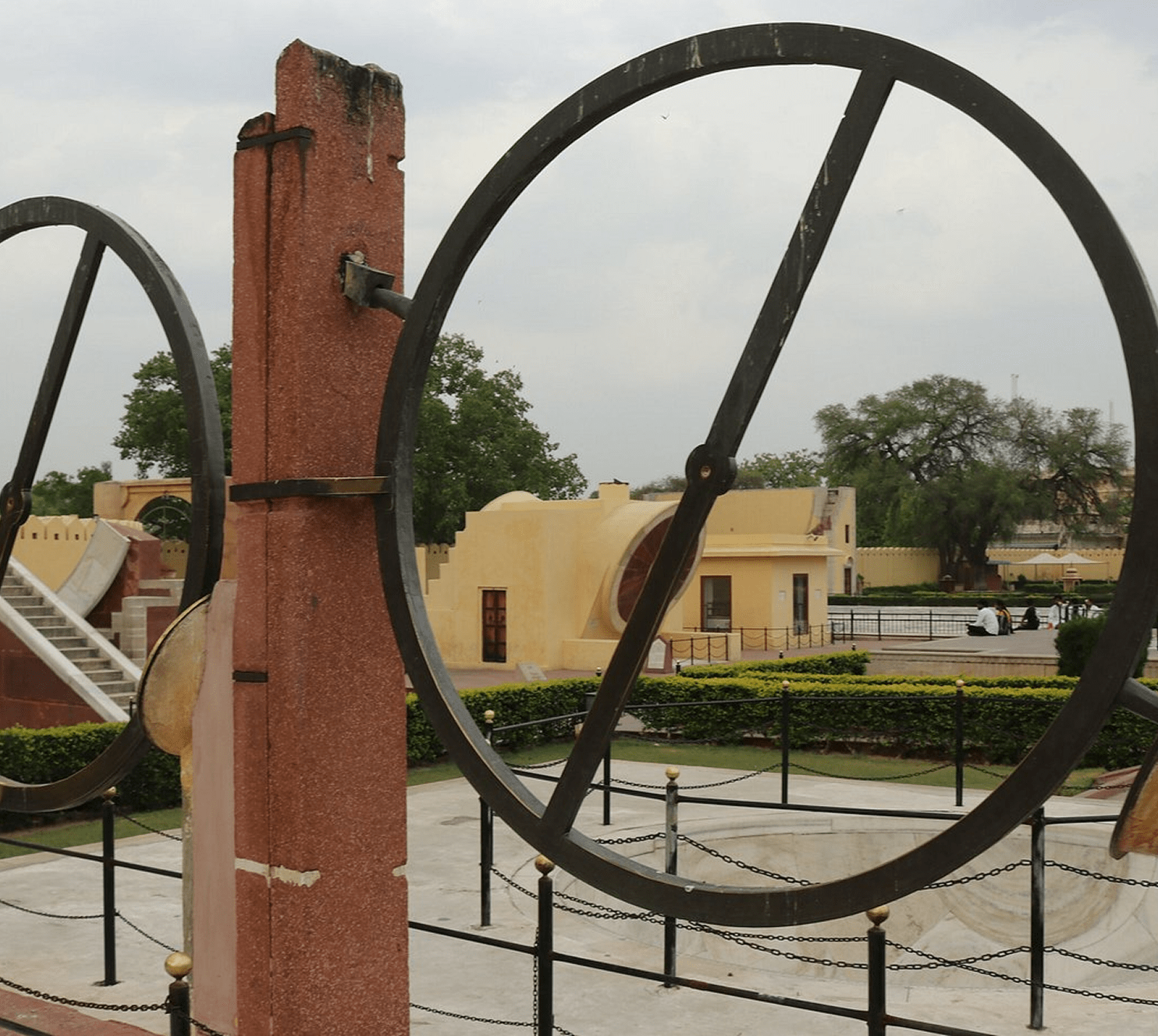
The image shows the Chakra Yantra instrument at the Jantar Mantar observatory in Jaipur, India.

Digamsa and Chakra Yantras

These instruments helped ancient astronomers determine the exact times of sunrise and sunset, which were vital for both astrology and religious rituals.
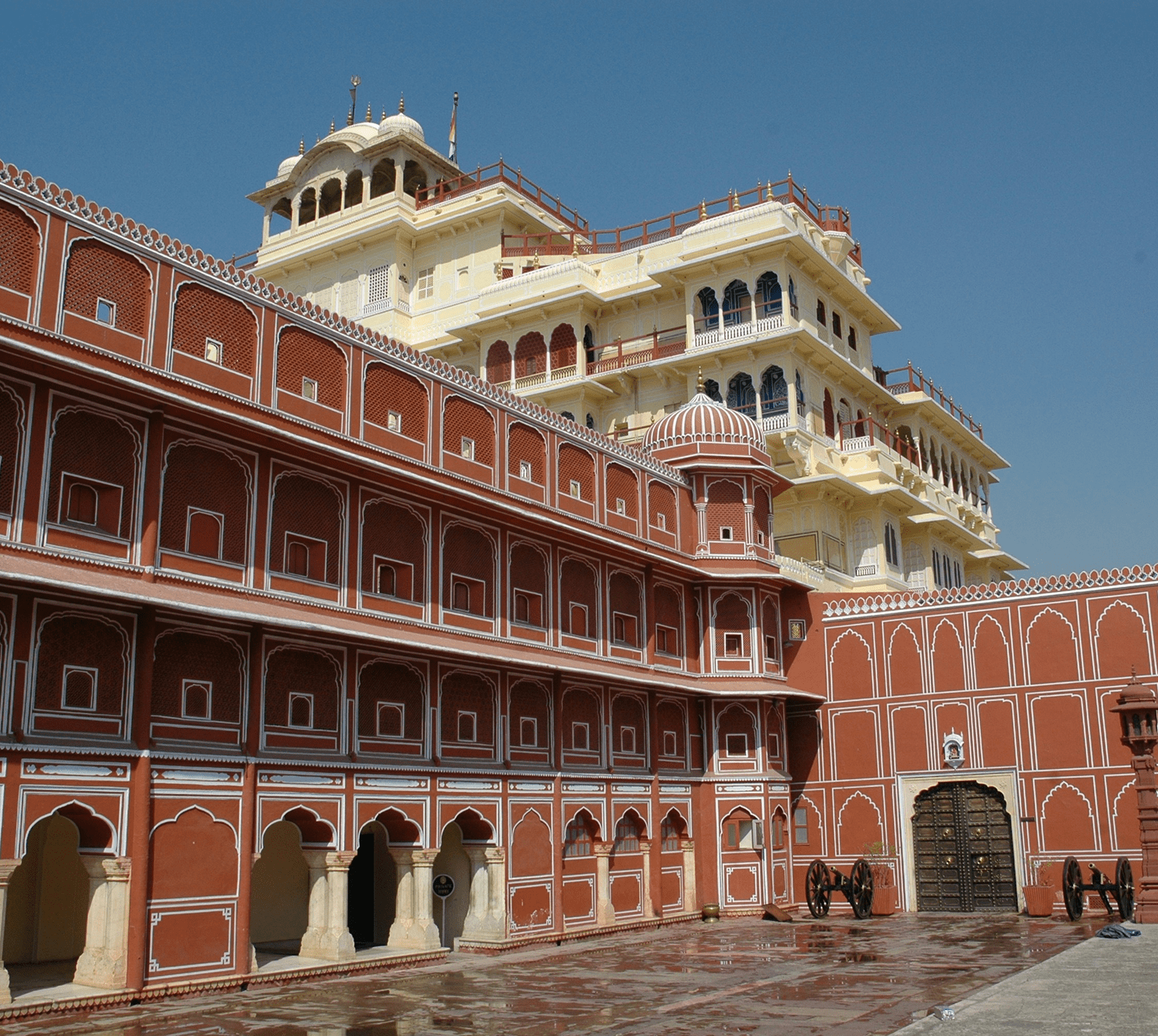
Visitor Information: Timings, Entry Fee & How to Reach

Games, recipes and traditional attire that have shaped our culture over generations are now thoughtfully curated into experiences for you to enjoy.

Timings & Best Time to Visit Jantar Mantar

Entry Fee

How to Reach

Tips for Visiting Jantar Mantar

ico fish 1

Nearby Attractions to Jantar Mantar

This is a photo of the City Palace in Jaipur, India. The palace complex was the ceremonial and administrative seat of the Maharaja of Jaipur.

City Palace Jaipur

A royal complex showcasing artefacts, textiles, and arms of the Kachwaha dynasty.
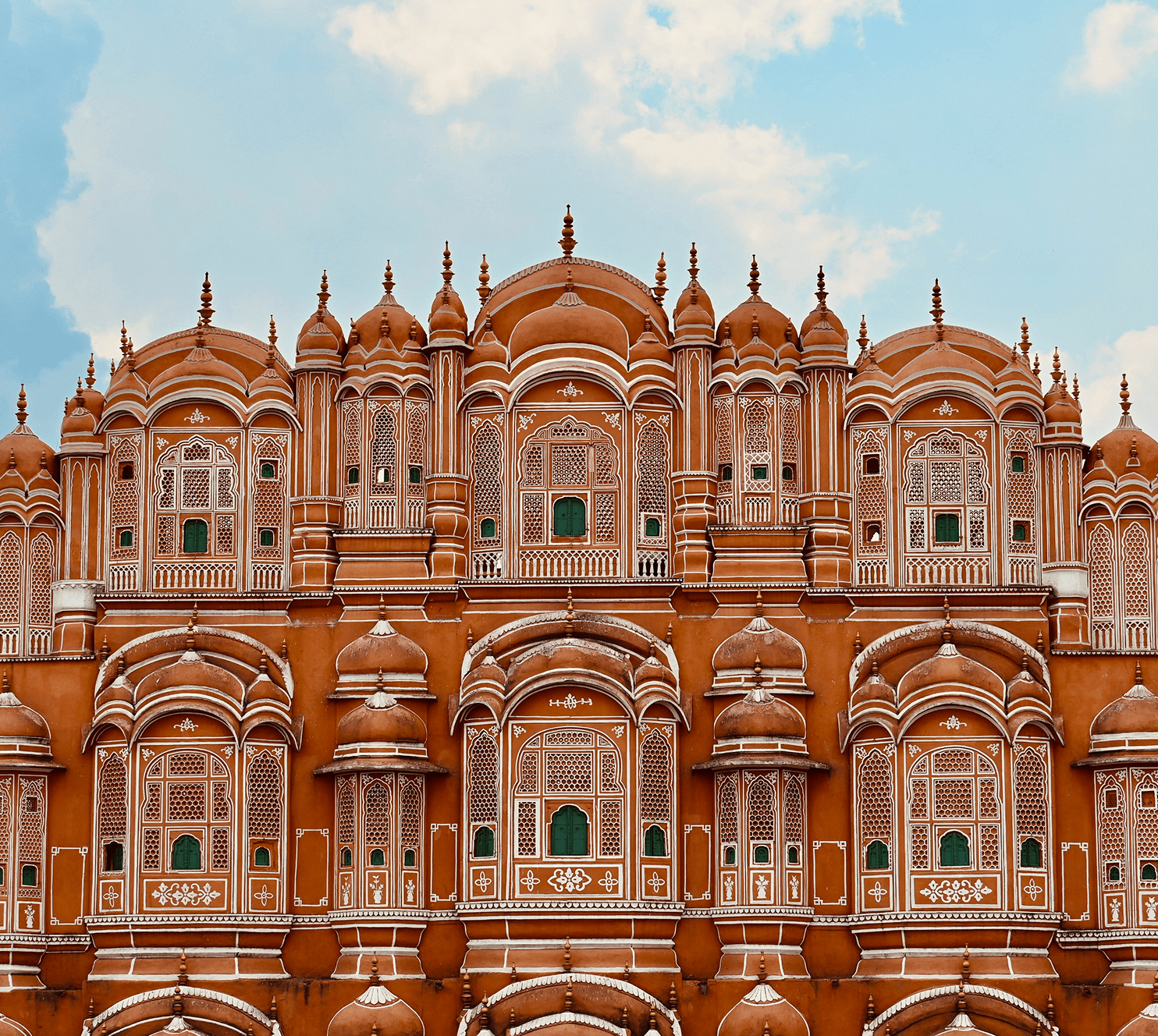
The image shows the façade of the Hawa Mahal, a historic palace located in Jaipur, Rajasthan, India.

Hawa Mahal

The iconic Palace of Winds, just a short walk away.
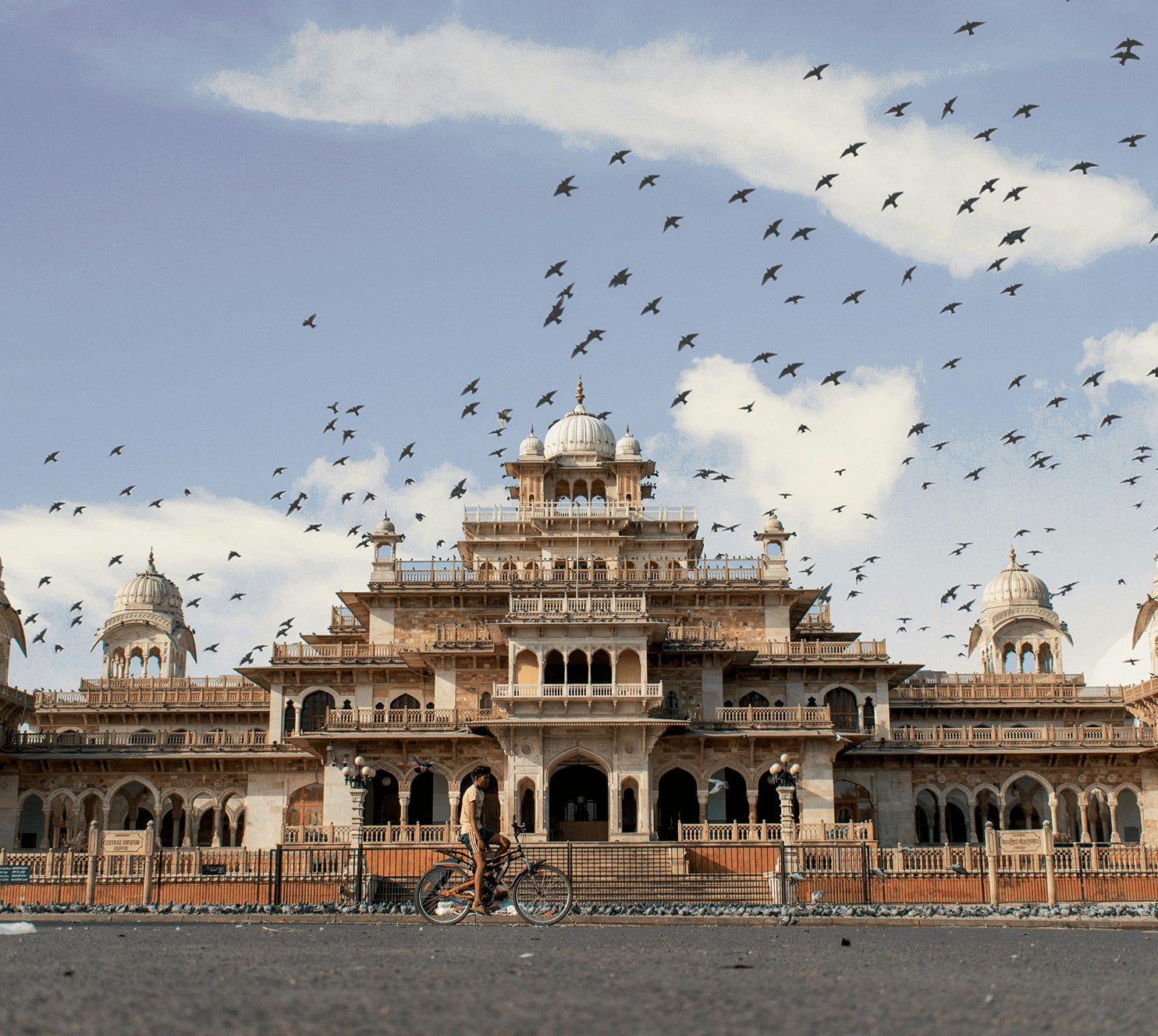
The image shows the Albert Hall Museum in Jaipur, Rajasthan, India.

Albert Hall Museum

Showcasing Rajasthani heritage, art, and history.
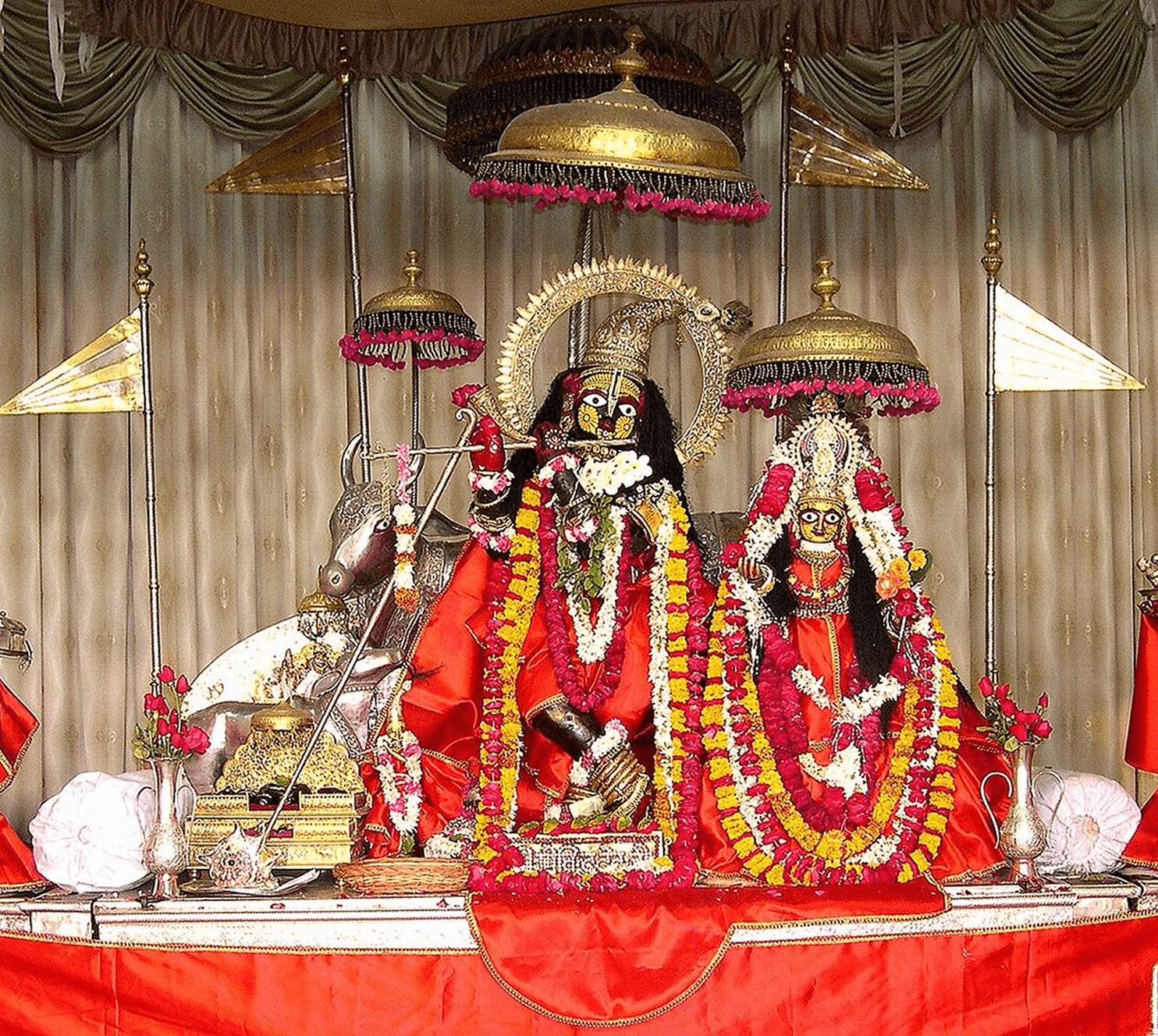
This image depicts the deities of the Govind Dev Ji Temple located in Jaipur, India.

Govind Devji Temple

A critical Krishna temple within the City Palace complex.
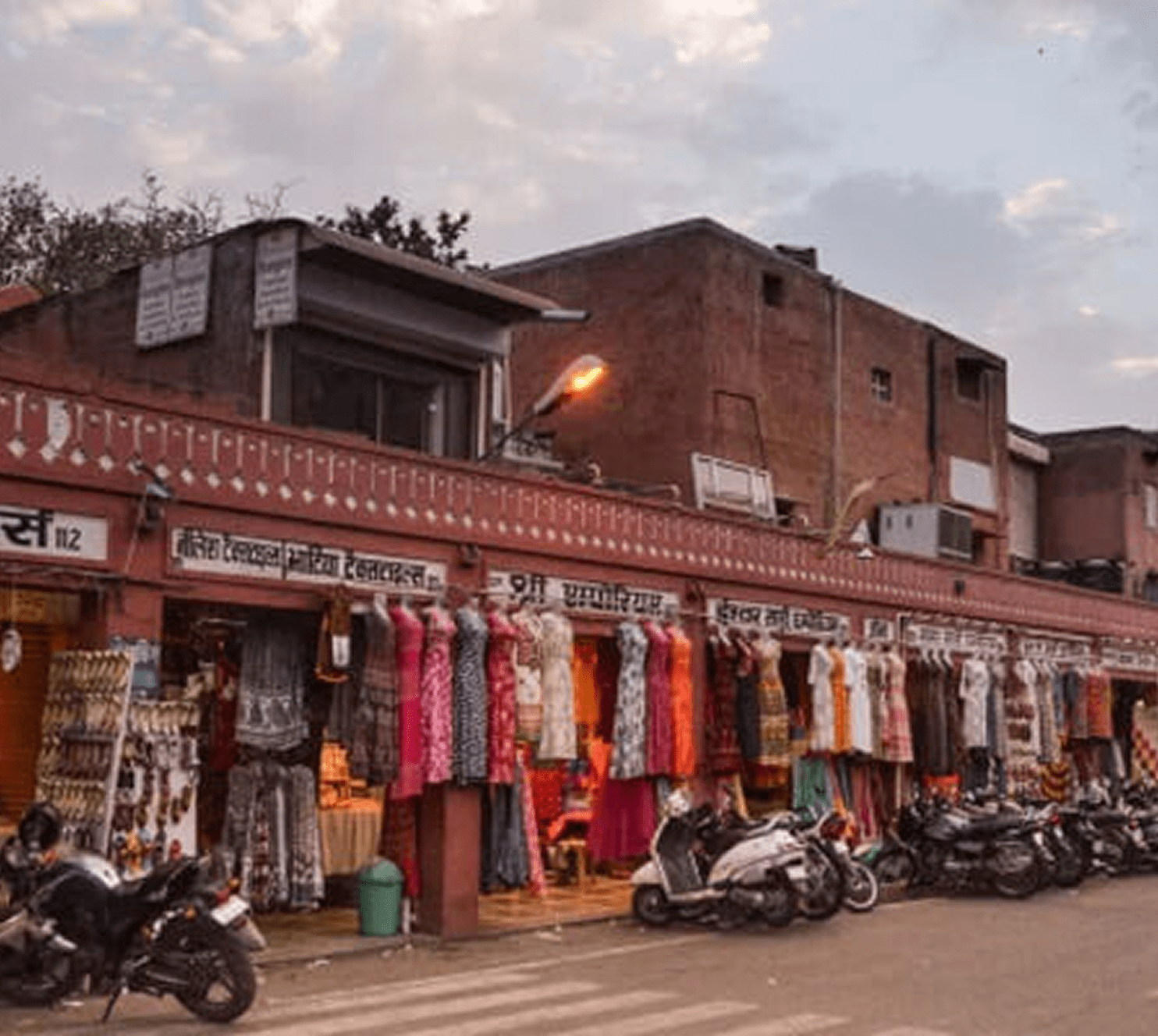
The image shows shops in Bapu Bazaar or Johari Bazaar, two of the oldest markets located in the Walled City of Jaipur, India.

Bapu Bazaar & Johari Bazaar

Perfect for shopping for souvenirs, jewellery, and textiles.

Suggested Itinerary

Start at Jantar Mantar in the morning → Explore City Palace → Visit Hawa Mahal → Lunch in the old city → Evening shopping in Bapu Bazaar.

Where to Stay Near Jantar Mantar Jaipur

Dera Mandawa - Heritage Stay (Highly Recommended)

ico fish 1

Photography & Instagram Spots at Jantar Mantar

Jantar Mantar ranks among Jaipur’s most photogenic locations, offering countless opportunities for stunning photography and Instagram-worthy shots.
The image shows the Vrihat Samrat Yantra, the world's largest stone sundial, located at the Jantar Mantar observatory in Jaipur, India.

Samrat Yantra

The world’s largest sundial makes a striking visual backdrop.

The image shows the Jai Prakash Yantra, one of the 19 astronomical instruments at the Jantar Mantar observatory in Jaipur, India.

Jai Prakash Yantra

Capture the marble hemispheres and geometric lines.

This image captures a view of the Samrat Yantra, the main sundial at the Jantar Mantar observatory in New Delhi, India.

Rama Yantra

Offers dynamic framing for creative travel photos.

This is a moment captured at the Jantar Mantar astronomical observatory in Jaipur, India.

Panoramic Viewpoints

Include City Palace domes and Hawa Mahal skyline in your frame. Best Time for Photography: 9:00–10:00 AM and 4:30–6:00 PM for balanced light and shadows.

FAQs

1. Why is Jantar Mantar famous?
It is famous for its stunning blend of Rajput and Mughal architecture, mirrorwork halls, and royal grandeur.
It is famous for its collection of 18th-century astronomical instruments that demonstrate ancient Indian expertise in astronomy and geometry.
The Samrat Yantra, the world’s largest sundial, is the highlight.
No, it is open only during the day from 9 AM to 5 PM.
Around 1 to 1.5 hours.
Yes, it was designated as a UNESCO World Heritage Site in 2010.
While not mandatory, a guide helps visitors understand the working and purpose of each instrument in depth.
Yes, Jantar Mantar is an excellent educational site for children and students interested in science, astronomy, and Indian history, offering engaging insights into ancient observational techniques.

Plan Your Visit to Jantar Mantar

Jantar Mantar in Jaipur is not just a monument but a testament to India’s scientific genius and architectural brilliance. It bridges the gap between astronomy and art, showing travellers a peek into an era when royal innovation met intellectual pursuit.
Whether you’re a history enthusiast, a photography lover, or a curious traveller, this monument promises a memorable exploration of Jaipur’s scientific and cultural heritage.

Book your stay with us now