

Jaipur has a short list of backdrops that turn up in almost every album. The best-known pre wedding shoot locations in Jaipur, the fort at Amer at first light, the painted arches of Patrika Gate and the palace sitting in the lake at Jal Mahal, have since become the default for every kind of shoot, from family portraits and anniversary sessions to fashion and brand work. All three are beautiful, and all three come with the same catch. Other shoots are waiting for the same arch, sightseers drift through the frame, and at the protected monuments the time is counted in paid two-hour slots.
Nobody treasures a photograph because its backdrop was famous. People treasure it because it looks like the people in it. What follows is a plain account of the most popular pre wedding shoot locations in Jaipur, what they cost in time and money, and the case for a setting that has not appeared in a thousand other albums.
The best-known pre wedding shoot locations in Jaipur
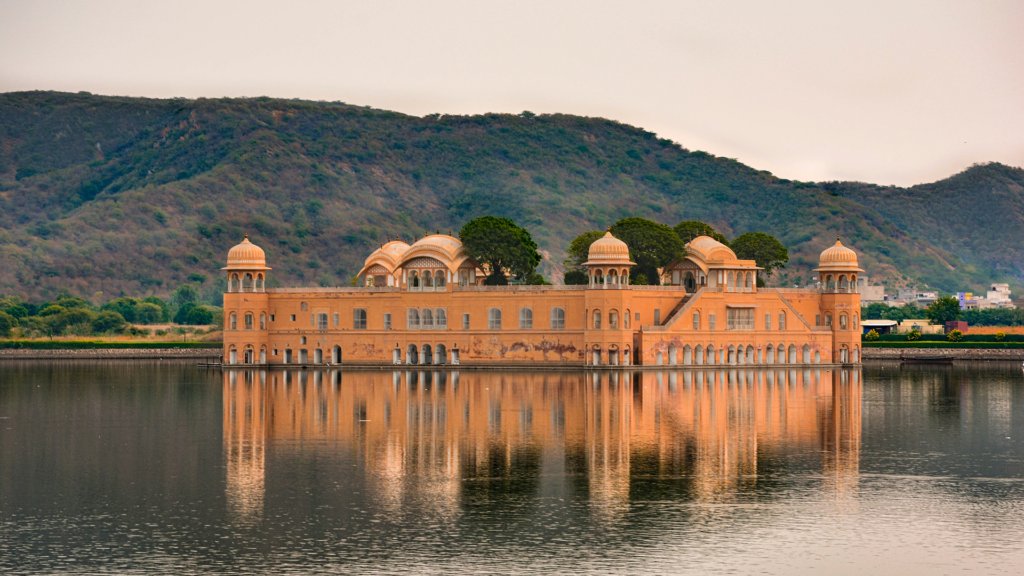
These pre wedding shoot locations in Jaipur earned their fame through wedding albums, and that fame is now part of the problem.. The free ones, Patrika Gate with its painted corridors and the roadside view across the water to Jal Mahal, cost nothing to use, which is exactly why they draw a steady stream of shoots and sightseers. A popular arch at the wrong hour can mean a long wait for strangers to clear the frame, and a background hundreds of other albums already hold.
The protected monuments are another matter. Shooting professionally at the fort at Amer, at Nahargarh and at the city’s other state-protected sites needs permission from Rajasthan’s Department of Archaeology and Museums, with the fee charged per two-hour slot and priced higher for early access before the public gates open.
Lighting is regulated too. Under the state’s monument rules, any artificial light other than a flash synchronised with the camera needs a separate written licence inside a protected site, so a photographer’s continuous lights have to be cleared in advance.
Then there is the clock. General visiting hours at Amer begin at eight in the morning. In midwinter the sun is up a little after seven, and in early summer before six, so by the time ordinary visitors are let in, the softest light of the day is fading or long gone. The early-access slot exists for exactly this reason, and it is priced accordingly. None of this makes the monuments wrong for a shoot. It makes them expensive in the currency that matters most on the day, which is time in good light.
What a haveli photoshoot gives you that a fort gate cannot
A lived-in haveli turns most of those problems inside out, and it is quietly becoming one of the most rewarding pre wedding shoot locations in Jaipur.
The frame belongs to the people in it
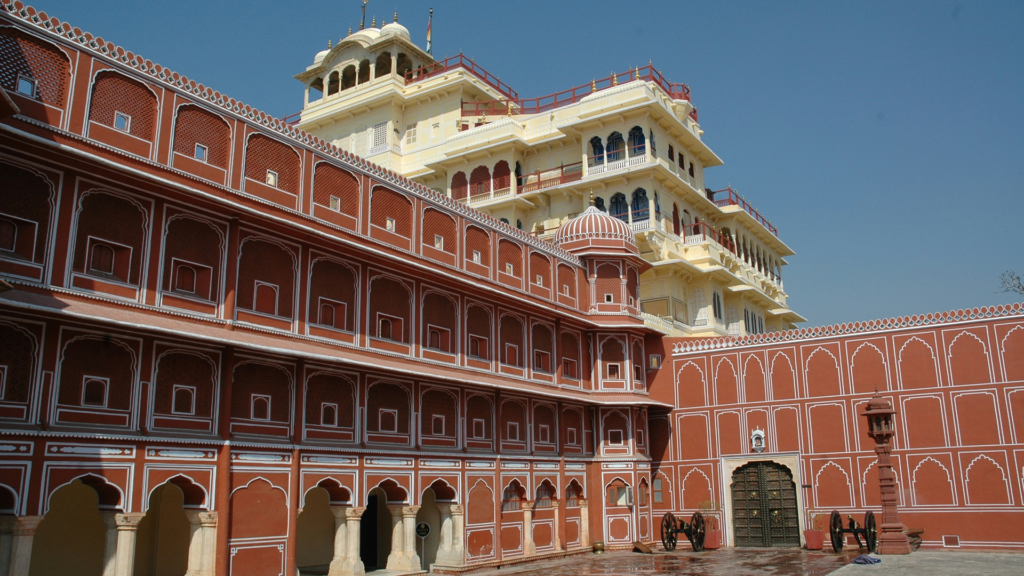
Nobody walks through the back of a shot in a private courtyard, and no other shoot is waiting for the same doorway. A photographer can spend twenty minutes on a single arch without anyone checking a watch, which is how the best frames get made.
The light can be worked with
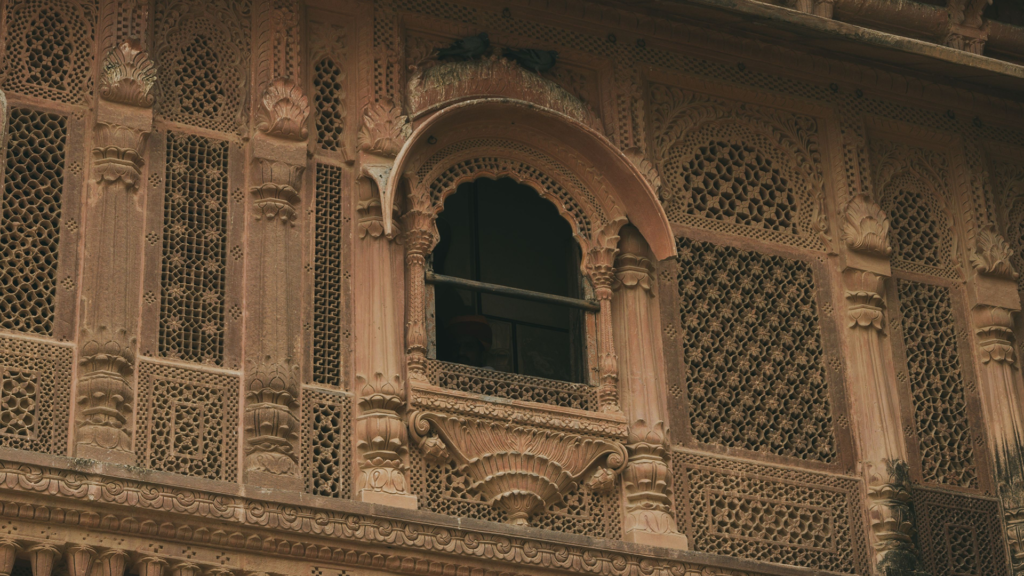
A haveli is built around its courtyards, which behave like light wells, while its jharokhas and jaali screens break hard sun into soft, patterned light. Even at noon, when a rampart is all glare, there is open shade under a veranda. And the morning starts when the sun does, not when a ticket counter opens.
Several looks sit within a few steps
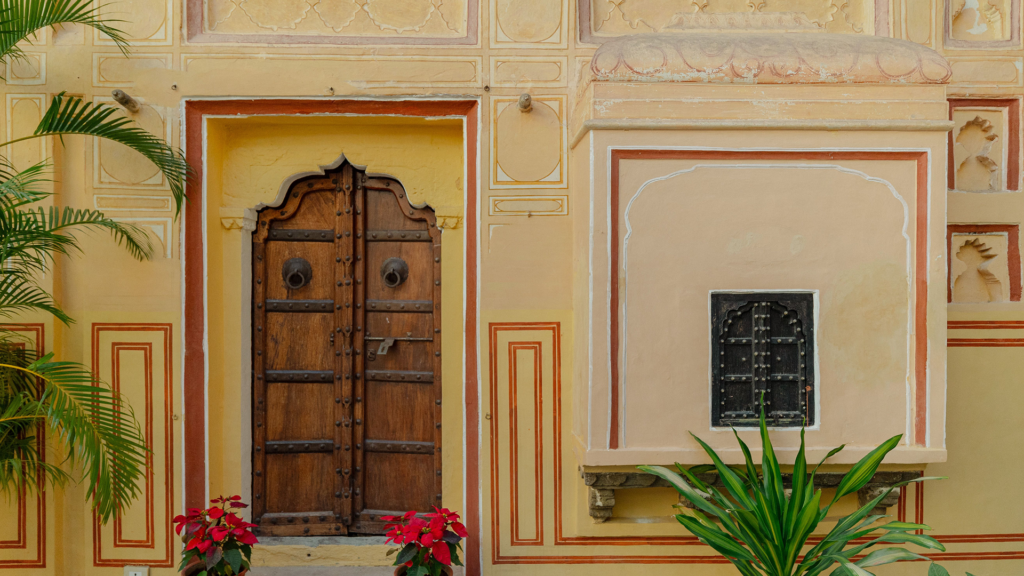
A haveli was built as a home, so a single morning can move from the old entrance gate to arched verandas, a courtyard, a carved jharokha, a swing and a rooftop terrace with no drive in between. At the monuments, the same variety takes two or three locations and a car journey between each.
There is somewhere to change, eat and rest
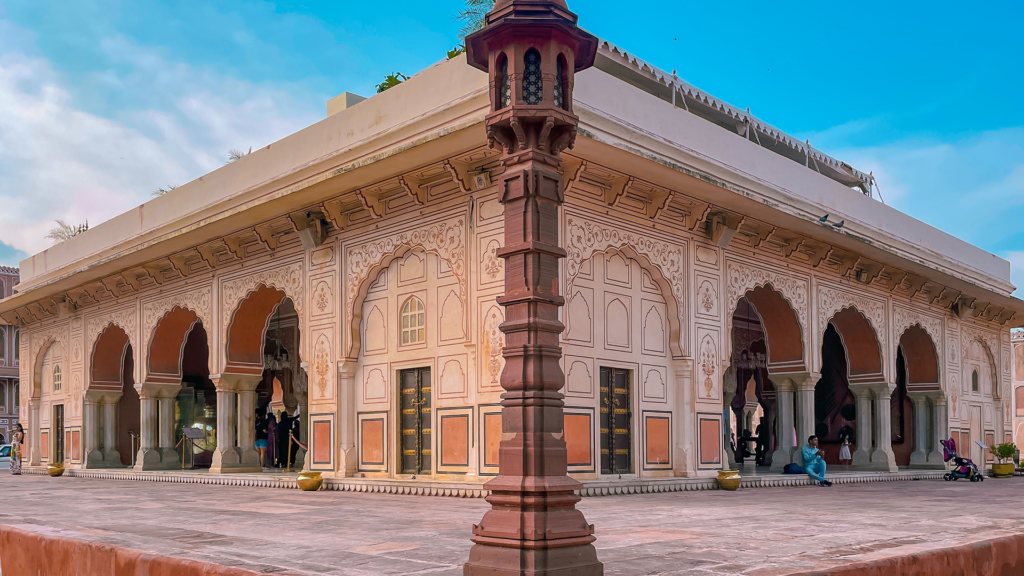
Outfit changes are the hidden drain on any shoot day. At a monument they happen in the back of a car; in a haveli they happen in a room with a mirror, a fan and a chair. A house with its own kitchen turns chai between looks into a matter of minutes, not a detour across town.
The hosts know where the light falls
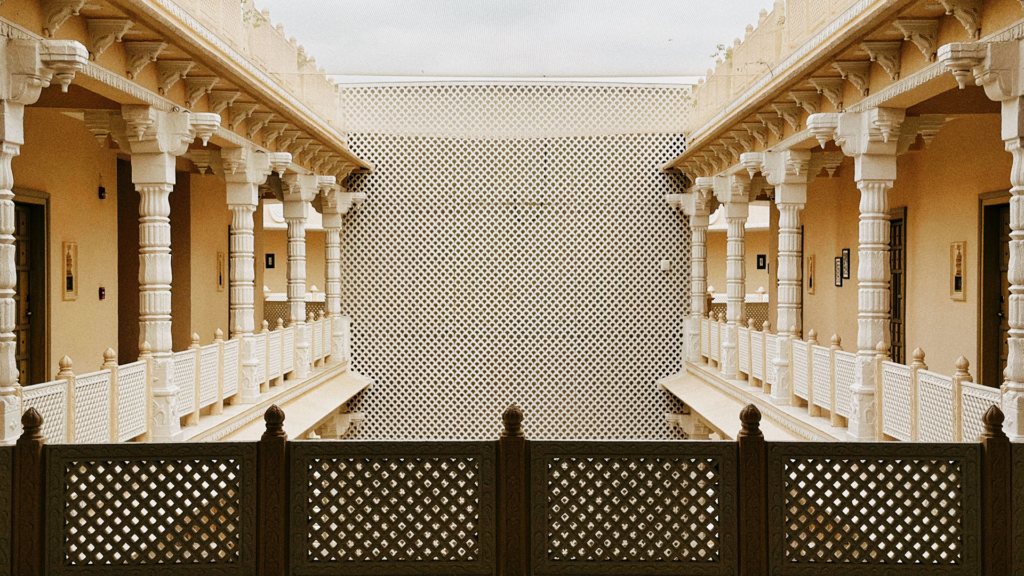
A family that has lived in a house for generations knows which courtyard catches the morning sun, which veranda stays cool at two in the afternoon and which window turns gold before dusk. That knowledge saves an hour of scouting, and no permit can buy it.
The grandeur of a fort is all there in a haveli photoshoot. The difference is that, for a few hours, it belongs to nobody else.
Dressing for a royal photoshoot
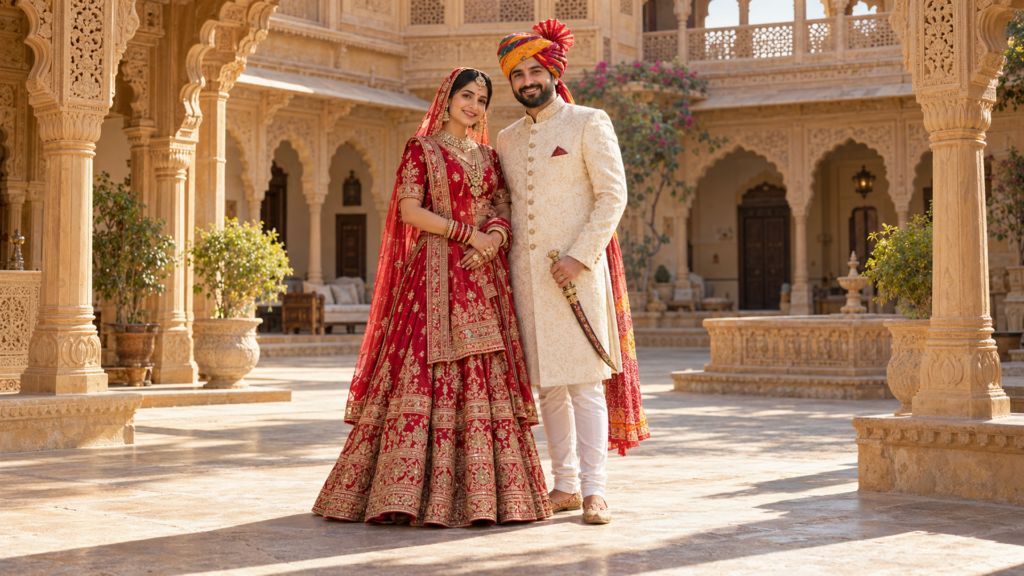
The setting decides half of a royal photoshoot, and the clothes decide the rest. For women, a lehenga, a saree or a Rajasthani poshak in a deep jewel tone holds its own against old walls and carved wood, while very pale pastels can wash out against sandstone in bright sun. For men, an achkan or bandhgala jacket with churidar trousers and a safa, the Rajasthani turban, gives the classic look, finished with mojari, the traditional leather slippers with a curled toe.
The safa deserves a word of its own. A turban tied by hand on the morning, by someone who knows how, holds its shape through hours of movement and sits differently from a ready-stitched one. Jaipur is also one of India’s great centres of kundan and meenakari jewellery, and a single piece from the old bazaars can do more for a portrait than a whole rail of hired costume. Heavy fabric and gold are hard work in warm weather, so the heaviest outfit belongs in the coolest hour of a royal photoshoot.
Hotels near City Palace, and a shoot that starts at the door
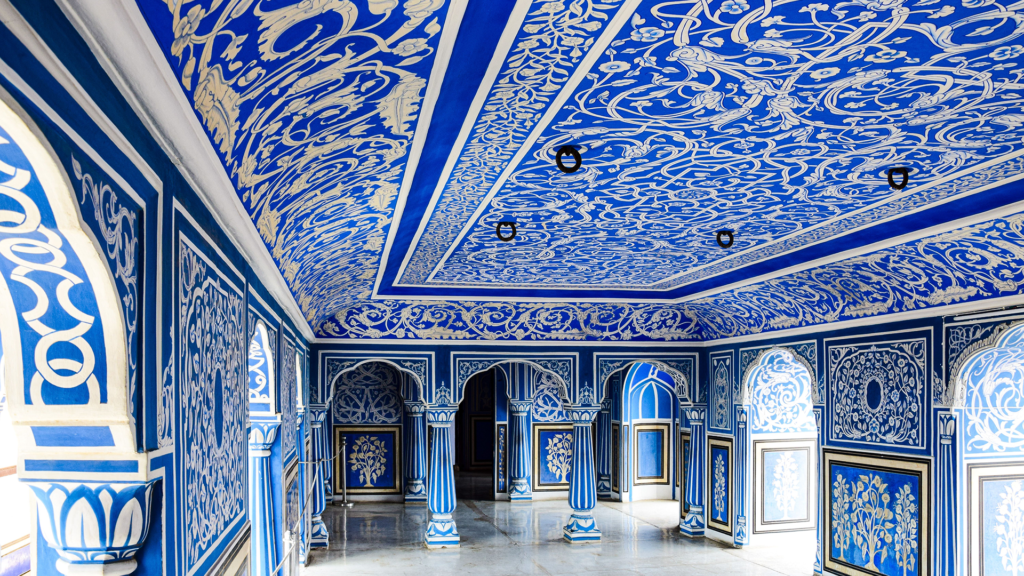
Good light in Jaipur arrives early and leaves early. At the fort, catching it means paying for the early-access slot and setting off while the city is still asleep. Staying at a haveli among the hotels near City Palace removes that journey altogether, and it turns the house itself into one of the most convenient pre wedding shoot locations in Jaipur.
The walled city sits a short walk from the door as well, one of the quiet advantages of staying among the hotels near City Palace. A few frames in its lanes at first light, with the bazaar shutters still down and the walls glowing pink in the low sun, round off a morning without a single car journey. By the time the traffic arrives, the best of the shoot is already done.
A shoot at Dera Mandawa
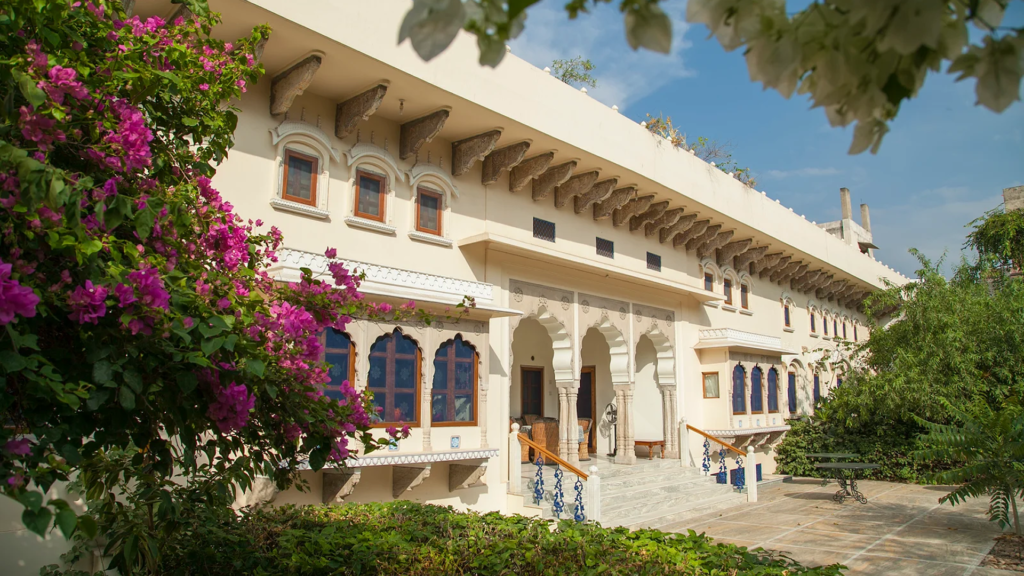
Our home was built around 1885 by Thakur Jait Singh Ji of Mandawa, as a place to stay when he attended the court of the Maharaja of Jaipur, and our family still lives in it. It was never designed as a hotel, which is why no two of our suites are alike, and why Rajasthani arches and jharokhas sit beside British-inspired doorframes. Dressing can happen in the house too, with a saree draping and turban-tying session before the first frame.
We arrange each haveli photoshoot in conversation, around the light and the season, and a note with your dates is the place to start., and a note with your dates is the place to start. The story of the house is worth reading before you come.
Frequently Asked Questions
Do you need permission for a photoshoot at Jaipur’s monuments?
Professional shoots at the state-protected monuments need a paid permit from the state archaeology department. Public streets, gates and roadside viewpoints across the city need no monument permit.
How much does a monument shoot permit cost in Jaipur?
Fees run to several thousand rupees for each two-hour slot, more for early access before regular visiting hours, with entry tickets for the crew on top. The rates have changed in recent years, so confirm the current figure with the monument before setting a budget.
Who arranges the monument permit, the client or the photographer?
Many Jaipur photographers arrange monument permits for their clients as part of a package. It is still worth confirming in writing who is applying, for which monument and for which slot, since each permit is tied to a date and a time.
Can you shoot inside City Palace?
City Palace is managed by a trust of the former royal family, not by the state archaeology department, so its rules and charges for shoots are set separately. Part of the palace is still the family’s private residence. Contact the palace directly for current terms before planning a shoot there.
Which months are best for a photoshoot in Jaipur?
October to March, when the days are mild, and the light is clear. December and January mornings can be cold, so warm layers between frames help. From April to June, afternoon temperatures pass forty degrees, which leaves only the first and last hours of daylight workable.
What happens if it rains on the shoot day?
The monsoon months of July to September bring the most rain, usually in short, heavy bursts. Covered verandas and indoor rooms keep a haveli shoot going through a shower, where an open rampart sends everyone running. A spare morning in the plan is the safest insurance in any season.
How many outfits fit into one photoshoot?
Three looks sit comfortably in a half-day shoot. Each change means redoing hair and jewellery as well as clothes, and every change spends some of the best light. Dressing in one place, with a room to change in, saves the most time.
Which photoshoot spots in Jaipur are free to use?
Patrika Gate, at the entrance to Jawahar Circle, and the promenade facing Jal Mahal are both free. The palace in the lake is closed to visitors, so every Jal Mahal frame is taken from the roadside. Both fill up as the morning goes on.
How long does a photoshoot in Jaipur take?
A shoot usually runs from half a day to a full day. Much of a full monument day goes on the road between locations and on waiting for crowds to clear, so a shoot planned around one or two places covers more looks in fewer hours.
Can you book a haveli photoshoot at Dera Mandawa?
Yes, by writing to the family with the kind of shoot and the dates in mind. Portraits, family sessions, couples’ shoots and a full royal photoshoot can all use the courtyard, verandas and rooms, and dressing help can be arranged beforehand.
What are the best pre wedding shoot locations in Jaipur?
The best-known pre wedding shoot locations in Jaipur are Amer Fort, Patrika Gate and the roadside view of Jal Mahal. For more privacy and control over light, a heritage haveli such as Dera Mandawa offers courtyards, verandas and rooftops within a single location.
