

Kathputli Puppetry in Rajasthan: What a Traditional Performance Involves
- Published On: February 9, 2026
- Written By: Yuvragi Rathore
A Kathputli puppetry performance is one of those experiences people believe they understand until they actually sit down and watch one. In Kathputli Puppetry in Rajasthan, the surface elements appear deceptively simple. Wooden puppets, vivid costumes, a modest stage, and music that seems to belong to another time. Yet once the performance begins, it becomes clear that this is not entertainment in a casual sense. Kathputli puppetry carries history, social memory, and storytelling techniques that have survived centuries of repetition within traditional Rajasthan.
To understand what truly unfolds in Kathputli Puppetry in Rajasthan, it is necessary to look beyond the puppets themselves. Attention shifts to how the performance is constructed, who performs it, and why this form of Rajasthani folk art continues to hold attention today.
Kathputli Puppetry in Rajasthan as a Living Tradition
The stage in a Kathputli puppetry performance is deliberately modest, often no more than a cloth backdrop. The puppeteer, traditionally known as a Bhat, remains unseen or only partially visible, controlling the puppets through strings attached to their heads and torsos. The movements may appear exaggerated at first, but in Kathputli Puppetry in Rajasthan, every gesture is carefully calculated to convey emotion, humour, and narrative clarity.
Voice work is central to a Kathputli puppetry performance. One puppeteer may voice several characters, shifting pitch and rhythm seamlessly. Live music accompanies the narration, guiding transitions and heightening dramatic moments without overwhelming the story. In Kathputli Puppetry in Rajasthan, sound and movement work together as a single storytelling language.
Craftsmanship that goes beyond performance
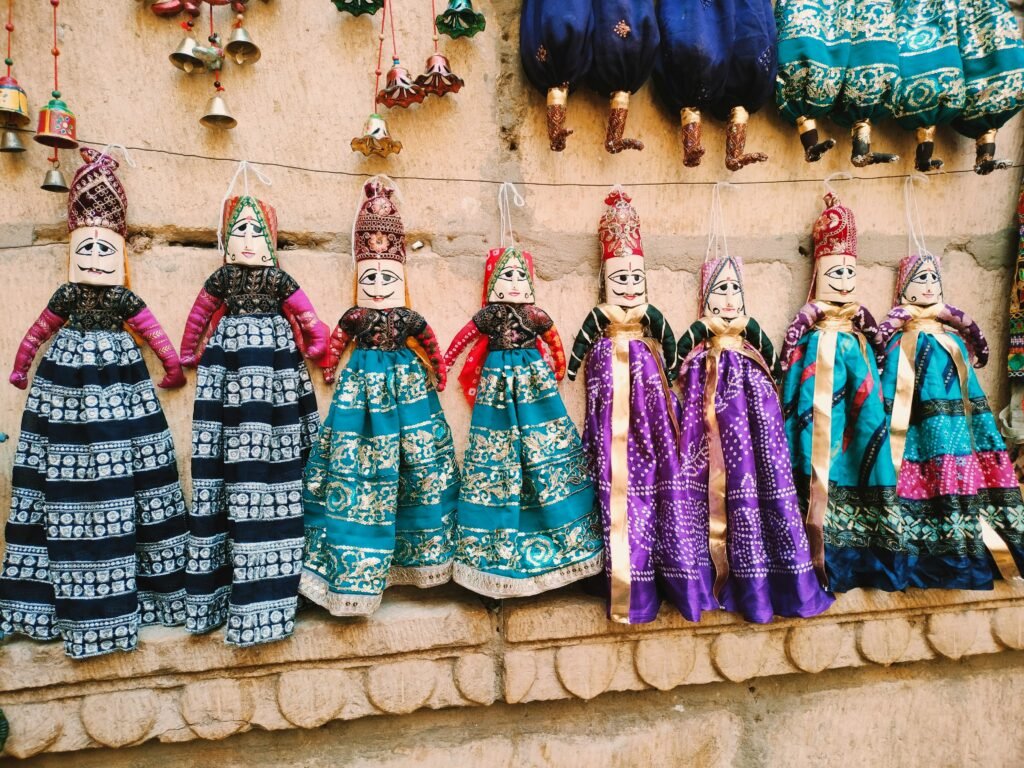
The puppets used in Kathputli Puppetry in Rajasthan are hand-carved from wood and dressed in vibrant textiles. Their design is intentional rather than decorative. Costume colours, facial features, and jewellery styles signal character types instantly, allowing the audience to follow the story with ease. This visual language draws directly from Rajasthani folk art, regional painting traditions, and historic courtly attire.
Stories that speak to the present
Although many narratives in Kathputli Puppetry in Rajasthan are centuries old, performances are never fixed. Puppeteers adapt dialogue, pacing, and emphasis based on audience response. Satire, humour, and social commentary find their way into the performance naturally, allowing Rajasthani puppetry to remain relevant across generations.
The role of music and timing
Unlike modern theatre, Kathputli Puppetry in Rajasthan does not enforce a strict separation between performer and viewer. Audience reactions influence pacing. Laughter may extend a scene, while silence may shorten it. This responsiveness reflects the participatory nature of traditional Rajasthan, where live art forms evolve through interaction rather than rigid scripts.
Why this art form endures
Watching with understanding
In keeping with these traditions
