Jaipur has no shortage of things to leave you open-mouthed. But among all the tourist spots in Jaipur, one place manages to combine science, history, and sheer architectural audacity in a way that nothing else quite matches. The Jantar Mantar in Jaipur is not a ruin, not a palace, and certainly not your average monument. It is a working astronomical observatory built in stone and marble in the early 18th century, and it still tells the time today. Yes, you read that correctly.
If you have walked through its grounds and thought it looked like a set from a science fiction film, you are not entirely wrong to feel that way. These towering geometric structures are instruments, each one precisely engineered to track the movements of the sun, moon, planets, and stars with the naked eye. No telescopes. No computers. Just mathematics, marble, and an extraordinary mind at work.
The Man Behind the Marvel at Jantar Mantar in Jaipur
The story begins with Maharaja Sawai Jai Singh II, the founder of Jaipur and one of the most scientifically curious rulers of his era. Born in 1688, he succeeded to the throne of Amber at just thirteen years old and went on to become a soldier, diplomat, city planner, and passionate astronomer. He was fluent in Sanskrit and Persian, studied both Hindu and Islamic astronomical texts, and even engaged with European scientific knowledge through contacts with the Portuguese Viceroy in Goa.
The Maharaja had a specific problem to solve. He noticed that the existing Islamic and Hindu astronomical tables used to calculate calendar dates, festival timings, and celestial positions were riddled with inaccuracies. Rather than simply accepting this, he decided to build five entirely new observatories across India, in Delhi, Jaipur, Ujjain, Mathura, and Varanasi, so he could collect fresh, precise data and create improved astronomical tables from scratch.
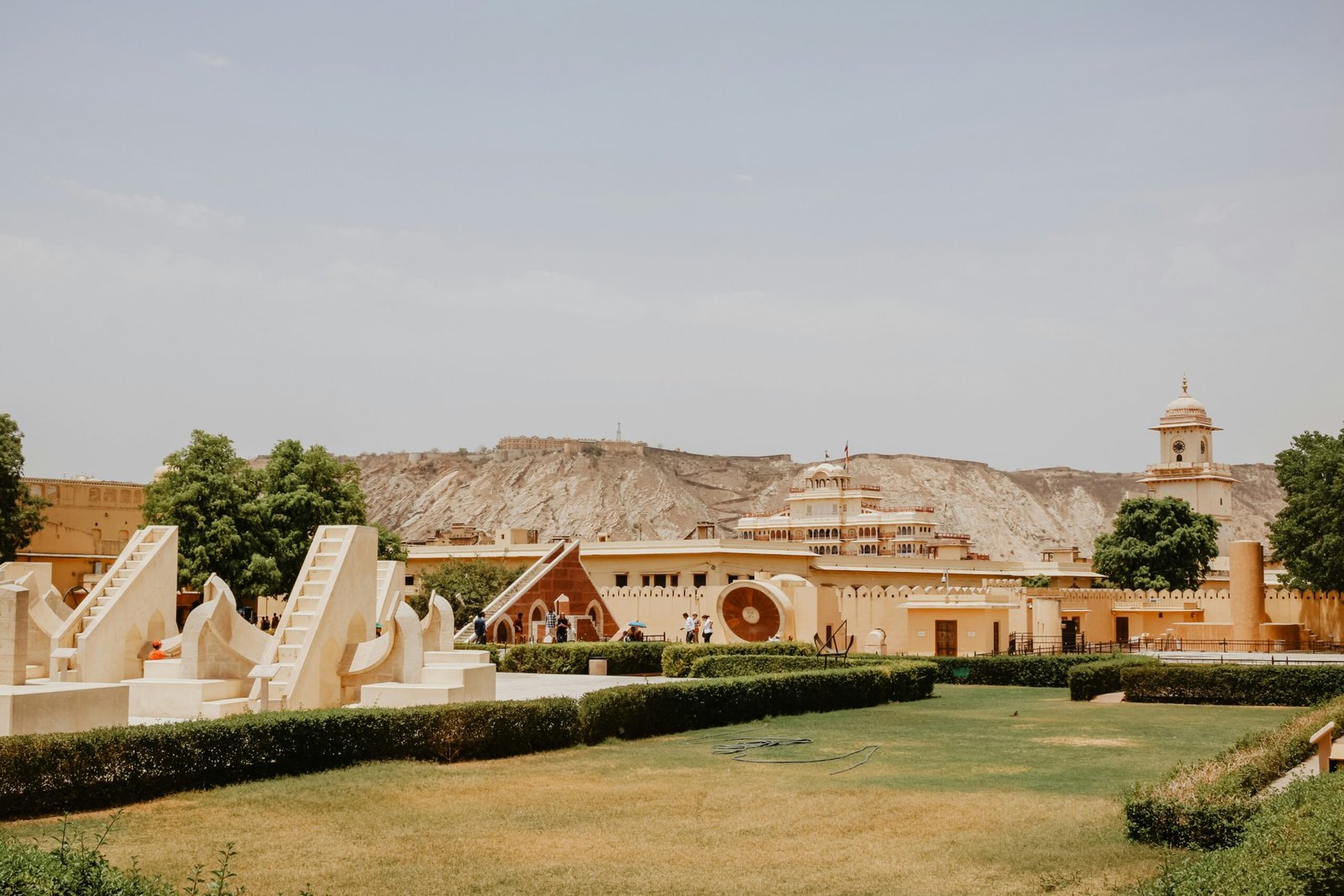
The Jaipur observatory, completed in 1734, became his most ambitious and is the largest and best preserved of the five. Its 19 instruments, built from local stone, lime plaster, marble, and bronze, cover an area of roughly 18,700 square metres. In 2010, UNESCO recognised it as a World Heritage Site, describing it as “an expression of the astronomical skills and cosmological concepts of the court of a scholarly prince at the end of the Mughal period.”
What Does "Jantar Mantar" Actually Mean?
The name itself is rather clever. It comes from two Sanskrit words: yantra, meaning instrument or machine, and mantrana, meaning to consult or calculate. Jantar Mantar, quite literally, means “calculating instrument.” Every single structure in the complex lives up to that name.
The Instruments and Their Secrets
Walking through Jantar Mantar, you will find yourself surrounded by towering triangles, giant bowls sunk into the Earth, and cylindrical towers open to the sky. Each one has a job to do. Here are the ones that will stop you in your tracks.
Vrihat Samrat Yantra
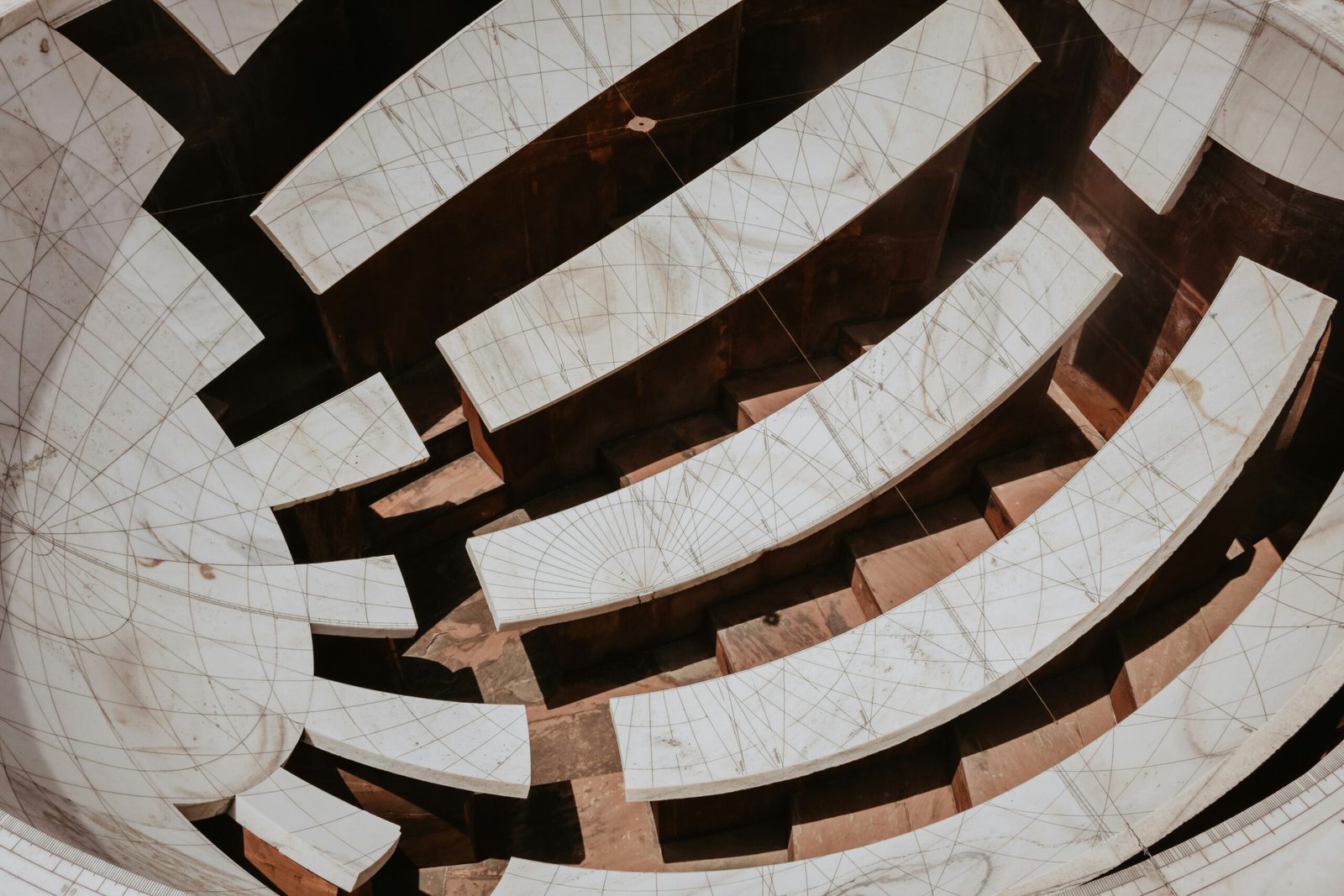
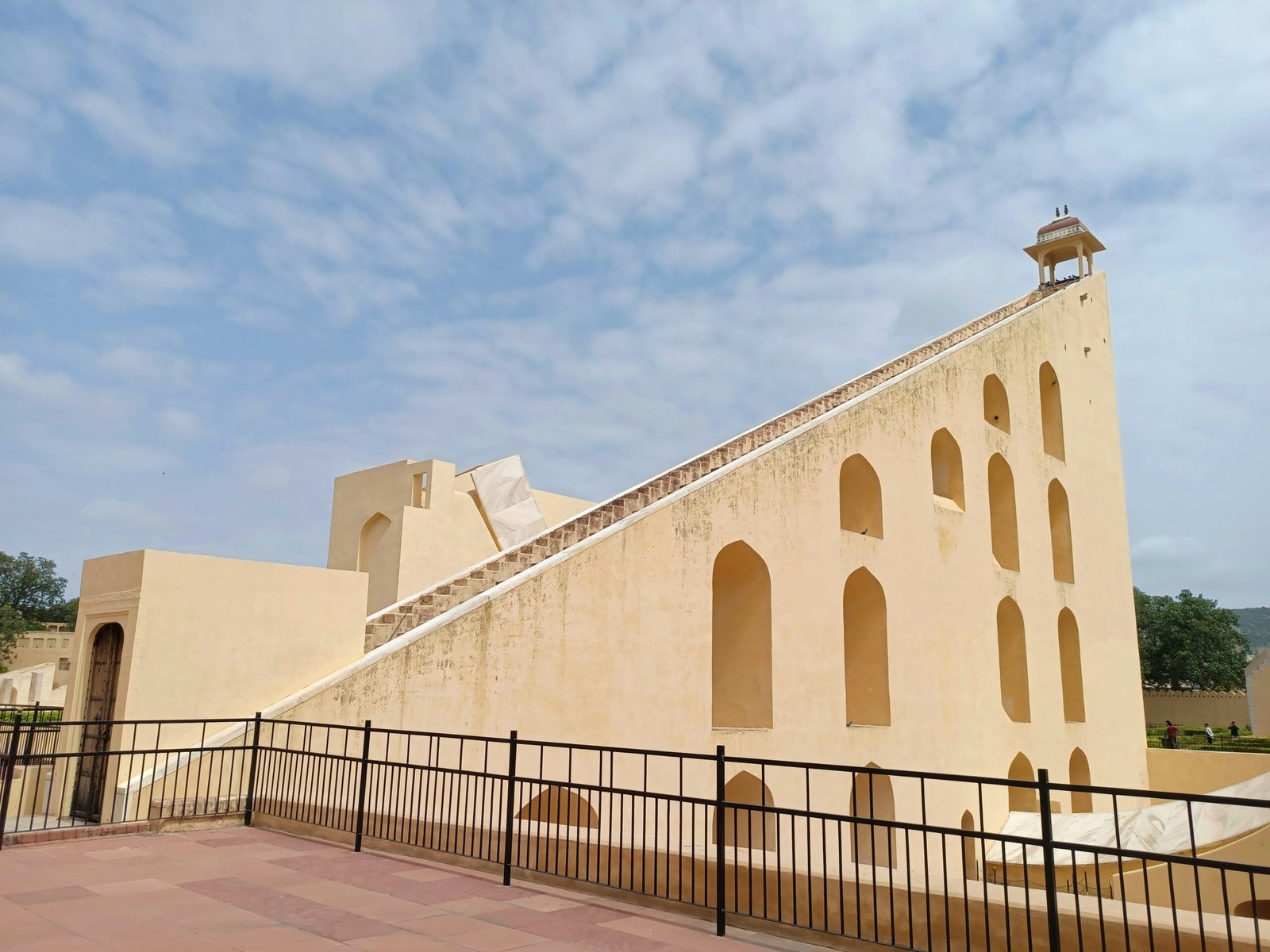
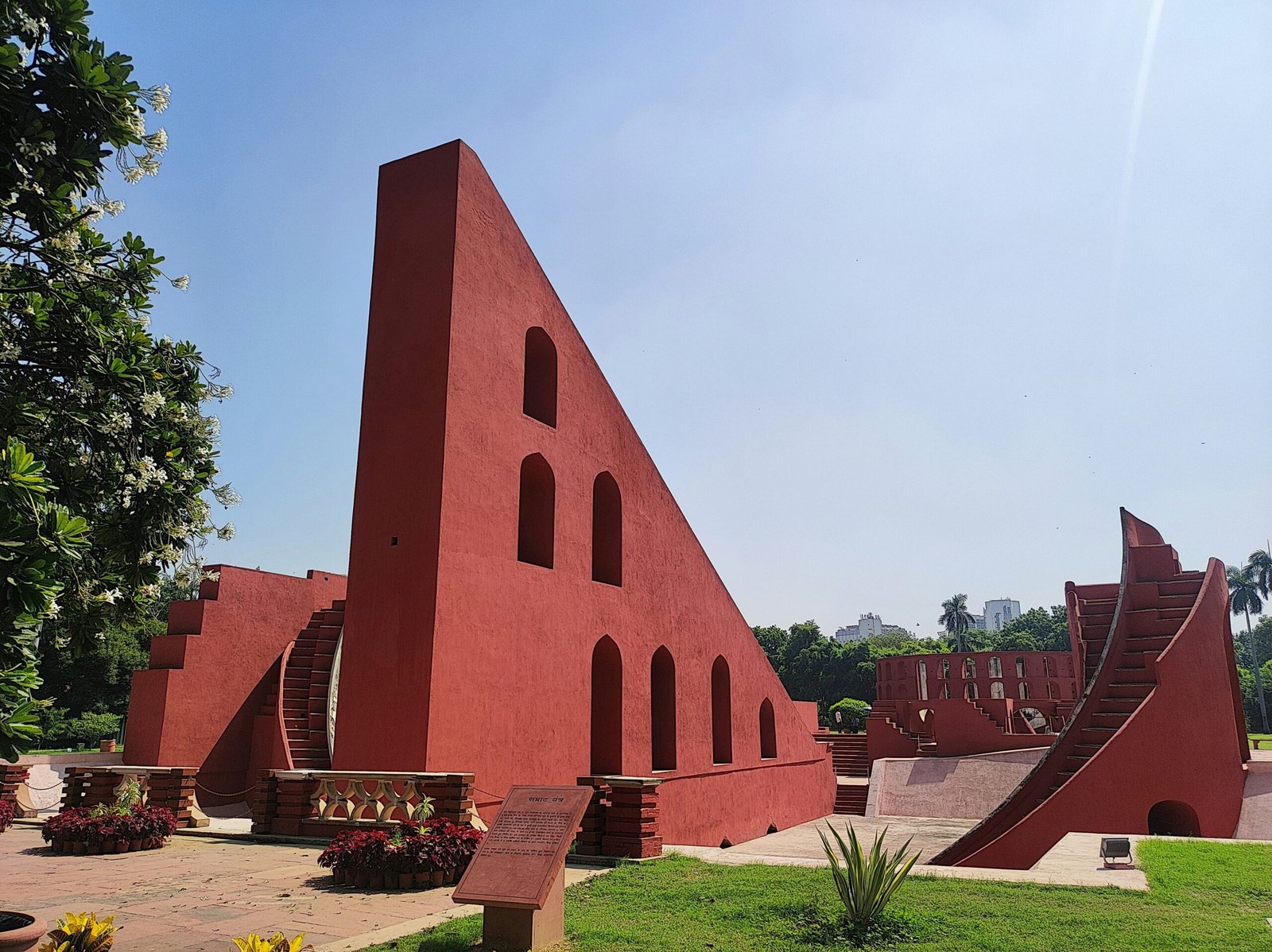
This is the showstopper. A nine-storey-tall triangular structure of stone and marble, the Vrihat Samrat Yantra is the largest sundial on the planet. Its shadow moves across two curved scales on either side, and on a clear day, you can tell the time from it to within two seconds. Not two minutes. Two seconds. From a structure built in the 1700s, without a single piece of modern technology. Let that sink in.
Laghu Samrat Yantra
Think of this as the smaller, quieter sibling of the Vrihat. It works the same way but tells time to within 20 seconds, and many believe it was actually built first, as a working model, before the Maharaja committed to building its magnificent larger counterpart. Look closely at its southern dial, and you will find Sanskrit inscriptions beginning with a prayer to Lord Ganesh and ending with restoration notes.
Jai Prakash Yantra
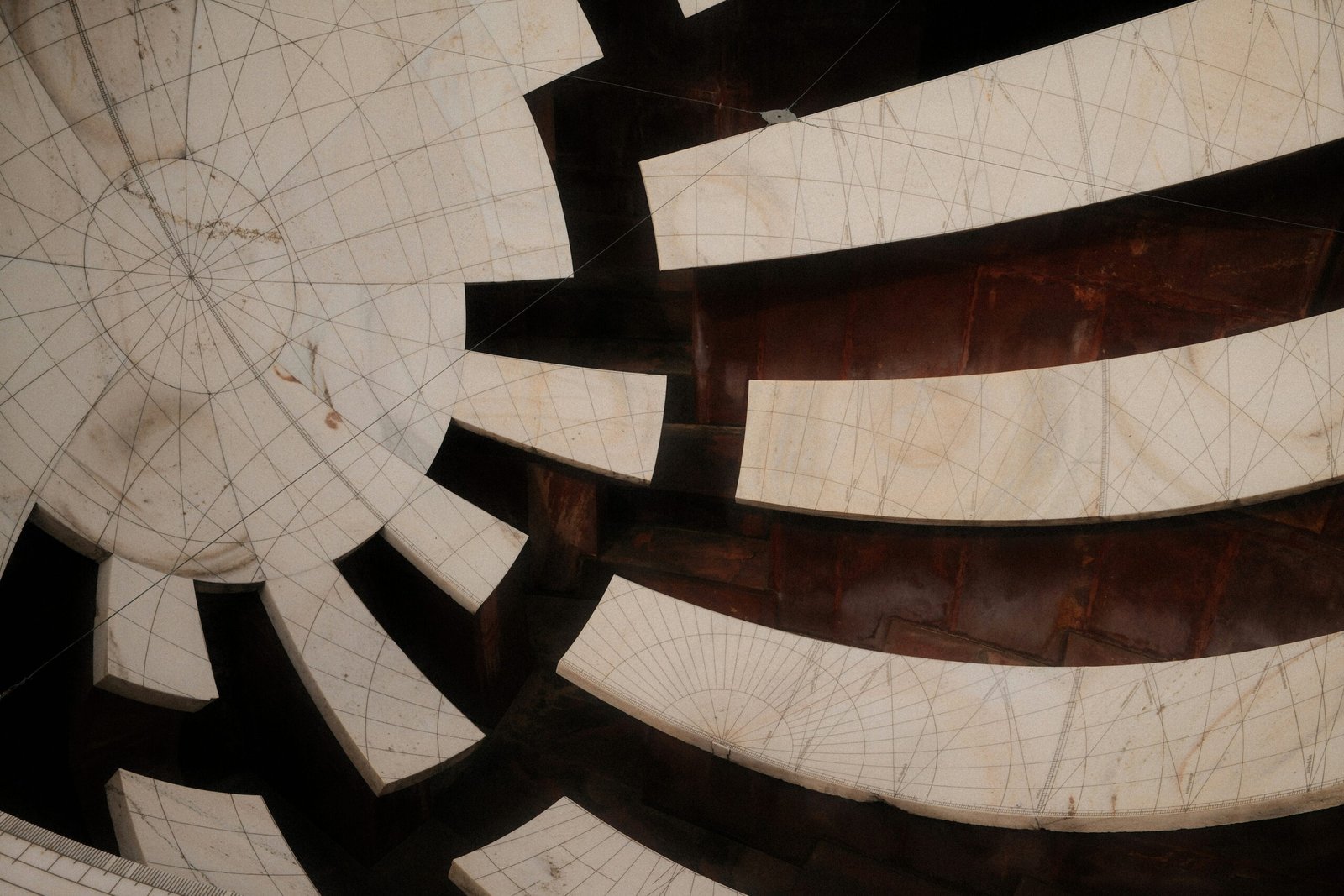
This is the one that tends to leave people speechless. Two large bowl-shaped structures, partly sunk into the ground, with crosswires stretched across the top and a metal ring hanging at the centre. Astronomers would physically walk down into the bowl and follow the shadow of that ring to read the position of the sun and stars. It could work across two different celestial measurement systems at once and convert between them on the spot. A stone instrument that did the job of a calculation table, only faster and without any paper.
Rama Yantra
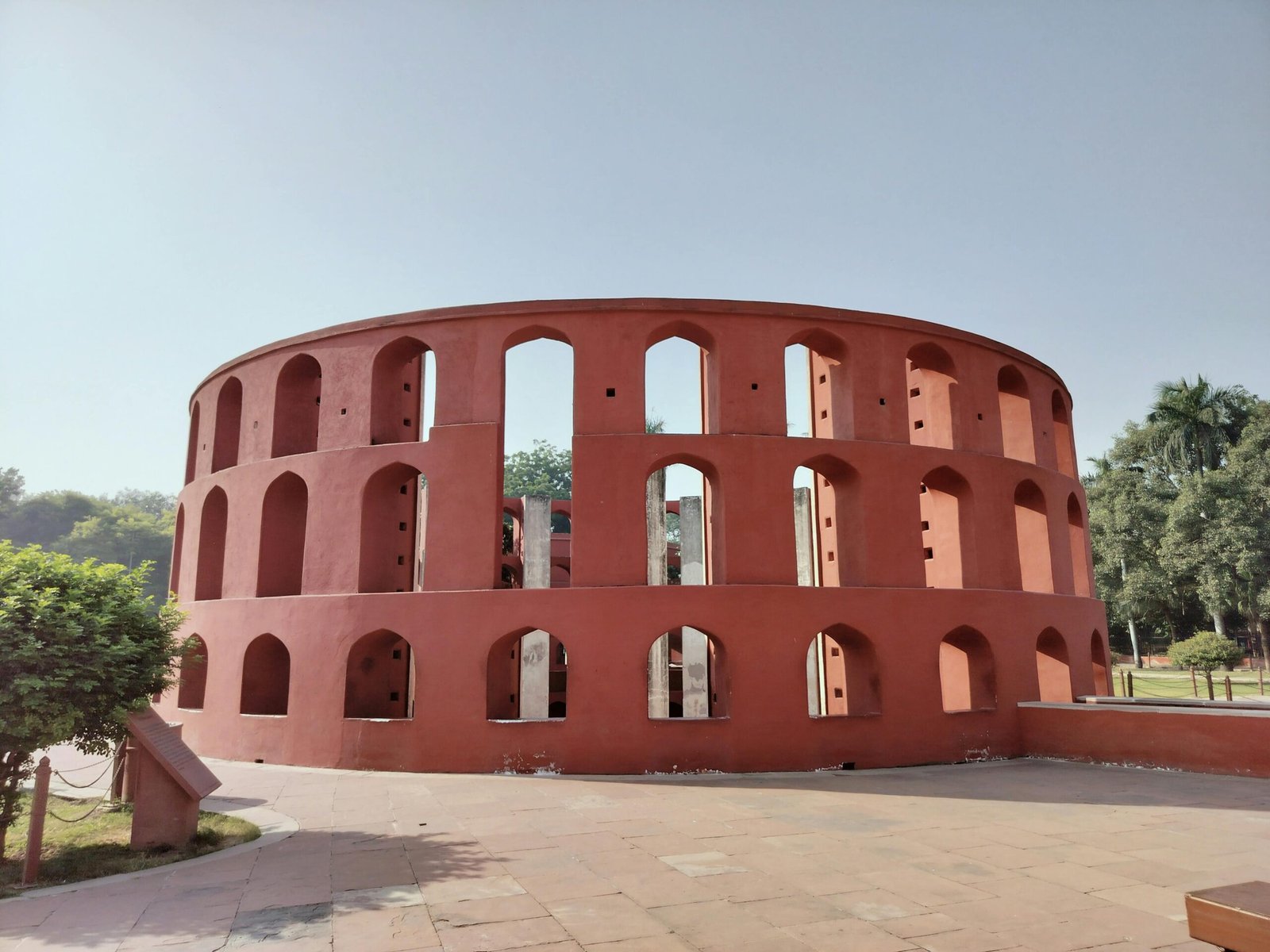
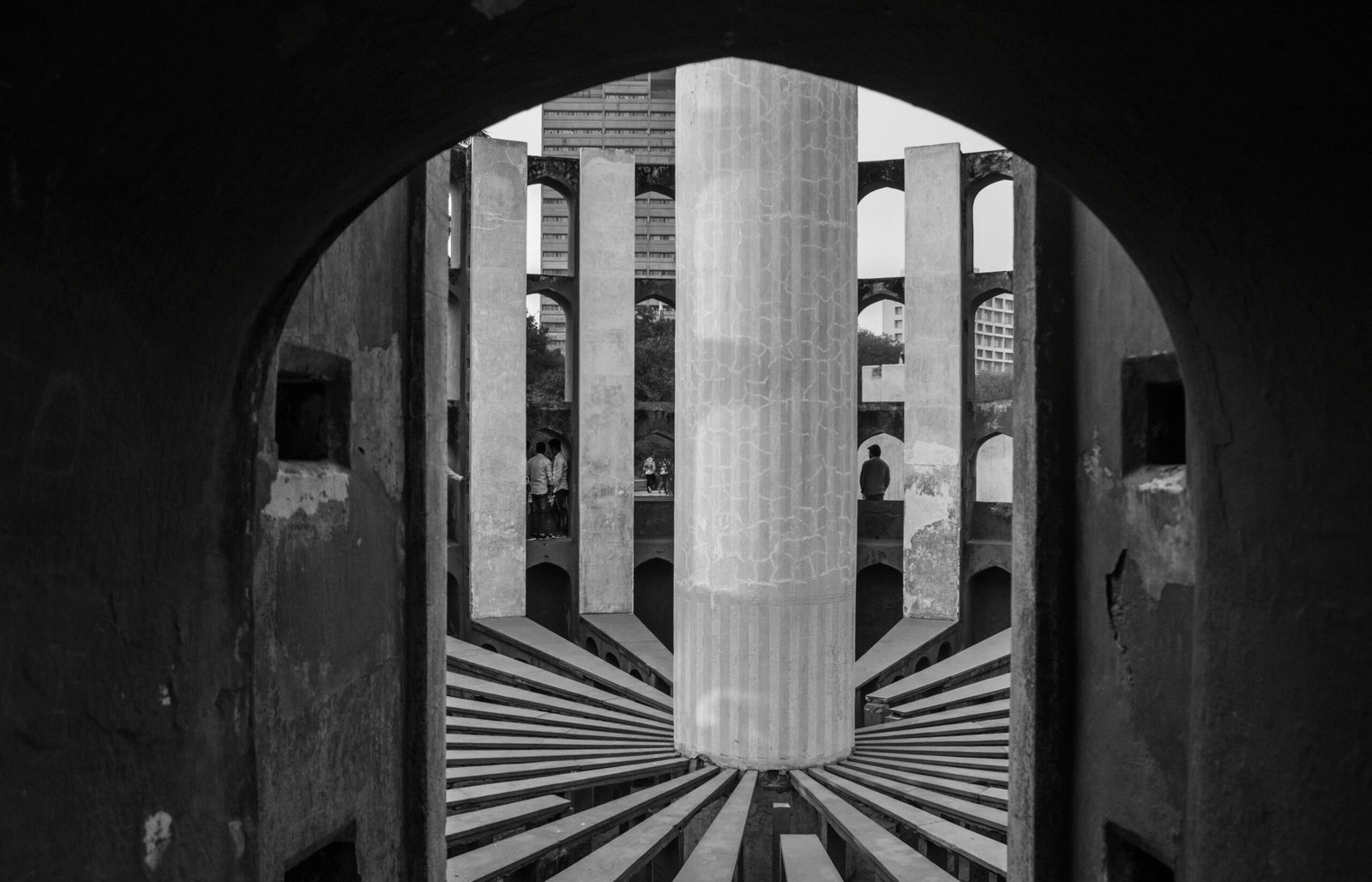
The Rama Yantra is a pair of large open-topped cylindrical structures that work as a team. Neither one can do the job alone. When the sun’s shadow falls in a gap within one cylinder, the reading is taken from the other. Together they measure the altitude and direction of the sun and other celestial bodies with quiet, elegant precision.
Rashivalaya Yantra
This one has a certain drama to it. The Rashivalaya Yantra is not a single instrument but a set of 12, one for each sign of the zodiac. At any given moment during the year, exactly one of the 12 dials comes alive as its corresponding constellation crosses the meridian overhead. The Maharaja did not build one general-purpose dial and call it done. He built twelve, each mathematically tuned, because that was the only way to do it properly. Precise, obsessive, and rather brilliant.
Narivalaya Yantra
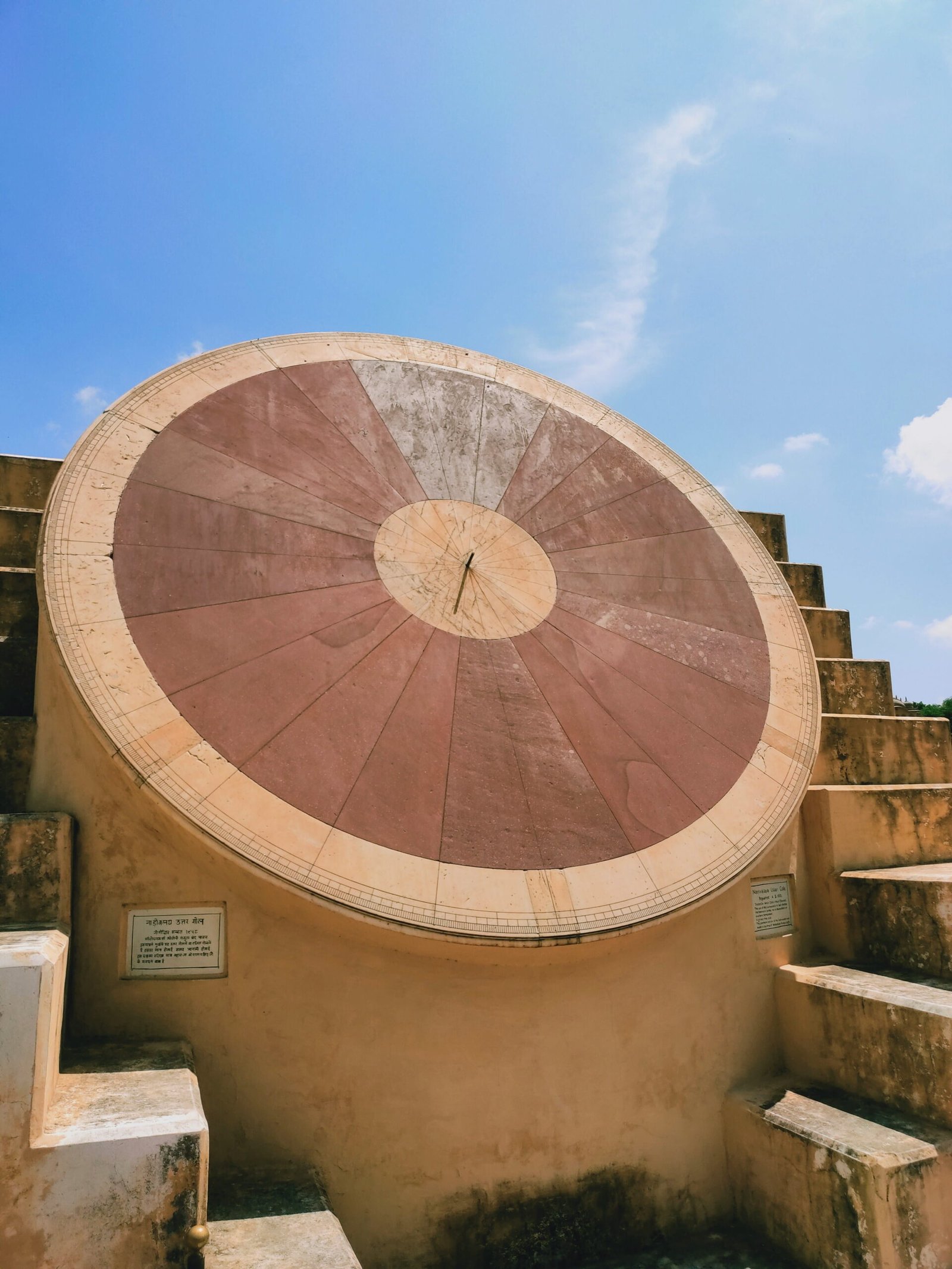
Two circular discs on a single instrument, one facing north and one facing south. One is used for the summer months and the other for winter. A small iron rod at the centre is aligned with the Earth’s axis, and its shadow tells you the local solar time. Beautifully simple and entirely accurate. The ancient equivalent of glancing at your watch.
Why The Maharaja Built All of This
It would be easy to assume this was purely an exercise in scholarly curiosity, and perhaps that was part of it. But the Maharaja’s goals were deeply practical. Accurate astronomical observations were essential for determining religious festival dates, reforming the lunar calendar, and predicting the arrival of the monsoon, something on which the livelihoods of millions of farmers depended.
In doing so, the Maharaja wove together Hindu, Persian, and Islamic astronomical traditions into one coherent scientific mission, operating from a hilltop capital he had only recently founded.
Visiting Jantar Mantar as Part of Your Jaipur City Tour
For anyone putting together a Jaipur city tour, the Jantar Mantar sits conveniently close to both the City Palace and Hawa Mahal, making it a natural part of a single day’s exploration of the old city. It draws more than 700,000 visitors a year, and the instruments remain in a usable state, with authorised astronomers still able to conduct observations using them today.
The experience is best enjoyed at a slow pace. Each instrument rewards curiosity, and having a guide helps enormously in understanding how to read them. Stand under the Vrihat Samrat Yantra in the morning light and watch the shadow move, and you will understand precisely why this place belongs on every list of best places in Jaipur.
Extending Your Rajasthan Journey
If the Jantar Mantar has stirred a love for Rajasthan’s extraordinary depth of history and craftsmanship, the journey does not have to end in Jaipur. Dera Mandawa, a heritage property in the capital of Rajasthan, is a beautifully restored haveli that brings that same sense of timeless Rajasthani character into your stay. The hand-painted frescoes, warm hospitality, and an atmosphere that connects you to a bygone era, the kind of place that turns a trip into a memory you carry home.
If the Jantar Mantar has sparked your curiosity for Rajasthan’s layered history, extend your journey beyond monuments. Stay at the best heritage hotel in Jaipur, where the city’s architectural legacy continues through hand-painted frescoes, courtyards and timeless hospitality.
Dera Mandawa offers an experience that mirrors the spirit of Jaipur itself — immersive, elegant and deeply rooted in tradition.