

Most travel guides will tell you, with the confidence of a weather presenter, that you should only visit Jaipur in summer if you’ve lost a bet. Stay home, they say. Wait for October. The Pink City is too hot, too dusty, too unforgiving. And yet, every year, a small contingent of clever travellers turns up in April, May and June anyway, and casually wanders the City Palace, Amber Fort and Jantar Mantar while the rest of the world queues in December. They have worked something out that the guidebooks don’t quite admit. Summer in Jaipur isn’t a compromise. For the right kind of traveller, it might be the better trip.
None of this is to romanticise the heat. May is genuinely warm, with daytime temperatures climbing past 40 degrees Celsius. But heat is one variable. Crowds are another. Price is a third. Weigh all three together, and the case for off-season travel in Rajasthan becomes harder to dismiss than the guidebook headline suggests.
The honest case for choosing to visit Jaipur in summer
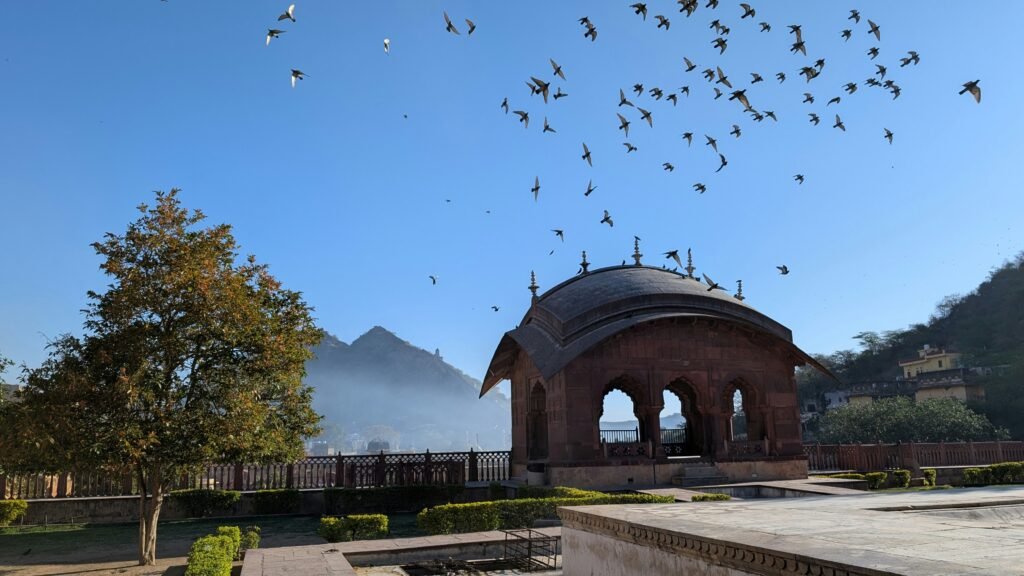
Peak season in Jaipur runs roughly from October to March. The City Palace courtyards fill with selfie sticks and tour groups all marching to the same itinerary. By contrast, summer in Jaipur is when the Pink City breathes out. Major monuments feel half empty by late morning. The staff have more time to talk, the guides are less rushed, and the photographs you take don’t feature thirty strangers’ shoulders in the frame.
This is the practical bargain of off-season travel in Rajasthan. Less crowd, lower cost, and, if you plan your day with even modest sensibility, a far more personal experience of the city’s heritage.
The forts and palaces feel different with lesser crowd
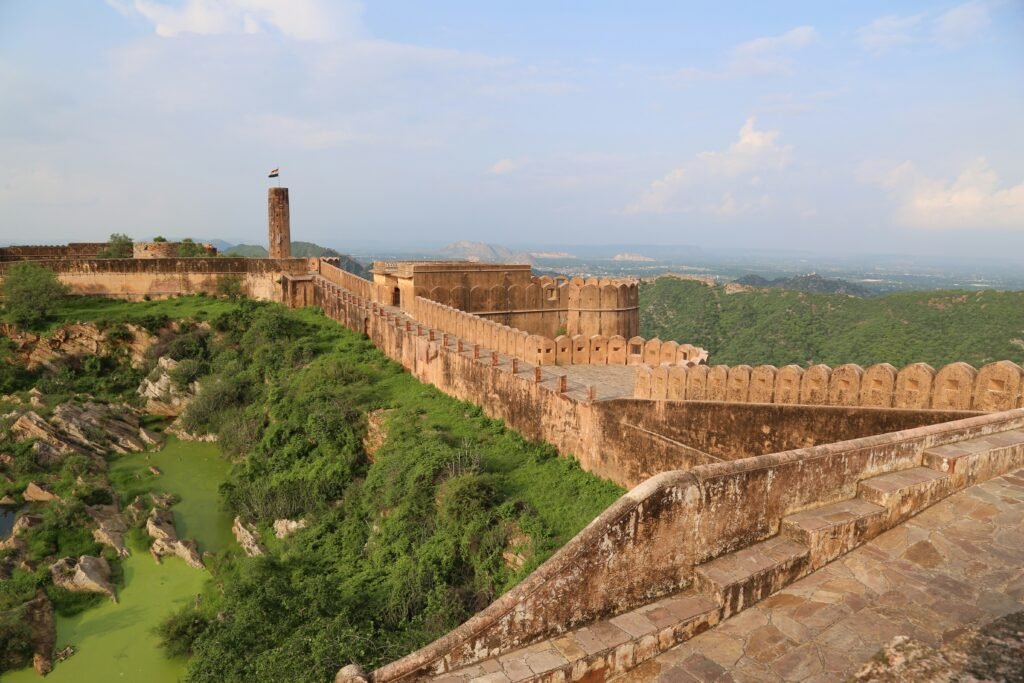
Arrive at Amber Fort at eight in the morning in May, the moment it opens, and you’ll see something most winter visitors never do. Empty courtyards. The Sheesh Mahal without a tour guide narrating at full volume next to you. Diwan-i-Aam without thirty cameras pointed at it. This hilltop fort, built by Raja Man Singh I in 1592 and now a UNESCO World Heritage Site, was designed for the elite, not the masses. It feels far closer to its original mood when you’re one of a few dozen people inside it.
The same logic applies at the City Palace. The royal residence in the heart of the old city is most rewarding when you can stand still and look at the walls, the doors, the courtyards and the museum galleries without being moved along by foot traffic. In summer, this is genuinely possible.
And then there’s Jantar Mantar, the eighteenth-century astronomical observatory built by Maharaja Sawai Jai Singh II. Here, summer carries an unusual advantage that almost no guidebook mentions. The nineteen instruments were designed to read the sun. The strong light in the summer months makes the Samrat Yantra, the world’s largest stone sundial, throw a sharper, more legible shadow than it does on a hazy winter morning. The science of the place becomes visible in a way it simply isn’t in cooler months. If you care at all about astronomy, geometry, or how eighteenth-century Rajputs measured time, summer is the season the observatory was built for.
A small confession about the Rajasthani summer
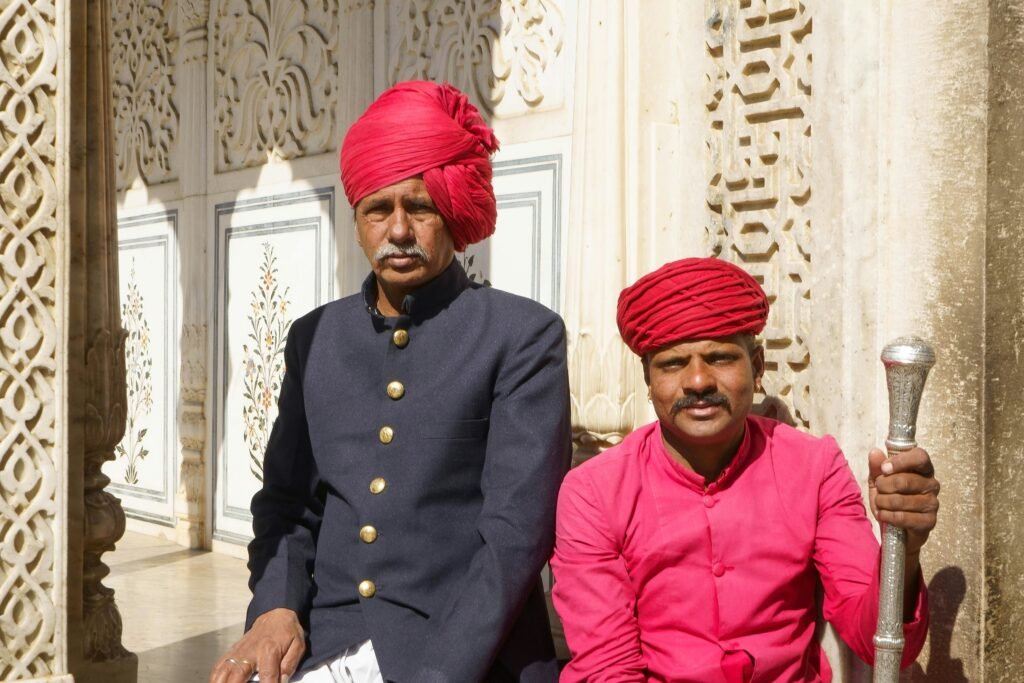
Here’s the bit no one tells you. Rajasthani culture is built around the heat. The architecture, the food, the schedule of the day, and the festivals. All of it assumes the sun is doing exactly what it’s doing in May. The thick walls and high ceilings of the city’s old havelis aren’t decorative; they’re climate control. The famous summer drinks of the region, sugarcane juice, buttermilk, and bel sherbet, exist precisely because the Rajasthan summer demands them. The Gangaur procession and the Teej festival belong to this stretch of the year. You’re not visiting Rajasthan in spite of the weather. You’re visiting this region as it was designed to be visited.
How to actually do a summer trip well
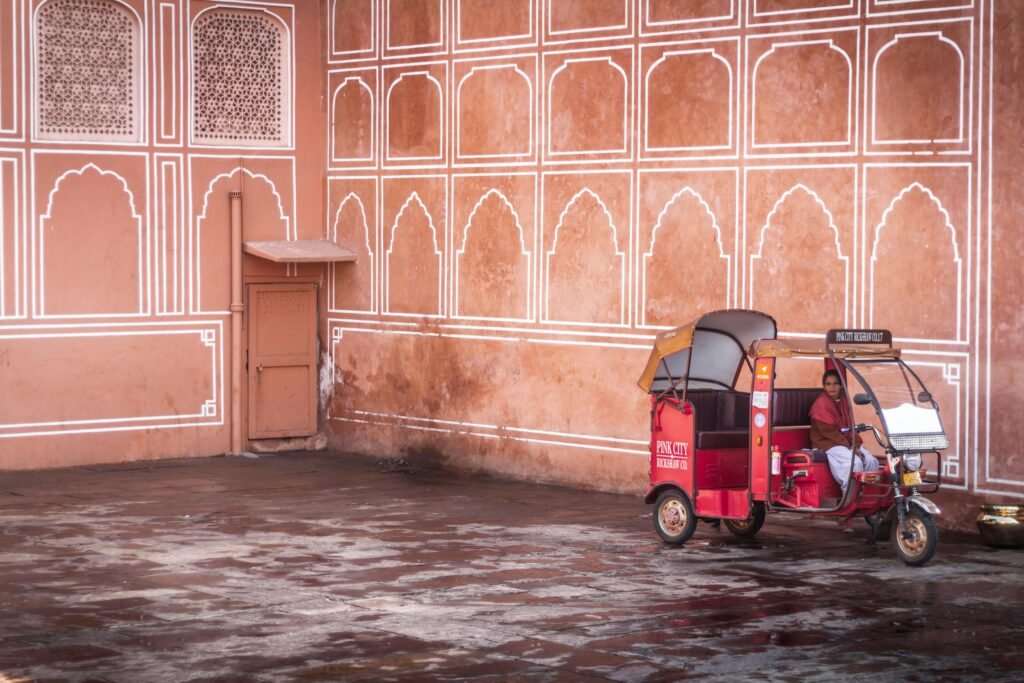
One has to start early. Be at Amber Fort by eight when it opens, or photograph the Hawa Mahal facade from the street at sunrise. The light is soft, the air still bearable, and you’ll have the place largely to yourself for the first hour. Most of the city’s monuments open from around eight or nine, which gives you a generous window before the heat builds.
Use the middle of the day for indoor pursuits. The Albert Hall Museum, the cool interiors of heritage properties in Jaipur, cooking sessions, henna, saree draping, and even a slow lunch with a long pot of nimbu pani. The whole city more or less observes the siesta hour, and so should you.
Return to sightseeing after five. Jal Mahal at golden hour, Nahargarh Fort for sunset over the city, an evening walk through Tripolia Bazaar for jewellery and textiles when the shopkeepers are at their most genial. The temperature drops sharply after sundown, and the city comes back to life. Drink water religiously and wear cotton or linen along with a hat.
Where to stay matters more in summer than in winter
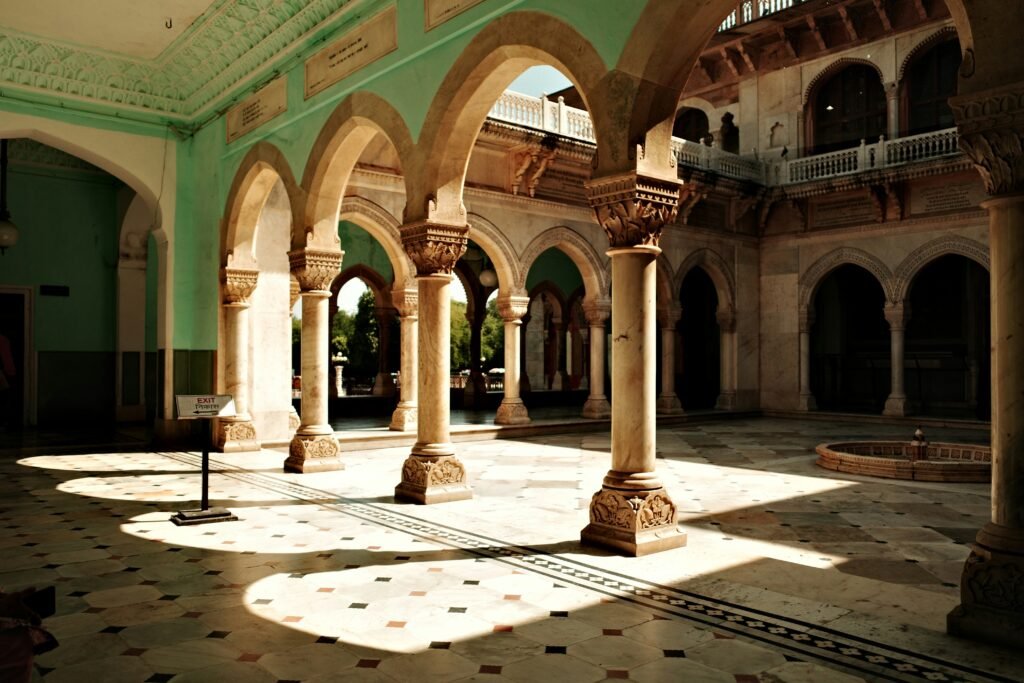
In winter, almost any hotel in Jaipur works. In summer, the choice of stay becomes the difference between a brilliant trip and a difficult one. You want shaded courtyards, thick old walls, well-cooked local authentic meals and hosts who can tell you which gate of the old city to visit at which hour. You want a property that treats the season as a feature, not an inconvenience.
This is where Dera Mandawa, our family-run boutique heritage hotel in Jaipur, earns its keep. Tucked just off the road near Chandpole Gate and walking distance from the heart of the Pink City, it was established in 1885. The eleven suites carry the kind of detail you don’t find in larger hotels. Frescoes, carved wooden pillars, courtyards that stay cool through the worst of the afternoon, and meals served alfresco from the family kitchen. There’s cooking with the family cook, kite flying on the terrace, and, on request, gala evenings with folk music.
For a summer trip, when the rest of the city is busy persuading travellers to come back in November, a property like this is the difference between enduring Jaipur and properly enjoying it.
So, go in May or June; take your hat. The Pink City is more itself when fewer people are looking at it.
Ready to book your summer stay at Dera Mandawa? Contact us today, and we’ll take care of the rest.
