

A Kathputli puppetry performance is one of those experiences people believe they understand until they actually sit down and watch one. In Kathputli Puppetry in Rajasthan, the surface elements appear deceptively simple. Wooden puppets, vivid costumes, a modest stage, and music that seems to belong to another time. Yet once the performance begins, it becomes clear that this is not entertainment in a casual sense. Kathputli puppetry carries history, social memory, and storytelling techniques that have survived centuries of repetition within traditional Rajasthan.
To understand what truly unfolds in Kathputli Puppetry in Rajasthan, it is necessary to look beyond the puppets themselves. Attention shifts to how the performance is constructed, who performs it, and why this form of Rajasthani folk art continues to hold attention today.
Kathputli Puppetry in Rajasthan as a Living Tradition
The stage in a Kathputli puppetry performance is deliberately modest, often no more than a cloth backdrop. The puppeteer, traditionally known as a Bhat, remains unseen or only partially visible, controlling the puppets through strings attached to their heads and torsos. The movements may appear exaggerated at first, but in Kathputli Puppetry in Rajasthan, every gesture is carefully calculated to convey emotion, humour, and narrative clarity.
This form belongs firmly within traditional Rajasthan, where oral storytelling has always played a central role. The stories told through puppets range from local folklore to episodes inspired by royal courts, social customs, and historical events. Kings, queens, courtiers, and commoners all appear, each with distinct gestures and tones.
Voice work is central to a Kathputli puppetry performance. One puppeteer may voice several characters, shifting pitch and rhythm seamlessly. Live music accompanies the narration, guiding transitions and heightening dramatic moments without overwhelming the story. In Kathputli Puppetry in Rajasthan, sound and movement work together as a single storytelling language.
Craftsmanship that goes beyond performance
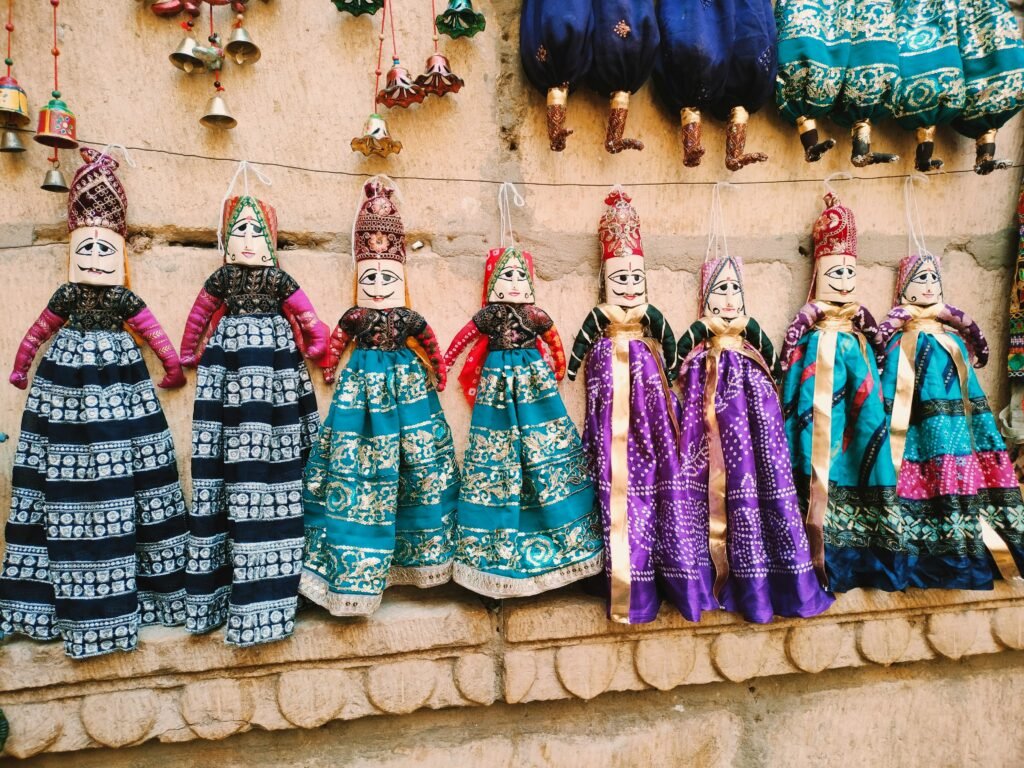
The puppets used in Kathputli Puppetry in Rajasthan are hand-carved from wood and dressed in vibrant textiles. Their design is intentional rather than decorative. Costume colours, facial features, and jewellery styles signal character types instantly, allowing the audience to follow the story with ease. This visual language draws directly from Rajasthani folk art, regional painting traditions, and historic courtly attire.
Every puppet is built to last. Repairs are part of their life cycle, not a sign of decline. This continuity reflects how Rajasthani puppetry survives through use rather than preservation behind glass. A puppet that has been handled for years carries a kind of authority that a newly made one does not.
Stories that speak to the present
Although many narratives in Kathputli Puppetry in Rajasthan are centuries old, performances are never fixed. Puppeteers adapt dialogue, pacing, and emphasis based on audience response. Satire, humour, and social commentary find their way into the performance naturally, allowing Rajasthani puppetry to remain relevant across generations.
In traditional Rajasthan, storytelling has always served multiple purposes. It entertains, yes, but it also communicates values, questions authority, and records social change. Kathputli performances do the same, often slipping sharp observations into lighthearted scenes.
The role of music and timing
Music in a Kathputli performance is functional rather than decorative. Percussion marks entrances and exits. Vocal cues signal shifts in scene or mood. The pacing of the performance depends heavily on this coordination.
Unlike modern theatre, Kathputli Puppetry in Rajasthan does not enforce a strict separation between performer and viewer. Audience reactions influence pacing. Laughter may extend a scene, while silence may shorten it. This responsiveness reflects the participatory nature of traditional Rajasthan, where live art forms evolve through interaction rather than rigid scripts.
Why this art form endures
Kathputli has survived political change, shifting patronage, and modern entertainment because it remains flexible without losing its core. Its roots in Rajasthani folk art keep it visually grounded, while its storytelling adapts with each generation. The skills required are passed down within families. Children learn by watching, assisting, and eventually performing.
This lineage-based transfer is fundamental to Rajasthani puppetry, ensuring continuity without formal institutions controlling it. Today, performances appear in village squares, festivals, private gatherings, and cultural spaces. The setting may change, but the form remains recognisable. That balance between consistency and adaptability is what keeps audiences engaged.
Watching with understanding
Knowing what goes into a Kathputli performance changes how you watch it. You notice the precision of movement. You listen more carefully to the shifts in voice. You see how Rajasthani folk art and storytelling combine into a single expression. It also becomes clear that this is not nostalgia performed for effect. It is a living practice within traditional Rajasthan, maintained because it still communicates effectively.
In keeping with these traditions
Stories in Rajasthan have always travelled through people, objects, and repeated practice. That same continuity shapes how Dera Mandawa has been run and shared over the years. As a heritage property in Jaipur, the haveli is not arranged to perform an idea of culture, but to hold it quietly through architecture, hospitality, and long-established ways of doing things. For guests who value detail, craft, and context over checklist travel, it offers a place to stay that aligns naturally with the traditions discussed here.
For reservations or further information, you are welcome to contact us directly.
